"Abstract: We can take much information if we consider university as the last part of the supply chain in education. This talk will cover my communication experience of the following person; high school students, university students, parents of the students, staff of universities, professors and the person in charge of employment in company. I hope it will be an opportunity to think how your affiliation functions as a supply chain"
Showing posts with label Japan. Show all posts
Showing posts with label Japan. Show all posts
Wednesday, December 11, 2019
University as a Supply Chain in Japan
Greetings from Yogyakarta, at the IEEE TALE 2019 engineering education conference, where Dr. Taku Jiromaru, from Kurume University, talked on the "University as a Supply Chain in Japan". Dr. Jiromaru suggested a "satellite" between the university and society, to provide more real world input to the university. I asked Dr. Jiromaru why not simply reform university programs, he pointed out that such attempts had been difficult in the past.

Wednesday, July 20, 2016
China's Influence in Developing Asia
- Goh, E. (Ed.). (2016). Rising China's Influence in Developing Asia. Oxford University Press.
"Rising China has been reshaping world order for the last two decades, but this volume argues that we cannot accurately understand rising China's global impacts without first investigating whether and how its growing power resources are translated into actual influence over other states' choices and policies. Concentrating on the developing countries in East and South Asia, where the power asymmetry is greatest and China ought to have the biggest influence, the volume investigates China's influence in bilateral relationships, and on key political actors from these countries within key issue areas and international institutions. ..."
-
King, A. (2016). China-Japan Relations after World War Two: Empire, Industry and War, 1949–1971. Cambridge University Press.
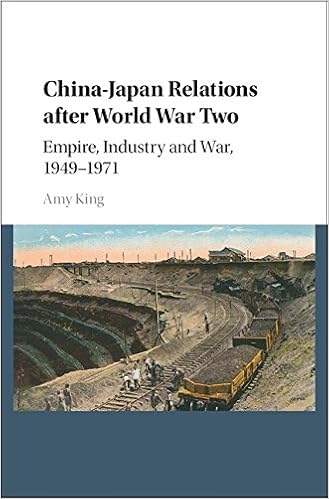
" A rich account of how and why China rebuilt its economic relationship with Japan so soon after the devastating experience of World War Two. King argues that the period between 1949 and 1971 was an important moment of non-Western modernisation stemming from the legacy of the Japanese empire, industry and war in China."
Wednesday, March 2, 2016
Japan, the Trans-Pacific Partnership and the Regionalism

Professor Urata started by pointing out Japan's deflation, increasing government debt, low labor productivity, declining savings rate and declining population. He showed a diagram of the electronics production between Korea, China and Japan and then exported to the USA. He compared this complex arrangement with the simpler North American production, between the USA and Mexico. An even more complex process is for production of hard disk drives in Asia. He also pointed out there are more free trade agreements in existence and proposed. One curious aspect of Professor Urat's presentation was the lack of mention of service industries. After iron ore, coal and natural gas, education is Australia's fourth largest export earner.A TPP which increases access to manufacturing industry is not much use to Australia.
It would be interesting to compare the international production of electronic goods with education. It the educated student is considered the "product", how international is that education? My interest is in the TPP and higher education services. Jessop (2016) discusses efforts by Asian countries to become knowledge based economies (KBE), including Taiwan's ‘Green
Silicon Island’ strategy and ‘e-Taiwan’ project, South Korea's "Brain Korea 21" and "Brain Korea 21 Plus" for national innovation, Singapore's ‘Intelligent Island’ and ‘Intelligent Nation 2015’. Jessop (2016) identifies the OECD as an advocate for economic development trough vocational training and lifelong learning. As part of this education becomes an arm of economic, rather than social, development and an international industry. Bhoothalingam (p. 51, 2016) suggests that India could regain its historic role as a provider of regional education, given its strength in English language high volume delivery of courses using IT. Lester (2013) draws a link between trade liberalization and on-line university courses, particularly MOOCs.
- "The capacity for future Australian governments to direct public subsidies for education appears to be protected (as a result of civil society and union pressure) through Chapter 10 and Annex II: Schedule for Australia, and specifically in relation to: autonomy in admissions policies, setting tuition rates, development of curricula or course content; non-discriminatory accreditation and quality assurance procedures for education and training institutions; government funding, subsidies or grants; the need for education and training institutions to comply with non-discriminatory requirements related to the establishment and operation of a facility."
- "However, Chapter 9, the Investment Chapter has the effect of locking-in and intensifying pressures of commercialisation and privatisation. It establishes rules that bind nation-states not only on the basis of regulatory differences between domestic and non-domestic investors, but on the basis of an effect that results in ‘expropriation’ or ‘nationalisation’ of an investment for international providers, including in relation to changes to ‘licences, authorisations, permits and similar rights’ conferred pursuant to the law. This means, a for-profit VET provider owned from overseas could demand compensation from the Australian government if they changed laws which meant that they could not enrol domestic students or could not access public subsidies where those requirements would mean a loss of investment."
- "Some Chapters indeed facilitate trade in private education. Article 10.6 means Australian ‘service suppliers’ (higher education providers) are not required to establish a company in the relevant nation for the purposes of cross-border supply (also means MIT does not need a local campus to deliver Engineering course to Australia). Australia has a side agreement with Vietnam which effectively prevents them from re-nationalising higher education."
- "In relation to academic mobility, Chapter 12 empowers short term stays for skilled and non-skilled labour because the phrase ‘business person’ is so broadly defined. There are more strict regulations in terms of the recognition of qualifications but these can be easily diluted if our government reaches an agreement with another nation to accept the qualification status of professionals from another country."
- "Australian education providers are now able to compete for government procurement contracts in relation to:
o Primary, secondary, and higher education services in Brunei Darussalam, Japan, Canada, Malaysia, Mexico and Peru;
o Adult education services in Brunei Darussalam, Canada, Japan, Malaysia and Peru; and
o Research and development services in Brunei Darussalam and Peru."
From: TPP impacts on education and education services, NTEU, 16 November 2015
References
Bhoothalingam, R. (2016). The Silk Road as a Global Brand. China Report, 52(1), 45-52. Retrieved from http://chr.sagepub.com/content/52/1/45.full.pdf
Jessop, B. (2016). Putting higher education in its place in (East Asian) political economy. Comparative Education, 1-18. Retrieved from http://www.tandfonline.com/doi/full/10.1080/03050068.2015.1128659
Lester, S. (2013). Liberalizing cross-border trade in higher education: The coming revolution of online universities. Cato Institute Policy Analysis, (720). Retrieved from http://object.cato.org/sites/cato.org/files/pubs/pdf/pa720.pdf
Lester, S. (2013). Liberalizing cross-border trade in higher education: The coming revolution of online universities. Cato Institute Policy Analysis, (720). Retrieved from http://object.cato.org/sites/cato.org/files/pubs/pdf/pa720.pdf
Friday, August 7, 2015
Shorter Programs for Vocational Qualifications
The Wall Street Journal reports that the Japanese Government will expand business programs and vocational training at the expense of liberal arts ("Japan Rethinks Higher Education in Skills Push" by Mitsuru Obe, 2 August 2015). If the objective is to
produce graduates with vocationally relevant business and technical
skills, then cutting back liberal arts makes sense. However the question needs to be asked if this is what
universities are for and if degree programs are the way to provide these
skills.
It does not make a lot of sense to take a non-vocational
university degree program and try to retrofit work related skills to it.
If individuals have years to devote to a liberal education followed by vocational studies, that is
fine. However, if there is not the funding for that, then it would be
better for the individual to spend their time and money learning the
essential vocational skills, get a job and then worry about a liberal
education when, and if, they can afford it. In Australia you have the
option of doing six months to two years of vocational education to get a
qualification for a job and worry about a degree later.
ps: A senior person at the business school of a prestigious European university commented to me recently that the liberal arts students enroll in business classes shorty before they are to graduate, when they realize they are "two terms away from unemployment". ;-)
ps: A senior person at the business school of a prestigious European university commented to me recently that the liberal arts students enroll in business classes shorty before they are to graduate, when they realize they are "two terms away from unemployment". ;-)
Subscribe to:
Posts (Atom)