Showing posts with label China. Show all posts

Wednesday, June 17, 2026

Chinese Government Endorses Pratice Based Degrees

Reporting in the China Daily, Zou Shuo wrote "Practice-based degree assessments gain traction" (2026-06-16). They report that a class from East China Normal University submitted novels for their master's degrees, while China Agricultural University students submitted fertilizer and produce production plans. This is not that unusual in Australia, particularly at the masters level. As it happens, one of my students undertook a project to design a video learning system. They are now studying for a PhD, while also teaching students using this type of technology. 

Australia has introduced a Vocational Degree which will allow students to study more practical skills at vocational institutes, rather than universities. 

ps: What makes this significant is that the China Daily is an official government newspaper. I visited the HQ of the other official newspaper, the People's Daily, in 2003. 

pps: Curiously, the LinkedIn and Twitter links have swapped labels on the China Daily page: if you place your pointer over the LinkedIn icon it says "Twitter" and for Twitter it says "LinkedIn".


Thursday, November 27, 2025

China's Digital Economy and Moore's Law

 Greetings from the Australian National University's China Update. The first session is on China's digital economy, innovation, finance and growth. Harry X Wu started with industry policy implications and the difficult issue of productivity. He argues ICT drives China's productivity, despite the "productivity paradox". This is due to government policy promotion of ICT in State Owned Enterprises (SOE). He suggested this benefited from Moore's Law, but unevenly distributed across the economy. 

I suggest that this analysis could be applied to other fields, such as defence. There is concern in Western countries over the growth of China's military capabilities. This comes party from government increasing investment but also from applying manufacturing capabilities. Western countries will tend to produce a few of each aircraft, tank or ship, thus making them expensive. China can afford to make more by making more. The other factor yest to be appreciated is AI. 

Recently I was discussing the role of drone submarines with a defence specialist. They argued these had limited use as it is very difficult to communicate with a submarine, so they could not be remotely controlled. This missed the point that these will be tasked like a crewed submarine: given patrol orders then left to execute them, reporting occasionally from periscope depth by radio or laser. The use of a lethal AI system might seem problematic but sea mines use much less intelligence.

Sherry Tao Kong argued that China has a widely adopted digital payment system, but it lacks depth in digital finance. That is you can make payment for goods with Alipay or WeChat pay, but not conduct other financial transactions, such as taking out a loan, or buying insurance. There is also a gap between rural and urban users. I had experience of lack of digital transactions this week when I tried to take out car insurance with NRMA Insurance. I could get a quote online, gut had to call to get the policy issued, despite being an existing customer. It took three attempts to make the payment, due to the poorly designed process, while the people at the car dealership waited to give me the car.

Yanrui Wu cited China's digital economy action plan. The most interesting part for me is digital talent development. Interestingly Dr Wu pointed to the high density of fibre optic cables in China as a measure of digital economy. This also would make the country more resilient to natural disasters and military attacks. 

This was an interesting session but not long enough for questions.

Tuesday, March 5, 2024

Education and the Ripple Effect With China's Presence in SE Asia

Greetings from the Australian National University School of Regulation and Global Governance, where Associate Professor Enze Han is talking about his new book "The Ripple Effect: China's Complex Presence in Southeast Asia" (Oxford University Press, 2024). Dr. Han talked about the economic, as well as political support which China provides to countries of the region. At question time he was asked about the effects of education. He pointed out that Chinese language learning was popular in the region, but also that Chinese parents send their children to universities in the region. 

One element missing from the analysis was how this differs from that of previous growing economic powers. One of the audience asked Dr. Han about this. He pointed to South Korean influence in Vietnam.

Thursday, March 23, 2023

Australian Coal Exports to China to Drop in 2025

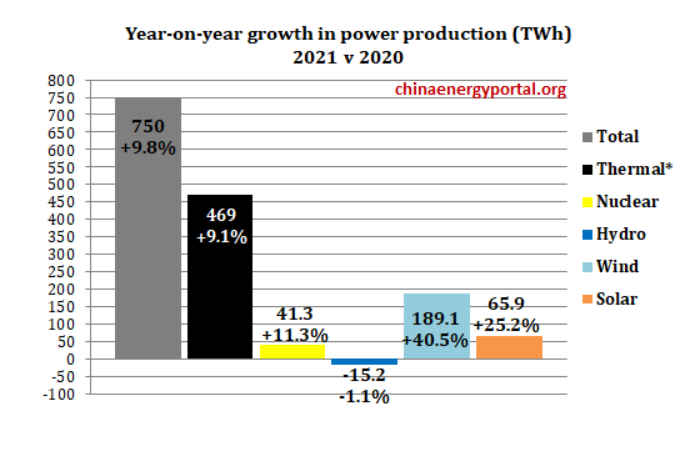
Greetings from "Coal consumption in China" by Jorrit Gosens, creator of the "China Energy Portal" at the Australian National University. He predicts that by 2025 China will be able to meet much more of its requirements for coal domestically for energy and steel production. This is due to improvements in rail lines to get coal from west to east. 


Australia can sell much of its surplus coal China doesn't need, to Japan and South Korea, but not all. In the longer term coal consumption in China will go down, but it is unclear by how much, as Chinese provincial governments like to "build stuff".

Monday, January 30, 2023

What is China's Tech Policy?

Greetings from the Australian Centre on China in the World,at The Australian National University, where Rogier Creemers from  Leiden University i speaking on China’s Techno-Developmental State: Achieving the Future. He began by noting there were few China tech policy watchers, despite there being plenty of Chinese government documents available to work from. Also Dr Creemers suggested China is a "future oriented authoritarian state", in contrast to Russia's "eternal present". 

Working out what the thinking is in the Chinese government is of vital interest to Australia. It is also of immediate interest to me, as yesterday new reports indicated China has banned their citizens studying online. But exactly what had the Chinese government decided, and why?

In 2003 I attended a conference in Beijing to provide advice on building the website for the 2008 Olympics. As a former Australian government technocrat, and academic, I felt very comfortable talking to Chinese technocrats and academics. The US representative, in contrast, seemed to expect everyone to be in Chinese tunics, waving little red books.

Dr Creemers argued that Chinese tech policy is shaped by being a late adopter. China had to have its Internet first hosted by a Western university, and accept its libertarian underpinnings. This is perhaps a little overstated. When we needed to set up the Australian Defence Department's web site, I turned to a university. Admittedly this was the Australian Defence Force Academy, but the Government bureaucracy could not cope with what to do, I bypassed it. Similarly, the laissez-faire ethos of the Internet is something which the Australian Government could not comprehend. In a Senate Internet inquiry we had to explain why there could not simply be a government agency which approved every document before it went online. In contrast, when I visited the People's Daily, they had a sophisticated view of how to guide discussion online. 

Dr Creemers suggest that the rise of the smartphone took the Chinese government by surprise, but an office was established to regulate this, and coordinate digital policy. 

As Dr Creemers explains it, the Chinese government had some surprises and made adjustments to policy. This reminded me of Juan Du's "The Shenzhen Experiment: The Story of China’s Instant City", which challenged the idea that the city's success was due to a single central policy decision. One insight was that China wants not to just master a technology, but apply it profitably. This is an approach the Australian Government could perhaps learn from. Successive Australian Governments have attempted to set up defence industries. However, these have failed, due to a lack of competitiveness. 

Dr Creemers argues that China is trying to design a new economic model which provides economic prosperity, but is not the same as western liberal capitalism. 

At question time I asked Dr Creemers: "Given how important China is to Australia, what should the Australian government be doing, apart from generously funding a tech policy unit at ANU? ;-) ". He explained he had just arrived, but would tell European governments to work out what they see as a long term acceptable relationship with China, rather than short term knee jerk reactions.

Philippa Jones, from China Policy asked about China's interest in the Digital Economy Partnership Agreement (DEPA). Dr Creemers suggested China was heavy handed in expressing interest in this, and there would need to be involvement from the USA, for balance. He made the interesting point that DEPA is a rare example of an agreement to regulate trade of something which was not regulated, rather than removing trade barriers.

Back to the Campus Says Chinese Government

Greetings from the Coffee Grounds Cafe, at the Australian National University, on a wet monday morning. According to media reports, the government of China has placed restrictions on its citizens studying online at foreign universities (Australian universities welcome snap decision by China to ban online studies, The Guardian, 29 January 2023). Australia's universities were already preparing for the return of students, so this is not a major difficulty.

While media reports refer to online being "banned", the announcement from China's Ministry of Education, characterise this as a return to previous policy, and there is provision for students who are unable to get to campus. An example given is those who can't get to a Ukraine campus due to war:

In investigating how Australian universities might offer online learning to international students, I noticed China, in particular, was wary of this (Worthington, 2014). COVID-19 required a softening of attitudes to online learning, in Australia, China, and other countries. There is a wish to get back to "business as usual", however, what was usual, and is that the best for the students, or the community they aim to serve?

Reference

Worthington, T. (2014, August). Chinese and Australian students learning to work together online proposal to expand the New Colombo Plan to the online environment. In 2014 9th International Conference on Computer Science & Education (pp. 164-168). IEEE. URL https://doi.org/10.1109/ICCSE.2014.6926448

Tuesday, August 9, 2022

Prepare for Regional Conflict to Keep Students Offshore

Dirk Mulder reports that 19% of international students enrolled in Australian universities are offshore (Dirk Mulder on where international students are (and aren't, Campus Morning Mail, 9 August 2022). This may be an underestimate, as it is based on government figures for the number  of students with visas (students studying purely online don't need a visa). The figure is higher for Chinese students (38%), and lower for Indian (10%). The students in China may be unable to travel due to COVID-19 restrictions. However, it may be that some of these students do not see value in travelling to Australia, and would prefer to study offshore. That option has only been available from a few universities and programs, with most requiring on campus participation. Also students may be taking advantage of Australian university not indicating on transcripts that students studied online. In investigating the possibility of Chinese and Indian students studying at Australian universities online before the pandemic, I noticed that particularly in the case of China online study had a poor reputation. 

Also, in 2016 I warned that international tensions may stop students studying on campus in Australia. The type of tension I had in mind is currently taking place around Taiwan. As I wrote in 2016, Australian universities should be prepared if tension deters, or prevents, students travelling to Australia. This could effect not only Chinese students, but also Indian students, and nationals of other countries in the region. The best way to prepare is to offer quality online learning with a campus option.

Friday, July 22, 2022

Alternatives to Chinese technology training for the Indo-Pacific

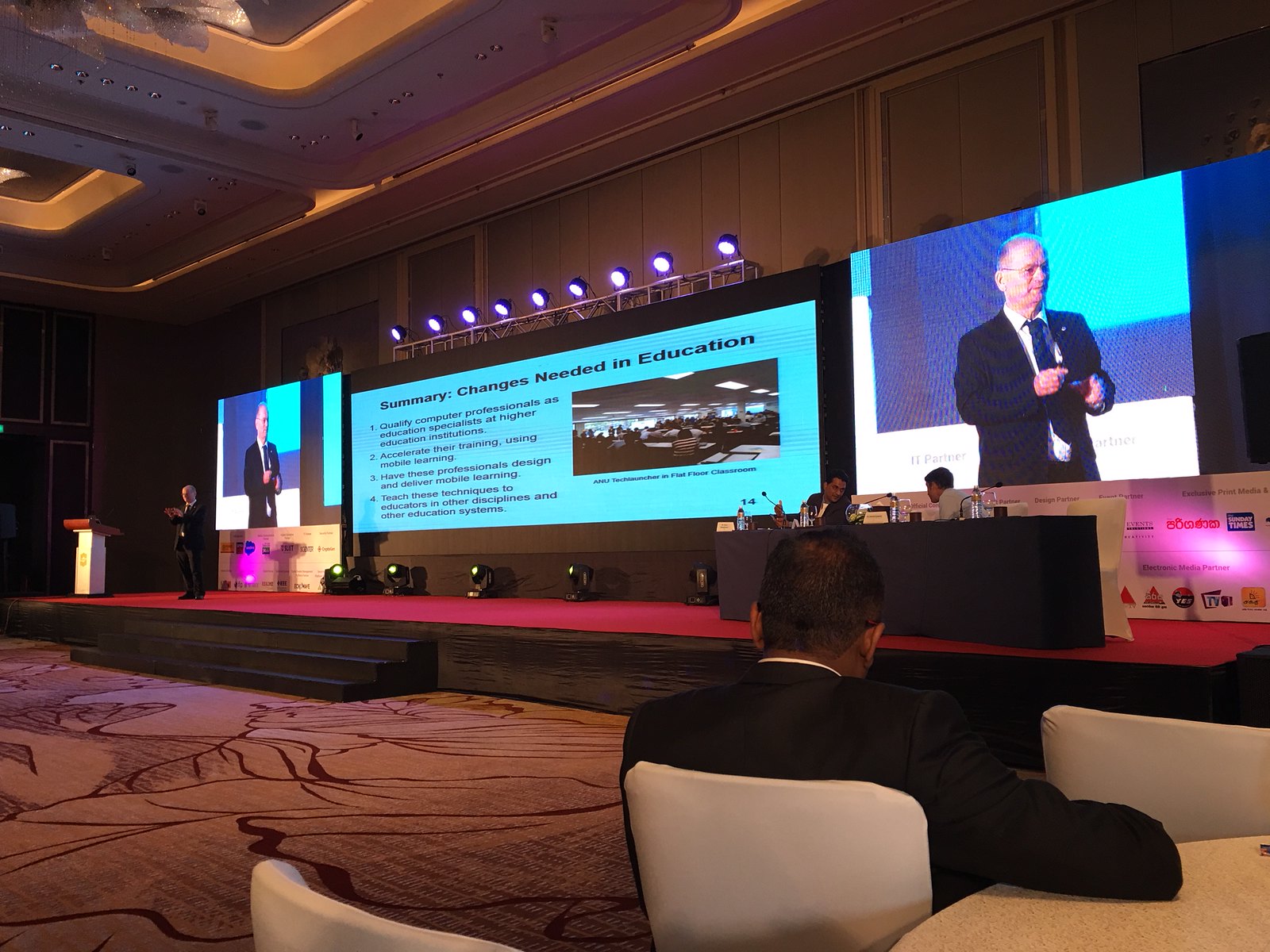
Tom Worthington Speaking at NICT 2018 in Colombo
Presenting on M-learing for the Indo-Pacific, 2018. 

In "China Inc. and Indonesia’s Technology Future", van der Kley, Herscovitch, and  Priyandita (ANU National Security College, 2022), suggest Australia and its allies should provide tech training in Indonesia, to counter China's influence. This is a viable idea, from geopolitical, developmental, and market development perspectives. However, Indonesia has excellent tech educators (I have met many), and so this would be better done by assisting them, rather than being imposed from outside.  In 2018 I suggested countries of the Indo-Pacific could jointly educate professionals using mobile devices, in to counter the influence of China's Belt and Road Education Plan.

Rather than creating free courses, dependent on intermittent foreign aid programs. I suggest that allied educational institutions, and entrepreneurs, could be assisted to set up not-for-profit, and for-profit programs, which will be able to be self funding. This can be done using standard start-up techniques, and Indonesia's exceptionally vibrant commercial sector. 


Wednesday, May 25, 2022

Learning from Wuhan on Helping International Students

While western universities have focused on the problems of their own students during the COVID-19 pandemic, it should be remembered that China also has international students. There are some interesting papers emerging from the experience of students, some at the epicenter of the Pandemic.  English, Yang,  Marshall, and Nam (2022) have written about the experience of international about 1,500 students facing Wuhan's 76 day lock-down (out of 8,000 pre-Pandemic). The authors note that the stress from the pandemic is in addition to the stress international student face from studying abroad.

Wuhan was locked down earlier than other locations, when little was know of the virus, which will have increased the stress level for students. Also, as the authors note, those in Wuhan faced the stigmatization and discrimination as being perceived as the source of the disease. However, it should be noted that Melbourne (Australia) experienced six lock-downs, of 262 days in total, more than the rest of the world. It would be interesting to compare the experience of Melbourne's very large international student population to that of other countries. Australian international students were stigmatized by the then Australian Prime Minister, who with a breathtaking lack of compassion, said of the students: "it's time to go home".

The authors report the stress and anxiety students felt, fear, worry, uncertainty, which were made worst by misinformation. Students were homesick and felt  abandoned by those able to leave. However, they were able to continue their education online. In my own studies of the potential for online education in China, I noted that it was not widely accepted (Worthington, 2014). Despite this, as the authors note, Chinese universities were able to switch to online learning, at scale. Another positive point was that international students were helped by the local community, reducing the sense of isolation.

The authors suggest universities could apply the prosocial behavior exhibited at Wuhan in dealing with mental health issues of students generally. In particular, peer support, and practical help for students, with food, and transport. Also social support from outside the international student body will reduce a sense of isolation. 

Wang (2022) makes similar points. However, they also point to the direct role of university medical personnel, and students, in treating patients. This included online support for the psychological effects of the pandemic. The author emphases the sense of "belonging" of China's students, which aided response to the pandemic. This may sound a little odd, to western ears, but Australian universities are similarly attempting to cultivate a sense of care for students. The use of social media, specifically WeChat, is mentioned, but unfortunately not detailed. Australian universities now routinely use social media to get messages out to students, but these can tend to be more in the form of announcements, which do not have the power to engage. 

References

English, A., Yang, Y., Marshall, R. C., & Nam, B. H. (2022). Social Support for International Students Who Faced Emotional Challenges Midst Wuhan's 76-day lockdown during Early Stage of the COVID-19 Pandemic. International Journal of Intercultural Relations. https://doi.org/10.1016/j.ijintrel.2022.01.003/

Wang, L. (2022). Belonging, being, and becoming: Tertiary students in China in the battle against COVID-19 pandemic. In J. S. McKeown, K. Bista, & R. Y. Chan (Eds.), Global higher education during COVID-19: Policy, society, and technology (pp. 39-56). STAR Scholars. https://ojed.org/index.php/gsm/issue/view/152

Worthington, T. (2014, August). Chinese and Australian students learning to work together online proposal to expand the New Colombo Plan to the online environment. In 2014 9th International Conference on Computer Science & Education (pp. 164-168). IEEE. https://doi.org/10.1109/ICCSE.2014.6926448

Thursday, August 26, 2021

Australian Universities Should Pivot to Quality Online Learning with a Campus Option

Tim Dodd
Tim Dodd reports that Australian universities have not had any joint programs with Chinese institutions approved since 2019 (Beijing puts Australian universities in the deep freeze, The Australian, August 25, 2021.). With these programs, students start their studies in then own country, then come to Australia to finish their degree. In 2016 I suggested Australian universities should be ready with online learning, in case a crisis kept international students away. COVID-19 has proven the usefulness of e-learning, but it can also be used in the medium term to provide options and in the long term to provide an internationally competitive alternative. As an example, international students can be offered to option to begin their studies online in their own country, then when ready, come to Australia.

Julie Hare
Julie Hare reports that international students are choosing to study in the UK and Canada, as Australian borders remain closed to them (Australia will lose the battle for international students, IDP warns, AFR, Aug 25, 2021). In 2016 I graduated from  a Canadian university, which I had never been on the campus of. This is one of the reasons I suggested Australia could offer an online experience for students, with the option of then studying on campus. My online experience was as educationally rewarding as an on-campus one (and slightly cheaper). Australian universities could offer a quality online experience. Students could then study on campus later, should they feel the need to. 

Deborah Terry, Vice-Chancellor of the University of Queensland
Deborah Terry, Vice-Chancellor of the University of Queensland, has written in support of the hybrid model (Australia needs a new model of international education for the post-Covid era, Times Higher Education, August 26, 2021). However, as I suggested in a series of papers and talks at international conferences (from 2014), for this to work, we need to have Australian & international students together in quality online courses (Worthington, 2014 & 2018). 

Tom Worthington Speaking at NICT 2018 in Colombo
Presenting proposal in Colombo, 2018
One reason I suggested a blended approach, was to respond to China's Education Action Plan for the Belt and Road Initiative. While attention over the last few years focused on the possibility of the loss of Chinese students from Australian universities, there was little attention on the possibility of Chinese universities, and Chinese sponsored universities in third countries, attracting students away from Australian institutions. Rather try to directly compete with conventional courses, I proposed an online alternative, as part of a Colombo Plan style initiative. As it happens I presented this to a conference in Colombo (Worthington, 2018).

In 2019 I described how the final module of learning for a project course at ANU, had domestic and international students worked in teams (Worthington, 2019). While the students were in classrooms in Canberra, I had designed the final task for students, so this could be switched to pure online delivery, in an emergency. This option was activated for semester 1, 2020, due to COVID-19 and  worked well (Cochrane,  Birt, Cowie, Deneen, Goldacre, Narayan & Worthington, 2020). However, that was only possible because the design work had been done the year before the pandemic struck. It takes time to design education.

Rather than continue with the current ad-hoc approach, I suggest there would be value in Australian higher educational institutions working together, with government, on the blended approach. This could be done cooperatively using a brand Australia, rather than each Australian university competing with each other for international students. One successful model for this is Open Universities Australia (OUA) which offers a brand, and administrative structure, for online learning by a diverse mix of 22 institutions. With OUA's approach, students can select courses from across institutions, to a limited extent, but then graduate from one of the institutions. This allows universities to retain their autonomy, but benefit from pooling marketing resources.

In addition, Australian universities can't assume they have a captive market for domestic students, so need to improve the quality and branding of online learning. When I looked for a graduate program in education to undertake, I started by looking in the city where I lived. As soon as I looked outside that, I realized I would be studying online, and so need not confine myself to Australian institutions. The costs were comparable, but a barrier I found was how to assess the quality of little known institutions in other countries. As an example, I spent a considerable amount of time trying to work out if a Canadian university had accreditation from their government, only to discover universities are not accredited by the Canadian government, but instead through a mix of local and US non-government procedures.

Australian universities have been able to deal with the effects of COVID-19 under otherwise favorable conditions. This could change suddenly. When I suggested Canberra's universities be ready with e-learning in 2016, I had in mind not a pandemic, but a military confrontation to our north. With tensions growing, there is scope for an incident which would see most international students leaving Australia.

References

Worthington, T. (2014, August). Chinese and Australian students learning to work together online proposal to expand the New Colombo Plan to the online environment. In 2014 9th International Conference on Computer Science & Education (pp. 164-168). IEEE. https://doi.org/10.1109/ICCSE.2014.6926448

Worthington, T. (2018, October). Computer Professionals Providing Mobile Learning for the Digital Economy. For National IT Conference 2018, 9 am, 3 October, 2018, Colombo, Sri Lanka. http://www.tomw.net.au/technology/it/digital_economy_learning/

Worthington, T. (2018, December). Blended Learning for the Indo-Pacific. In 2018 IEEE International Conference on Teaching, Assessment, and Learning for Engineering (TALE) (pp. 861-865). IEEE. https://doi.org/10.1109/TALE.2018.8615183

Worthington, T. (2019, December). Blend and Flip for Teaching Communication Skills to Final Year International Computer Science Students. In 2019 IEEE International Conference on Engineering, Technology and Education (TALE) (pp. 1-5). IEEE. https://doi.org/10.1109/TALE48000.2019.9225921

Cochrane, T., Birt, J., Cowie, N., Deneen, C., Goldacre, P., Narayan, V., ... & Worthington, T. (2020, November). A collaborative design model to support hybrid learning environments during COVID19. ASCILITE. https://doi.org/10.14742/ascilite2020.0119

Sunday, June 13, 2021

Education for a Better World


Yesterday, President Biden announced that "The United States is rallying the world’s democracies to deliver for our people, meet the world’s biggest challenges, and demonstrate our shared values". I suggest part of this could be an online education program, to complement, rather than confront, China's Belt and Road Education Plan (Worthington, 2014 & 2018).

Expanding infrastructure in low and middle-income countries will required trained workers. The Build Back Better World  (B3W) program aims to invest trillions of dollars in developing countries infrastructure. That will require millions of trained professionals, in the fields of energy, health, digital technology, and education. 

I propose Australia be the lead partner for B3W Education, in the indo-pacific, but world wide. We can mobilize our decades of expertise in higher education. In doing so, we can create new opportunities around the world, as well as jobs at home.

References

Worthington, T. (2014, August). Chinese and Australian students learning to work together online proposal to expand the New Colombo Plan to the online environment. In 2014 9th International Conference on Computer Science & Education (pp. 164-168). IEEE. URL https://doi.org/10.1109/ICCSE.2014.6926448

Worthington, T. (2018, December). Blended Learning for the Indo-Pacific. In 2018 IEEE International Conference on Teaching, Assessment, and Learning for Engineering (TALE) (pp. 861-865). IEEE. URL https://doi.org/10.1109/TALE.2018.8615183

Thursday, May 13, 2021

Protecting Australian Education Exports

Van der Kley and Herscovitch, have produced a four page policy paper, for the ANU National Security College, on the risks to international student enrollments from China, due to tensions with Australia. Unfortunately, the provocative title of the paper may make the situation situation worse. I suggest policy proposals for protecting Australia's interests can be worded in a way which avoids giving offence.

As the paper points out, education is a $10B export industry which employs many Australians, and one of the few major ones not effected by Chinese restrictions. The industry is fragmented, with Australian public and private institutions both  competing for international students. The authors propose an Office for Education Trade, but Austrade, I suggest, is particularly unsuited to this role and may well do more harm than good. It is perhaps the lack of government intervention, which has been behind the success of this export sector. Australia has excellent, independent institutions, which international students value highly and government branding may damage this. 

Tom Worthington Speaking at NICT 2018 in Colombo
Tom Worthington, proposing Indo-Pacific
joint education initiative
, in Colombo, 2018

Australia should, obviously diversify its education market to new countries. That can take years, but Australia academics connections with the region can help with this (obvious markets are India, Sri Lanka and Indonesia).

As the authors suggest, Australia should prepare for Chinese students being discouraged from studying in Australia. In 2017 I warned of this possibility and suggested online learning should be prepared as an option. In this I avoided explicitly mentioning China, to avoid giving offence. The crash programs to implement e-learning in 2020 for COVID-19 have now made this possible. However, while providing some flexibility, a reliance on e-learning also creates a risk, as technical means could be used to cut off Australian institutions access to their students in China. 

The paper recommends increasing Australia’s education diplomacy. However, there is no mention of , its implications for Australian education exports, or the geopolitical and geoeconomic situation of the region. Rather attempting to directly challenge China, I have suggested offering alternative forms of education to the region (Worthington, 2014 & 2018). While the loss of Chinese international students is of concern, in the longer term there are far graver implications for Australian education, and the nation's strategic situation.

References

Protecting Education Exports: Minimising the damage of China’s future economic coercion, Policy Options Paper No 18, Dirk van der Kley and Benjamin Herscovitch, National Security College, May 2021. Url https://nsc.crawford.anu.edu.au/sites/default/files/publication/nsc_crawford_anu_edu_au/2021-05/digital_nsc_policy_options_paper_no18.pdf

Worthington, T. (2014, August). Chinese and Australian students learning to work together online proposal to expand the New Colombo Plan to the online environment. In 2014 9th International Conference on Computer Science & Education (pp. 164-168). IEEE. URL https://doi.org/10.1109/ICCSE.2014.6926448

Worthington, T. (2018, December). Blended Learning for the Indo-Pacific. In 2018 IEEE International Conference on Teaching, Assessment, and Learning for Engineering (TALE) (pp. 861-865). IEEE. URL https://doi.org/10.1109/TALE.2018.8615183

Wednesday, February 17, 2021

Adapting Geoeconomic Competition to Australian Advantage

Adapting Australia to an era of geoeconomic competition by Wilson, 2021
The report "Adapting Australia to an era of geoeconomic competition" (Wilson, 2021) was launched yesterday at the Australian National University in Canberra. I had a ticket to attend, but decided to stay home and participate online. This reflects one of the new realities of Geoeconomics, which threatens the viability of Australia's universities. 

This report defines Geoeconomics as "the application of economic instruments for geopolitical ends" and points out its reemergence in the  Indo-Pacific, between the USA and China. The report suggests that Australia needs to adapt its liberal approach in response.

Wilson points out that education makes up 9% of Australian exports (p. 8), which is much higher than tourism at 5%, with education exports dominated by China (p. 9). 

The report singles out China’s Belt and Road Initiative (BRI) as an "archetypal geoeconomic strategy" (p. 23), for economic development and international political influence. However, as well as targeting trade and heavy industry, the BRI also has an Education component which Wilson doesn't mention. This is similar to the Colombo Plan which Australia and western allies implemented during the cold war (Worthington, 2014). However, online learning considerably increases the scope for education as part of geoeconomic strategy.  Guthrie et al. (2021) predicts onshore international students at Australian universities will drop 60% by 2030 due to competition from China.

Reference

James Guthrie, Martina K Linnenluecke, Ann Martin-Sardesai, Yun Shen, and Tom Smith (January 2021). On the resilience of Australian public universities: Why our institutions may fail unless Vice-Chancellors rethink broken business models, Macquarie University Business School working paper. URL https://www.dropbox.com/sh/f3idf8xogq5r8rj/AAA35NWKaxYTmR2DF3V0FcFIa?dl=0

Wilson, p. (January 2021), Adapting Australia to an era of geoeconomic competition, Perth USA Center. URL: https://perthusasia.edu.au/getattachment/Our-Work/Embracing-the-Indo-Pacific-South-Korea%E2%80%99s-progress/PU-184-Geoecon-201207-PRESS.pdf.aspx?lang=en-AU

Worthington, T. (2014, August 23). Chinese and Australian Students Learning to Work Together Online: Proposal to Expand the New Colombo Plan to the Online Environment. Paper to be presented at the 9th International Conference on Computer Science & Education (ICCSE). Vancouver, Canada.

Friday, February 5, 2021

Blend of Onshore, Offshore and Online to Save Ten Australian Universities at Risk

Gwilym Croucher,
University of Melbourne
Croucher, Elliott, Locke and Yencken (2020) define two types of Transnational Education (TNE): offshore campus-based and online. They are are cautiously optimistic about the future of Australian TNE, both in existing markets, particularly China, and new ones, such as Sri Lanka and Indonesia.

However,  I could find no mention of China's Belt and Road Education Plan, in the report. More recently with COVID-19 there is more emphasis on delivering courses online by China. This could prove attractive for students wanting a low cost education, which is aligned with the region's dominant economy.

Also, the authors don't mention a third form of TNE, a blended model using an onshore campus in Australia, plus online study in the student's nation. I suggest this could prove an attractive option for students and is, in effect, what many international students have been forced to do, due to COVID-19. It is also cost-effective and logistically easier for universities, as they do not have to maintain overseas campuses.

Australian universities already enhance their online courses through partnerships with universities in other countries. I saw this in action at the Sri Lanka Institute of Information Technology (SLIIT). This approach can be combined with the option of onshore study, so students undertake introductory studies online and at a campus of a local institution, and then travel to Australia for advanced studies.

James Guthrie,
Macquarie University
These options might form part of new business models for ten Australian universities which Guthrie et al. (2020) warn are at "high risk of financial default". The authors identify a "rapid expansion of onshore and offshore international students" as one factor threatening the viability of the universities, and the expanding Chinese higher education sector as a future risk. Their "probable" scenario, predicts onshore international students dropping 33.3% in 2021 due to COVID-19 and 60% by 2030 due to competition from China.

References

Gwilym Croucher, Kristine Elliott, William Locke and Edward Yencken (0 Mar 2020) Australia’s higher education delivery offshore and online – trends, barriers and opportunities, Melbourne Centre for the Study of Higher Education. URL https://melbourne-cshe.unimelb.edu.au/__data/assets/pdf_file/0009/3568275/Australias-higher-education-delivery-offshore-and-online.pdf

James Guthrie, Martina K Linnenluecke, Ann Martin-Sardesai, Yun Shen, and Tom Smith (January 2020). On the resilience of Australian public universities: Why our institutions may fail unless Vice-Chancellors rethink broken business models, Macquarie University Business School working paper. URL https://www.dropbox.com/sh/f3idf8xogq5r8rj/AAA35NWKaxYTmR2DF3V0FcFIa?dl=0


Wednesday, April 15, 2020

China Pivots to International e-Learning: Should Australia Follow?

China has announced that universities and colleges will offer online courses in English to international students due to COVID-19. This is a significant pivot for the little known Education Action Plan for the Belt and Road Initiative. This Plan is about boosting China's trade, but also has similarities to the Colombo Plan. During the Cold War, Australia provided free education to students from the region, as a form of soft diplomacy. Australia's Government, and universities, have so far made only tentative moves with international education. That may now have to change, as I suggested in 2017.

It would be tempting for Australian universities to assume that  online courses from China in English would be of low quality, and so not direct competition for on-campus Australian courses. However, Chinese institutions have been adapting the online techniques used by some of the world's leading universities. Also research over decades shows that graduates of online courses are at least as employable as those from on-campus.

Australian universities might decide to concentrate on quality advanced degrees, conceded the introductory and first degree market to online overseas institutions. However, graduates make very good online students, and someone who has done an introductory online course will think an online first and second degree perfectly normal.

The Australian automotive industry  assumed that Japan, and later Korea, were not a threat due to poor quality products. However, the quality improved, and we do not now have an Australian automotive industry. Australian universities need to not make the same mistake.

For several years I have been attending international technical education conferences run by, or with large attendance of Chinese academics. They reported steady progress with scaling up offerings of education in China to international students from developing nations.

As well as students studying in China, the Plan also envisaged campuses in the student's country, built and staffed with Chinese help. While China has some large online universities with decades of experience, online learning was not mentioned in the Plan.

Here is what I suggested in 2017:
"Education is Australia’s third-largest export and the government's "National Strategy for International Education 2025" points out that Moodle is an Australian product serving a global market and identifies on-line learning as an area for growth (Australian Government, 2016). However, Australia's universities are predominantly set up for students traveling to Australia to study on campus, and the government strategy provides little practical guidance for changing this. International tensions could disrupt the flow of students to Australia very quickly. Competition from universities in other countries and DE is likely to increase. We can produce quality on-line and blended programs to remain competitive, based on demonstrated success and research results." (Worthington, 2017).

References

Mo Jingxi, Millions to benefit from online vocational training, Apr 14, 2020, China Daily, State Council, China.

Education Action Plan for the Belt and Road Initiative , Ministry of Education of the People’s Republic of China, July 2016

Worthington, T. (2014, August 23).  Chinese and Australian Students Learning to Work Together Online: Proposal to Expand the New Colombo Plan to the Online Environment. Paper to be presented at the 9th International Conference on Computer Science & Education (ICCSE). Vancouver, Canada. URL https://doi.org/10.1109/ICCSE.2014.6926448 Preprint available at: http://hdl.handle.net/1885/11724

Worthington, T. (2017). Digital Teaching In Higher EducationDesigning E-learning for International Students of Technology, Innovation and the Environment (book).

Saturday, February 29, 2020

Australian Government Guide for Online Education into China

A short Guide for delivery of online education into China has been released by the Australian Trade and Investment Commission (17 February 2020), for international students who have been unable to get to campus due to the COVID-19 Coronavirus. This reports that Australian "edu.au" websites are working in China, but if third party websites are also required there could be problems.

Also students access may be slower, for multimedia and large files in China. The guide suggests hosting of content in, or near China, such as Hong Kong, Macau or Korea, may help. Austrade provide a list of online platform providers. Before looking at onshore options, I suggest reducing the size of multimedia files. This can be as simple as saving a video with reduced resolution, reducing files to one tenth the size. Usually it it the video files which take up most of the space, but occasionally a poorly formatted PDF file can cause problems..

The Austrade report points out that China does not recognize foreign online qualifications. The acceptability of blended learning, a mix of online and classroom based, is unclear, and is being investigated. When I studied the topic of online education in China and India, I found there was a suspicion of this, even where such qualifications were officially approved. This is not just an administrative hurdle to be overcome but a cultural one.

In practice on-campus full time Australian university students, including international ones,  are already studying in blended mode. They spend more than half their time studying online. However this is a very fine blend, with the student in a classroom several times a week. Also major assessment tasks are face-to-face and proctored. Replacing more of the face-to-face instruction with online equivalents is likely to be acceptable. However, remote unsupervised assessment, is less likely to be accepted.

Tuesday, December 17, 2019

Machine Learning Innovation Report

Karen Andrews MP,
Minister for Industry,
Science & Technology
The report "Machine Learning Innovation:A Patent Analytics Report" by IP Australia for for the Australian Computer Society, is now available. A major finding of the report is that China dominates machine learning patents, having filed 69% of the global total since 2012. One government owned Chinese electric utility is responsible for 3% of these patents globally. The report was launched today by Karen Andrews MP, Minister for Industry, Science and Technology.

Key Report Findings

  1. 36,740 patent families have been filed in machine learning technologies since 2012.
  2. 25,319 originate from China.
  3. Machine learning patent filings have grown 27% or more every year since 2012.
  4. 91% of AI and machine learning related patent families are in an active state.
  5. The State Grid Corporation of China is the top global innovator, with 1,018 active patent families (88% are active).
  6. China is the largest filing destination in the world, while Australia is 10th.
  7. Australian innovators rank 17th globally, with 59 patent families.
  8. The telecommunications sector leads real world applications of machine learning, with 17% of patent applications.
  9. Image and video analysis is the largest core capability application, with 36% of patent applications.
From Summary,  Machine Learning Innovation:A Patent Analytics Report,  IP Australia, December 2019 (numbering added)
The direction China may want to take AI could be troubling for other countries. As an example, at the recent education conference an academic from a Chinese university presented research on an AI system for monitoring student attention. A camera observes the facial expressions of all students in the classroom at all times, and from this prepares a report on who is paying attention. This is used to prepare reports not only about the student's behavior, but the performance of the teacher. There was some disquiet among the delegates at the Orwellian nature of this. However, the presenter pointed out that the research showed it was very effective. As a result, this approach may find its way into classrooms in other countries.

ps: Kate Crawford, Principal Researcher at Microsoft Research, will talk on "AI and Power: From Bias to Justice" at ANU, 5:30pm today.

Thursday, August 22, 2019

Risks to Australian Universities from China Student Boom

Salvatore Babones (2019) has produced a detailed 44 page analysis of the risks to Australian universities from over-reliance on funding from Chinese students. The language used is alarmist: "... multi-billion dollar gamble with taxpayer money to pursue a high-risk, high-reward international growth strategy ...". Australian universities have a high proportion of international students from one source, however I suggest this does not necessarily translate into a financial risk.

The report focuses on seven universities: Melbourne, ANU*, Sydney, UNSW, UTS, Adelaide and UQ. Babones points out that China is the largest source of inbound international students, making up more than half. These make up 13%  to 22-23% of student fees for the universities.

Australian universities have a high proportion of international students from one source. However, a point the report does not emphasize is that much of the cost of teaching students is variable: as the revenue from students drops, so does the cost of teaching them. This reduces the financial risk to the university.

While Australian universities have a high proportion of international students in comparison with other countries, they still only make up 25% of the student population (with half from China). So if students from China were to cease, this would only reduce overall student numbers by 12.5%. That would be a serious concern for some areas of universities, particularly business studies, but not a risk to  institutions overall. There would be some excess teaching space, however, these are currently undergoing reconfiguration and replacement, as lectures are replaced with flexible learning.

I suggest a larger concern for universities should be the changes taking place in the way education is provided, and what forms of qualifications will be demanded by the workplace. Universities have argued that there is a synergy between their education and research roles. This was always a questionable link, as researchers do not necessarily make good teachers. Also the shift to online education places at risk university's business model. The demand for smaller, even micro, credentials, also presents a challenge for universities.

Universities, and university educators, are not just sitting back waiting for disaster. They are actively changing the way Australian university education is provided. As someone who designs courses for, and teaches, international students.

Reference


Babones, Salvatore. The China Student Boom and the Risks It Poses to Australian Universities, Analysis Paper 5, , Sydney, Centre for Independent Studies, August 2019

Monday, August 19, 2019

Digital Learning For Behavioural Change

I was skeptical, and slightly worried, by the title of Haymarket HQ's talk last Friday: "The Future of Digital Learning to Drive Behavioural Change" by So-Young Kang, Founder of Gnowbe. Haymarket HQ is a start-up center in Sydney's Chinatown, specializing in helping Australian businesses expand into China. But the behavioral change So-Young talked about was not some sort of Orwellian brainwashing, but helping people get ready for new jobs.

So-Young emphasized a mobile first approach to online learning, rather than mobile responsive. The latter is for on-line delivery to desktop computers, but uses features in web technology to ensure the display is adjusted if the student has a mobile device. With real mobile-first, the screen display, the content, and the course, is designed with mobile devices in mind. This requires much smaller units of learning.

With my course design I started with desktop orientation, about ten years ago, and started incorporating more mobile features using responsive design over the last five years. I now assume the student will study the material on a mobile device, do the quizzes and forum interaction, but still use a desktop computer for the major written assignments.

So-Young talked of both businesses and universities using Gnowbe products for staff and students. What was most interesting was using this for people skills. Academics and teachers could look at some of these techniques. What is yet to be explored in detail is how this will fit with conventional post-secondary learning. Are VET and university qualifications to be replaced by micro-learning? I suspect not, but it may be supplemented, or supported by this.

Wednesday, May 8, 2019

Time to Pivot Australian International Higher Education

The Australian newspaper and ABC TV rarely agree on anything, but this week both warned of problems with Australian university support of international students. This comes with the end of increasing enrollments from China and moves to recruit more from India.

Tim Dodd  wrote:
"The highly lucrative six-year boom in Chinese students is over.

Australian universities now are focusing on the less-developed Indian market to meet budget expectations, exposing them to the risk of enrolling low-quality students with poor English. ..."

From: "End of China boom roils universities", The Australian, 8 May 2019
 And:
 "... The number of Chinese students enrolled in Australian higher education ... is flattening off, sending universities on a feverish quest to find new students from India ... But rapid growth poses risks if it is accompanied by a fall in student standards ..." 

From "There’s risk in rush to new overseas markets", The Australian, 8 May 2019
ABC TV reported: 
"Teaching staff say that universities are risking their reputations by taking on students who are not capable of advanced levels of learning." 
From: Cash Cows, ABC TV, 6 May 2019
In response to the ABC, an industry body, the International Education Association of Australia (IEAA), pointed out stricter government controls had been introduced. This included improvements in English language standards. However, these were only introduced eighteen months ago, so the changes would not yet be reflected in the current student body.

Where there are violations of Australian law and academic standards, I suggest these should be dealt with by suspensions, and, where necessary, criminal prosecution. However, Australian universities and academics can offer new forms of learning, and supporting international students in new ways. This can be done with online and blended learning, incorporating integrated progressive assessment, to ensure students do the required work, on time and to the required standard.

IEAA pointed out that universities have introduced programs alongside their main courses of study, to improve language proficiency. However, I suggest we can also take advantage of technology, to test students early in each course, to see they have the required language, and other skills. Special assistance can be offered, or if necessary, the student removed from a course early. Assessment can move away from a few large tests, where students are tempted to cheat. Students can be issued with digitally certified qualifications, as they progress through their studies, so they are rewarded for good work.

I will be discussing some ways to do this in a presentation "Mobile Learning with Micro-Credentials for International Students", at EduTECH in Sydney, 4 pm 6 June, and the next day in round-table discussions.