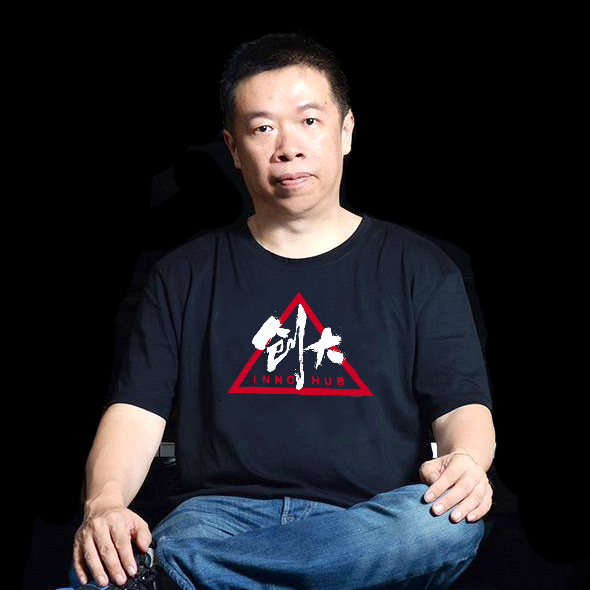
I was skeptical, and slightly worried, by the title of Haymarket HQ's talk last Friday: "The Future of Digital Learning to Drive Behavioural Change" by So-Young Kang, Founder of Gnowbe. Haymarket HQ is a start-up center in Sydney's Chinatown, specializing in helping Australian businesses expand into China. But the behavioral change So-Young talked about was not some sort of Orwellian brainwashing, but helping people get ready for new jobs.
So-Young emphasized a mobile first approach to online learning, rather than mobile responsive. The latter is for on-line delivery to desktop computers, but uses features in web technology to ensure the display is adjusted if the student has a mobile device. With real mobile-first, the screen display, the content, and the course, is designed with mobile devices in mind. This requires much smaller units of learning.
With my course design I started with desktop orientation, about ten years ago, and started incorporating more mobile features using responsive design over the last five years. I now assume the student will study the material on a mobile device, do the quizzes and forum interaction, but still use a desktop computer for the major written assignments.
So-Young talked of both businesses and universities using Gnowbe products for staff and students. What was most interesting was using this for people skills. Academics and teachers could look at some of these techniques. What is yet to be explored in detail is how this will fit with conventional post-secondary learning. Are VET and university qualifications to be replaced by micro-learning? I suspect not, but it may be supplemented, or supported by this.
Showing posts with label Haymarket HQ. Show all posts
Monday, August 19, 2019
Tuesday, July 24, 2018
China’s Education Boom: A Golden Opportunity?
Greetings from Haymarket HQ in Sydney's Chinatown. This is a start-up center for entrepreneurs looking at the Asian market. This evening has a presentation on "Eureka! The golden opportunity of China’s Education Boom" with Maria Spies and Patrick Brothers from HolonIQ.
Patrick commented that currently there is a heavy weighting of postgraduate students attending Australia's Group of Eight universities. To keep this in perspective he commented that China is out investing the USA in education three to one and noted that international investors are underrepresented compared to other industries. Patrick noted that the Chinese government recently shut down two hundred international educational partnerships, however he did not explain why.
Maria commented that the issues in Chinese education are much the same as in Australia: including new flexible classrooms, STEM and STEAM curriculum, and edtech. One difference she noted was an openness to technology by parents and teachers. Much of the investment is in private after-school tuition.
Keeping in mind my proposal for Australian to provide blended learning online, I asked if Australian institutions could sell into China. Maria answered that inflows of students into China are increasing and there are likely to be increasing regional flows. She suggested that Australian universities should not assume the current model of Chinese students coming to Australia will continue. Students are willing to use online learning from quality institutions, along with local partnership campuses.where facial expression recognition was used to
Patrick commented that currently there is a heavy weighting of postgraduate students attending Australia's Group of Eight universities. To keep this in perspective he commented that China is out investing the USA in education three to one and noted that international investors are underrepresented compared to other industries. Patrick noted that the Chinese government recently shut down two hundred international educational partnerships, however he did not explain why.
Maria commented that the issues in Chinese education are much the same as in Australia: including new flexible classrooms, STEM and STEAM curriculum, and edtech. One difference she noted was an openness to technology by parents and teachers. Much of the investment is in private after-school tuition.
Keeping in mind my proposal for Australian to provide blended learning online, I asked if Australian institutions could sell into China. Maria answered that inflows of students into China are increasing and there are likely to be increasing regional flows. She suggested that Australian universities should not assume the current model of Chinese students coming to Australia will continue. Students are willing to use online learning from quality institutions, along with local partnership campuses.where facial expression recognition was used to
Monday, January 16, 2017
Chinese Venture Capital for Australian Startups
"Angel investing & venture capital in China; the development of the Wechat ecosystem; the current startup boom in the Middle Kingdom; and investment by Chinese VCs in Australian startups.
Professor XU Hongbo is an active angel investor; founder of the Shenzen venture firm Innohub.io; which is the general partner of the Wechat Growth Fund, which is backed by, among others, Tencent. He is also a professor of computer science, specialising in artificial intelligence, at the South China University of Technology, a Top 25 university. ..."
Sunday, January 8, 2017
Chinese Start-ups in Sydney
Nick Jenkins, Co-founder and CEO of Language Confidence will be giving a free talk on "Lessons learned starting up in China" at Haymarket HQ, in Sydney's Chinatown, 6PM, 10 January 2017. "Nick will be talking about raising money in Singapore, creating a global
team ... and working with Chinese corporates.".
Subscribe to:
Posts (Atom)