On Friday I attended the last
Friday Night Pitches at the
Fishburners co-working space in Ulitmo in Sydney, before they move to a new location in the Sydney CBD. Fishburners is currently located in an old warehouse with timer beams on the ceiling in the Industrial/New York loft style adopted by start-ups around the world. Fishburners is moving to the NSW Government sponsored "
Sydney Startup Hub" along with the Stone & Chalk Fintech Hub and other incubators and accelerators. They are offering
free trials and discounts on the new location. It will be interesting to see how the new, more corporate atmosphere effect
s the start-ups.
The new fit-out is by interior architects
TomMarkHenry and from the artist's renderings looks open and comfortable. This is a more modern building, but not new (which is a good thing). It appears to be "
Transport House" built in the Art
Deco style in the 1930s:
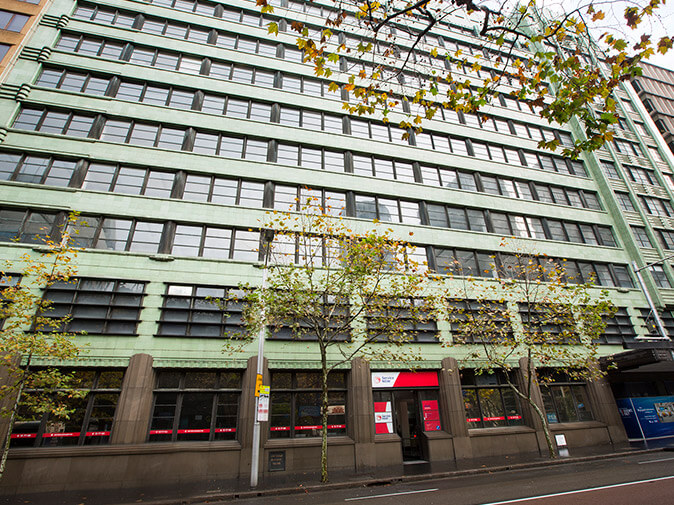 "Transport House is one of the most intact Art Deco buildings in Sydney,
and one of the earliest fully resolved Art Deco expressions in CBD
(along with ACA at King and York Streets). It is an important building
by prominent firm of H. E. Budden and Mackay, and was awarded a Sulman
Medal in 1935 and Royal Institute of British Architects Medal in 1939.
Substantial important intact office interiors survive. The building is
rare for its scale and extensive use of green terracotta facing,
considered the most impressive in Sydney. It is a major element in the
townscape of Wynyard Square precinct."
"Transport House is one of the most intact Art Deco buildings in Sydney,
and one of the earliest fully resolved Art Deco expressions in CBD
(along with ACA at King and York Streets). It is an important building
by prominent firm of H. E. Budden and Mackay, and was awarded a Sulman
Medal in 1935 and Royal Institute of British Architects Medal in 1939.
Substantial important intact office interiors survive. The building is
rare for its scale and extensive use of green terracotta facing,
considered the most impressive in Sydney. It is a major element in the
townscape of Wynyard Square precinct."
From Former Railway House (Part of Transport House), NSW Office of Environment and Heritage.
The new interior design is by the same architects of the
WeWork co-working space at Pyrmont in Sydney. From a
brief visit, this I thought was a little cluttered with too much industrial ornamentation, but still usable. It is a shame perhaps, the designers did not go for some 30s details with the Sydney Startup Hub: perhaps a comic book transport motif?
The design of such start-up hubs is of interest for more than budding entrepreneurs, as the same design is now being used for universities and businesses. With this approach there are a few dedicated offices and some meeting rooms. Most of the space is given over to open plan shared working areas with offices, with movable furniture and combined recreation presentation rooms with kitchens. Some may lament the loss of individual offices and dedicated presentation rooms, but few would be willing to pay the cost of these, either in terms of dollars per square metre, or loss of flexibility.
Bree Trevena from University of Melbourne wrote recently about Australian universities
becoming more integrated with the community by locating facilities in the city and providing services on campus for the community. One driver for this
Trevena did not mention was review. Start-up co-working spaces charge for desk-space by the day, week, month or year. It will be interesting to see if universities adopt the same approach. Companies are reducing the allocation of permanent offices and desks for staff, preferring staff to be out on site with customers. The same could be applied to students, who should not be sitting around at the university, but out in the community, in the field, or at work, learning. This would be particularly applicable for graduate students, where Australia needs to produce more Masters and Doctoral students with
practical professional skills for industry and fewer research academics.