Showing posts with label classroom design. Show all posts

Wednesday, November 5, 2025

Instapod for Education


 The excitement of EduTech Asia was getting a little overwhelming so I retreated to one of the six Instapods installed on the conference floor.  These each accommodate four people at a small meeting table. Not completely soundproof, they appear only single glazed, but workable. There are smaller and larger pods available.

Tuesday, September 5, 2023

Crisis in the Moot Court

Briefing in the ANU Moot Court.
Tom Worthington CC-BY 2023
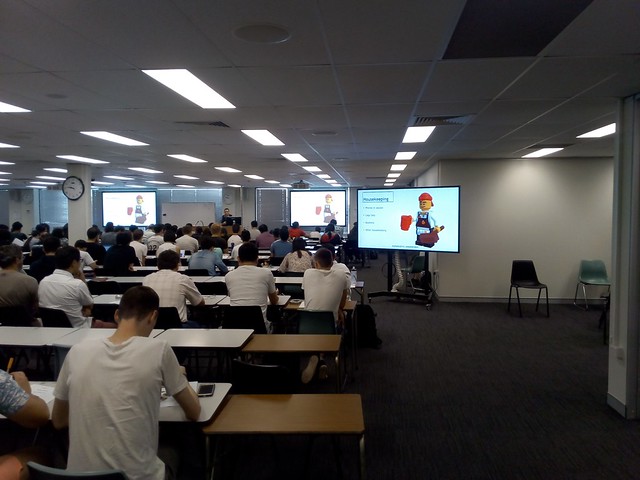
Greetings from the Australian Crisis Simulation Summit at in the Moot Court at the Australian National University in Canberra. A team of ANU students are running simulations of national security situations (with cyber-attacks, grey-zone & information warfare, plus natural disasters), for teams students across Australia to respond to in real time. I am mentoring some local teams, using my experience working at HQ ADF. 

The Moot Court turns out to be ideally suited to running such an exercise. The main room, which is set up like a mock courtroom is used for briefings, which are sent out via Zoom. The setup resembles the sort of government briefing rooms used for real briefings. The room has a folding wall which has been deployed, so one crisis team can work in half the room. Outside is an area used for breaks. Opposite are two small Harvard style tutorial rooms, being used for smaller mentor briefings, and team work. There is a glass walled kitchen at one side of the tutorial rooms, which the student team is using as their HQ. This way they can look out to see what is happening. 

The students are wearing black lanyards resembling those worn by public servants, adding to the authenticity. Some have earpieces and walkie-talkies, looking very James Bond. ;-)

ps: It easy to dismiss the simulation as just a training exercise, and the students as just students. But some of the students work in major government security agencies, and the mentors have experience in various government roles. The scenarios they have prepared are disturbingly close to current regional and world events. At the outbreak of the Falklands War the UK Royal Marines were conducting Mountain and Arctic Warfare training. The class and trainers were sent to the Falklands to put the training into immediate practice. Hopefully a crisis in the region will not require the ACSS participants to do the same.

Wednesday, February 24, 2021

Australian Universities Were Already Past The Online Tipping Point Before COVID-19

Vector Consulting report on a survey of Australian universities and TAFEs in "The Tipping Point for Digitisation of Education Campuses" (26 November 2020). The study was commissioned by telecommunications companies Cisco and Optus, so it is not surprisingly upbeat about the prospects for the digitization of post-secondary education. But this is a well researched study and, if anything, it is not as pro-Internet some. The study suggests there will still be campuses, with classrooms, but these will be fully integrated with online facilities for research and education.

I called the E-Learning Tipping Point in 2017, as respected Australian universities started offering credit towards degrees for online learning. The Vector Consulting report argues that campuses are changing due to COVID-19, with  fewer people, more "experiential", promotion of "health" and space for industry partners. However, this was happening long before. Universities were replacing lecture theaters with flat floor flexible internet equipped classrooms. There were new entertainment, sport and dining facilities installed. Students were studying more online than on campus. 

An example of this new campus is ANU's Kambri development, opened in 2019, with flexible classrooms, reconfigurable lecture theaters, bars, a gym and swimming pool. The nearby computing building opened a few years before has offices for the Defence Department collocated.

The strategy the report recommends is to first get a secure digital platform, then apply a digital first strategy, apply campus master planning and make use of industry partnerships. The timescale proposed is 18 months, but I suggest any university which is not already doing these things is unlikely to be still in business in 18 months time.

It would be unwise to over-invest in one overall digital platform, as resilience comes from having multiple platforms and layers. At the extreme, a university doesn't need any campus, or any digital, infrastructure of its own, being able to use whatever the staff and students carry around in their pockets. In practice there are likely to be new infrastructure needed as technology and requirements change. Even if many staff still have offices, they may not need telephones, or computers on their desks.

Sunday, February 21, 2021

Changing Role of the University Campus

Geoff Hanmer, Adjunct Professor of Architecture, University of Adelaide
Geoff Hanmer, Adjunct Professor of Architecture, University of Adelaide, has written a thoughtful two part series on the university campus. Professor Manmer argue sthat WWII was a turning point for universities, convincing governments, not just in the USA, to invest in big science on campuses. Post war new campuses were built on the fringes of Australian cities. Hanmer identifies a more recent trend of migration back to the city for universities. 

While interesting, I would have liked more on the post cold war era, the effect of changes in university enrollment as a factor and the Dawkins Revolution. New ideas of how students learn and changing our campuses, with the demise of the fixed tiered lecture theater, more flat floor high tech classrooms. Upscale accommodation, sport, and entertainment venues has made some campuses more like resorts, or malls, than centers of research and learning.

Also some of Australia's older universities are woven into the fabric of city centers, Oxbridge style. Adelaide has an interesting take on this, with the old stone Torrens Building, in the city center, rented out to multiple online universities to give them gravitas. 

Thursday, June 11, 2020

Revise Guidelines for Social Distancing in Lecture Theaters

This is to suggest revising guidelines for social distancing in lecture theaters, to allow for 50% normal capacity. ARINA WHP Architects issued "Physical considerations in the operation of a university campus to meet Step 3 COVID-19 guidelines" (Version 1. 01, 26 May 2020). ARINA point out that it is not feasible to implement social distancing in most stepped lecture theaters and recommend that video lectures continue. Also it is pointed out that flat floor spaces can be more easily reconfigured. However, I suggest that the fixed seating in lecture theaters might be used to advantage to meet social distancing requirements.

The Australia requirement for 4 square meters per person is a general one to lessen the spread of COVID-19. In a lecture theater, people are seated, in fixed locations, facing one direction, mostly not speaking. Students are not exerting themselves physically and present for less than an hour. As a result virus spread will be minimized. Social distancing could be maintained in this setting by leaving every second seat empty. Each person would have an empty seat on either side, in front and behind them. The result would be that a lecture theater would have half its normal capacity.

I suggest this should only be a short term measure. In the longer term, most stepped lecture theaters should be decommissioned, as there are few learning benefits for students from this mode of teaching. More flexible classroom formats, which require more space for each student so they can learn actively, should be built. As a byproduct, this will allow for social distancing.

It cannot be assumed that COVID-19 restrictions will end any time soon, and there will be future pandemics. Also the provision of social distance will reduce the incidence of local outbreaks of colds and flu, thus saving the institution from disruption and staff sick leave.

Also I suggest Australian universities be required to offer all courses online, as an option for all students, as a condition of government funding. Universities should be funded for, and required to have, all teaching staff qualified to teach, at least to the level of a Certificate IV (as TAFE teachers already are). There is no reason to prevent students studying online, if they wish to. If properly trained staff are used, this is equally effective as face to face teaching.

Tuesday, April 21, 2020

Adapting Classrooms to Reduce the Spread of COVID-19

It is time to plan a return to campus. Previously I suggested this could be gradual using blended learning. However, social distancing* will still be required. This will require changes to campuses and classrooms, similar to those now employed in stores. This requires a smaller number of people indoors, and kept further apart than is usual in classrooms and offices. One way to do that is to continue to schedule online classes, so the physical space can be rationed. Some minor changes to physical layouts may also be possible, and perhaps this could be a topic for the EduBuild Australia and Asia conference series.

Transparent Partitions in Classrooms


Some Saudi-Arabian universities use partition-rooms to separate female students from male teachers. The teacher is behind a glass wall,  and has a separate doorway to the outside of the building, so they are  never in physical contact with students. However, that would require extensive building work, for limited return.

A simpler measure would be the type of transparent plastic screens now installed at supermarket checkouts. These have been used not only in front of human cashiers, but between self-serve checkouts. The same could be done in lecture theaters, with a screen in front of the lectern.

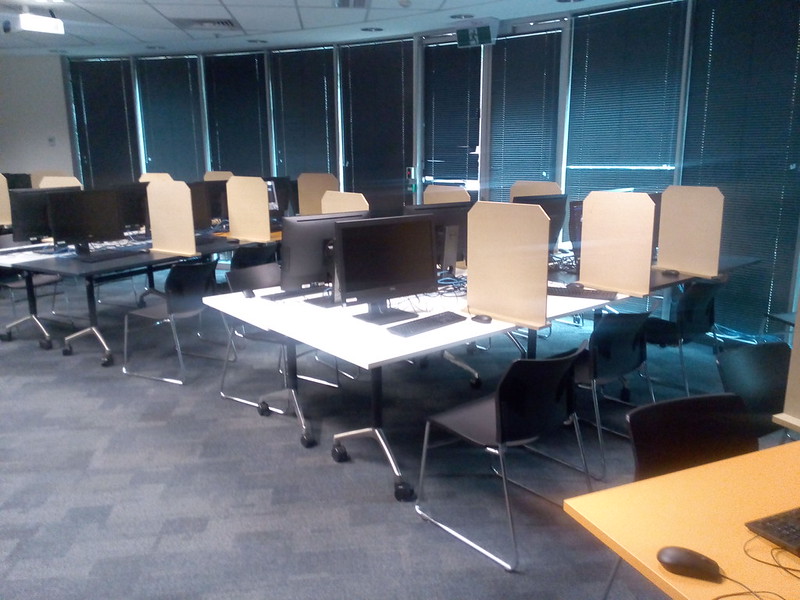
Room in the Computer Science and Information Technology Building, Australian National University, set up with temporary screens and computers for a computer based examination.  Screen design  by Bob Edwards. Photo by Tom Worthington
In laboratories, a screen could be placed between each student. Removable screens have already used in the Australian National University's computer labs for examinations. The difference would be that the new screens would be transparent.  It may be possible to design a screen which is partly transparent so it can server both purposes: part of the partition would be transparent, so the student could see the person next to them, and the instructor. But part would be opaque, louvers, lattice, or translucent, so the student could not see what was on others desktops and computers.

Online Educaiton Works


However, before investing in new measures to bring all students to campus, it needs to be kept in mind that distance education online is generally as effective as face to face instruction. There is a body of literature on this "No Significant Difference" phenomenon. So it should not be assumed that students education is being harmed.

School systems and universities already had online distance students, so had content, tools and techniques. The problem was to familiarize the teachers and students with these, and provide access. That is relatively simple, compared to rebuilding classrooms.

This is not to say online study is the same as face-to-face, and benefits everyone equally. Dr Cathy Stone from University of Newcastle has produced National Guidelines for Improving Student Outcomes in Online Learning.

My online students do as well online as as in their face to face courses. However, these are students who chose to study this way, using techniques developed to keep the students studying, with courses designed for this, and an instructor trained to teach this way.

The world is, in effect, conducting a large scale experiment, to see if students forced online, with teachers having only a small amount of training in this mode can produce comparable results. So far it is going well where I teach, but that is a very well resourced university, with a cadre of experienced online educators, and some of whom spent years preparing for this emergency.

Simplify Assessment


Perhaps the most useful thing which could be done right now is simplify the assessment system to try to counter the obsession which students, parents, and universities have with grades. Outside the education system, in the workplace, how well you did at school, or university, doesn't matter, as long as you passed. The vocational education system has long used an approach were students are assessed as "competent", or "not yet competent".


* ps:  While "social distancing" is the term in common use, I suggest "physical distancing" would be better, as we want people to be socially close, while physically isolated, for their own mental health, as well as to be as economically productive as possible.

Wednesday, August 28, 2019

Active Learning Classroom Designs

Thirty Seat Classroom at
Anteater Learning Pavilion.
Image by UC Irvine.
UC Irvine has an excellent video about their Anteater Learning Pavilion, built last year. They have a mix of room designs, the smaller having more movable furniture. The smallest rooms have tablet-arm chairs on casters, which can be moved by the students. The medium size rooms having tables on casters, but tethered by power and A/V cables to the floor. The largest room has seats fixed to the floor.


250 Seat Lecture Hall at
Anteater Learning Pavilion.
Image by
UC Irvine.

I like the smaller room designs. However, the 250 seat "Lecture Hall" looks to me an uncomfortable compromise between a conventional lecture theater and an active teaching space. I suggest two separate rooms would be better: one with a flat floor for active learning and one with stepped theater seating for conventional lectures. This would make better use of space, and each learning mode would be better accommodated.


The Australian National University went a step further, and built two separate buildings, one with theater seating for lectures (the Culture and Events Building), and one with flat floors for active learning (the Marie Reay Teaching Centre). Some of the lecture theatres in the Culture and Events Building also have retractable seating to provide very flat floor spaces. I have used the Marie Reay building for large student workshops.


Thursday, September 13, 2018

Bomb Proof Timber Buildings

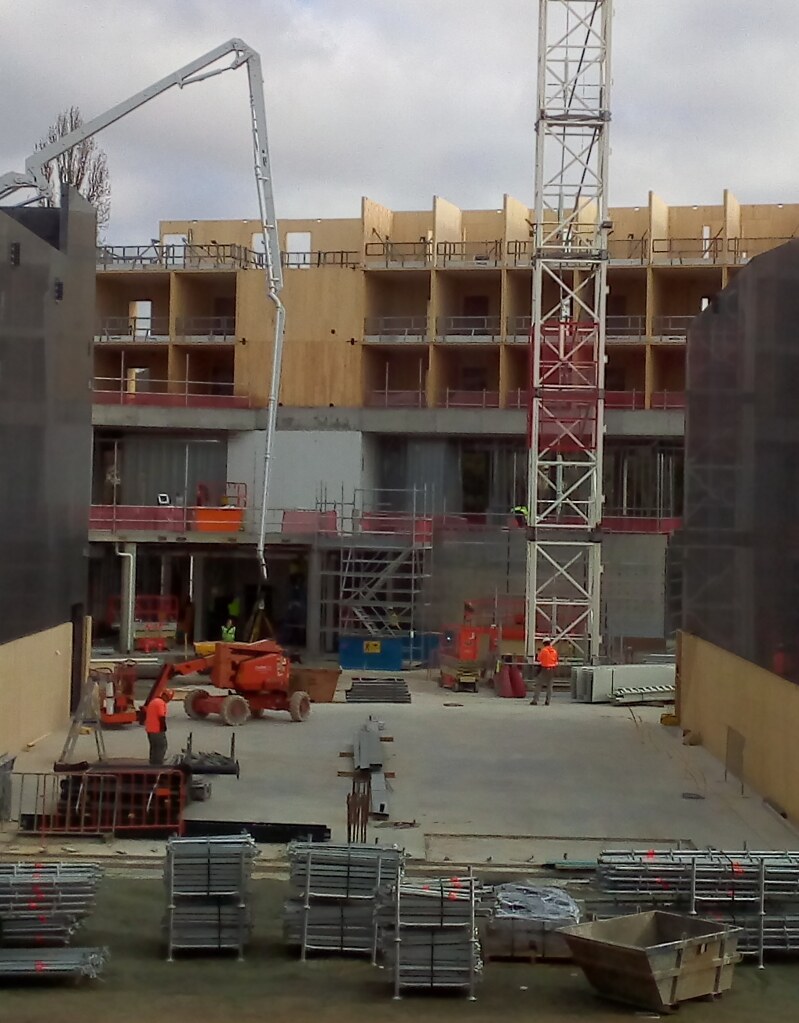
Greetings from the Mass Timber Building Seminar at the Australian National University. The new ANU teaching building is being constructed from timber, which is still unusual for large modern buildings. One aspect of this building technique which was pointed out by Andrew Smith from Lendlease DesignMake, is that it has been tested as bomb proof for the US Army.

What might have wider applicability is that Andrew suggested the use of a technique similar to that used by automobile manufacturers to produce a wide range of different cars from the same set of engineered components. With this a set of steel connectors and wooden panels would be used to quickly produce custom buildings. But perhaps from car making as an analogy, flat-pack furniture would be more applicable.

I asked Andrew if timber provided flexibility for a teaching building. He said that they settled on a 8 x 8 m module for the new ANU Flexible Teaching building would provide a good balance between flexibility and cost. The wood floor of the building is stiffened with wood ribs.

I was one of those who argued for eliminating conventional lecture theaters, but exactly what size or shape space might be best is still not yet clear. It is also likely this will change over time. Six years ago I looked at remodeling the ANU's Computer Science and Information Technology Building (CSIT) for flexible learning. However, this was difficult to do due to the placement of the columns in the building. These had been placed to suit the computer workstations in common use when it was built. The computers were long gone, being obsolete, but the concrete columns could not be moved.

Andrew Smith also emphasized "volumetrics". Buildings are mostly empty space and so it is not necessarily economic to build them in modules.  It is more efficient to assemble them from pre-cut panels and beams. The panels can then be "nested" for delivery: carefully laid out like a jigsaw puzzle to reduce wasted space. He pointed out that the panels must be smaller than the shipping containers they are transported in. However the panels are very strong and it occurred to me they might be stacked on a logistics platform.

Later speakers at the seminar will discuss how the Cross Laminated Timber (CLT) building panels are made (Sean Bull, XLAM) and how to prevent Mould & Fire (Andreas Luzzi, Laros Industries).

While the construction of large buildings from timber appears challenging,  Rohan George from Equatorial Launch Australia mentioned they were looking at it for their Arnhem Space Centre in the Northern Territory.


ps: I will be speaking on "Learning to use new  tech-infused teaching spaces" at EduBuild 2018 in Singapore, 9 October, 5:20pm.

Friday, August 31, 2018

Decreasing Campus Energy Use With Flexible Classrooms and e-Learning

I will be speaking on "Decreasing Campus Energy Use With Flexible Classrooms and e-Learning" at EduBuild 2018 in Singapore, 9 October, 5:20pm. This is a new part of the annual EduTech conference, focusing on classroom design and use.
  1. Energy use and Carbon Emissions
  2. New Flexible Classrooms
  3. E-learning
ps: The next day at EduBuild I will be taking part in a discussion of "Learning to use new  tech-infused teaching spaces".

Sunday, August 19, 2018

Quickly Constructing University Buildings from Timber

ANU Timber Student
Building Construction
A free half day seminar on how the Australian National University's newest student accommodation and teaching buildings are built in Canberra from timber, will be held 12:30 pm, 13 September 2018. This includes a guided walk to the building site.
"The Union Court Redevelopment project includes a 450 bed student accommodation and 7,000 m2 teaching building to be built using cross laminated timber (CLT) and glulam (GLT).
Mass Timber in the form of Cross Laminated Timber and Glulam has finally come to Canberra, with the recent redevelopment occurring within the campus of the Australian National University.
Lendlease DesignMake, the designer and fabricator of the engineered timber structures for this project will discuss the design and construction of this redevelopment. Other speakers will discuss mass timber use, CLT and fire rating of timber. The seminar will also include a guided walk to view the actual construction on the ANU site.
This half-day seminar is a must for all building and design professionals including architects, engineers, building designers, certifiers, developers, builders, regulators and educators. ...

Program

12.30pm Welcome
  • Welcome and WoodSolutions Update and Mass Timber - Andrew Dunn, TDA
  • Building’s use in Australia to date
12.45pm Union Court, ANU
  • Design and Construction of Union Court
  • Student Accommodation and Teachers Facility - Andrew Smith, DesignMake
  • Guide walk to building site - Andrew Smith, DesignMake
03.00pm Afternoon tea and coffee break
03.30pm Mass Timber Solutions
  • CLT Design and Fabrication insight - Sean Bull, XLAM
  • Mould & Fire = Destructive Forces & Solutions for Mass Timber - Andreas Luzzi, Laros Indust.
  • Calculating Timber Charring Rates and AS1720.4 Update - Andrew Dunn, TDA
05.00pm Finish"

From: "Mass Timber (CLT) Building Free WoodSolutions Seminar"

 ps: I will be speaking on "Learning to use new  tech-infused teaching spaces" at EduBuild 2018 in Singapore, 9 October, 5:20pm.

Wednesday, August 8, 2018

Learning to use new tech-infused teaching spaces

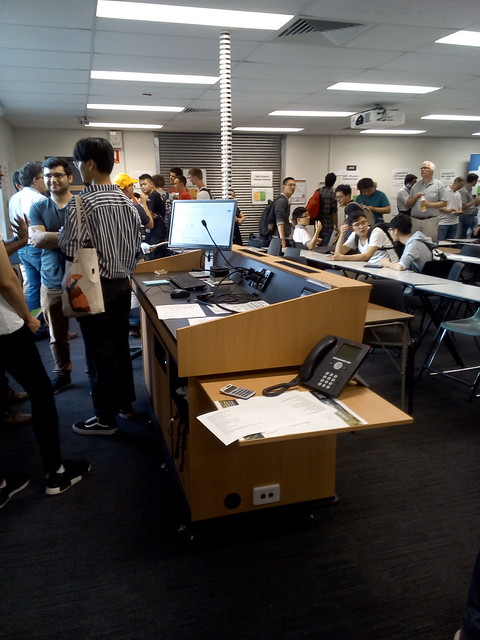
The control console for an Australian National University flat floor classroom.
ANU "TechLauncher"
in flat floor classroom.
I will be taking part in a discussion of "Learning to use new  tech-infused teaching spaces" at EduBuild 2018 in Singapore, 10 October, 11:10 am and 11:55 am. This is a new part of the annual EduTech conference, focusing on classroom design and use. For this I will relate my ANU experience.
"Teachers and students will need to learn to use new flexible classrooms.

This will require blending the physical spaces with online tools and techniques. Both staff and students will need to work together, with team teaching and group learning.
  1. How do we get teachers to use these new spaces for more than old fashioned "chalk and talk"
  2. How can physical spaces be integrated with flipped, blended and online courses?
  3. How can these spaces fostering student engagement?
  4. How do these spaces promote collaborative and peer learning?
  5. What curriculum changes are needed to promote effective use of new teaching spaces?
  6. Can the new teaching spaces also be innovation centers?
  7. Do teachers, and university academics, need new formal qualifications to teach in these spaces?"
ps: The day before at EduBuild I will be speaking on "Decreasing Campus Energy Use With Flexible Classrooms and e-Learning".

Tuesday, July 3, 2018

Learning to Use University Spaces

Dr Jacqueline Ashby
Libraries have become "learning centers" and university buildings have cafes and bright comfy furniture in common areas, but has how students and staff use informal spaces at universities for changed? In her 2013 PhD thesis Jacqueline Grace Pizzuti-Ashby examined the use of the Peter Jones Learning Centre at the at University of the Fraser Valley (UFV) in British Columbia (Pizzuti-Ashby, 2013). The Australian national University (ANU) is about to enter into a grand experiment in space use with multiple new buildings across the Canberra campus and may benefit from such research.

Pizzuti-Ashby looked at the effects the change of a typical university library into a "Learning Centre" had on use of the space. One observation was "... electrical outlets behaved like black holes attracting students and furniture to them ..." (Pizzuti-Ashby, p. 154, 2013). I found this surprising, as I had assumed studnets would be using mobile devices with high capacity batteries. But then I remembered hunting around the UBC Irving K Barber Learning Centre at UBC looking for a power point.

Another counter intuitive observation is "... students inclination to want to work around one another even in silent spaces" (Pizzuti-Ashby, p. 154, 2013). Of course keeping the noise down has been an age old problem for librarians, although it seems to be the noisiest people in a modem university library are the librarians. ;-)

One interesting finding was gender preferences in learning spaces. It may be that the physical design of such spaces is turning female students away (Pizzuti-Ashby, p. 162, 2013):
"It was observed during this study that gender may also influence the type of learning space desired. This study found that males utilized learning space primarily designed for individual use. These areas also were noted for their fixed furnishings, access to windows and natural light, and elevation and views of the surrounding campus milieu. Females were observed utilizing areas of the PJLC that were supportive of social and collaborative learning activities. These spaces were also described as providing a flexible furniture arrangement, accommodating for both individual and group study. Investigating the factors that influence male and female students in their selection and usage of learning environments is an area worthy of further inquiry."
New ANU Maths &
Computer Science Building
The Australian National University is opening its new Mathematics and Computer Science building today. In addition to accommodating the ANU Mathematical Sciences Institute (MSI) and Research School of Computer Science, there is also and area for staff of the Australian Signals Directorate (ASD). One way the building design aims for collaboration is by having shared kitchens in a common area between wings adjacent to the stairs. Those going up and down stairs and into the wings will see whoever is getting a coffee and sitting in the common area. Another feature which attracted comment from the media is that as well as high-tech flat screen displays, the building has old fashioned chalkboards for the mathematicians. It will be interesting to see if these features encourage collaboration and perhaps may be worthy of a space use study similar to that of Pizzuti-Ashby.

The old ANU Computer Science and Information Technology Building has  an interesting approach to collaboration. One wing of the building was designed for the CSIRO IT researchers and the other for ANU. The architect intended a shared common room between the two wings. However, government rules required the CSIRO staff to have their own staff room. So two mirror image rooms were built side by side, each with a kitchen and with doors marked for ANU and CSIRO staff. However, the wall between the two rooms was omitted, creating one large shared space. For decades two doors side by side were marked for ANU and CSIRO staff, but entering into the same room. Recently the doors were more usefully relabeled "In" and "Out".

Reference


Pizzuti-Ashby, J. G. (2013). Designing for the future: a post-occupancy evaluation of the Peter Jones Learning Centre (Doctoral dissertation, Education: Faculty of Education). URL http://summit.sfu.ca/system/files/iritems1/12772/etd7785_JPizzuti-Ashby.pdf

Thursday, May 24, 2018

Improving Teaching and Learning at ANU

ANU has released " A Vision for Teaching and Learning at The Australian National University" prepared by consultant Diane Joseph (2017). This recommends consulting the University community on a Teaching and Learning Strategy. Teaching development and building programs were two areas to be explored.

The draft Vision for Teaching and Learning at the ANU is (p. 3):
"Our students are future ready, capable of solving problems not yet imagined to improve their lives, the lives of others and their communities."
 This is covered by four pillars (p. 4):
  1. "Determined Students
  2. Inspiring Academics 
  3. An Enriching Environment
  4. A Connected Community
  5. High quality teaching and learning is underpinned by the ANU values"
The interesting question then is how to achieve these. There are nineteen recommendations of the report (p. 4), including:
"... 4.1 Identify, encourage and support lead practitioners to model and share effective collaborative learning pedagogies in the CLE Building ...
5.1 Develop a Teaching and Learning Strategy ...
6.1 Support and encourage distinctive approaches to education, including technology-enhanced learning ...
7.1 Develop a Teaching Professional Development and Resourcing Plan ...
8.1 Identify requirements for potential building programs to enable the Vision for Teaching and Learning ..."

Suggestions for the ANU Teaching and Learning Vision


As a member of the ANU community (former student, donor and honorary lecturer) with an interest in teaching, I have six suggestions for advancing the vision:
  1. Increase teaching effectiveness with good course design
  2. Increase student engagement with real-world challenges
  3. Teach university academics to teach
  4. Give teaching staff a modern student experience
  5. Personalize the student experience without reducing the student to staff ratio
  6. Prove flexible new buildings and adapt old ones 
In detail:

1. Increase teaching effectiveness with good course design

Teaching effectiveness can be increased by designing courses and programs using project design techniques. First consult the prospective employers as to what skills and knowledge graduates will require. Then translate those requirements into learning objectives.  Design assessment to test for those objectives. Lastly provide educational materials and learning activities to prepare students for the assessment tasks. The time of the staff and students need to be carefully budgeted to achieve the required assessment results.

An example of this top-down design is the course "ICT Sustainability", offered as COMP7310 by ANU and COMP635 by Athabasca University, Canada. This is designed around the Skills Framework for the Information Age (SFIA), used for international accreditation of computer professionals. The SFIA skills are mapped to learning objectives in the course, with major assignments for each objective. There are small weekly exercises to help students build the skills and knowledge needed for the assignments.

The time needed for students to undertake readings, videos, quizzes and discussion activities where estimated for ICT Sustainability and budgeted to fit in the available study time. This included an estimate of the words in readings multiplied by the average reading time of a graduate student (from published research). The time needed for the instructor to run the course and conduct assessment was also budgeted. In this course lectures are not used and the weekly work is by automated quizzes and peer assessment, to free up the teacher's time to help students.

2. Increase student engagement with real-world challenges

Student engagement can be increased by providing real-world problems for students to solve and authentic assessment (not end of term examinations). Every task we ask students to undertake can be mapped to the problem solving exercises they will have to undertake. To keep students on task, learning skills and knowledge for this challenge, they can be given frequent small assessment tasks with rapid feedback.

The students in ANU TechLauncher have to work in teams building an engineering or software solution for a real client. Students are evaluated on their teamwork and problem solving by their peers, the tutors and the client.
Students also have the option of working on a start-up in the Innovation ACT competition. This approach has been utilized at other universities, such as UBC Electrical and Computer Engineering, with their "New Venture Design" course (APSC 486).

3. Teach University Academics to Teach

Those teaching at university need to know how to teach. However, university academics are reluctant to enroll in conventional classroom based training courses. The same approaches used to improve student engagement can be applied to staff: providing real-world problems to solve in the workplace, with authentic assessment.

Education for staff can be conducted using the techniques the institution aims to use for students. In particular learning should be primarily on-line, supplemented with blended and flipped classes in flat floor classrooms. Group activities, capstone projects and e-portfolios should be used for learning and assessment. There should be a minimum of lectures and no paper based examinations.

Short courses and online tips can be provided (ACU have some good ones). However, as with school and  vocational teachers, those teaching at universities would benefit from having formal qualifications in education. The aim should be to have junior teaching staff with an AQF Level 8 Graduate Certificate in education (or a Certificate IV in training for those who also teach in the VET sector), mid-level academics a Diploma of Education (or Graduate Diploma), and senior academics a Bachelor Degree or Masters Degree of Education (Coursework).

Staff should also be encouraged to join learned societies, such as HEA and HERDSA, as a supplement to formal qualifications in education.

4. Give Teaching Staff a Modern Student Experience

Local workplaces should provide support and encouragement for staff to undertake study for educational qualifications. In particular staff need to do "Dog-Fooding": experience what it is like to be a university student in the modern environment, so they have an understanding of the pressures imposed on their students. Staff on education courses should be encouraged to undertake projects for their studies in the workplace and to immediately apply what they have learned in their teaching. It should be noted that academics who supervise research students are also engaged in education.

5. Personalize the student experience without reducing the student to staff ratio

The student to staff ratio is unrelated to the quality of learning. High quality education can be provided with large classes, if the learning is well designed by qualified educators using proven techniques. Providing realistic tasks for students to undertake in groups, with the use of peer feedback and assessment, supported by automated tools helps.

6. Prove Flexible New Buildings and Adapt Old Ones

Interactive group learning requires new classrooms. Tiered lectures theaters are unsuitable for interactive group activities. Large rooms with flat floors, and preferably with furniture on wheels, are required. These can be new built, or adoptions of existing buildings.

Multipurpose Auditorium at Fitzwilliam College Cambridge
An example of such a facility is the Auditorium at Fitzwilliam College Cambridge (UK). Electrically operated, retractable tiered searing allows rooms to be used for flat floor teaching and, and at the push of a button, convert to a lecture theater. This design is now being implemented for the ANU Kambri Development.

A flat floor large classroom at ANU, with large mobile LCD screens used to relay presentation to the back of the room.
 However, the new teaching spaces will require staff to be trained in new teaching techniques, including the on-line elements which support the classroom experience. Also this may require some minor items of equipment.

Experience with the existing temporary large flat floor classrooms at ANU shows that a room with 300 students working in groups is feasible, but requires good teaching team coordination. Some of the equipment can be low tech, such as a whistle to get student's attention when they were deep in discussion.

Australian Department of Foreign Affairs Diplomatic Academy
The recently opened Foreign Affairs Diplomatic Academy  shows that an exiting office building can be converted to attractive flexible flat floor classrooms. The Academy's impressive new premises have large rooms which can be divided for smaller classes.

See also:

  1. A Green Computing Professional Education Course Online, 2012
  2. Digital Teaching In Higher Education (e-book), 2017.
  3. Educating the Future Workforce, Submission  to the Senate Select Committee on the Future of Work and Workers, 2018.
  4. Education for Sustainable Development, Submission to the Senate Foreign Affairs, Defence and Trade Committee on the United Nations Sustainable Development Goals (SDG), March 2018.

Monday, March 12, 2018

Decreasing Campus Energy Use With Flexible Classrooms and e-Learning

The Australian National University is preparing an Energy Master Plan. The aim is "... to create an Australian world class energy efficient, low-carbon, least-cost campus ...". One target in the existing ANU Environmental Management Plan 2017-2021 is to "Reduce energy use per person by 20 per cent by 2021". New forms of education can help, by using the buildings more efficiently and moving some education online. I suggest these techniques can be used to reduce energy use per person. In particular, teaching staff can be trained to teach in flexible and online mods. Also, a system can be used for students to book a seat.

Use Classrooms More Intensively


One way to reduce energy use per person is by increasing the intensity of use of the buildings. Empty rooms use almost as much energy as full ones, so the more use of each room in each building, the lower per person energy use.

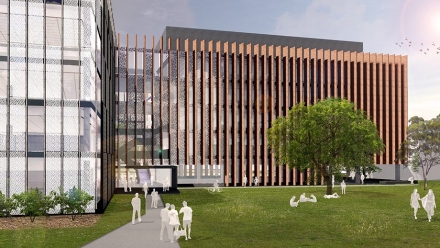
ANU Union Court Redevelopment
New ANU Buildings
(artists' impression).
One way to increase the use of classrooms is to make them more flexible. The ANU Union Court redevelopment is a prime example of this. Two new buildings will allow forms of education beyond conventional lectures and tutorials.

ANU Culture and Events Building
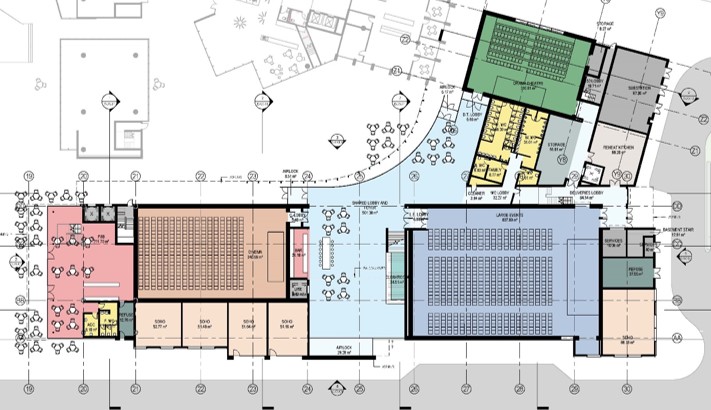
The ANU Culture and Events Building will have rooms with retractable seating. At the press of a button, the room can be changed from a flat floor for a conference, to theater format, with tiered seating for a lecture.

ANU Collaborative Learning Building
The ANU Collaborative Learning Building will have flat floor rooms with movable furniture and walls. This enables the same space to be used for different size and format classes. Walls can be folded back for a large class or moved in form more smaller ones. Desks can be in straight rows for a more conventional eyes-front classroom, or in circles for a more collaborative approach.

Flat floor classrooms are conventionally used for small groups of up to a few dozen students. However, with technology and new teaching techniques, such rooms can accommodate hundreds of students. 

Training to help make use of classrooms


A flat floor large classroom at ANU, with large mobile LCD screens used to relay presentation to the back of the room.Training can help make flexible classrooms more efficient, in terms of teaching and energy use. Academics familiar only with conventional lectures and tutorials will tend to use the new flexible teaching spaces only for old fixed teaching formats. To use the rooms flexibly requires the staff to be training in flexible formats.

As an example, an instructor used to conventional lecture driven teaching will find the idea of hundreds of students in a room working in teams a recipe for chaos. The instructor needs to be taken through the theory and practice of how this works, and ideally act as an assistant in such a class before being required to be the lead instructor.

 The ANU TechLauncher events for Team Formation and Bootcamp run in the ANU's large flat floor teaching rooms, at 7-11 Barry Drive, have demonstrated that group exercises with 300 students can work. By introducing academics to these techniques, they will be more confident to use them in courses.

Use e-Learning to Supplement Campus


E-learning can also be used to increase the intensity of campus use. Most courses at Australian universities are now, to some extent, "blended", with part of the tuition on-line. However, to make the best use of the technology course designers and instructors need to be trained in on-line techniques.

Academics who have only training and experience in face-to-face lectures and tutorials will tend to continue to rely on those techniques and be reluctant to try e-learning. There will be concern the students will not do the work, or will cheat, which can be the case if materials are not well designed and trained staff are not available to run on-line courses.

As an example, the ANU course COMP7310 "ICT Sustainability" is run entirely on-line, with no lectures and no examinations. This course runs alongside ANU's face-to-face courses, with the same status and meeting the same quality standards. However, design of this award winning course required the assistance of specialist e-leaning professionals. It also helped to have undertaken graduate education training at ANU and other institutions, focused on in e-learning.


With the appropriate level of training it is feasible to aim for the typical university program to be a 20/80 blend: 20% in a formal classroom setting and 80% on-line outside the classroom. An example of this approach is the ANU Techlauncher program, where students undertake a group project building software for a real client, in government or industry. Students are expected to undertake 10 hours of study per week, but are only required to attend a 2 hour formal session in a typical week.

Ideally students should be on campus no more than the equivalent of one day a week. Students should be out in the real world learning and practicing their skills.

Double University Per Person Intensity of Use


Less than half of students attend a typical university class. A survey at ANU found "... attendance declines over semester to around 30% of original signup ...". This is not confined to ANU and is not a new feature of universities. However, universities still tend to allocate teaching space based on the number of students enrolled in the class at the beginning of semester. As a result the classrooms tend to be less than half full after the first few weeks. This is a waste of space and also a waste of energy needed to maintain these spaces.

One way to engage students, and thus attract them to class, is with group activities, as is done with ANU Techlauncher. This ensures almost full attendance at interactive group activities. Blends of on-line and face to face activities (so called flipped classrooms) can keep students coming to class. However, not all students need to attend every class and many classes will have one third to one half attendance. This can be incorporated into space use planning.

Students can be given the opportunity to book a seat in class a few days in advance. Classrooms can then be allocated, making use of different size rooms and flexible walls and formats, to suit. A reasonable aim would be to double the intensity of use of classrooms, thus halving the per person energy use.

Reduce Staff Campus Use

Persons use of the campus includes staff as well as students. Most teaching undertaken at a university is not by full time, permanent academics, but by graduate students and part time staff from industry. E-learning is a particularly useful way to make use of part time staff skills. Industry professionals can teach students without having to leave their workplace. Researchers in the field can teach students. However, this will require the staff to be trained in techniques for e-learning. The ideal way to conduct this training is on-line.

More on:
  1. Classroom design 
  2. Digital Teaching 

Sunday, February 25, 2018

ANU Project Bootcamp with Lego and User Centered Process

Students taking part in a  Lego Serious Play exercise at the Australian National University in Canberra
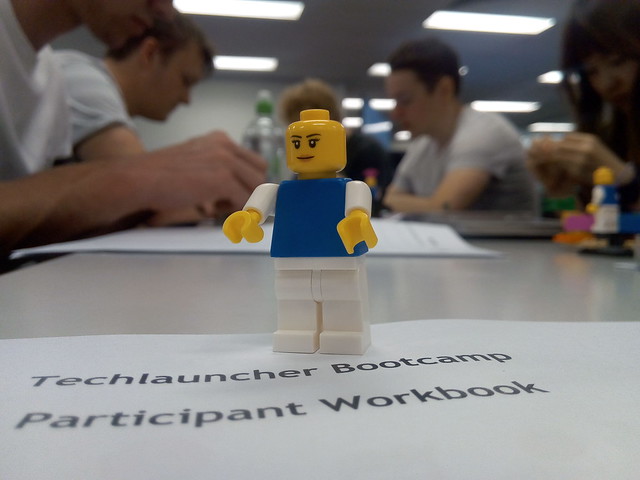
On Saturday I participated in the TechLauncher "Bootcamp" at the Australian National University in Canberra. There were about three hundred students who had been formed into about fifty teams of six students each, after Thursday night's team formation exercise. Each team has a tutor and a client, plus there as some mentors to help teams in areas such as social enterprises.

Dr Stephen Dann taking students through a Lego Serious Play exercise at the Australian National University in Canberra
The students went through a series of group exercises:
Dr Stephen Dann took the students Lego Serious Play in the morning and Dr Craig Davis on User Centered Process in the afternoon. The idea is to get the students thinking as a team (not individuals) and thinking about what will be useful for the client and their users (not what the team wants to build).

Students doing a Lego Serious Play exercise at the Australian National University in CanberraThis all took place in the same large flat floor classroom as the previous exercise. One limitation of the room is that the small single person tables are arranged in straight rows. An enterprising team of students at the back rearranged their tables in to circle for better group-work. To rearrange all the tables for group work would take considerable effort, as they don't have wheels.

I have previously been a student in one of Dr Dann's Lego exercises (and recommended it for TechLauncher). It takes a little while (and some faith) to accept that this is a serious educational activity, not just playing with bricks. The students were asked to build something to represent the project and their role in it, after each build describing it and answering questions from other students.

Dr Davis took the students through exercises to verify the product to be produced would be valued by the customer. This is a small part of what is usually a much longer workshop series (which I have been a student of). There is a version of this for researchers being run from March. The exercise where team members have to get up and interview members of other teams was a little hampered by the limited space between desks. 

Apart from the limitation of non-groups desks, the flat floor large room worked well. I moved my teaching on-line in 2009. With flexible facilities becoming available for flipped/blended learning, it may be time to go back to the classroom.

Thursday, February 22, 2018

Team Formation Exercise in ANU Large Flat Floor Classroom

A flat floor large classroom at ANU, with large mobile LCD screens used to relay presentation to the back of the room.
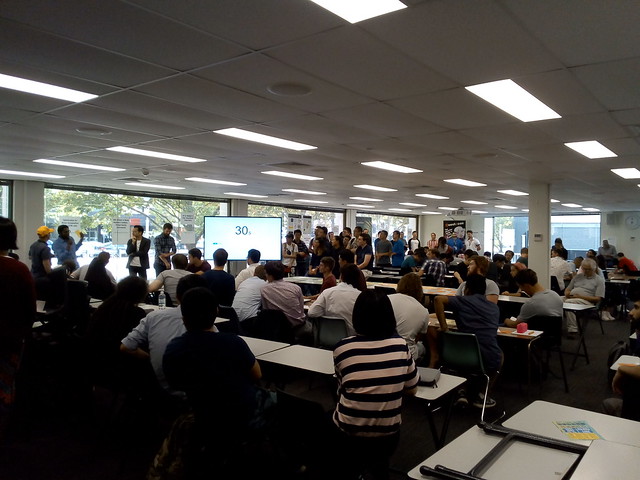
Greetings from the TechLauncher Team Formation event at the Australian National University in Canberra. There are more than three hundred students hearing 30 second pitches from potential clients. The students then select the project they prefer and form a team. They have a year to build what the client wants, which is usually software, but could be engineering hardware. 

The room used in not on campus, as the
The control console for an Australian National University flat floor classroom.ANU Collaborative Learning (CLE) Building is still under construction. The university has leased space in an office building across the road from the campus. Without the usual internal office walls, the ground floor provides a large flat floor classroom. There is a standard lectern, with audio-visual controls at one end of the room. However, rather than being built in, this is on wheels and has an umbilical to the ceiling.

The "front" wall has power operated retractable screens for three ceiling mounted video projectors. There is also a small white-board on wheels. There are small fold up desks, one for each student, along with a lightweight plastic chair. The desks are in rows with two isles. 

To one side there is a recess for storing large LCD displays on wheels. These units do not appear to be as smart as Queensland University of Technology's MOCOWS (Mobile Computers on Wheels), using 84 inch entry level LCD panels (Panasonic Model TH-84EF1U). There are power sockets around the walls for the LCD screens, which show the same display as the front projectors. The screens could be used for group work, with students using their own laptop and standing around, or  the desks and chairs rearranged to suit. However today there are only two units deployed half way down the room, on each side, to relay what is on the main screens.

This is a temporary set-up, but looks reasonably usable. It is a little untidy, as there are no storage cabinets for equipment. However, this provides a similar atmosphere to the typical startup innovation hub, suited to student project work. One problem is that the standard height office ceiling is a little low for such a large space making.

The room is almost square, as is usual for TEAL style rooms. For the pitch exercise, the clients are spaced around the walls, each standing in front of the sign-up sheet for their project. One instructor (wearing a bright yellow baseball cap, so they can be seen) is going around the room with a wireless microphone, so each client can pitch. Another instructor is at the lectern controlling the timer. Several other instructors are roving the room, dealing with problems and queries.

The room is not silent: there is a low murmur of conversation (the floor is carpeted, but the ceiling could perhaps do with more sound absorption than standard ceiling tiles provide). The sound system is working well, but as with any flat floor large room, it is not easy to see the presenter. Perhaps there should be a roving video camera relaying the presenter to the screens around the room.

The desks are lightweight and are easily moved. However, these desks appear intended for examinations, with one student per desk. Larger desks with wheels (for six to nine people each) would be be better for collaborative work.

One good feature of the room is that it is lacking in unnecessary technical gimmicks. The control console is the same as in ANU lecture theaters, so instructors are familiar with its operation. The LCD displays are not built in, so the controls and sockets are easily accessible. Apart from the umbilical for the console and four slim columns, there is nothing to obstruct vision. All the power points are around the walls, so there are no boxes in the floor to trip over.

Sunday, December 10, 2017

Sydney Startup Hub: Model for the University of the Future?

On Friday I attended the last Friday Night Pitches at the Fishburners co-working space in Ulitmo in Sydney, before they move to a new location in the Sydney CBD. Fishburners is currently located in an old warehouse with timer beams on the ceiling in the Industrial/New York loft style adopted by start-ups around the world. Fishburners is moving to the NSW Government sponsored "Sydney Startup Hub" along with the Stone & Chalk Fintech Hub and other incubators and accelerators. They are offering free trials and discounts on the new location. It will be interesting to see how the new, more corporate atmosphere effect
s the start-ups.

Sydney Startup Hub cafe artist impression
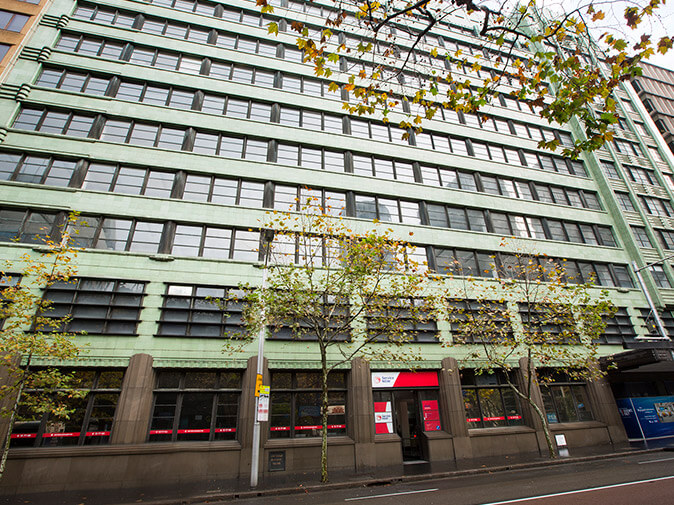
The new fit-out is by interior architects TomMarkHenry and from the artist's renderings looks open and comfortable. This is a more modern building, but not new (which is a good thing). It appears to be "Transport House" built in the Art Deco style in the 1930s:
"Transport House is one of the most intact Art Deco buildings in Sydney, and one of the earliest fully resolved Art Deco expressions in CBD (along with ACA at King and York Streets). It is an important building by prominent firm of H. E. Budden and Mackay, and was awarded a Sulman Medal in 1935 and Royal Institute of British Architects Medal in 1939. Substantial important intact office interiors survive. The building is rare for its scale and extensive use of green terracotta facing, considered the most impressive in Sydney. It is a major element in the townscape of Wynyard Square precinct."

From Former Railway House (Part of Transport House), NSW Office of Environment and Heritage.


The new interior design is by the same architects of the WeWork co-working space at Pyrmont in Sydney. From a brief visit, this I thought was a little cluttered with too much industrial ornamentation, but still usable. It is a shame perhaps, the designers did not go for some 30s details with the Sydney Startup Hub: perhaps a comic book transport motif?

The design of such start-up hubs is of interest for more than budding entrepreneurs,  as the same design is now being used for universities and businesses. With this approach there are a few dedicated offices and some meeting rooms. Most of the space is given over to open plan shared working areas with offices, with movable furniture and combined recreation presentation rooms with kitchens. Some may lament the loss of individual offices and dedicated presentation rooms, but few would be willing to pay the cost of these, either in terms of dollars per square metre, or loss of flexibility.

from University of Melbourne wrote recently about Australian universities becoming more integrated with the community by locating facilities in the city and providing services on campus for the community. One driver for this Trevena did not mention was review. Start-up co-working spaces charge for desk-space by the day, week, month or year. It will be interesting to see if universities adopt the same approach. Companies are reducing the allocation of permanent offices and desks for staff, preferring staff to be out on site with customers. The same could be applied to students, who should not be sitting around at the university, but out in the community, in the field, or at work, learning. This would be particularly applicable for graduate students, where Australia needs to produce more Masters and Doctoral students with practical professional skills for industry and fewer research academics.

Thursday, December 7, 2017

Reframing Teaching to Use Flexible Classrooms

Last Monday I attended "Work Integrated Learning - a disciplined approach" at University of Canberra. This was based on a recent paper by Ruge and McCormack (2017) on constructive alignment of the assessment for a course at University of Canberra. Two recent case studies in EduCause point to the need for new classroom designs, plus course design and the training of staff in how to do this (Morrone, Flaming,  Birdwell, Russell, Roman & Jesse, 2017).
ANU Union Court Redevelopment
New ANU Buildings
(artists' impression).

Universities are building new flexible learning classrooms (such as in the new teaching building at ANU). These typically have a flat floor, and tables for small student groups, with display screens on all walls. However, to effectively use these spaces course redesign and teaching staff training is required. There is no point in moving out of lecture theaters if the "lecturer" gives hour long non-interactive monologues in the new "flexible" room. There is no point in putting the students in groups and link them with tech, if the primary assessment is an end of semester individual paper based examination.

The "lecturer" needs to be trained how to teach without lecturing and the assessment redesigned to use group and project based work. New classrooms can then be used effectively and the learning aligned to vocational requirements beyond the classroom. For more on this, see my free e-book "Digital Teaching"

References

Morrone, A., Flaming, A., Birdwell, T., Russell, J., Roman, T., & Jesse, M. (2017, December 4) Creating Active Learning Classrooms Is Not Enough: Lessons from Two Case Studies, EduCause. URL https://er.educause.edu/articles/2017/12/creating-active-learning-classrooms-is-not-enough-lessons-from-two-case-studies

Ruge, G., & McCormack, C. (2017). Building and construction students’ skills development for employability–reframing assessment for learning in discipline-specific contexts. Architectural Engineering and Design Management, 1-19. http://www.tandfonline.com/doi/abs/10.1080/17452007.2017.1328351

Tuesday, May 9, 2017

Future of Teaching and learning at ANU

ANU Union Court Redevelopment
New ANU Buildings
(artists' impression).
Greetings from the Australian National University (ANU) in Canberra where Professor Marnie Hughes-Warrington is speaking on the Teaching and learning futures at ANU. This is one of a series of talks about the new Union Court Development. There are also Union Court podcasts. Three of the new buildings will include teaching facilities. There will be a student services building, teaching and cultural events building (with large theaters).

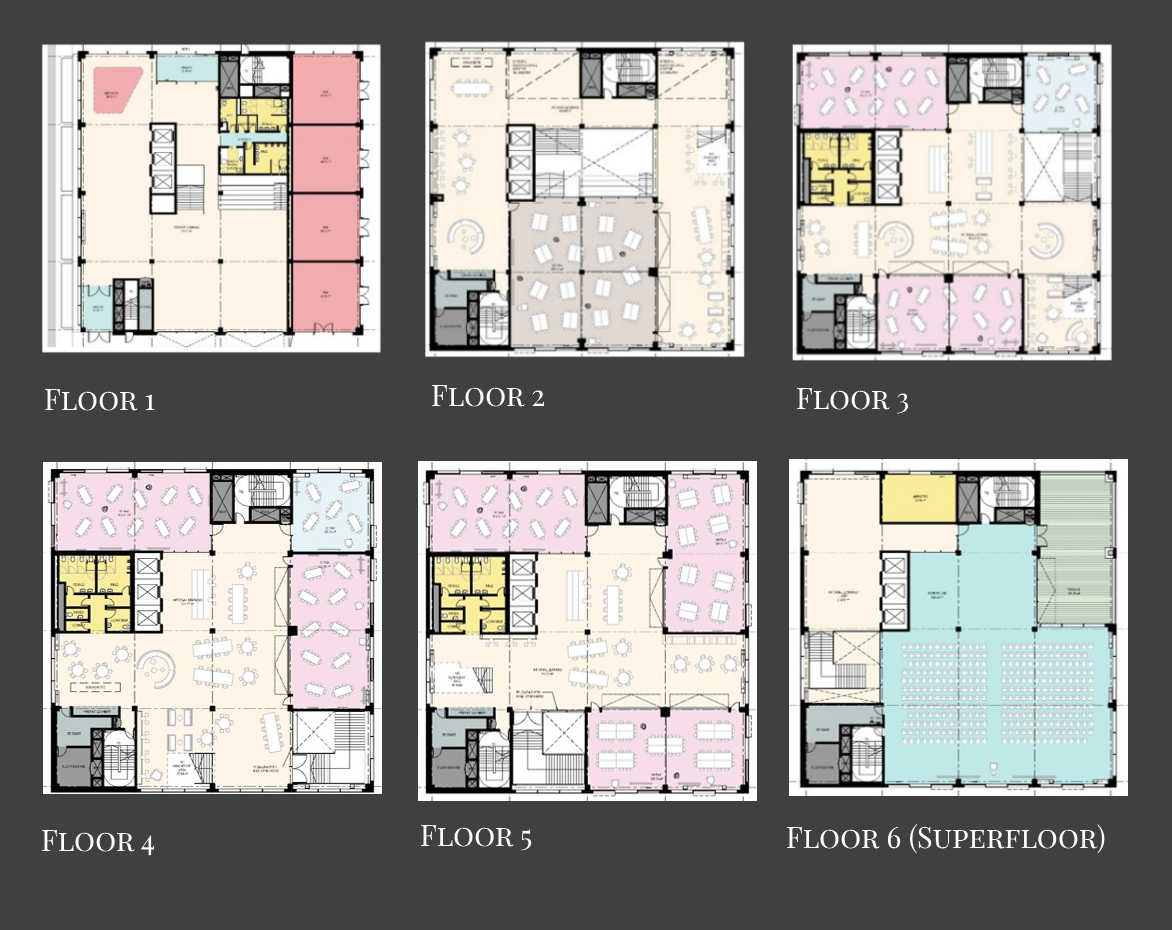
The teaching building will have 60% formal learning spaces and 40% informal. Rooms are designed for 30, 60, 90 and 120 students (some rooms have movable walls). There will be translucent glass panels to provide privacy with light. The top floor will have a "super-floor" suitable for 320 students in cabaret style.

For the last ten years I have been looking at suitable teaching space design and for three years learning about teaching styles to suit these spaces. I will be presenting on this in "Dogfooding: Learning About Teaching by Being an On-line Student", at ANU, 1pm, 15 May 2017.
The culture and event building will have a flexible space with movable 200 and 512 seat tiered lecture theaters. This is intended to be used for sports and examinations with the seating retracted. I have been to conferences in similar spaces in Hong Kong and Cambridge. There will also be 150 and 300 fixed seat theaters for performances and lectures.
While the new buildings are being built there will be a need for temporary facilities. I have suggested rather than finding large temporary lecture theaters instead change to flipped teaching in flat floor rooms. Apart from being easier to find flat floor spaces this will improve the teaching.
One interesting aspect is that Professor Hughes-Warrington pointed out the new teaching building will be constructed from cross-laminated timber rather than concrete and steel. She suggested this will improve the WiFi signals, but I suspect the cabling in the building will still limit transmission.
"The university landscape is rapidly transforming, driven by societal and technological change on a global and local level. These changes provide us with an opportunity to ensure that we are providing an enriched and valuable learning experience here at ANU.
The revitalised Union Court precinct ANU is building will feature some of the country’s most advanced collaborative learning environments.
This forum will discuss the opportunities these spaces provide for teaching at ANU and the wide range of teaching possibilities our spaces will accommodate, including didactic lectures, tutorials, seminars, flipped classrooms and more."