Showing posts with label flipped classroom. Show all posts

Wednesday, November 18, 2020

Blend and Flip for Teaching Communication Skills to Final Year International Computer Science Students


Bright lights of Yogyakarta at TALE2019

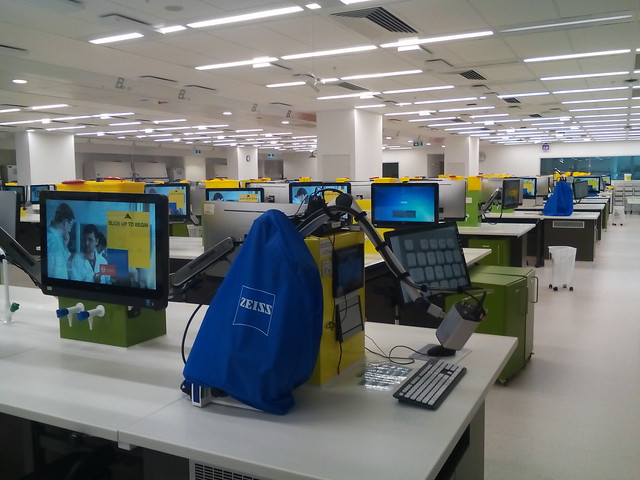
My paper "Blend and Flip for Teaching Communication Skills to Final Year International Computer Science Students" has just been published from TALE 2019 (Yogyakarta). This was presented at a conference in Jogjakarta last year, but I guess COVID-19 held publishing up. In this I describe using a "chunky" approach to blended learning. The notes for the presentation are also available.

Abstract: In addition to technical knowledge, graduates in computing and engineering disciplines are expected to have communication skills, and the ability to undertake lifelong learning. These skills are difficult to acquire using conventional lecture and tutorial based teaching. Final year international graduate computer science students at the Australian National University, College of Engineering and Computer Science, were found to have particular difficulty when asked to write about their learning. In response, lectures were replaced with online exercises, group workshops in a new purpose-built flat floor classroom, and peer-assessed progressive assessment. This approach was trialed with eighty students in 2019. Preliminary results indicate students performed at least as well as with conventional lecture-based instruction.

What I did not mention in the paper, but turned out very useful, was that in 2018 I had designed this to allow rapid conversion from blended to pure online mode, if students were unable to get to campus (which I identified as an issue in 2016). So when COVID-19 struck in early 2020, it was only necessary to replace the face-to-face workshops with video conferences. Everything else, including assessment, was already online and so needed no changes. 

The difficult question will be what to do when some students return to campus. It would be possible to again offer face to face workshops. However, not all the students are ever going to return to campus, so should they be able to participate in hybrid or parallel modes? That is, should the face to face class be linked online to the remote students, or a separate class run for the online students?

In the past I assumed that the hybrid mode would disadvantage the remote students. However, this week I attended a face to face class where the instructor kept apologizing because their materials and presentation technique were for online delivery. It may be the students in the room who are disadvantaged.

Reference

Worthington, T. (2019, December). Blend and Flip for Teaching Communication Skills to Final Year International Computer Science Students. In 2019 IEEE International Conference on Engineering, Technology and Education (TALE) (pp. 1-5). IEEE. https://doi.org/10.1109/TALE48000.2019.9225921

Wednesday, September 9, 2020

Replace Old Lecture Theatres with Energy Efficient Flexible Teaching Spaces

The Australian National University is conducting a public consultation on "How can we reduce ANU contributions to climate change?". I submitted a suggestion to Shift 80% of ANU Learning Online to Reduce CO2 Emissions, under the Behavioral change theme. But I was also asked to contribute suggestions to the Energy and buildings theme, so have proposed to replace lecture theaters with flexible spaces. 

Replace Old Lecture Theatres with Energy Efficient Flexible Teaching Spaces

ANU's older lecture theatres have tiered floors with fixed seats. These can be replaced with flexible classrooms suiting modern education techniques, and which are more energy efficient. Modern teaching techniques emphasise student discussion and teamwork, which is difficult to do when all the seats are fixed facing forward. The Marie Reay Teaching Centre in ANU's Kambri precinct, has flat floors made of engineered sustainable plantation timber, with furniture on wheels. This has been used for flipped blended learning (Worthington, 2020). As students undertake more study outside the classroom with this approach, less teaching space will be required, reducing energy use further.

Reference

Worthington, T. (2020, June). Blend and Flip for Teaching Communication Skills to Final Year International Computer Science Students. Paper accepted for the IEEE International Conference on Teaching, Assessment and Learning for Engineering (TALE), 10-13 December 2019, Yogyakarta, Indonesia. URL https://openresearch-repository.anu.edu.au/handle/1885/204833

Tuesday, December 10, 2019

Problems with Using Flipped Classroom a Programming Course

Hrafn Loftsson,
Reykjavik University
Greetings from Yogyakarta, at the IEEE TALE 2019 engineering education conference, where Hrafn Loftsson from Reykjavik University talked about "Using Flipped Classroom and Team-Based Learning in a First-Semester Programming Course". They replaced conventional lectures with videos and textbook readings, followed by classroom quizzes, and work on programming exercises, individually and in groups.
"Abstract— The use of the flipped classroom (FC) approach and team-based learning (TBL) has gained popularity in recent years by instructors in introductory programming courses (CS1), due to increased emphasis on student success and active learning. In this paper, we present an experience report about using FC and TBL in a CS1 course. We present the motivation for restructuring the course, the specific implementation, the results of two student surveys, and the outcome of several exams. We discuss the results, present what actions were taken during the course period, and what changes will be carried out in the future. The results from the surveys show that 47% of the students were pleased with the organization of the course, whereas up to 33% of the students were displeased (in particular the female students). About 60% of the students liked the TBL in class, but about half of the students felt that the course lacked traditional lecturing. Finally, it was surprising that 44% of the students never or seldom read the textbook before class, while 74% watched the videos."
 The results were surprising, in that students admitted they tended not to read the textbook (not surprisingly, they did watch the videos). Many students did not like the elimination of lectures (even though many students do not turn up when lectures are offered). The satisfaction level and completion rate was lower than previously. In response the externally sourced videos where replaced with ones featuring the instructor and shown at the start of each face-to-face session, and the number of programming exercises the students have to hand in was reduced. This restored the student satisfaction ratings, and the successfully completion rather also went up to around the university average.

At question time, I suggested that the in-class individual quizzes be administered before the face-to-face class, rather than during it. This is to encourage the student to read the materials provided and watch the video. In contrast another delegate suggested having the quiz at the next face-to-face class, to give the student more time.

Sunday, February 17, 2019

Blend, Flip, and Back to the Classroom

ANU Marie Reay
Teaching Centre
I will be speaking on "Blend, Flip, and Back to the Classroom", at ANU in Canberra, 1pm, 15 March 2019.

Each year I find a theme to talk about at conferences and events. This evolves during the year (sometimes I don't know what the theme is until later). But it looks like it will be:

Blend, Flip, and Back to the Classroom

Tom Worthington, Marie Reay  Teaching Centre, Room 2.02, ANU, 1pm to 2pm, Friday 15 March 2019.
"In 2008 Tom Worthington ended his last lecture for the year at ANU by announcing it would be his last lecture, ever (1). Having become disillusioned with the lecture format, he has been teaching online for the last ten years, with his award winning course offered by three institutions, in Australia and North America (2). During that time Tom looked at alternative classroom designs in Australia and around the world. In February 2019 the Australian National University unveiled the Marie Reay Teaching Centre, a flexible teaching building (3). So this year Tom is going back to the classroom to apply what he has learned, with a blend of online and classroom teaching in the new building (4). This is intended to be a model for how academics can easily convert conventional courses to new interactive ways of learning, and allow each student to choose the blend of online and classroom learning to suit their needs."
References
  1. Worthington, T. My Last Lecture, Net Traveller (Blog), August 20, 2008. URL https://blog.tomw.net.au/2008/08/my-last-lecture.html 
  2. Worthington, T., "A Green computing professional education course online: Designing and delivering a course in ICT sustainability using Internet and eBooks," Computer Science & Education (ICCSE), 2012 7th International Conference on , vol., no., pp.263,266, 14-17 July 2012 URL: http://dx.doi.org/10.1109/ICCSE.2012.6295070 Preprint available at: http://hdl.handle.net/1885/9013
  3. Worthington, T. Learning to Teach in the New ANU Teaching Building, Higher Education Whisperer (Blog), February 11, 2019. URL https://blog.highereducationwhisperer.com/2019/02/learning-to-teach-in-new-anu-teaching.html
  4. Worthington, T. Helping Computing Students Prepare a Reflective Portfolio: Parts 1 to 7, Higher Education Whisperer (Blog), November 28, 2018 to February 13, 2019. URL https://blog.highereducationwhisperer.com/search/label/Reflective%20Portfolio%20Course
ps: Last year the theme ended up "Blended Learning for the Indo-Pacific", presented as a short paper at the IEEE International Conference on Teaching, Assessment and Learning for Engineering (TALE 2018) in December. This started out at the beginning of the year with an invitation from Sri Lanka's computer society to speak at their national conference. But before this the Australian Computer Society had a gap in their Canberra conference, so I first spoke on this, with 24 hours notice, in September under the title  "Mobile Learning from Canberra with Microcredentials and Blockchain for the Indo-Pacific: Colombo Plan 2.0".  Also I prepared a version for the Senate Inquiry into UN Sustainable Development Goals, and did a repeat performance for the ACEN WIL Snapshots Second Chance Conference. There may have been a few guest lecture versions as well.

Monday, February 11, 2019

Learning to Teach in the New ANU Teaching Building

ANU Marie Reay Teaching Centre
Greetings from the Marie Reay Teaching Centre at the ANU Kambri complex, by lead architect Ninotschka Titchkosky of BVN, and constructed by Lendlease. The buildings opened in Canberra this morning. ANU Online, the central ed-tech unit, is running a series of workshops to teach the staff to use the new building for flipped and other forms of flexible learning.

In 2008 I gave my last lecture at ANU, having decided that more flexible forms of learning are needed. Since then I have been teaching online. But with the opening of the teaching center I have the facilities to go back into the classroom.

There is no point in spending millions of dollars on a new building with furniture on wheels, movable walls and flat floors,  and then use it for old fashioned "lectures". This requires "lecturers" come to terms with a different way of teaching. Also students need to understand that getting them to do things, is the essence of teaching.

The first workshop right now is by Dr Graeme Salter. We are sitting in one of the smaller rooms and Graeme is using some of the techniques he advocates, such as online polls to keep student attention, as part of the workshops. This is fun, with one participant saying they get students to imagine they are a tomato.

I have booked a room in the building to do flipped teaching in a few weeks time in a module on How to Write Job Application.

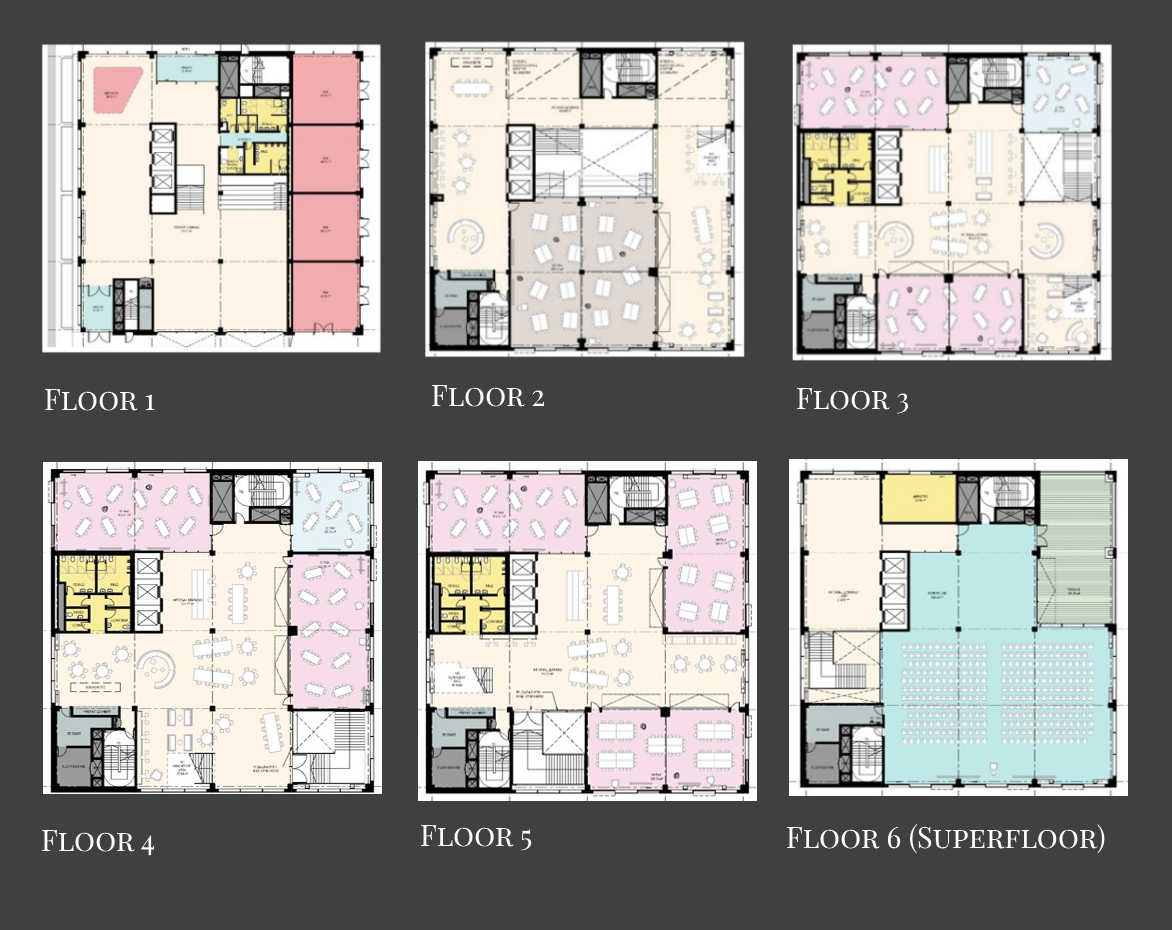
My first impressions of the building are good. This is a six story hi-tech wooden  building. The wooden beams are visible as part of the aesthetics of the building, along with wooden ceilings. There is an open staircase, with adjacent informal space for students, then classrooms around the outside. The classrooms have glass walls to the central areas, flat floors and retracting room dividers. The flip top tables are on wheels. This is a style of room previously best implemented at the University of Canberra Inspire Center

What I liked was that all the rooms in the Marie Reay Teaching Centre were rectangular, without any gimmicks. Many institutions install round, or oval shaped rooms, in an attempt to improve interaction, but these waste space and make it difficult to place desks and screens. Also institutions tend to want a tech-gimmick, just as a 3D room, or a giant ultra-high definition screen wall. These tend to be break, or are decommissioned after a few months, when the novelty wears off. 

The Marie Reay Teaching Centre is clearly aimed at flipped group learning. You could give a presentation, but there are no lecterns, to make it just that little bit more difficult to do so.

The wooden building doesn't look high tech, but the wifi, projectors, and sound reinforcement are all there and working. One thing to keep in mind is that all of the online resources of the institution are available in the classroom. So rather than finding some new online tools, those already available in the learning management system for students to use remotely, can be used live.in the classroom.

The only glitch so far is the display screen in the foyer has the image inverted. For a new building that is very good.

The classrooms have glass walls which gives a more open feel. But it may be a little distracting for the class when there are large number of people moving outside. The glass might need some more frosting, so the sense of openness is not lost, but there it is not like being in a fishbowl.

The classrooms could do with some small electronic screens on side and back walls, display what is on the main screens. Also the whiteboard on walls need some additional lighting. But these are minor matters.

I did question the decision to have the teaching rooms around the outside, and the informal spaces in the middle, without a direct view. But then I noticed the classrooms had been strategically placed, so the open areas get magnificent views across Canberra.

Walking past the new buildings I had a feeling of had been there before, although it just opened. Then I recalled walking the avenues at University of British Columbia,  Vancouver Campus, which I spent a week at l2015.

ANU has taken the approach with Kambri of retaining separate tiered lecture theatres and flat floor group work rooms. I spent several years trying to work out a design for a classroom combining the features of a lecture theatre and group work room. Early versions were limited by the need to accommodate power and data cables and, desktop computers. The advent of WiFi and portable devices removed those restrictions. Eventually I decided it was just not possible to reconcile the conflicting requirements, and better to have separate optimized rooms.

In 2015 I attended conferences in Hong Kong and Cambridge. Both of these were held in rooms with retractable tiered seating. A similar setup has now been installed in Kambri. This allows for a large lecture, or by retracting the seating, a large flat floor event.

Sunday, December 16, 2018

Digital Technology for Partition-Rooms

Elhussein, Düştegör, Nagy and Alghamdi, (2018), report on student reactions to Partition-Rooms used in Saudi-Arabian universities. These rooms have a partition with a one-way mirror, so that the female students can see the male instructor, but not the reverse. Not surprisingly, the researchers found that students thought they learned better in a regular classroom (with a female instructor).
What is surprising is that this analog room design also limits the student's use of digital technology. The one-way mirror requires the student's part of the room to be dimly lit. As a result, the light from a student's digital device will be very visible, literally highlighting that student. As a result students are reluctant to use their smart phones for personal, or educational, purposes in class.

Why not use Video Conferencing?

Given the obvious limitations of this room format, it seems odd that the universities do not simply use video conferencing. In place of the mirrored partition, there could be a video screen, showing the instructor's image. This would eliminate the need for a specially designed room, with any electronically equipped classroom being be suitable (after any cameras in the room were switched off, or covered). This would also eliminate the complexity of providing  separate entrance to the teaching building for male staff, as they could conduct the class remotely, from another electronic classroom, or their office, in another building, campus, or city. 

Use Clickers?

A high-tech digital partition-room might provide the instructor with some indication as to the disposition of the students. This could use "clickers" to allow the students to indicate if they are following the presentation, if it is too fast, or slow. A high-tech version could use a camera to read the expressions of the students, and present these in cartoon form to the instructor, without a realistic representation of individual students.

Also the researchers appear to have only been investigating conventional lecture format classes. If these are replaced by flipped classroom instruction, the limitations of the Partition-Room will be reduced. With the flipped format, the instructor's presentation is pre-recorded, to be watched by the students individually, before class. This eliminates the need for the partition room for this part of the instruction.

Use the Flipped Classroom?

A common format used for large scale flipped classes is to have tutors in the room to assist the instructor, or one tutor at each remote video-linked location. These could be female tutors in the room with female students, with a remote male instructor. The flipped format usually starts with Q&A, which could be facilitated by the tutors, coordinating with the remote instructor. After Q&A the tutors could facilitate the individual or group activities of the students, and report back to the remote instructor.

Experiment with the Partition Room

The Partition-Room is, in effect a form of distance education, with the partition increasing the effective distance between students and instructor. This presents the possibility of interesting experiments. One class could be told that the instructor is on the other side of the wall, and this compared with a class told the instructor is in another building, or a distant country. The instructor could similarly be told the students are nearby, or far away. The effect of the perception of distance could then be examined, separate from the particular technology.

Is the Partition-Room Legal and Ethical?


Also worth considering is the legality, and ethics, of the use of Partition-Rooms for female students. While the researchers point out these are required by Saudi-Arabian culture, the provision of an inferior form of education on the basis of gender may infringe the student's human rights, under international law. Instructors may need to consider if it is a breach of their professional ethics to teach under these restrictions. 
However, other instructors having to teach under far more stringent conditions. As an example, distance education (DE) places severe limitations on the form of education which can be provided. Instructors could decide not to provide any DE, believing it offers an inferior education. But this would exclude a section of the population, for example those in remote locations in Australia, for whom DE is the only form of education possible.

Will Blended Learning Make Partition-Rooms Obsolete?


Research shows that blended learning, is superior to both pure DE, and classroom based instruction. Also conventional live lectures have been shown to not be an effective form of instruction. With blended learning replacing conventional classes, the need for Partition-Rooms may be eliminated within a few years. This would also reduce the legal, and ethical dilemmas for instructors.

Reference

Elhussein, M. A., Düştegör, D., Nagy, N., & Alghamdi, A. K. H. (2018). The Impact of Digital Technology on Female Students' Learning Experience in Partition-Rooms: Conditioned by Social Context. IEEE Transactions on Education, (99), 1-9. URL https://doi.org/10.1109/TE.2018.2840501

Monday, March 12, 2018

Decreasing Campus Energy Use With Flexible Classrooms and e-Learning

The Australian National University is preparing an Energy Master Plan. The aim is "... to create an Australian world class energy efficient, low-carbon, least-cost campus ...". One target in the existing ANU Environmental Management Plan 2017-2021 is to "Reduce energy use per person by 20 per cent by 2021". New forms of education can help, by using the buildings more efficiently and moving some education online. I suggest these techniques can be used to reduce energy use per person. In particular, teaching staff can be trained to teach in flexible and online mods. Also, a system can be used for students to book a seat.

Use Classrooms More Intensively


One way to reduce energy use per person is by increasing the intensity of use of the buildings. Empty rooms use almost as much energy as full ones, so the more use of each room in each building, the lower per person energy use.

ANU Union Court Redevelopment
New ANU Buildings
(artists' impression).
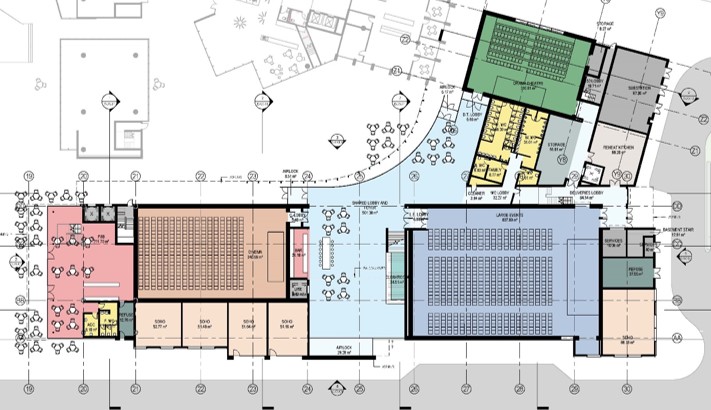
One way to increase the use of classrooms is to make them more flexible. The ANU Union Court redevelopment is a prime example of this. Two new buildings will allow forms of education beyond conventional lectures and tutorials.

ANU Culture and Events Building
The ANU Culture and Events Building will have rooms with retractable seating. At the press of a button, the room can be changed from a flat floor for a conference, to theater format, with tiered seating for a lecture.

ANU Collaborative Learning Building
The ANU Collaborative Learning Building will have flat floor rooms with movable furniture and walls. This enables the same space to be used for different size and format classes. Walls can be folded back for a large class or moved in form more smaller ones. Desks can be in straight rows for a more conventional eyes-front classroom, or in circles for a more collaborative approach.

Flat floor classrooms are conventionally used for small groups of up to a few dozen students. However, with technology and new teaching techniques, such rooms can accommodate hundreds of students. 

Training to help make use of classrooms


A flat floor large classroom at ANU, with large mobile LCD screens used to relay presentation to the back of the room.Training can help make flexible classrooms more efficient, in terms of teaching and energy use. Academics familiar only with conventional lectures and tutorials will tend to use the new flexible teaching spaces only for old fixed teaching formats. To use the rooms flexibly requires the staff to be training in flexible formats.

As an example, an instructor used to conventional lecture driven teaching will find the idea of hundreds of students in a room working in teams a recipe for chaos. The instructor needs to be taken through the theory and practice of how this works, and ideally act as an assistant in such a class before being required to be the lead instructor.

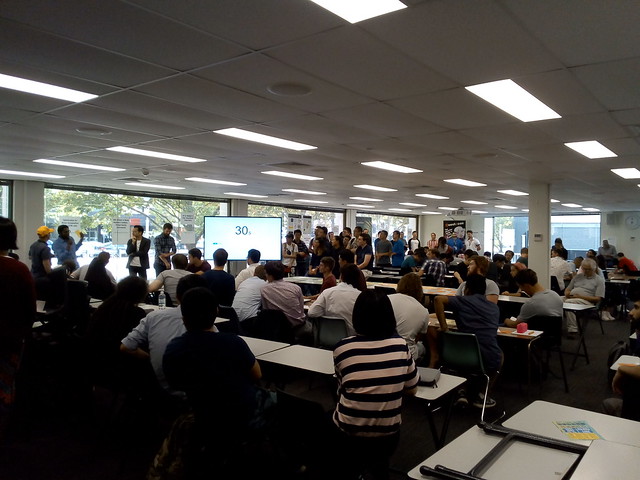
 The ANU TechLauncher events for Team Formation and Bootcamp run in the ANU's large flat floor teaching rooms, at 7-11 Barry Drive, have demonstrated that group exercises with 300 students can work. By introducing academics to these techniques, they will be more confident to use them in courses.

Use e-Learning to Supplement Campus


E-learning can also be used to increase the intensity of campus use. Most courses at Australian universities are now, to some extent, "blended", with part of the tuition on-line. However, to make the best use of the technology course designers and instructors need to be trained in on-line techniques.

Academics who have only training and experience in face-to-face lectures and tutorials will tend to continue to rely on those techniques and be reluctant to try e-learning. There will be concern the students will not do the work, or will cheat, which can be the case if materials are not well designed and trained staff are not available to run on-line courses.

As an example, the ANU course COMP7310 "ICT Sustainability" is run entirely on-line, with no lectures and no examinations. This course runs alongside ANU's face-to-face courses, with the same status and meeting the same quality standards. However, design of this award winning course required the assistance of specialist e-leaning professionals. It also helped to have undertaken graduate education training at ANU and other institutions, focused on in e-learning.


With the appropriate level of training it is feasible to aim for the typical university program to be a 20/80 blend: 20% in a formal classroom setting and 80% on-line outside the classroom. An example of this approach is the ANU Techlauncher program, where students undertake a group project building software for a real client, in government or industry. Students are expected to undertake 10 hours of study per week, but are only required to attend a 2 hour formal session in a typical week.

Ideally students should be on campus no more than the equivalent of one day a week. Students should be out in the real world learning and practicing their skills.

Double University Per Person Intensity of Use


Less than half of students attend a typical university class. A survey at ANU found "... attendance declines over semester to around 30% of original signup ...". This is not confined to ANU and is not a new feature of universities. However, universities still tend to allocate teaching space based on the number of students enrolled in the class at the beginning of semester. As a result the classrooms tend to be less than half full after the first few weeks. This is a waste of space and also a waste of energy needed to maintain these spaces.

One way to engage students, and thus attract them to class, is with group activities, as is done with ANU Techlauncher. This ensures almost full attendance at interactive group activities. Blends of on-line and face to face activities (so called flipped classrooms) can keep students coming to class. However, not all students need to attend every class and many classes will have one third to one half attendance. This can be incorporated into space use planning.

Students can be given the opportunity to book a seat in class a few days in advance. Classrooms can then be allocated, making use of different size rooms and flexible walls and formats, to suit. A reasonable aim would be to double the intensity of use of classrooms, thus halving the per person energy use.

Reduce Staff Campus Use

Persons use of the campus includes staff as well as students. Most teaching undertaken at a university is not by full time, permanent academics, but by graduate students and part time staff from industry. E-learning is a particularly useful way to make use of part time staff skills. Industry professionals can teach students without having to leave their workplace. Researchers in the field can teach students. However, this will require the staff to be trained in techniques for e-learning. The ideal way to conduct this training is on-line.

More on:
  1. Classroom design 
  2. Digital Teaching 

Thursday, March 8, 2018

Whistle Pedagogy for the Large Flat Floor Classroom

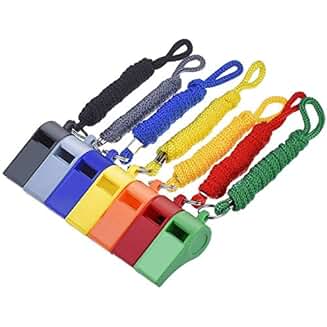
A few weeks ago I was helping out in one of the Australian National University's large flat floor teaching spaces. There were more than three hundred students and it was difficult at times to get their attention. The students would be come very engaged in their small group activities, which is good, but it was difficult to return their focus to the instructor, for the next exercise. So for the next workshop, which was to be a whole day, I purchased a $2.50 coach's whistle, on a bright yellow lanyard.

The whistle turned out to be very useful, both to get student's attention, and to mark out who the instructor was. In the following two weeks the whistle has been used at several events, including the Canberra Innovation Network's First Wednesday pitches and ACT Government energy workshop.

The only scholarly work I could find addressing the use of a whistle in the modern classroom was for law students in the SCALE-UP classroom: Student-Centred Active Learning Environment with Upside-down Pedagogies (Burke, p. 200, 2015):
"If the room is large, a wireless microphone is desirable because this type of learning space can become noisy. A low-tech option that this professor has used is the classic whistle."
However, I found in practice, even with a good quality public address system it is difficult to get the attention of 300 students. Playing tune from smart phone via the PA system did not work either: the echo noise cancellation function of the PA system filtered the music out.

Reference


Debra D. Burke (2015) Scale-Up! Classroom design and use can facilitate learning, The Law Teacher, 49:2, 189-205, URL https://doi.org/10.1080/03069400.2015.1014180

Tuesday, May 9, 2017

Future of Teaching and learning at ANU

ANU Union Court Redevelopment
New ANU Buildings
(artists' impression).
Greetings from the Australian National University (ANU) in Canberra where Professor Marnie Hughes-Warrington is speaking on the Teaching and learning futures at ANU. This is one of a series of talks about the new Union Court Development. There are also Union Court podcasts. Three of the new buildings will include teaching facilities. There will be a student services building, teaching and cultural events building (with large theaters).

The teaching building will have 60% formal learning spaces and 40% informal. Rooms are designed for 30, 60, 90 and 120 students (some rooms have movable walls). There will be translucent glass panels to provide privacy with light. The top floor will have a "super-floor" suitable for 320 students in cabaret style.

For the last ten years I have been looking at suitable teaching space design and for three years learning about teaching styles to suit these spaces. I will be presenting on this in "Dogfooding: Learning About Teaching by Being an On-line Student", at ANU, 1pm, 15 May 2017.
The culture and event building will have a flexible space with movable 200 and 512 seat tiered lecture theaters. This is intended to be used for sports and examinations with the seating retracted. I have been to conferences in similar spaces in Hong Kong and Cambridge. There will also be 150 and 300 fixed seat theaters for performances and lectures.
While the new buildings are being built there will be a need for temporary facilities. I have suggested rather than finding large temporary lecture theaters instead change to flipped teaching in flat floor rooms. Apart from being easier to find flat floor spaces this will improve the teaching.
One interesting aspect is that Professor Hughes-Warrington pointed out the new teaching building will be constructed from cross-laminated timber rather than concrete and steel. She suggested this will improve the WiFi signals, but I suspect the cabling in the building will still limit transmission.
"The university landscape is rapidly transforming, driven by societal and technological change on a global and local level. These changes provide us with an opportunity to ensure that we are providing an enriched and valuable learning experience here at ANU.
The revitalised Union Court precinct ANU is building will feature some of the country’s most advanced collaborative learning environments.
This forum will discuss the opportunities these spaces provide for teaching at ANU and the wide range of teaching possibilities our spaces will accommodate, including didactic lectures, tutorials, seminars, flipped classrooms and more."

Monday, April 24, 2017

Replace Lectures with a Flipped Classroom

Australian universities are moving away from the provision of dedicated lecture theaters. This change in physical spaces provides the opportunity to think about how to improve teaching. As an example, the Australian National University (ANU) is replacing the central Manning Clark lecture theatre complex with flexible learning spaces, as part of the Union Court Redevelopment. The obvious approach to consider is the flipped classroom. Apart from improved education, this will halve the amount of formal teaching space required.

A common teaching format is three one hour lectures a week and one tutorial of one hour. However,  a student who has sat through three hours of someone talking at them in a darkened room is not likely to recall much, the following week when a tutorial is held.

With the flipped classroom the student reads material on-line on their own, watches some videos or listens to an audio podcast. They do a short quiz or exercise immediately after, to consolidate the learning. Within a few days they then attend a face-to-face session where they listen to a presenter for a few minutes, do a small group exercise, listen to the results from other groups.

Key to both distance education and the flipped classroom is to have the students doing something active. Also key is to have this activity assessed and to provide the students with feedback on how they are doing, as soon as possible.

But is it feasible to replace lectures and tutorials with a flipped classroom? Will it take too many new buildings and staff?

Consider a typical course with 300 students enrolled and tutorials of 20 students (from p. 4  "A Guide for Parents and Carers", 2016). A typical course will have three one hour lectures a week and one tutorial of one hour. Assuming a 300 seat lecture theater is available, one lecturer can provide the lectures in three hours and 15 tutor hours will be required per week. This would require a 300 m2 lecture theater for three hours and a 40 m2 tutorial room for fifteen hours per week (using usual space guidelines). This is a total of 5 m2 hours of floor space per student per week. 

Rendering of the TEAL classroom at MIT
A room for cabaret style flipped teaching, such as  MIT's Technology Enabled Active Learning (TEAL) or the ANU Physics Studio, requires about 2.5 m2 per student. The 300 students would require 750 m2 with 34 tables (each seating nine students). As well as TEAL* this format of classroom is also called SCALE-UP: Student-Centered Active Learning Environment with Upside-down Pedagogies (or Student‐Centered Active Learning Environment for Undergraduate Programs), ALC: Active Learning Classrooms, or TILE: Transform, Interact, Learn, Engage.

A cabaret style room requires about two and a half times as much floor space as a conventional lecture theater. However, saving is made in floor space, as each student spends less time in the room, with the flipped approach. There is also no need for a separate tutorial room.

Such large teaching spaces do exist, as an example, the University of Sydney "X-lab wet lab" accommodates about 240 students. However, the X-lab has a very sophisticated (and expensive) audio system allowing it to be divided for smaller classes.

A more workable option may be to divide a course into multiple sessions. This also provides the student with the option to choose a time which better suits them. A course of 300 students could be divided into two groups of 150. This would require a room of 375 m2, about 19 m2, with seventeen tables. This is a total of 2.5 m2 hours per student per week.

Each flipped class will require a lecturer to be the MC and about five tutors (one for each four tables and one to assist the lecturer). If each  student undertakes one workshop of one hour per week, there would need to be two classes a week (or one a week for a two hour class).

The two hours of flipped class per week will require about the same amount of staff time as the four hours of lectures and tutorials. An emcee (equivalent of a lecturer) will be required for the two hours. While this is less than the three hours of lectures, they will also need to supervise the on-line component of the flipped class and handle the increased complexities of the flipped mode.

While only 10 hours of tutor time are needed in the face-to-face class, there will be extra work for the digital teaching in on-line classes.

One advantage of cabaret style teaching rooms is that they do not require a purpose built building. Libraries, offices and commercial buildings with flat floors can be re-purposed for cabaret style teaching These changes can be temporary, using mobile furniture and equipment. When not needed for classes the space can be used informally by students. The ANU Physics Studio, in a former chemical laboratory, is an excellent example of this approach.

The cabaret rooms, with movable furniture can be adapted for other teaching styles, best illustrated by the University of Canberra's Inspire building TEAL room*,  which has semi-curricular flip top tables which can be quickly reconfigured during a class for different teaching styles, or packed away for a function.

Before cutting the space budget at universities, administrators need to consider where students will study when not in formal classes. With an emphasis on group work, students will need somewhere to do that group work. This will not involve an instructor and not be scheduled on the university timetable, but is still key to learning. Learning commons and uncommitted time in the flexible teaching rooms will be needed if the students are to meet on campus. Also students undertaking lab work with specialized equipment will need time to work.

In 2008 I gave up lectures and moved my teaching on-line. With new teaching spaces available it may soon be time to go back to the classroom. I will discuss some of this in "Dogfooding: Learning About Teaching by Being an On-line Student", for the  ASCILITE Technology Enhanced Learning Special Interest Group Webinar (TEL edvisors), 4 May  & Human Centered Computing Seminar, RSCS, ANU, 15 May 2017.

* ps: The University of Canberra's Inspire building TEAL room is colored teal (blue-green), which may be a joke by the designer.

Monday, July 25, 2016

Sydney University Transforming Learning

The University of Sydney 2016–20 Strategic Plan (March 2016, p. 29), has as Strategy 5 "Transform the learning experience", with three initiatives:
  1. "Develop interactive and collaborative learning designs that foster excellence and innovation ... greater use of pre-readings, pre‐recorded videos, and brief, ideally automated, diagnostic assessment of understanding of core concepts and themes. ...
  2. Create contemporary environments that enable
    flexible and interactive learning
    ... Taking advantage of our experience with the award-winning X-lab in the Charles Perkins Centre research and education hub, we will maximize the effectiveness of higher cost, well-equipped teaching spaces such as laboratories and studios by finding
    ways to share space, equip it flexibly and to a high
    standard, and increase usability.
  3. Build a new professional learning and
    support environment
    ...Educational Innovation Team within the Education Portfolio will create a refreshed framework for professional learning. ..."
This appears to indicate that, like other universities, Sydney is moving away from lectures and tutorials/labs, to e-leaning and  flipped classroom teaching. What is not clear is what training the academic staff will be provided in to enable this, or what qualifications they will be required to have. As an example, vocational education sector staff require a minimum of a Certificate IV in Training and Assessment. University teaching staff have been typically expected to have a postgraduate certificate in education.

Wednesday, July 20, 2016

University of Queensland Student Strategy

The University of Queensland (UQ) has issued a twenty page Student Strategy 2016-2020 White Paper (19 July 2016). The paper sets out five goals and twenty initiatives, mostly citing specific projects already underway. Some exceptions are Authentic assessment, Learning analytics and eAssessment, which have no specific projects listed to implement them.

It will be interesting to see how far UQ goes with online learning, offering short modules, competency-based credit, Learning analytics, Authentic and eAssessment. These require a high level of skill from course designers and instructors, otherwise they risk the reputation of the institution for high quality education. The old university approach of having someone with just a research degree design and teach courses will not work. UQ will need qualified educational specialists, working in teams. This approach has been routine at distance education teaching orientated institutions, but not research universities.

An interesting initiative is the  Employ101x: Unlocking your employability MOOC. One frustration with the white paper is the lack of hypertext links, or references, to initiatives cited. As an example, the VC’s flagship courses for ‘creating change’ sound interesting, but I could not find these on the UQ website. I have added links below, to some of the projects I could find.

Some of the initiatives do not appear very radial and perhaps do not go far enough. As an example, moving from two terms a year (Semesters) to three (trimesters), is not a very radical move. The universities in the Open Universities Australia consortium already offer four study periods a year. As a part-time postgraduate student I have found this a very useful option, allowing me to study at a steady pack all year and progress at a reasonable rate.

Goal 1: Game-changing graduates

  1. Work integrated learning and student employability program expansion ... BEL Student Employability Team; UQ Advantage OfficeEmploy101x
  2. UQ research fused with UQ teaching ... Undergraduate Research Program
  3. The VC’s flagship courses for ‘creating change’ ... Schools of Law and Political Science – Undergraduate Working Groups
  4. Idea acceleration ecosystem ... EAIT – Idea Hub
  5. Global extension experiences ... Short-Term Mobility Project
  6. Authentic assessment ... Develop a system of assessment that uses challenging and meaningful assessment tasks to engage and extend students across their programs.

Goal 2: Student-centred flexibility


  1. Initiative 1: Extended online and on-campus active learning ... Prioritise the online delivery of courses ... HASS – Strengthening the First-year Gateways: Aligned, Literate and Flipped; EAIT – Flipping the classroom
  2. Unbundled course options ... Offer key components of our courses in short modules that draw on UQ’s advanced digital learning resources and allow students to build competency-based credit. ... School of Psychology and UQx – Introduction to Psychology – Online Series: PSYC1030x
  3. Program schedule alternatives ... Move to a trimester system across selected undergraduate and postgraduate programs where a need for accelerated and decelerated study options is identified. ... UQ Business School – Flexible MBA options
  4. Learning analytics and eAssessment capability

Goal 3: Dynamic people and partnerships

  1. Students as partners ... UQ Students as Partners Fellowships
  2. Multi-point mentor program ... EAIT – MEET a Mentor Program
  3. Teaching innovation support ... UQ’s Learning Designer Teams
  4. Staff professional development and recognition provisions ... Teaching@UQ
  5. A teaching engaged staff profile ... School of Chemistry and Molecular Biosciences – The Alure project

Goal 4: An integrated learning environment

  1. Campus precinct development ... UQ student residential borough
  2. The student learning and support hub ... Provide a central, integrated physical location on campus that enables innovative teaching practices and effective student enquiry/support services.
  3. Enhanced multifunctional spaces ... UQ Library: Multifunctional, service-oriented spaces
  4. IT infrastructure renewal ... Invest in IT infrastructure renewal to enhance UQ’s online user experience and support the increasing demand of eService requirements across the University.
  5. Student support interfaces ... my.UQ

Monday, June 13, 2016

Adaptive Courseware Doesn't Work But Blended Instruction Does

Yarnall, Means, and Wetzel (2016) analyzed the results of trials of adaptive courseware, funded by the Bill & Melinda Gates Foundation. Adaptive courseware uses data on student progress and provides feedback to the students and instructors to improve learning. However, this report found that the majority of trials of adaptive courseware had no discernible impact on grades and did not improve student completions. Curiously the report suggests pressing on with adaptive courseware, even though it does not seem to have much positive effect.

The most interesting point for me was that switching from lectures to adaptive blended instruction improved student learning. But the authors did not draw the obvious conclusion: it was likely the switch from lectures which made the difference, not the adaptive courseware. There is no mention of "flipped classroom" in the report. The evaluators were out to see if adaptive courseware worked (impact evaluation) but perhaps forgot the overall goal, which is to improve student learning.

References

Yarnall, L., Means, B., Wetzel, T. (2016) Lessons Learned From Early Implementations of Adaptive Courseware. Menlo Park, CA: SRI International. Retrieved from https://www.sri.com/sites/default/files/brochures/almap_final_report.pdf

Tuesday, August 11, 2015

Flipping Your University Class

Dr Eric McCreath, Research School of Computer Science, will speak on "Flipping Your Class - Without Flipping Out" at the Australian National University in Canberra, 1pm 13 August 2015:
"The traditional approach to teaching has the teacher deliver core content as lectures, after which students go off and complete exercises, labs, assignment, etc. with often little help from, or interaction with, teaching staff or other students. The idea of "flip teaching" is that lecture material is recorded and listened to outside of class. This frees up class time to focus on the more interactive aspects of education.

Given dwindling lecture attendance (students where just watching the lectures at home anyway), in 2013 and 2014, I flipped my Introduction to Computer Systems class, providing students with pre-recorded lecture content and reorganised class time. This talk will summarise the changes I made to the course, overview the tools used, and reflect on the educational outcomes. Overall this has been a positive experience and I plan to refine and continue this teaching approach in coming years."
It seems to me that Eric's approach can be used not only to address dwindling lecture attendance but also issess of students cheating. If students are required to be active and involved in class, then it is more likely they will learn and so have less incentive to cheat on assessment. Also if they are required to do many small tasks spread over a whole semester it will be much harder to carry out the mechanics of cheating than for one large assignment or examination.