Showing posts with label alternative energy. Show all posts

Monday, May 23, 2022

Global Energy Transition Accelerated by Ukraine Situation?

Professor Jotzo,  Ambassadors Pulch,
& Myroshnychenko, at ANU 
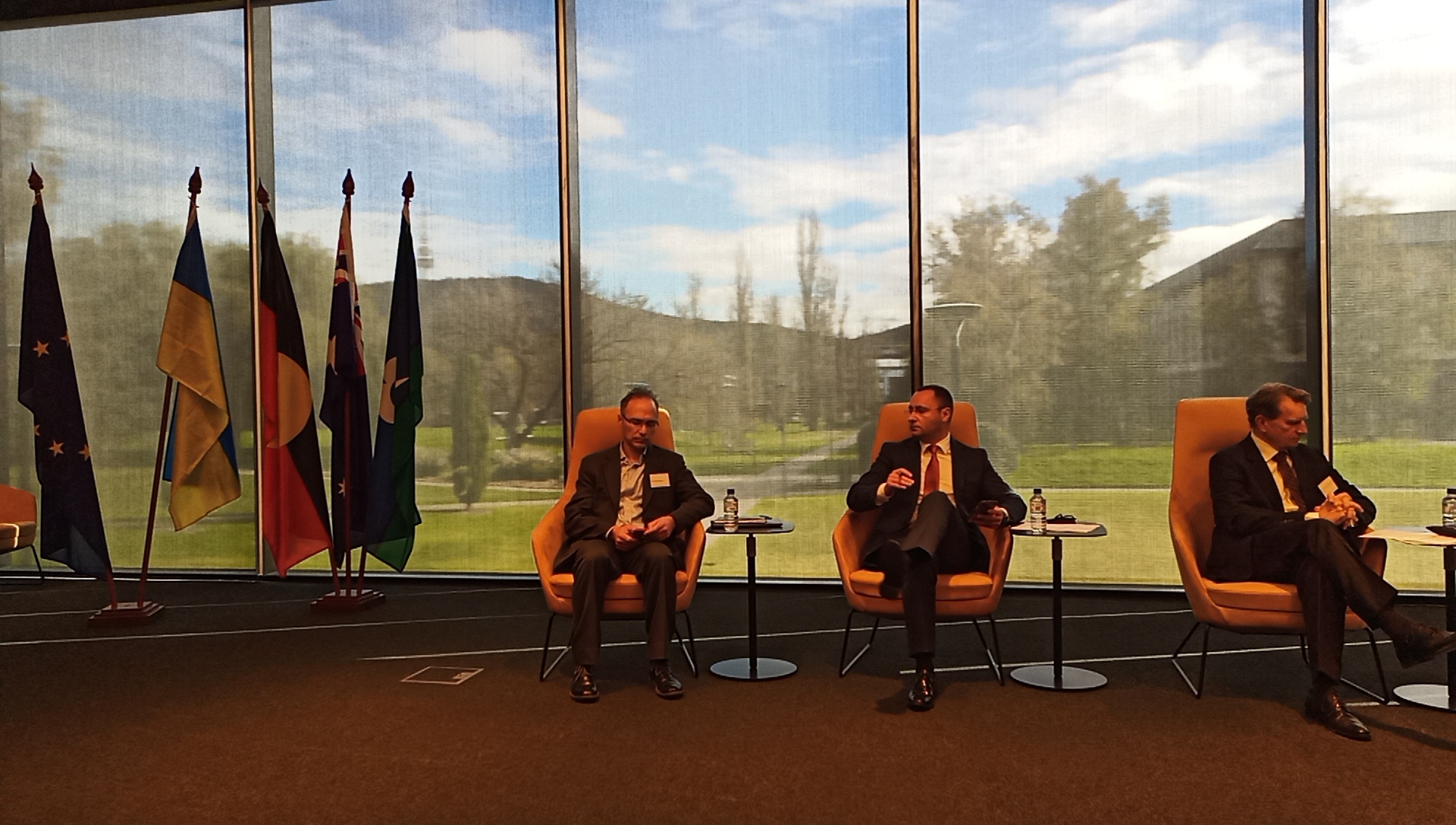
Greetings from the Australian National University in Canberra, where Dr Michael Pulch (European Union), and Vasyl Myroshnychenko (Ukraine),  Ambassadors to Australia, are speaking along with the ANU's own Professor Frank Jotzo on the energy implications of the situation in the Ukraine. The obvious solution is more use of renewable energy, but that is not easy, or cheap to do, especially quickly. The event is in a theater of the ANU Research School of Social Sciences, with a wonderful view of the Campus and Black Mountain. 

The EU Ambassador pointed that imported gas dependence had increased in the last few years, due to declining local extraction, and conversion from other fuels. Also they noted the spread of dependency was uneven across the EU. The Union this year decided to phase out dependency on imported gas, however that sound to me like the Captain of the Titanic deciding to buy more lifeboats, but only after seeing the iceberg. The Ambassador did note there are some short term moves possible, to increase gas imports other than from Russia, having more storage, and more use of coal. In the longer term the Ambassador said they were looking to follow Australia's example promoting rooftop solar. But they noted options would not be simple or cheap.

The Ambassador said they did not expect significant LNG exports from Australia, but Australia could increase experts to other regions, thus freeing up supplies for Europe. The Ambassador did not mention longer term opportunities for Europe to buy renewable energy from Australia, in the form of synthetic fuels, or Australian technology to reduce energy use.

The Ukrainian Ambassador noted Russian "weaponizartion" of energy policy. They argued previous German policy on gas from Russia propped up the Soviet Union. They referred to the "Schröderization" of energy,  German politician, Gerhard Schröder, advocating the Nord Stream pipeline, then after retirement taking up a board position. The Ambassador advocated phasing out Russian gas in Europe, facing up to the shock. They said Ukraine will buy more Australian coal and uranium. These will be unpalatable messages for European and Australian governments. Quickly phasing out Russian gas will have a local political cost, as would the new Australian government, which may dependent on cross benches, supporting coal and uranium. The Ambassador also may a very technical point that Australian LNG has a different composition, and so EU industry may need to make changes to use it for chemical production (simply burning it is less of a problem). 

Professor Jotzo pointed out that the Ukraine situation can lead to increased use of renewable energy in the long term, as well as energy trade within political blocks. However, there will be more investment in fossil fuels in the short term. What they did not mention was the potential for changes in behavior to reduce energy use. As an example of what can be done where needed, was the shift to online work and study during COVID-19. This was something many thought impossible, until their life, and livelihood, depended on changing behavior. 

National governments are understandably anxious to return to "normal" after pandemic restrictions. However, where "normal" involves the use of fossil fuel for travel, which could be eliminated with online work and study, government could productively work on a new normal. In my course "ICT Sustainability" (currently offered online from Canada)I invited students to consider how such changes could reduce emissions. So I asked the panel about this. Professor Jotzo suggested the energy savings from telecommuting would be marginal. ,  Ambassador Pulch pointed out the many small savings which could be made would add up. Ambassador Myroshnychenko pointed out that working from home has energy costs, may lower the quality of work decisions, and quality of life. He pointed out people were very keen to travel after the pandemic.

Tuesday, June 22, 2021

Solving the Big Problems

 Greetings from the Superfloor of the Marie Reay Teaching Centre at the Australian National University, were I am taking part in a planning meeting of the new Institute for Climate, Energy and Disaster Solutions (ICEDS). This merges three previous institutes, on disaster, energy and climate. The new name also emphasizes finding solutions, not just identifying problems. The Vice Chancellor emphasized this in his opening address, while reminding us of the challenges the university had faced recently, with fire and flood, as well as COVID-19, he suggested a positive attitude for the future.

After some speeches the people from across the university will look at what to concentrate on. There is a list of dozens of potential topics proposed, which needs to be refined.

Saturday, August 8, 2020

ZeroCO2 Hackathon 2020

ZeroCO2 Hackathon
Canberra's ZeroCO2 Hackathon 2020 runs online over two-weeks, starting 18th August and is open for registrations. Teams will work on business ideas to reduce domestic and commercial carbon emissions, with $10,000 in prizes. I mentored teams in the 2019 competition and have volunteered again. 

 Due to COVID-19 this years event is entirely online, whereas last year we were all at the Canberra Institute of Technology's excellent renewable energy training facility. However, this will be my fourth time helping with an online hackerthon this year, and the activity has easily translated to the online format.

Thursday, March 12, 2020

Sustainable energy Planning for Indigenous Communities

Greetings from the Australian National University where Professor Paul Parker, University of Waterloo is speaking on "Sustainable energy planning in Canada: recognising diversity and the need for Indigenous voices". There are significant lessons for providing energy to remote Australian communities, in terms of consulting the local community on what they need. Surprisingly, solar energy is viable in Canada, along with wind. I asked Professor Parker about the role of for-profit companies in alternative energy, as most of the examples given were government funded not-for-profit initiatives. The problem is that these are limited by the availability of public finding. I suggest some training in startups for those involved may be useful, so they can seek out what the customer is will to pay for, so they can be self funding.

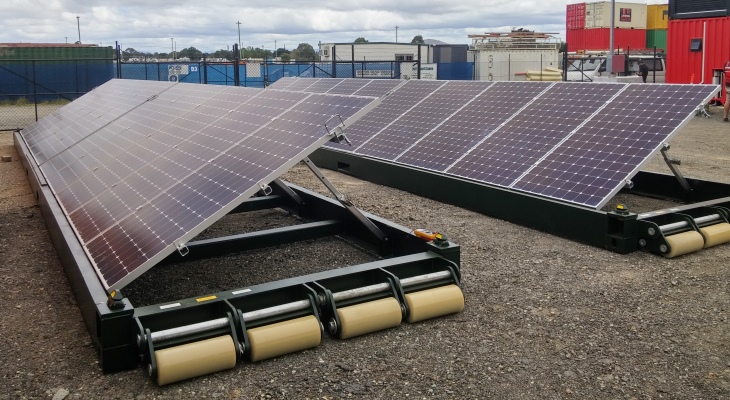
One of the audience asked about portable energy systems for  Australasian abourginal communities. I pointed out that ECLIPS Engineering built a Container Roll-Out Solar System (CROSS) for the Australian military. This is a very rugged system of standard solar panels attached to a hinged framework mounted on a shipping container compatible platform. It would be able to provide power for a small town. Smaller versions could be built for family groups, which could be packed into a trailer and towed behind a car.

Wednesday, July 24, 2019

Coal transition: power sector, regional adjustment and policy

Greetings from the Australian National University in Canberra, where the Coal transition: power sector, regional adjustment and policy conference just opened. The chair pointed out that while a transition from coal to renewable energy was happening in Australia, to create a major export industry, but that the politics of regional development and employment needed to be taken into account.

The chair just invoked the Chatham House rule, so I can tell you what the speakers say, but not who says it. I have been to industry events on regional defence strategy under the rule, so military and government personnel could speak freely, but this is unusual for an academic conference.

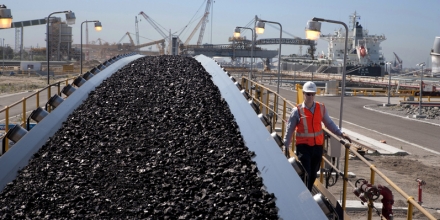
The first speaker talked about Germany's transition out of coal, with the last mine closed. However, Germany imports coal, including from Australia, as it has the EU's largest proportion of coal fired electricity generation. It is planned to phase it out by 2038. While the speaker said Germany had phased on coal, then then said that  Lignite is still mined. The form of poor quality brown coal is mined in the former East Germany, where there is high unemployment. Some of the newer coal fired power stations in Germany have a lifetime out to beyond 2060, so closing them by 2038 will require government intervention (by regulation or a auction mechanism).

The speaker pointed out that Germany was the only European country aiming to phase out coal, without use of nuclear power. This creates a problem of how to provide continuity of supply when there is limited sun and wind. An extreme form of this is Nuclear Winter, mentioned by Professor  Schmidt, Vice Chancellor of the Australian National University, last Thursday, when in introducing the energy entrepreneur  Dr Lachlan Backhall.  Professor  Schmidt suggested that nuclear power might be needed during a nuclear winter. Dr Blackhall seemed taken aback at the suggestion, and quipped he was delighted Professor  Schmidt thought humanity could survive a nuclear winter.

The next speaker this morning  outlined the use of coal for power generation in Australia. They described any new coal power station in Australia as a "white elephant", with renewables quickly supplanting coal. With no new coal fired power investment the question is when the existing plants will be economically non-viable. Exiting plants are earning good returns for their owners, due to market power, however, many could be uneconomic by the end of the 2020s. The problem is the sudden closure of a few large plants will cause price spokes benefiting the few remaining plants, and requiring expensive government intervention.  The speaker proposed an auction based mechanism for orderly exit from coal. They derided the idea that a three year notice by plant owners was sufficient, as it takes many more years to provide a replacement.

The third speaker focused on what would be needed for the transition from coal in Victoria. This included a complex map showing the main energy generation plants and inter-connectors. This was a very matter-of-fact presentation, planning the transition, within the limitations of only a three year notice from coal fired power station owners. They point out that just planning new faculties could take five years, before construction started. An additional problem is that old power stations become unreliable, long before they are closed, and this also needs to be planned for. What was proposed was forward planning in anticipation of closure. What I found interesting was that the discussion was limited to the planning of the transmission networks, with the provision of actual generating capacity left to the market. One issue they are addressing is the 14 days capacity needed to complement renewable energy. Their analysis was that if there is more than a 20% chance of a major Victorian power station closing early, it would be worth building an extra in-connection early. However, they were still not planning actual generating capacity.

The next speaker suggested that rooftop solar was being installed at such a rate, it would allow earlier closure of coal fired power stations. It is hard to imagine that householders installing a few panels on their roof can replace a huge power station, but Australia leads the world with home solar power. This is being complemented by construction of wind farms, many of which are being built as private company initiatives, so their full impact has not been apparent. This is a very positive picture, especially for governments, which would need to do little except see that a network was in place to carry the power. The last part of the puzzle was storage needed for when the wind is not blowing or sun shining.

The last speaker discussed coal jobs and the transition to renewable. They first pointed out that coal mining jobs are very different to work in power stations. Government policy had mostly addressed power station jobs, not coal mining, and the speaker questioned the viability of this. Job statistics conflict as to the trend of jobs in coal mining, but it is clear that coal mining is not a major employer. Coal miners are younger than power station workers ("They are aging with their plant"). About half of coal miners are low skill machinery operators, whereas power station workers are more highly skilled, making them more employable. The experience of other countries is that only about one third of redundant coal miners get secure jobs, with a third becoming casual, and one third retiring. The Australian experience from the Hazelwood closure, which had government funding, showed a similar pattern.

Statistics for renewable energy employment are less clear, but it appears half the jobs are in roof top solar installation. Employment per kwh of energy are lower than for coal. The low skill proportion of jobs is similar to coal mining (for installers, rather than machine operators). Large scale wind projects tend to be more distributed than coal mining, and not in the same locations. What the speaker did not discuss was that most of the jobs for renewable energy are installation. Once a solar panel or wind turbine is installed, not much maintenance is needed over the decades of life. Of course this also increasing applying to a coal mine, where after construction the mines are increasingly automated, and operated remote from the mine site.

Thursday, July 11, 2019

Grid "duct-taped together" says ANU Entrepreneurial Fellow

Greetings from the Shine Dome at the Australian Academy of Science in Canberra, where Dr Lachlan Backhall is presenting the ANU Entrepreneurial Fellow Inaugural address. In introducing Lachlan, Professor  Schmidt,
the Vice Chancellor of the Australian National University recalled how he had sought advice on renewable energy for his farm. His battery/solar system can now provide power during a blackout, and provide a good financial return. The VC commented that this is a "dumb" solar system, and much more is possible with the smart energy technology Dr Backhall has championed.

In his address Dr Backhall pointed out that the introduction of electricity was heralded as a revolution in energy use, but was resisted by entrenched industry. Also towns in regional NSW from 1888 acted to provide their own electricity supply and this has parallels with today's micro-grids. Apart from regulatory issues, Dr Backhall suggested that communities need to work how how they can share energy storage facilities.

Dr Backhall also pointed out that almost all tramways in Australia had been electrified by the start of the twentieth century. At this time there were few cars, but one third were electric, with lead acid batteries. The short range of these cars was addressed with public charging facilities hand battery swap schemes. While electric cars declined in the 1920s, he suggested some of the business models from this era may have parallels today. He suggested by the 2020s electric cars will have displaced internal combustion engines. He also speculated that electric cars might be used to transport energy: charge at point point and then drive somewhere are discharge into the grid.

Dr Backhall mentioned that there was early debate as to when streetlights should be turned out, as people should be home in bed. He did not point out that streetlights were previously off five nights, each lunar month, when the full moon was bright enough to see by (da Cruz, 2013).

Dr Backhall concluded by describing our electrical system as "duct-taped together", and suggesting there were better engineered options including renewable energy. He also said "No one in their right mind would build a new coal fired power station in Australia today".

Tuesday, March 5, 2019

Renewable Energy Hackathon in Canberra

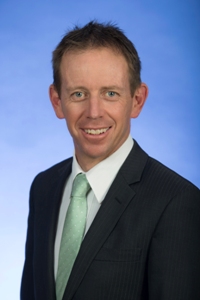
Shane Rattenbury, 
ACT Minister for Climate
Change and Sustainability
Greetings from the ZeroCO2 Renewable Energy & Sustainability Hackathon at the Canberra Institute of Technology (CIT). I will be mentoring teams working for two days on renewable energy, waste disposal, sustainability in food and manufacturing, transport & travel, smart cities, building and education. There is a a $10,000 prize pool, plus access to Canberra Innovation Network desk space and coaching.

It is easy to get cynical: what can you do to save the planet in two days? Certainly new tech can't be completed in that time, but new ideas of what is needed, and how what is available can be better used. The hackerthon is a compressed version of the group project teaching techniques we use in ANU Techlauncher.

Before the hacking, we have Shane Rattenbury,  ACT Minister for Climate Change and Sustainability speaking.The ACT Government is currently working on the sustainability plan for 2025. He pointed out that this gets more difficulty when households have to change their behavior. Canberra's transport emissions are increasing.

There is also a Renewable Energy and Sustainability Industry Forum taking place in conjunction with the hackerthon. Both events will end with competition results at  First Wednesday Connect, 5pm tomorrow.

All events are taking place in Building K at CIT Bruce  Campus. This was a purpose built for renewable engendering. There is a big workshop on the ground floor, full of neat color coded pipes and machinery. Above the workshop are floors of classrooms, and then space for texting solar panels on the top.

ps: CIT is where I studied for my Certificate IV in Training and Assessment.

Tuesday, February 12, 2019

Wooden solar panels?

Greetings from the Energy Change Institute Open Day at the Australian National University in Canberra. During his keynote presentation, Professor Armin Aberle, from Solar Energy Research Institute of Singapore (SERIS), mentioned the problem of architects accepting solar panels on buildings. I suggested collaborating with architects who are exploring using new modular building techniques, such as BVN, with the ANU Kambri complex, opened yesterday. 

Professor Aberle, pointed out that high rise buildings have relatively little roof space and there is now technology for transparent panels which can be used as windows. But these panels need to look good, and need to be easy to install. The new student towers at ANU have prefabricated wooden panels hung on the outside. These are covered with ceramic "biscuits" in a factory, and conventional windows, before installation. This system could be used with solar panels and translucent panel windows. These would be hung on the building and then plugged into the grid.

Prefabricated solar building panels  could be relatively low-tech, with the same mounting systems as used for buildings simply screwed to the wooden building panels.  The solar elements would be attached and wired to a plug. The completed panels would be stacked on a truck. After lifting into place the panels would be plugged in.


ps: I am a member of the ANU Energy Change Institute, teaching ICT sustainability to masters students.

Tuesday, October 23, 2018

Energy Transformation with Social Equity

Professor Kenneth Baldwin,ANU ECI Director
Greetings from the Australian National University in Canberra, where I am taking part in a symposium on
"Social equity in the energy transformation". ANU researchers project that the crossover to more renewable than fossil fuel electricity generation will happen in Australia by 2025. The question now is not if this will happen, but how to handle the social and economic effects of this. Without action this may make social inequities much worse in Australia.

Topics:
  1. Social Equity in Energy Supply
  2. Social Equity in Energy Consumption
  3. The Emerging Role of Energy Prosumers
ps: I am taking part as a member of the ANU Energy Change Institute and as I teach ICT Sustainability.

Tuesday, October 9, 2018

Stopping Climate Change One Classroom at a Time


As a child I enjoyed watching black and white science fiction disaster films. Scientists in white coats would warn of impending doom, but be ignored until it was almost too late.
I don't have a white coat, but I am a member of the Australian National University Climate Change and Energy Change institutes. Some of my colleagues helped write the "Special Report on Global Warming of 1.5°C" for the Intergovernmental Panel on Climate Change (IPCC), issued 8 October. The report warns of more extreme weather and rising sea levels if carbon emissions are not reduced. The report says limiting global warming to 1.5°C requires "rapid and far-reaching" transitions in land, energy, industry, buildings, transport, and cities."

Unfortunately, like those old science fiction films, such unwelcome news is not well received. But some changes can be made which enhance human well being while also reducing emissions.

At the EduBuild Asia 2018 conference in Singapore today I am suggesting the increased use of blended, online and mobile learning. Older students can spend more time learning via their mobile devices, away from campus. Classrooms can be reconfigured and teaching techniques changed, so when on campus students learn much more intensively. As well as improving student's education, this will reduce the carbon footprint of the campus.

Sunday, September 23, 2018

Zero-Carbon Energy for the Asia-Pacific Wins ANU Grand Challenge


The project "Zero-Carbon Energy for the Asia-Pacific" has won the Australian National University Grand Challenge.  This project will be funded to research how to capture solar and wind renewable energy on a large scale in north-west Australia, then export it to Asia.

Wednesday, September 19, 2018

Zero-Carbon Energy for the Asia-Pacific

Greetings from the ANU Grand Challenges pitch night in Canberra.  Four teams are presenting their ideas. One will receive funding. The last is "Zero-Carbon Energy for the Asia-Pacific". This project proposes to capture solar and wind renewable energy on a large scale in north-west Australia, then export it to Asia.

The energy will be exported by undersea cables, as synthetic fuel in supertankers and as refined metal. The project has to work out how to negotiate with traditional owners of the land on which the energy will be collected, and with the nations the cables and tankers will need to transit.

One issue is that cables and supertankers of fuel make attractive targets for terrorists and nations. The tradition approach to such defence would involve UAVs and rapid reaction air and seaborne forces. However, this could also include the local community as part of the early warning system.

Saturday, November 26, 2016

Canberra Renewables is the University of the Future

This week I attended the opening of the Less Than Two  Degrees Renewables Innovation Hub in Canberra. This is a new office building professionally fitted out, specifically as an innovation hub. This contrasts with the typical innovation center in a converted warehouse, such as  Fishburners in Sydney. As well as being an excellent design for an innovation center, Renewables Canberra provides a template for the university of the future.

Half the ground floor of Renewables Canberra is open space for events. This area has no permanent furniture: it just is just a large room. The other half of the building has offices and meeting rooms around the periphery, each with a frosted glass inner wall. The interior has rows of desks on wheels, with clip on power boards, connected to cables from the ceiling. There are rows of lockers forming room dividers. There are two kitchens, with some bench seating.

The space allows for individuals or small groups to start at the open plan desks (keeping their belongings in the lockers) and then graduate to an offices, or suite of offices.

The desks are on wheels and and be pushed aside for events, or to make a classroom. I suggest this will be the design of the university campus of the future. The space can be rearranged as required, for individual, small group work or large classes.

One addition I would make to the design is cafe booths on wheels. With this two rows of bench seats (each on wheels) is arranged facing a table between (also on wheels, but remember to lock all the wheels for a semi-permanent arrangement). These units provide high density, semi-private meeting spaces for groups of six, with the fabric of the high backs on the bench seats absorbing sound.

Another addition would be USB power sockets. USB sockets are much smaller and less intrusive than mains sockets.

The Australian National University is having a Union Court Revitalisation Project Update, 7December 2016, 1 pm. This would be a good place to incorporate multi-use spaces similar to Renewables Canberra.

Monday, November 14, 2016

Renewables Innovation Hub Opening in Canberra

The Canberra Renewables Innovation Hub is having a grand opening 4pm 22 November 2016. The official name for the facility is the "<2degrees Renewables Innovation Hub"*, and is dedicated to helping renewable energy and cleantech start-ups. The hub on the northern end of the innovation zone I previously identified between Canberra's CBD and the ANU campus.

ps: * Innovation hubs seem to delight in obscure and hard to pronounce names. This one is a spin-off of "Entry 29".

Friday, August 14, 2015

Reducing Australian Electricity Demand

Dr Hugh Saddler will speak on "Electricity demand and Australia’s renewable energy targets: where to?" at the Australian National University in Canberra, 12.30pm, 26 August 2015.
"Average annual electricity consumption per residential consumer has been falling steadily in every state since around 2009. The presentation will examine the factors which may explain this reduction and speculate on where electricity consumption may go in the next few years. It will also include some preliminary results from an analysis of how low income households use electricity."

Thursday, January 22, 2015

Energy Storage for the Grid and Cost Based Discovery

Greetings from the Australian National University in Canberra, where Professor Donald Sadoway (MIT) is speaking on"Innovation in Stationary Electricity Storage". He started by saying the subtext for his talk was "Cost Based Discovery": researches have to consider the implementation cost of what they are investigation, they can't just pass it on to industry and hope it will be affordable. Also Professor Sadoway criticized his colleagues at MIT who are producing Massive Open Online Courses (MOOCs), which he said were not helping with basic education in developing nations, as the typical MOOC student is a western university graduate (and only 5% finish the courses anyway). Professor Sadoway also pointed out that an online course is of no use in parts of Africa where there is no electricity supply. This was the segue into the topic of low cost high capacity batteries to make renewable energy sources feasable for baseload.

Professor Sadoway described his investigation of possible battery chemical processes, looking at what are low cost materials which would be inexpensive to process. You can read some of his research work in Bradwell, Kim, Sirk, & Sadoway (2012) and Kim et al. (2012). But the presentation was more about how to research to produce a a cost effective result. This is a message which Australian university researchers need to list to: they can be academically rigorous and also produce something of use to the community (and will make money).

Professor Sadoway claimed 70% efficiency for a liquid metal battery, which is comparable to pumped hydroelectric storage (the only form of electricity storage in common use). He argued that while a tub of hot liquid metal sounds dangerous he pointed out that a leak in the containment vessel will be self sealing (as the metal cools, it hardens).

One possible early application Professor Sadoway mentioned for liquid metal batteries was powering forward military bases. Solar panels are not sufficient on their own, and while you can package them with diesel generators, but fuel transport is still an issue. Professor Sadoway argued that a liquid metal battery could be easily transported, as it is solid when cold and would be resistant to small arms fire (and also silent).

While currently being shipping container sized and intended for stationary use, the liquid metal batteries already have an energy density similar to lead acid batteries and improving. So I asked Professor Sadoway is his batteries would work in a submarine. He said this had been discussed with the Pentagon and there were no particular problems. This could be of interest to Australia, which is considering lithium iron battery submarines with Japanese technology for the Collins class submarine replacement in Project SEA 1000.

Professor Sadoway then mentioned that he teaches first year chemistry. He mentioned the lectures are videoed and that Bill Gates watched and came to visit. This indicates that understand what MOOCs are really for: self promotion. ;-)

References

Bradwell, D. J., Kim, H., Sirk, A. H., & Sadoway, D. R. (2012). Magnesium–Antimony Liquid Metal Battery for Stationary Energy Storage. Journal of the American Chemical Society, 134(4), 1895-1897.
Kim, H., Boysen, D. A., Newhouse, J. M., Spatocco, B. L., Chung, B., Burke, P. J., ... & Sadoway, D. R. (2012). Liquid metal batteries: Past, present, and future. Chemical reviews, 113(3), 2075-2099.

Monday, December 8, 2014

US Energy Expert Awarded Honorary Doctorate by ANU

Greetings from the Great Hall of the Australian National University in Canberra, where Dr. Steven Chu, Professor of Physics and Molecular & Cellular Physiology and former U.S. Secretary of Energy was just awarded an honorary Doctorate for "Science in the Service of Society". Dr. Chu was the first energy secretary who was a scientist and was charged with increasing renewable energy use. Last week he addressed the Light, Energy and the Environment Congress and I was impressed with the way he combined knowledge of the science and politics of climate change. ANU's conferring of this award could be seen as a subtle criticism of the Australian Government's "direct action" climate change policy, as he oversaw a very different policy as part of the US Obama administration. Dr. Chu is also be speaking at the ANU ECI Energy Update, tomorrow, 9 December 2014.