Showing posts with label defence technology. Show all posts

Friday, February 6, 2026

Civil Defence Apps

Rhys Kissell, at hackathon start

Greetings from UNSW Canberra, where the Australian Defense Tech Hackathon just started. There is a room full of people ready to build defence related inventions. It was a unique and sobering experience to have a minute silence in memory of those lost in the Ukraine war. It was also useful to be reminded that defence tech is not all about drones dropping bombs, this can include civil defence. This is in conjunction with the European Defense Tech Hub. One interesting aspect is the emphasis on industry implementation and deployment, rather than just invent something. This is also a very hands on experience with UNSW's marker space with electronics equipment and 3d printers. I am presenting "How to Pitch to a General: Presenting to a Military Audience" 11am tomorrow for the hackerthon participants.

Thursday, February 5, 2026

How to Pitch to a General: Presenting to a Military Audience


I am presenting "How to Pitch to a General: Presenting to a Military Audience" at the Australian Defense Tech Hackathon, 11 am 7  February 2026, UNSW Canberra. This is intended to be a short informal session, with plenty of participation from the members of hackerthon teams. Here is a preview, and some notes to start the discussion:

You can learn to pitch at a local innovation center. These are located within many universities, with others in cities and towns. An example are the Canberra Innovation Network's pitching courses.  No special presentation techniques are needed for a military audience. Use the usual pitch techniques. It is important to keep to time and don’t be surprised if the time provided is shortened over that promised. Expect interruptions and blunt questions. As always, have a call to action: what do you want the audience to do?

If you have the time and the talent, consider an interview approach, where you, as the promoter of the product, talk to a military user of the product. 

Offer something new, but not too new: Say this is what our allies are doing. Entrepreneurs often make the mistake of claiming their invention is completely radically new. But military operations, particularly Australian ones, are about cooperating with other countries. If you can say the military of a respected ally is using your product, or another product using your approach, that will be appreciated. 

Like all of us, generals are subject to FOMO: Fear of Missing Out. If you can show that their counterparts in other countries are embracing your product, then they will want it as well.

In 1997 I wanted to convince the Australian Defence Force that Internet technology was usable. So I visited the flag ship of the US 7th Fleet on exercise off Queensland. On my return I was able to say how I saw US military personnel using the Internet and the web for planning. 

Major defence companies have former senior military personnel and government officials on staff to help get to senior decision makers. Startups do not have those resources, but can approach the decision makers via their staff. These staff are exposed to new concepts and products at the usual trade shows and during training. 

The military train staff at their own facilities and universities. The educators are always keen to expose their students to new concepts and techniques. You can have the students try your product, or even help develop it.

For several years students of the Australian National University assisted with test software for the CEA Phased Array Radar. The Australian Government liked the product so much that in 2023, they purchased the company.

ps: I asked an actual general, and their advice was to think at the tactical, operational and strategic levels. How will what you have help win a battle, campaign and ultimately a war? How does your technology contribute to a capability? Include options, as generals operate by choosing from those presented by their staff.


Saturday, January 11, 2025

Australian Defence Advanced Research Projects Agency Proposed

An Australian Defence Advanced Research Projects Agency, modeled on the US DoD's DARPA, has been proposed in a paper published by the Australian Strategic Policy Institute (ASPI). I support the proposal, and not just because I suggested it myself in 1999. My proposal got some positive press at the time. I also had the honor of being pilloried in a public statement from DSTO, now Defence Science and Technology Group (DSTG). ;-)

Robert Clark and Peter Jennings propose a partnership between the Defence Department, industry and universities for research & development. This would be extended internationally to instutions in Australia's closet allies (the so called "Five-Eyes"). 

Jack Dalton's comments on ASPI's proposal are curious in that he expresses a grudging admiration for the Chinese political system. He notes the benefits of a centralized one party state in terms of economic development. However, I suggest centralized five-year plans are not necessarily a good way to become a world leader in a technical field. Japan tried this approach with the Fifth Generation Computer Systems project and found that throwing money at something does't necessarily work. Australia needs something more decentralized, fluid and flexible. Even in the case of China, their central plans are not as centralized as they appear.

Wednesday, October 2, 2024

Thursday, September 19, 2024

How did pagers explode?


Part of being associated with a university is making yourself available for expert commentary. Yesterday I had a request from SBS News to talk about exploding pagers. I could have said "No, I am on holidays". But instead I propped my phone up on a suitcase and was interviewed for a segment six minutes into the national nightly news: "How did Hezbollah's pagers explode in Lebanon and Syria?".

As it happens, when working at HQ Australian Defence Force in the eatly 1990s, I tested the use of a pager, while travelling around defence bases in northern Australia by RAAF aircraft. The units were able to receive messages in remote areas and while in flight, making them useful.

One feature which I noticed was that it was possible to send a test message to a pager which was apparently switched off. The only way to prevent this was to remove the battery from the unit. I suggested it is likely that something like this was used for activating a few grams of explosive hidden in the pagers. Also I warned that some of the pagers could have not been delivered to their intended targets and pose a danger to the community, worldwide. 

Tuesday, August 6, 2024

Killing Bushfires with Drones

Associate Professor Roslyn Prinsley,
Head of Disaster Solutions,
ANU Institute for Climate,
Energy & Disaster Solutions
Associate Professor Roslyn Prinsley, Head of Disaster Solutions, ANU Institute for Climate, Energy & Disaster Solutions is taking about ways to prevent natural disasters. One of these being worked on at the Australian National University is to detect lightening strikes, resulting bushfires and quickly targeting them from the air with drones. This is a very challenging application as bushfires can start in large areas of Australia, and there can be thousands of lightning strikes which can potentially start a fire. Such a system can't simply water bomb every potential fire. This was at the ANU Disaster Solutions Update 2024.  The event is available live online.

The approach Professor Prinsley outlined was for small spot fires to be detected by UAVs and targeted with water dropped by steered parachutes. Such as system would be similar to those needed to defend Australia. Such a system has to scan large areas, decide what is a potential target deploy assets & assess results. Recent conflicts have shown it is no longer feasible to do this with crewed systems & human decision making. There are too many potential targets to be serviced & too much happening too quickly.


Monday, July 22, 2024

Welcome to the Next War: the AI Triple Black Box and Accountability

Professor Ashley Deeks
Greeting from "The Double Black Box: National Security, Artificial Intelligence, and the Struggle for Democratic Accountability" by Professor Ashley Deeks, University of Virginia. This is a public part of the conference "Anticipating the Future of War: AI, Automated Systems, and Resort-to-Force Decision Making" hosted by the Coral Bell School of Asia Pacific Affairs at the Australian National University. Professor Deeks' thesis is that defence AI is a block box both because even the programmers don't know what it is doing and if they did it would be secret. I suggest the situation is not that bad: it is possible to build AI systems which can be asked why they made a decision. But as the recent Microsoft/Crowdstrike failure shows, even non-AI systems can do surprising things. There is also cause concern, as Professor Deeks pointed out, due to the scale of use.

At a practical level it is not that difficult to test if an AI weapon is at least as reliable as a human operator. This could improve procedures by making explicit the decision making processes. There will be pressure to use advanced automated systems, just as there are for current simple ones, such as mines. 

Professor Deeks is presenting a US-centric view of the issues. However, the US is not a leader in development of AI weapons. Any country with a university having a computing school has the capability to make advanced AI weapons. Recently I was assessing a university student project for a small autonomous vehicle. This was for civilian purposes, but one version was tracked, and just needed a weapon added to be a robot tank.

The problem, I suggest, could be far harder than Professor Deeks suggests. The magic sauce for an AI weapon is in the software. The physical weapon can be upgraded over the air to have new capabilities. Some of this has been seen with missiles, where air launched missiles have been adapted for surface launch & surface for air. An example is the US Navy's SM-6 ship missile adapted for air launch against surface, air and space targets. Deciding of something is an anti-satellite weapon or not is a matter of software. 

Professor Deeks mentioned her paper "The judicial demand for explainable artificial intelligence" (2019) which argued for lawyers to get AI savvy. Some are thinking tech, such as Herbert Smith Freehills.

Thursday, March 21, 2024

Machine Learning, Games, Economic Systems and The End of the World

Greetings from the Australian National University where  Dr. Yun Kun Cheung is speaking on "Machine Learning in Games and Economic Systems" at the weekly AI ML & Friends seminar. One question raised was if algorithmic trading can cause stock markets to collapse, as well as deliberate attacks which incorporate algorithmic learning.

This is my second AI seminar of the day discussing the adverse effects of AI. The first was Arvind Narayanan & Sayash Kapoor (Princeton University) on "AI and Existential Risk". At question time I asked if the use of AI might be an acceptable risk, where it reduces the risk of nuclear war. As an example, the Australian Strategic Policy Institute released an article discussing the use of Australian nuclear powered submarines to defend Taiwan, and attack the Chinese mainland ("Punishing the Dragon—it’s not about Tomahawk missiles from SSNs", Malcolm Davis, 20 Mar 2024). Such a strategy risks escalating into nuclear war. As an alternative, I suggested small AI enabled drones, with limited offensive capability, could be used in place of nuclear submarines. As well as being more effective for defending, they have less capability for strategic offensive use.

Monday, December 18, 2023

Defence Industry in National Defence

ANU National Space Testing Facility
Greetings from the Australian National University for the launch of "Defence Industry in National Defence: Rethinking the Future of Australian Defence Industry Policy". In his opening, ANU VC Brian Schmidt, pointed out that the university has a fully equipped "ANU National Space Testing Facility" (worth a visit: it looks like a Bond villain's lair). 

The report was prepared by the Australian Industry Group (AIG) and the Strategic and Defence Studies Centre (SDSC) in the Coral Bell School of Asia Pacific Affairs at ANU. The report is very readable, and has just five recommendations:

1."The Australian defence industry should be considered a capability in its own right: A capability that supports the ADF force-in-being, but whose strategic value lies in those situations where that force is fully committed, needs to be rapidly reconstituted, and may need to expand. Domestic industrial capability should be developed to meet the demands of our defence planning scenarios, with foundation capabilities in place and capacity to scale with operational needs during conflict.

2. Defence industry should be embedded within and managed as part of Australia’s broader national industry structure and policy. Defence industry draws on resources such as capital, technology, infrastructure and skills from the civilian economy, and can achieve better scale and efficiencies when connected to their civilian peers. Industrial policy support for defence industry is integrated with, and not simply alongside that, support offered to its civilian counterparts.

3. Defence industries should be strategically prioritised, then supported to achieve scale and surge capabilities. Prioritisation will be required to identify where Australia has relevant capabilities, or might be able to efficiently develop them, that can contribute to our own and allies supply chains. These capabilities should also be aligned to existing areas of strength in Australia’s civilian industries and leverage new industrial policy programs. Scale in these prioritised areas should then be achieved by coordination across programs, the development of export markets, and/or the building of international technology partnerships.

4. Government should utilise the full range of policy levers at its disposal to shape defence industry outcomes. This including both formal and informal mechanisms for coordination between government and business, to ensure greater understanding, cooperative relationships, and two-way flow of information. Given the size of Australia’s defence effort, the selective use of single supplier (strategic partnering) arrangements will be crucial in some areas to achieve and sustain required industry outcomes.

5. Government should establish a Defence Industry Capability Manager. The Capability Manager would be responsible for defining the capability and capacity that government needs to develop, as well as for development of industry to meet the level of preparedness determined by the Government. Whilst close liaison within the Department of Defence and specific Capability Managers would be required, the Industry Capability Manager would have a wider ‘whole of government’ role to bring Defence, wider government and industry together for the achievement of strategic industrial outcomes."

The executive summary of the report starts on a sobering note: "As our geostrategic environment deteriorates ...". It goes on to argue the role for Australian industry, particularly hitech industry. However, one area in which the report is deficient is the role of training. This gets no mention in recommendations, although it is noted how this is central to other countries with successful defense industries. I suggest that vocational education, & universities are central to development of the Australian defence industry. 

This report draws lessons from Sweden, France, the UK, Israel and Canada. However, I suggest another country to look to: Australia. we already have some high tech defence companies. Unfortunately these are often overlooked by the Australian Government and ADF, looking for proven solutions, and summing they must come from overseas. 

Part of the solution, I suggest, is training for technical experts in defence related technology, and entrepreneurship. A problem has been that Australia produced excellent researchers, but told them their job ended when they write a paper with their results. We told them it was someone else's job to commercialize discoveries, then complain it didn't happen. Instead we have to train the technical experts in how to work with business and most leave academia to set up or work in, business.

Another part of the solution I suggest, is to train senior leaders in government and the military on use of tech for defence, and how to talk to business. As an example of this approach, I mentored students in the Australian Crisis Simulation Summit 2023, the Navy Warfare Innovation Workshop 2020, and Secure Supply Chains ADF/NZDF Hackerthon 2020. These brought together people from industry, government, & ADF working in a simulated high pressure environment. As well as creating new ideas, and providing valuable training, these events introduced people across sectors with comment interests so they could work better together for national defence.


While facing different strategic circumstances, their experiences illustrate how the possession of an independent but internationally linked defence industry is itself an asset during a period where the risk of major conflict is rising.


Their experiences offer pertinent lessons for Australia. This report identifies several factors that shape effective policy, argues that a fundamental rethink of Australian defence policy is required, and offers five recommendations.


WHO SHOULD ATTEND: Scholars, graduate students, policymakers and practitioners working in the fields of Defence and Strategic Studies.


This event is cohosted by the 

Image: HMAS Arunta and Naval Ship Management personnel on board the ship during its docking scheduled refit at Garden Island Defence Precinct, Sydney. Credit: Defence Imagery, LSIS Susan Mossop.

Saturday, December 16, 2023

Attracting Australians to Military Service

Luke Townsend, 
 Managing Director at Outlook Industries
Luke Townsend Managing Director at Outlook Industries Pty Ltd, has proposed an Australian service questionnaire ("Revolutionising ADF recruiting: an opt-out system", Australian Strategic Policy Institute, 15 Dec 2023). This would be compulsory for all year 11 or 12 Australian students, to determine their suitability for military service. Those considered most suitable would be sent an offer of a full or part time position. He proposes this could be extended to also cover civilian government job offers as well. This is proposed to answer a chronic shortage of Australian Defence Force personnel. However, in this form, the idea is unlikely to receive widespread political support.

A service questionnaire is likely to meet opposition as being conscription by stealth. Compulsory military service is an issue which has divided Australian society, even in times of world war. Also the questionnaire would not address the reasons why young people are not volunteering, and not choosing to remain in military service. The military needs people with advanced technical skills, and are competing with civilian employers for those people. While all trained to fire a rifle, most now sit behind a computer console to do their job. The ADF needs to offer competitive pay and conditions to attract and retain personnel who can maintain and operated advanced systems. 

Mr Townsend gives examples of the Australian 1st Armoured Regiment being removed from the order of battle, and HMAS Anzac has now been mothballed due to lack of crew. However, in the next decade tanks, & most warships will be replaced with drones having no crews. These will new fewer people to operate, but those people will need advanced technical skills, and be supported by techncans to keep the systems running.

Mr Townsend gives the example of Finland with 5% of the population in the reserve forces. However, Finland has a long land boarder which can be defended by troops, in some cases on skis. Australia is an island, requiring ships, submarines, and aircraft as its primary defense, and which will be mostly automated and uncrewed. This will require an advanced workforce, of mostly civilians working in industry, to support.

This is not to say an Australian service questionnaire could not be useful. But I suggest it needs to be voluntary to avoid political opposition. Also the questionnaire could emphasize civilian roles, not military ones. At the same time the ADF could reform its training programs, to offer civilian standard vocational certificates to recruits, as well as the university degrees already offered.


Wednesday, November 29, 2023

Broad Skills Needed for AUKUS

The Australian government has announced $128M for 4,001 STEM students with skills needed for the AUKUS nuclear-powered submarine project. It should be noted most of the training, and jobs, will not be related to nuclear technology. The initial submarines will be purchased built from the USA and largely supported by US personnel. In my opinion, it is unlikely the followup AUKUS submarines will ever be built. By that time conventionally armed crewed submarines will have been rendered obsolete by drones. However the STEM skills the graduates learn in these courses will be critical to designing and building drone submarines as part of the evolved and expanded AUKUSJSK.

Professor Andrew Norton has criticized the level of funding, as it assumes a 25% attrition rate per year. He points out this is higher than is typical. This may reflect the demand for skills in industry. Universities may have difficulty keeping students in the program, when they could be earning in industry after only completing part of the program, especially those in the AUKUS courses who will be required to meet security vetting requirements. One approach would be to have nested work integrated programs, where students study while working on AUKUS, with their work being submitted for assessment. Students could complete the first part of the program, and be awarded a qualification to get them an entry level job. They would be then study while working for a promotion.

Monday, July 17, 2023

Defence Innovation in Canberra

Greetings from the Defence Innovation Network Canberra Showcase opening at the ANU in Canberra. DIN is a made up of ANU, Macquarie, UNSW, Newcastle, Sydney, Wollongong, and UTS universities.

Western Sydney University logo. This is showcasing the capabilities of academia in areas such as AI, Robotics, cyber security, Quantum communications and optical systems. The Defence Innovation Network is Defence Innovation Network (DIN) is an association of eight leading universities in NSW and ACT. The purpose of the DIN is to bring together industry, universities, State Government and Defence to address Australia’s defence needs. The DIN also supports business innovation in the global defence market by harnessing world-class research capabilities available within our universities.

At the opening Professor John Blaxland raised the topic of collaboration with US universities, particularly given the AUKUS partnership.  

Given the deteriorating international situation it is timely for universities capabilities to aid defence to be boosted. However it needs to kept in mind the primary way university can help is with trained people, both in uniform, and in civilian roles in government and support industries. Training personnel, and building systems takes years, and in some cases decades.

As a former adviser on technology in the Defence Department I mentor students who work in the Defence Origination and tutored ones testing new weapons systems for defence companies.

Thursday, July 13, 2023

Weaponized AI Countermeasures

This is to suggest the Australian Government invest $100M in an institute for developing weaponized AI countermeasures. One area for research will be automated real-time fact-checking. Generative AI has the capability to create fake text, image, audio, and video content. This can be used to spread confusion and destabilize a country. There may not be time for manual fact checking to determine what is fake and put out alternative views, or have the offending material taken down, and there might not be enough information specialists available to manually handle the volume of fake news. The Institute would develop tools to identify, check, debunk, and respond to fake news automatically. Within microsecods of a fake news item appearing, a response and take-down notices would be issued. Where authorized, the fake content would be modified and reissued, to undermine the credibility of the adversary.

Wednesday, June 28, 2023

Weaponizing ChatGPT

Professor Sarah Kreps,
Cornell University
Since late last year I have been part of presenting, and attended, many seminars on ChatGPT, but this is a first: "Weaponizing ChatGPT?  National Security and the Perils of AI-Generated Texts in Democratic Societies". In this case "weaponising" is not a metaphor, or hyperbole, it really is about using AI to wage war. Greetings from the Australian National University, where a group of defence and AI experts from around the world are meeting, sponsored by the Australian Department of Defence. . This is the sort of seminar where not only have the speakers just published a new books, but so have half the audience. It is a little intimidating.

Professor Sarah Kreps, Cornell University, explained she was in the US Air Force engineering, working on the predator UAV, and AI was a short step from there. She suggested AI started in the civilian sector, and will then be adopted by the military. I am not so sure that is the case. What became web search engines, came out of research sponsored by US DoD. Some of the AI research is similarly sponsored. 

From the Professor's description, the US approach seems to be limited to what the threat might be from an adversary's use of AI. What I suggest western military's need to do is consider how they will use AI. As an example, if AI is being used defensively to create plausible fake news to undermine your nation, how can it be use to create instant factual responses, or offensively to create a largely factual narrative to undermine the enemy. 

Professor Kreps characterized western countries as an open system which could be exploited by misinformation, and AI can be used to enhance this. The result would be customized fake news to appeal to specific groups. 

It would be interesting to see what the ADF's Information Warfare Division is doing with generative AI. Just as Australia's military cyber-security experts have had an increasing role protecting government and civilian systems, with its name changed from Defence Signals Directorate, to Australian Signals Directorate. Is there a similar role for IWD?

Professor Kreps suggested the vocabulary used could indicate when generative AI is used. I suggest that can't be relied on. Professional speechwriters know to use the language and cadence of their customers. It will not be difficult for AI to write using the language of a particular individual, or group.

This would appear to be an area where DARPA, its UK & US equivalents, could provide funding for universities. This could produce free open access tools to counter misinformation.

Tuesday, June 27, 2023

Drones, human-machine teaming, strategic influence and mass warfare

Mick Ryan
Greetings from the Australian National University, where former Major General Mick Ryan, is speaking on "Thinking About Future War: Drones, Mass, and Other Trends". His first slide had as a backdrop a map showing how to invade Taiwan (from a WWII study), but then went on to talk about Ukraine. This seminar is part of a series associated with research funded by the Australian Department of Defence (the audience has a who's who of modern military thinking, here for discussions). He pointed out the amount of time between being detected and attacked had been reduced to about two minutes, requiring very mobile forces. However, war still doesn't happen quickly. He asserted that no military trains its personnel to "partner" with machines, and that this will become more important, when there are many more autonomous systems than personnel. He also suggested we have not seen the use of drones yet (swarm countermeasures were one topic at the Navy Warfare Innovation Workshop 2020 which I helped with).

Mick went on to talk about integrating political, and military objectives, and operations. He asked for new ideas for Australian defence. He pointed out that some of Russia's new ideas have "not worked out that well". He contrasted this with Chinese new thinking, and suggested Australia needs do this. He suggested organizing the defence force differently, as current battalions are based on old Russian legions. 

I suggest one thing the Australian military can do is make better use of universities, as industry are. Each semester, ANU has about 200 students working on group computer projects and 50 interns. Some of these people work on defence and security projects, mostly in companies contracted to the Australian Government. Examples are testing new radar for missile defence (an Australian system Ukraine has asked for), and testing cyber security of software for government.  Universities across Australia are working on AI, cyber security, drones, and all that stuff. 

In answer to a question about the potential for war over Taiwan, Mick Ryan suggested drone submarines would be more useful than nuclear powered ones. Another interesting point was what is the legal liability of civilians who help with defence online. Some seem reasonably clear to me: if you report a military aircraft going over, you have become a target. A great question from a public servant in the audience was what does a mass AI western influence operation look like? The first part of the answer surprised me: NATO (as a political influence organisation). The second part was to teach children that not everything on the Internet is true. 

Wednesday, May 24, 2023

Killer Robots at ANU

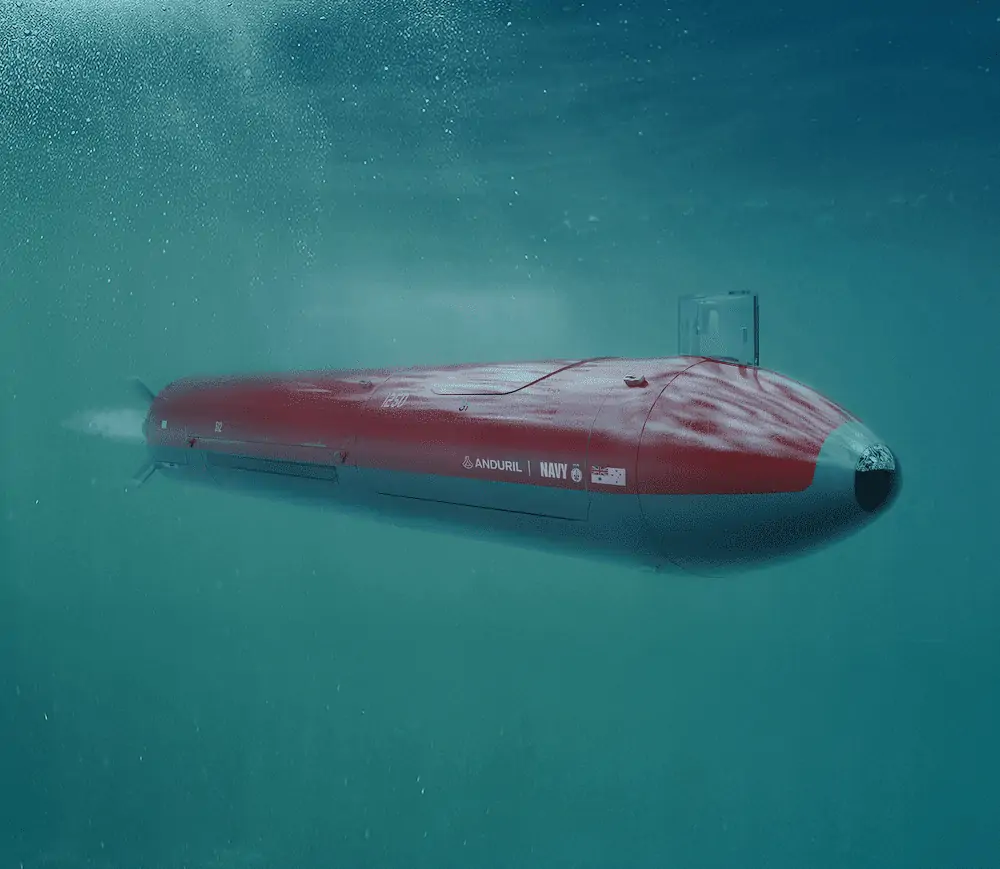
Greetings from the Australian National University Law School, where Dr Jeremy Moses from University of Canterbury is talking on "Lethal Autonomous Weapons and Bias". He pointed out these may be called "killer robots", Lethal Autonomous Weapons Systems (LAWS), Autonomous Weapons Systems (AWS), Robotic and autonomous systems (RAS), or Lethal autonomous robots (LAR). Dr Moses pointed out some Australian projects, including un-crewed trucks which follow others, and small surveillance sailing shops. These sounds benign, but then he pointed to the "Ghost Bat" autonomous aircraft for the RAAF, and "Ghost Shark" autonomous robotic undersea warfare vehicle will be armed. 

Dr Moses referred to the Campaign to Stop Killer Robots, which called for international law in 2012. He commented that little progress has been made since then, not just because states who want to use them are not keen to advance regulation. But he argued that it was likely that someone would be held responsible for the use of autonomous weapons. There is still concern that this may make war more likely, both by states, and non-state actors, or the robots may run amok. But I would be much more worried about deliberate misuse, than accidents.

Dr Moses pointed out that biases have been found it what otherwise were claimed to be unbiased automated systems. Also the ethics of the use of weapons varies between people.

Anduril Dive-LD Ghost Shark XL-AUV, 
made in Sydney

I have suggested that Australian universities should assist in the development of military drones. Some of my students worked on part of an anti-missile system, which has a automatic mode. This is not an advanced AI system, and would be under supervision of human operators, but does raise ethical questions.

Dr Moses argues that arguments from other aspects of the use of AI may not be applicable to warfare. This is because the campaigners are essentially campaigning against war in general, rather than the use of particular weapons. As examples, he argued that opposition to imperialism, or discrimination against particular groups, were not relevant to autonomous weapons, as imperialism and discrimination can happen without them. I am not so sure. Autonomous weapons may be particularity useful for oppression, and limiting or banning them may be appropriate. Of course such weapons may already be banned under existing international law.

An aspect which troubled me was that Dr Moses, and other lawyers in the room assumed that they had years to consider these issues. However, there is now the capability to mass produce cheap autonomous weapons. Shoulder launched missiles, in disposable canisters can be made with a cheap image sensor, and enough processing power to discriminate between different targets. 

Wednesday, April 26, 2023

Cyber Security in Defence Strategic Review

Had a call from the media asking about cyber security in the Defence Strategic Review (I was interviewed from the shower cubicle in my Singapore hotel room). There is a section on "Cyber domain and targeting" in the report (page 63): https://www.defence.gov.au/about/reviews-inquiries/defence-strategic-review

"Australia’s cyber and information operations capabilities must be scaled up and optimised.

Under project REDSPICE, the Australian Signals Directorate is significantly expanding its signals intelligence and cyber capabilities and capacity.

Defence must enhance its cyber domain capabilities to deliver the required responsiveness and breadth of capability to support ADF operations. This must focus on: integrating the defence and management of Defence’s C4 networks and architectures; delivering a coherent and, where possible, centralised cyber domain capability development and management function; and building and sustaining a trained Defence cyber workforce."
 But I am not sure centralizing is a good idea.
"Defence must also continue to develop its cyber and space capabilities." page 7
Good.
"To maximise the deterrence, denial and response options for the Government, the ADF must evolve into a genuine Integrated Force which harnesses effects across all five domains: maritime, land, air, space and cyber." page 19
 Will cyber have the corresponding funding and staffing?
"In the contemporary strategic era, we cannot rely on geography or warning time. Regional military modernisation, underpinned by economic development, has meant that more countries are able to project combat power across greater ranges in all five domains: maritime, land, air, space and cyber. Emerging and disruptive technologies are being rapidly translated into military capability." page 24
Is Australia planning to transition into combat in the cyber domain?
"Cyber warfare is not bound by geography." page 25
So what are the implications of cyber war not being geographically bounded?
"Internal measures have included: increased defence and national security spending; the reorganisation of elements of the national intelligence and national security community; substantial investments in cyber security;" page 33
In particular?
"Deterrence strategy and practice is evolving. In military terms it now spans five domains: maritime, land, air, space and cyber." page 37
Is deterrence effective in the cyber domain?
"Although invasion of the Australian continent is a remote possibility, any adversary could seek to coerce Australia through cyber attacks ..." page 37
Could the attacks be made in a coordinated enough way to be useful for coerce? Under international law, Australia need not respond to cyber attack with a cyber attack, it can use missiles, bombs, and troops.
"Resilience requires the ability to withstand, endure and recover from disruption. ... robust cyber security, data networks and space capabilities;" page 38
For example, having backups.
The strategy of denial must also recognise the importance of non-geographic security threats, including cyber, space and long-range missile capabilities." page 49
Could Australia be digitally blockaded?
"The adoption of this approach will necessarily lead to a very different force structure and posture to what the ADF has today. More attention and resources must be devoted to crucial future-focused joint capabilities such as information warfare, cyber capabilities, electronic warfare, and guided weapons and explosive ordnance." page 51

How many cyber and information warfare troops does the ADF have? How many do they need? Will the ADF pay enough to retain them?
"The evolution to five domains – maritime, land, air, space and cyber – demands a new approach." page 54

"Defence’s cyber security arrangements should be enhanced in
close collaboration with the Australian Signals Directorate." page 83

"Defence’s cyber security operations capability in Chief
Information Officer Group should be increased and legacy systems and platforms should be decommissioned." page 83
What will that cost, and how long will it take? For Y2K we took years, and hundreds of millions of dollars, to tidy up old systems.
"Options should be developed to change Defence’s recruitment framework to improve the eligibility pool of potential applications and to align service recruitment requirements to military employment, especially in key technical and specialist trades (cyber, engineering, space, etc.)." page 88
Perhaps the physical fitness requirement will be lowered for computer nerds? 😉
"The Government also notes that in the contemporary strategic environment, developments in cyber, space and long-range precision strike mean our defence interests are not bound by geography alone." page 103

"A comprehensive framework should be developed for managing operations in the cyber domain that is consistent with the other domains. Agreed"

"Defence’s cyber domain capabilities should be strengthened to deliver the required breadth of capability with appropriate responsiveness to support ADF operations. Agreed in-principle" page 106
Only in principle?
"Options should be developed to change Defence’s recruitment framework to improve the eligibility pool of potential applications and to align service recruitment requirements to military employment, especially in key technical and specialist trades (cyber, engineering, space, etc.). Agreed" page 107
So the nerds will not need to do pushups?
"Defence’s cyber security arrangements should be enhanced in close collaboration with the Australian Signals Directorate. Agreed" page 108
And the universities? 

Thursday, March 16, 2023

Broad Range of Skills Needed for AUKUS Submarine Project

On 4 Mar 2023 the Australian government announced a plan to acquire three US Virginia class nuclear-powered submarines from 2030, with modified UK Astute "AUKUS" class submarines built in Australia from 2040. Commentary on the announcement has pointed out that nuclear physics graduates will be needed to build, maintain, and operate the submarines. However, there will be many more specialists in engineering and computing needed. A submarine is essentially a metal tube full of computers. The weapons launched are similarly increasingly computer controlled.

Defence personnel operating, and operating from, the submarines, will also need high level skills in computing, and communications. There is a role for Australian higher education in training these personnel, and helping the Australian Defence Force in making best use of the submarines. As an example, in 2020 I coached a team in the 
Navy Warfare Innovation Workshop. Mixed teams of navy, public service and defence industry personnel worked on new ways to counter threats, many of which used drones.


Sunday, March 12, 2023

Paper Written by ChatGPT Get 2.6 out of 5 from Reviewers

Roger Clarke recently referred me a paper for review, knowing my interest in military matters, and AI. Apart from the topic, and how it was generated, the paper was also of interest as it was submitted to a public review forum, Qeios.

The paper was bland, much like other AI generated text. It was not really publishable as an academic work, as it didn't have anything new to say. But it was very much like many internal documents I had read, written by committee at the Australian Department of Defence. 

The other problem with the document was attribution. I suggested the author's name be changed to "Anonymous", as the content comes from a large corpus of online work by many authors. The person listed as author I suggested should be acknowledged as an editor. This would be a way, I suggest to acknowledge the contribute on people who generate such work.

Monday, September 5, 2022

Learning to Build a Nano-satellite

Greetings from the Birch Building at the Australian National University, where I am learning the basics of building a nano-satellite, from Dr Shinya Fujita, Senior Assistant Professor, Tohoku University, Japan. You have heard the expression "It is not rocket science", well this is. But we are starting with the simple stuff: what is a nano-satellite (1 to 10 kg). These craft are becoming popular, as advances in electronics make them more capable, relatively cheap, and able to be launched by more countries (such as Australia and NZ).

An innovation which has made nanosats popular is standardization. An example is the cubesat, made in units of 100 mm cubes, weighing no more than 
2 kg each. The standard units allow easy manufacture and packaging for launch of multiple satellites. Cubesats can be piggybacked on launches of larger satellites, fitted into empty spaces.  This is also a very familiar size, being about the width of a brick. 

Nano-satellites tend to be in a low earth orbit, so they can capture higher resolution images, and use smaller radios, but this requires ground stations which can track a moving target.