Showing posts with label ACT Government. Show all posts

Thursday, July 24, 2025

How can Local Government use AI to improve services?

Dr Tim Turner, Chairing the meeting
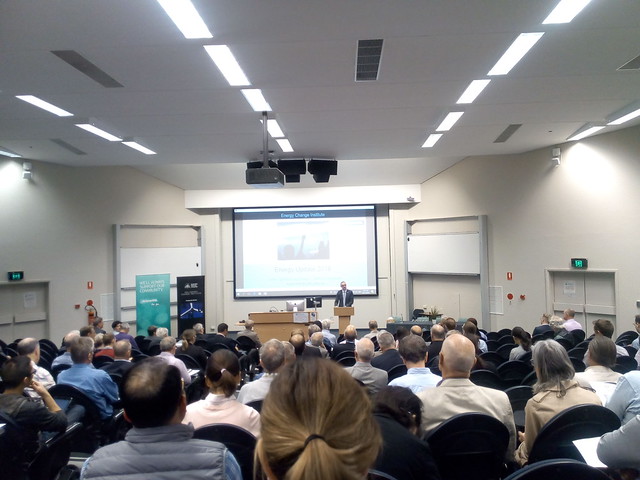
Greetings from the Canberra Innovation Network (CBRIN) where I am attending a meeting on "How can the ACT Government use AI to improve government services?" organised by the Pearcey Foundation. There are about 20 people in the room from government, industry and academia, with Dr Tim Turner chairing. I am not exactly sure why I am here, but when we went around the room I said I would teach this stuff, to students.

Each year, as well as sponsoring awards for Canberra entrepreneurs, the ACT Government sets a challenge for the Pearcey Foundation to address, with experts in Canberra. This year it is improving government services through AI. Apparently we are going to be doing brainstorming. 

Priority 1 is planning and development.

As it happens I know a little about ACT planning processes, as I chaired a local committee for redevelopment of the shopping center at Dickson. My suggestion was to train the staff to use AI, so they did not go off and use tools they should not, and put sensitive data into them. Also I suggested a tool to point citizens to other levels of government which provide relevant services. I am off to Singapore for Education and FinTech conferences in November, so did a quick search. I found the Singapore Government have had an AI for government plan since 2001, and have updated it since. So it would be worth looking at there experience (especially as Canberra is similar in some ways being a city state). One thing I put to the meeting was if AI could be used to improve social housing. As I was commenting on something another participant said, I commented "Like a smart patter book?". It turned out that wasn't what they meant, but perhaps this would be a good idea. NSW has a pattern book for cluster housing. If you use one of the designs it is pre-approved. The smart version would allow you to customise designs for different sizes and locations, but still meet planning requirements and get approved quickly. I then asked the meeting if there was an opportunity for small startup companies to provide AI products. It then dawned on me, this was why we were meeting at CBRIN. This raises the issue as to what is the role for government: do they need to build the software to do this, train the AI models, or can they just buy the service? Obviously Canberra's universities have teams of students who can build prototypes. 


I did the obvious, and asked Microsoft Copilot:

"The ACT Government can leverage artificial intelligence (AI) to improve public services by drawing on best practices and emerging trends from other jurisdictions. Here's a breakdown of how AI is being used and could be applied in the ACT:


---


### **1. Enhancing Service Delivery**

AI can streamline and personalize interactions between citizens and government services:

- **Customer Service**: AI-powered chatbots and virtual assistants can provide 24/7 support, answer FAQs, and guide users through complex processes like applying for permits or accessing health services[1](https://www.ncsl.org/technology-and-communication/artificial-intelligence-2025-legislation).

- **Healthcare Inspections**: AI can assist in analyzing inspection data to identify patterns and prioritize high-risk facilities for review[1](https://www.ncsl.org/technology-and-communication/artificial-intelligence-2025-legislation).

- **Road Safety**: AI can analyze traffic data to optimize road maintenance schedules and identify accident-prone areas[1](https://www.ncsl.org/technology-and-communication/artificial-intelligence-2025-legislation).


---


### **2. Responsible AI Governance**

Governments are increasingly adopting frameworks to ensure ethical and safe AI use:

- **Pilot Projects**: Many states start with pilot programs to test AI applications in public services before full-scale deployment[2](https://cdt.org/insights/state-government-use-of-ai-the-opportunities-of-executive-action-in-2025/).

- **AI Task Forces**: Creating cross-agency task forces helps coordinate AI strategy, assess risks, and ensure alignment with public values[2](https://cdt.org/insights/state-government-use-of-ai-the-opportunities-of-executive-action-in-2025/).

- **Impact Assessments**: Agencies are encouraged to conduct assessments to evaluate the societal, privacy, and equity impacts of AI systems[3](https://www.dlapiper.com/en-us/insights/publications/2025/04/white-house-releases-guidance-for-ai-acquisition-and-use-in-government).


---


### **3. Equity and Civil Rights Protections**

AI systems must be designed to avoid bias and protect vulnerable communities:

- **Bias Mitigation**: Guidelines can require agencies to evaluate AI tools for potential discriminatory outcomes, especially in high-impact areas like housing, employment, and education[2](https://cdt.org/insights/state-government-use-of-ai-the-opportunities-of-executive-action-in-2025/).

- **Transparency**: Publishing inventories of AI tools and their use cases helps build public trust and accountability[2](https://cdt.org/insights/state-government-use-of-ai-the-opportunities-of-executive-action-in-2025/).


---


### **4. Workforce and Procurement Strategy**

AI adoption should support—not replace—public sector workers:

- **Workforce Impact**: Agencies should assess how AI affects staff roles and ensure it enhances rather than displaces human work[2](https://cdt.org/insights/state-government-use-of-ai-the-opportunities-of-executive-action-in-2025/).

- **Smart Procurement**: Governments are updating procurement policies to ensure ethical sourcing of AI tools, protect data rights, and avoid vendor lock-in[3](https://www.dlapiper.com/en-us/insights/publications/2025/04/white-house-releases-guidance-for-ai-acquisition-and-use-in-government).


---


### **5. Legislative and Regulatory Frameworks**

The ACT can learn from other states that have enacted AI-specific laws:

- **Transparency Laws**: Requiring agencies to disclose their use of automated decision-making tools publicly[1](https://www.ncsl.org/technology-and-communication/artificial-intelligence-2025-legislation).

- **Worker Protections**: Ensuring AI does not undermine existing labor rights or collective bargaining agreements[1](https://www.ncsl.org/technology-and-communication/artificial-intelligence-2025-legislation).


Here’s a tailored proposal for how the ACT Government could implement AI to improve services across health, transport, and education:


1. Health

AI Applications

Predictive Analytics for Hospital Demand: Use AI to forecast patient admissions and optimize resource allocation.

Virtual Health Assistants: Provide 24/7 support for mental health and chronic disease management via chatbots.

Medical Imaging Analysis: Deploy AI to assist radiologists in detecting anomalies in scans faster and more accurately.

Implementation Steps

Partner with Canberra Health Services to pilot AI triage tools in emergency departments.

Collaborate with universities for ethical AI research in diagnostics.

Ensure compliance with privacy laws and conduct regular audits for bias.

2. Transport

AI Applications

Smart Traffic Management: Use AI to analyze traffic flow and adjust signals dynamically to reduce congestion.

Predictive Maintenance: Monitor infrastructure (roads, bridges, buses) to predict failures and schedule maintenance.

Public Transport Optimization: Analyze commuter patterns to adjust bus routes and schedules.

Implementation Steps

Integrate AI with existing Transport Canberra systems for real-time traffic updates.

Launch a pilot with AI-powered predictive maintenance for ACTION buses.

Use anonymized MyWay card data to train models for route optimization.

3. Education

AI Applications

Personalized Learning: AI tutors can adapt content to individual student needs and learning styles.

Administrative Automation: Streamline tasks like enrollment, grading, and feedback.

Early Intervention: Identify students at risk of disengagement or poor performance using predictive models.

Implementation Steps

Partner with ACT public schools to trial AI learning platforms in STEM subjects.

Train educators on ethical AI use and data literacy.

Establish a student data governance framework to protect privacy.

Cross-Cutting Recommendations

Create an ACT AI Taskforce: Include representatives from government, academia, industry, and civil society.

Develop an AI Ethics Framework: Ensure transparency, accountability, and fairness in all deployments.

Public Engagement: Host forums and consultations to build trust and gather feedback."


Wednesday, February 26, 2025

Energy Innovation in the Vault

Greetings from the Vault in Canberra, where an Energy Innovation Exhibition is being held. I was here a few weeks ago for an ACT Government Apartment Complex Electrification launch. This time there is about $20M in energy grants on offer from the ACT.


Some of the start-ups displayed seem readymade for the market. Examples are ways to repair old solar panels and an app which identifies where community batteries are needed. Others are a little more futuristic, such as a hydrogen powered speedboat (which looks like a USV from the Black Sea).


PS: * The technology does have defence application. At present there is concern over Australia's ability to patrol it's shores. One way is with small autonomous vessels. But these need more power than a battery can provide. This could be from hydrogen made on board, allowing the vessel to patrol for months.


Monday, May 16, 2022

Canberra Toolkit for International Student Promotions

The ACT Government provides a free online toolkit of materials for promoting Canberra. This includes for promoting international students to come to Canberra to study. As someone who writes a blog about education (highereducationwhisperer.com), I signed up for the toolkit. First thing I did was search for resources on "innovation". What came up were photos of Petr Adamek and Rachael Greaves from Canberra Innovation Network, and a couple of photos of the Mugga Lane Solar Farm. Those are relevant, but more pictures of students would be good, perhaps from CBRIN events.

But having found some images I am not sure what to do with them. I ticked a box below each image. I clicked on the basket item. But what happens next. Do I have to go to a checkout? Do I have to pay for them? I clicked anot basked icon further down the page and was at what looked like a checkout. This required me to describe what the photos were for and who the client was. The system, I assume, is designed for professional marketing companies.

This all seems a little old fashioned. In the modern era, you do a web search for materials, if the licence suits, you use them. You don't waste time explaining to some gatekeeper why you want to use them, or have to order and download them. You don't want to wait while your order is processed (why do stock photos have to be processed?)

It is useful to have attractive images, videos and test to show Canberra as an attractive place to come and study. However, university will need more than this to attract students, as they mostly study online now. In some ways this makes the city around the university more important, as the student will be spending very little time on campus (at least not in the classrooms). Also what will be important are employment opportunities in the region, during and after study.


Friday, July 26, 2019

Canberra Teaching Renewable Energy to India

Greetings from the ACT Renewables Showcase, at the Renewables Innovation Hub in  Canberra. The ACT Chief Minister is closing the event. He mentioned that the ACT will achieve 100% Renewable Energy in next year. However, as the population is increasing, the energy consumption will increase. The government will be looking at transport and buildings energy reduction. 
The Chief Minister mentioned he will be showicasing Canberra's expertise in renewable energy to India, at an upcoming visit. Earlier in the day I facilitated a workshop on "How Green is My Computer?". This was a taster for the course I designed on ICT Sustainability, run by the Australian National University. Many of my students are already from India, and the course is run online, so there is scope for more providing of such training.

High-Performance-Desktop-Replacement-Slim-Laptop by cmccarthy8  cc-by-sa nicubunu acquired from OCAL (Website) CC0 1.0
Computers > electricity > fossil fuel > CO2 > global warming.


This is an exercise from the short version, of the award winning university course "ICT Sustainability". Commissioned by the Australian Computer Society. The course has also been offered by the Australian National University, and Athabasca University (Canada).

Sunday, March 17, 2019

Effect of Educational Technology on Campus Needs

The ACT Government has commissioned the Australian National University (ANU) to estimate the number of students in Canberra's public schools in the next decade. This will take into account population growth, urban infill, and changes in preference for private versus public schools (the ANU is advertising for a demographer to work on this). However, another factor I suggest need to be taken into account is the use of technology in education. In the next ten years students will be predominately learning online. This will change the nature, and mix, of schools required, particularly for older students.

The assumption has been that students go to the same campus at fixed times, on fixed days, during a term. However, vocational education has already changed to a predominately on-line mode, and universities are in the middle of the same transition. This change will happen for older school students in the next ten years.

ANU Marie Reay
Teaching Centre
With a blended approach, students receive their learning materials online, with most assessment and routine administrative matters also handled online. Students study at home, or in a "learning center" (a library without books). Students undertake self organized group work, and may also attend some staff supervised workshop activities. However, there are few, if any, old fashioned classes with a teacher giving presentations. Last week I detailed how I am using this approach in the Australian National University's new Marie Reay Teaching Centre.


The change in teaching technique changes the design and mix of campus buildings needed. More informal learning space is needed, for individual and group work. Fewer lecture halls are needed, and almost no "classrooms". Rather than one large campus, an institution can have multiple small satellite campuses. These campuses can be shared between institutions, and be collocated with public facilities

As the ACT has one less level of government, it is much easier to combine school facilities with other educational and public functions. An example is Gungahlin College, which shares a building with the ACT Library and Canberra Institute of Technology. However, this could be taken further, with learning facilities shared more widely.

Thursday, November 29, 2018

Public Policy as a Canberra Export

Greetings from the Australian National University in Canberra, where Andrew Barr, ACT Chief Minister is addressing the ANU Energy Update 2018. He mentioned that the ACT Government (the local government for Canberra), had worked with Reposit Power, to produce a virtual power station (claimed to the the world's largest). The Chief Minister also commented that one of Canberra's exports was policy, including energy policy.

Professor Ken Baldwin, Director of the ANU Energy Change Institute, then gave the history as to how Australia ended up in the unusual situation of the government abandoning its has no effective energy policy, and the opposition adopting. He commented that while there had been a lack of government policy, industry had powered ahead.with renewable energy. He projected that renewable will take over from fossil fuel in Australia by 2024. At the current rate Australia will exceed its renewable energy target by 2020 and exceed emissions reduction targets. Even so, Professor Baldwin said that the certainty of policy was needed for this investment to continue, and for energy prices to be contained. Or as Jane Austen might have said: "It is a truth universally acknowledged, that a country in possession of a good energy demand, must be in want of a carbon price."

Tuesday, October 10, 2017

Future of School Education in Canberra

The ACT Government, which looks after Canberra's schools (both public and private) has issued a discussion paper and invited comment on The Future of Education. There is an invitation to join the conversation through social media #EducationforthenextGeneration on Twitter and Facebook, plus and the ACT Government own Your Say Platform.

These discussion questions were provided to start the conversation:
  • "What works, or could be improved in our education system?
  • How do we make sure the way we teach suits how every child and young person learns?
  • What does success look like? How can we help our children be successful in a way that suits them?
  • How should schools; their communities and the community sector better connect to support learning?
  • How can we increase access to affordable quality early childhood education and care (childcare), particularly prior to preschool?
  • How do we make sure all vulnerable children and young people have high quality education and care?"

Here are some thoughts on what could be improved:

"The ACT Government could provide training for new teachers so they are ready for the transition from campus/classroom based to primarily on-line education. While school campuses are likely to continue to be provided, especially for younger students, most of the education for older students is moving on-line and off-campus. The ACT Government already has some excellent initiative for this, such as the Canberra Institute of Technology having facilities integrated into the Gungahlin
public library and collocated with Gungahlin College.

Demolition of Manning
Clark Centre
(ANU 2017)
However, teachers need to be trained to teach using technology and also how to teach in teams for the smaller, but still important part of learning, which will take place on campus.

Australia's universities are phasing out obsolete lecture theaters, replacing them with blended, flipped and work integrated learning. The ANU Manning Clark Center lecture theater complex was demolished a few weeks ago, to be replaced with flexible spaces.

The best way to prepare teachers to teach in new ways is to train them using the same techniques. Canberra's teachers need to be comfortable and familiar with learning on-line and teaching in a team with other teachers.

I have explored some of these topics in my book on Digital Teaching.

Wednesday, May 17, 2017

Peace Through Superior Innovation

Kate Lundy
Greetings from the Canberra Innovation Network (CBRIN) office, where I am attending a ACT Defence Industry Forum. Former Senator for the ACT, Kate Lundy, the ACT Defence Industry Advocate opened the event. She pointed out that while defence industry in South Australia is discussed in the media, Canberra is the location of the ADF headquarters and many supplier companies. This is timely as I was on a panel for ANU software engineering students this morning, including a discussion of cyber-security and  radar design for warships (which is done in Canberra).

The choice of CBRIN for this event is interesting, as it is usually associated with web startups for consumer products, which would seem a long way from military systems. However, supporting the heavy iron military equipment are thousands of products and services provided by small specialist companies. I saw this first hand in 1997 when taking part in a multi-nation military exercise in Queensland. Not only were there companies at the temporary base set up for the operation, but deployed on warships at sea. I flew out into the Coral Sea by military helicopter to meet with my colleagues on the US fleet flagship, where I bumped into many civilians supporting the military.

Petr Adámek
Petr Adámek, the new CEO of CBRIN challenged the defence industry to think about how innovation could be better done. One way I suggest is to look at adopting some of the gig-economy techniques to defence services. This does not need to involve guns and bombs. Most defence spending goes on personnel: training people, feeding them, and keeping them healthy. The military also spend a lot on "logistics": getting materials needed to the right place at the right time.

A current example is the ADF restructuring to its traditional role as an amphibious fighting force. Australia has invested several billion dollars in amphibious warfare ships, which can transport personnel and equipment across the region onto a shore. However, retraining the Army to be effective marines, to get all the supplies they will need to where the ship is and all of the support on board is an opportunity for many new products and services.

Saturday, November 26, 2016

Canberra Renewables is the University of the Future

This week I attended the opening of the Less Than Two  Degrees Renewables Innovation Hub in Canberra. This is a new office building professionally fitted out, specifically as an innovation hub. This contrasts with the typical innovation center in a converted warehouse, such as  Fishburners in Sydney. As well as being an excellent design for an innovation center, Renewables Canberra provides a template for the university of the future.

Half the ground floor of Renewables Canberra is open space for events. This area has no permanent furniture: it just is just a large room. The other half of the building has offices and meeting rooms around the periphery, each with a frosted glass inner wall. The interior has rows of desks on wheels, with clip on power boards, connected to cables from the ceiling. There are rows of lockers forming room dividers. There are two kitchens, with some bench seating.

The space allows for individuals or small groups to start at the open plan desks (keeping their belongings in the lockers) and then graduate to an offices, or suite of offices.

The desks are on wheels and and be pushed aside for events, or to make a classroom. I suggest this will be the design of the university campus of the future. The space can be rearranged as required, for individual, small group work or large classes.

One addition I would make to the design is cafe booths on wheels. With this two rows of bench seats (each on wheels) is arranged facing a table between (also on wheels, but remember to lock all the wheels for a semi-permanent arrangement). These units provide high density, semi-private meeting spaces for groups of six, with the fabric of the high backs on the bench seats absorbing sound.

Another addition would be USB power sockets. USB sockets are much smaller and less intrusive than mains sockets.

The Australian National University is having a Union Court Revitalisation Project Update, 7December 2016, 1 pm. This would be a good place to incorporate multi-use spaces similar to Renewables Canberra.

Monday, November 14, 2016

Renewables Innovation Hub Opening in Canberra

The Canberra Renewables Innovation Hub is having a grand opening 4pm 22 November 2016. The official name for the facility is the "<2degrees Renewables Innovation Hub"*, and is dedicated to helping renewable energy and cleantech start-ups. The hub on the northern end of the innovation zone I previously identified between Canberra's CBD and the ANU campus.

ps: * Innovation hubs seem to delight in obscure and hard to pronounce names. This one is a spin-off of "Entry 29".

Thursday, September 29, 2016

Tablets for Canberra High School Students

Canberra goes to the polls in a few weeks time to elect a local government. If reelected, the governing Labor Party has promised a tablet computer for each of 6,000 Canberra high school students, at a cost of AU $17.2 M, over four years. There are better alternatives.

The tablet proposal works out to about AU $2,800 per student, which appears expensive. There are now folding touchscreen laptops about the size of an A4 pad, for under $500. These are suitable for older students.

However, is issuing standard devices to students educationally useful? There was a previous Australian national program to provide a computer for every high school student and have been laptop and tablet programs for students in other countries. The best known of these programs was the One Laptop Per Child Project (OLPC). Such programs have not been shown to significantly benefit education and may have done some harm, by diverting resources from other educational initiatives.

An alternative strategy for Canberra would be to ensure that educational resources are available on the range of devices students have at home and school. A small fund could provide for disadvantaged students who cannot afford a $500 device. More could  could then be spent on training teachers for the Australian Digital Technologies Curriculum, using the CSER Digital Technologies Courses and the Inspire Center.

Funds could also be used to allow some of Canberra's teachers to work on new materials for both Technologies curricular, for senior students.

Sunday, August 23, 2015

Low Cost Vocational Training for Canberra Residents

The ACT Government is subsidizing the cost of Vocational Education and Training (VET) programs for people in Canberra. The Skilled Capital Vocational Education Training Program covers courses offered both by commercial Registered Training Organizations and the Canberra Institute of Technology (where I got my Cert IV in T&A).

There is a wide range of qualifications covered by the courses, but there is a cap on the number of places in each. The list appears to reflect the demand for skilled workers in the Canberra. The subsidy varies from qualification to qualification and is up to half the course fee. It is not clear why the variation in subsidy, but perhaps this reflects the jobs priorities of the ACT Government.


There are limits on eligibility, for example being an Australian citizen or permanent resident,  living or working in the ACT.

Wednesday, August 13, 2014

Teaching Innovation in Canberra

Greetings from the Australian National University in Canberra, where the Innovation ACT 2014 Launch is taking place. For the last few years, the ACT Government has sponsored this competition to encourage Canberra's Higher Education students to learn how to turn their ideas into businesses. The completion was devised by ANU's Engineering and Computer Science College. Previously I have talked at the event and been a participant and later a mentor. This year I am designing a university course which will award credit for students undertaking this competition, or similar ones. Some argue that innovation cannot be taught in a formal course, it has to be experienced. However, I think it should be feasible to teach the theory in academic classes and then have the students innovate in practice (much as happens in architecture and design schools at university). If all goes well the new course will be available from second semester 2015. There are numerous innovation startup books , but I hope to avoid making the students read any of them. Universities interesting in running the course can contact me for details.

Innovation ACT has a format similar other "start-up" competitions. Teams attend presentations and workshops to learn how to prepare a pitch and business plan and then compete in various stages, winning prizes. The Innovation ACT competition broke with tradition by having only two short speeches at the launch. Most of the time was taken up with a short pitch competition. The first two were "InGiv" and "Butterfly Effect", proposing companies to assist social enterprise (that is non-profit organisations). There seems to be a lot of innovations with start-up companies offering services to non-profit organisations. The third Tradesmin was for small trades companies (an example of re-intermediation). Bio-Mine was offering authenticated electronic documents (I could not see how this was different to the Digitary certificates issued by ANU). BeeHub was to offer FAQs for university students. "Swap" was a barter system and "Hidden Talent" an online art gallery. The Winners were: 1. Bio-Mine; 2. Tradesmin; 3. InGive and BeeHub.

ps: There are also some free  online courses (MOOC), on innovation, such as:
  1. "Entrepreneurship 101: Who is your customer?" (MIT, edX), 
  2. "Social Entrepreneurship" (University of Pennsylvania, Coursera)
  3. "Innovation and Enterprise" (Loughborough University, Futurelearn).
  4. Coursera)
    "Entrepreneurship and Family Business" (RMIT, Open2Study)
    "Beyond Silicon Valley: Growing Entrepreneurship in Transitioning Economies" (CaseWestern Reserve University, Coursera)