Showing posts with label ANU Energy Change Institute. Show all posts

Friday, August 4, 2023

Australia an Exporter of Renewable Energy Embedded in AI Models?

The energy use of AI was discussed by Schwartz, Dodge, Smith, and Etzioni (2020). The authors noted that Amazon AWS was 50% powered by renewable energy. Perhaps Australia could become an exporter of renewable energy embedded in Green AI models.

In 2017 my colleagues at ANU initiated a project to cover large areas of northern Australia with solar panels, and export the energy. The university invested $10m in research, and some of it is now being commercialized.

Options investigated included a cable to Singapore, & synthetic fuel in tankers. But an alternative was "Green Steel". The energy would be used to refine iron ore in Australia. The embedded energy would, in effect, be exported in the steel. The steel is much easier to ship than electrons, hydrogen, or ammonia. The same thing might be done with AI.

The world would send AI requests to Australia. These would be forwarded
to data-centers located at high capacity grid connections to solar and wind farms. AI models would be trained using the renewable energy, making an "AI battery", with the embedded energy stored in the models.

Saturday, August 8, 2020

ZeroCO2 Hackathon 2020

ZeroCO2 Hackathon
Canberra's ZeroCO2 Hackathon 2020 runs online over two-weeks, starting 18th August and is open for registrations. Teams will work on business ideas to reduce domestic and commercial carbon emissions, with $10,000 in prizes. I mentored teams in the 2019 competition and have volunteered again. 

 Due to COVID-19 this years event is entirely online, whereas last year we were all at the Canberra Institute of Technology's excellent renewable energy training facility. However, this will be my fourth time helping with an online hackerthon this year, and the activity has easily translated to the online format.

Wednesday, July 24, 2019

Coal transition: power sector, regional adjustment and policy

Greetings from the Australian National University in Canberra, where the Coal transition: power sector, regional adjustment and policy conference just opened. The chair pointed out that while a transition from coal to renewable energy was happening in Australia, to create a major export industry, but that the politics of regional development and employment needed to be taken into account.

The chair just invoked the Chatham House rule, so I can tell you what the speakers say, but not who says it. I have been to industry events on regional defence strategy under the rule, so military and government personnel could speak freely, but this is unusual for an academic conference.

The first speaker talked about Germany's transition out of coal, with the last mine closed. However, Germany imports coal, including from Australia, as it has the EU's largest proportion of coal fired electricity generation. It is planned to phase it out by 2038. While the speaker said Germany had phased on coal, then then said that  Lignite is still mined. The form of poor quality brown coal is mined in the former East Germany, where there is high unemployment. Some of the newer coal fired power stations in Germany have a lifetime out to beyond 2060, so closing them by 2038 will require government intervention (by regulation or a auction mechanism).

The speaker pointed out that Germany was the only European country aiming to phase out coal, without use of nuclear power. This creates a problem of how to provide continuity of supply when there is limited sun and wind. An extreme form of this is Nuclear Winter, mentioned by Professor  Schmidt, Vice Chancellor of the Australian National University, last Thursday, when in introducing the energy entrepreneur  Dr Lachlan Backhall.  Professor  Schmidt suggested that nuclear power might be needed during a nuclear winter. Dr Blackhall seemed taken aback at the suggestion, and quipped he was delighted Professor  Schmidt thought humanity could survive a nuclear winter.

The next speaker this morning  outlined the use of coal for power generation in Australia. They described any new coal power station in Australia as a "white elephant", with renewables quickly supplanting coal. With no new coal fired power investment the question is when the existing plants will be economically non-viable. Exiting plants are earning good returns for their owners, due to market power, however, many could be uneconomic by the end of the 2020s. The problem is the sudden closure of a few large plants will cause price spokes benefiting the few remaining plants, and requiring expensive government intervention.  The speaker proposed an auction based mechanism for orderly exit from coal. They derided the idea that a three year notice by plant owners was sufficient, as it takes many more years to provide a replacement.

The third speaker focused on what would be needed for the transition from coal in Victoria. This included a complex map showing the main energy generation plants and inter-connectors. This was a very matter-of-fact presentation, planning the transition, within the limitations of only a three year notice from coal fired power station owners. They point out that just planning new faculties could take five years, before construction started. An additional problem is that old power stations become unreliable, long before they are closed, and this also needs to be planned for. What was proposed was forward planning in anticipation of closure. What I found interesting was that the discussion was limited to the planning of the transmission networks, with the provision of actual generating capacity left to the market. One issue they are addressing is the 14 days capacity needed to complement renewable energy. Their analysis was that if there is more than a 20% chance of a major Victorian power station closing early, it would be worth building an extra in-connection early. However, they were still not planning actual generating capacity.

The next speaker suggested that rooftop solar was being installed at such a rate, it would allow earlier closure of coal fired power stations. It is hard to imagine that householders installing a few panels on their roof can replace a huge power station, but Australia leads the world with home solar power. This is being complemented by construction of wind farms, many of which are being built as private company initiatives, so their full impact has not been apparent. This is a very positive picture, especially for governments, which would need to do little except see that a network was in place to carry the power. The last part of the puzzle was storage needed for when the wind is not blowing or sun shining.

The last speaker discussed coal jobs and the transition to renewable. They first pointed out that coal mining jobs are very different to work in power stations. Government policy had mostly addressed power station jobs, not coal mining, and the speaker questioned the viability of this. Job statistics conflict as to the trend of jobs in coal mining, but it is clear that coal mining is not a major employer. Coal miners are younger than power station workers ("They are aging with their plant"). About half of coal miners are low skill machinery operators, whereas power station workers are more highly skilled, making them more employable. The experience of other countries is that only about one third of redundant coal miners get secure jobs, with a third becoming casual, and one third retiring. The Australian experience from the Hazelwood closure, which had government funding, showed a similar pattern.

Statistics for renewable energy employment are less clear, but it appears half the jobs are in roof top solar installation. Employment per kwh of energy are lower than for coal. The low skill proportion of jobs is similar to coal mining (for installers, rather than machine operators). Large scale wind projects tend to be more distributed than coal mining, and not in the same locations. What the speaker did not discuss was that most of the jobs for renewable energy are installation. Once a solar panel or wind turbine is installed, not much maintenance is needed over the decades of life. Of course this also increasing applying to a coal mine, where after construction the mines are increasingly automated, and operated remote from the mine site.

Tuesday, March 5, 2019

Renewable Energy Hackathon in Canberra

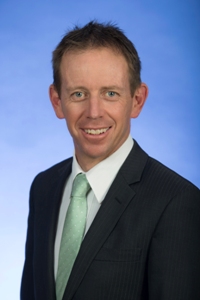
Shane Rattenbury, 
ACT Minister for Climate
Change and Sustainability
Greetings from the ZeroCO2 Renewable Energy & Sustainability Hackathon at the Canberra Institute of Technology (CIT). I will be mentoring teams working for two days on renewable energy, waste disposal, sustainability in food and manufacturing, transport & travel, smart cities, building and education. There is a a $10,000 prize pool, plus access to Canberra Innovation Network desk space and coaching.

It is easy to get cynical: what can you do to save the planet in two days? Certainly new tech can't be completed in that time, but new ideas of what is needed, and how what is available can be better used. The hackerthon is a compressed version of the group project teaching techniques we use in ANU Techlauncher.

Before the hacking, we have Shane Rattenbury,  ACT Minister for Climate Change and Sustainability speaking.The ACT Government is currently working on the sustainability plan for 2025. He pointed out that this gets more difficulty when households have to change their behavior. Canberra's transport emissions are increasing.

There is also a Renewable Energy and Sustainability Industry Forum taking place in conjunction with the hackerthon. Both events will end with competition results at  First Wednesday Connect, 5pm tomorrow.

All events are taking place in Building K at CIT Bruce  Campus. This was a purpose built for renewable engendering. There is a big workshop on the ground floor, full of neat color coded pipes and machinery. Above the workshop are floors of classrooms, and then space for texting solar panels on the top.

ps: CIT is where I studied for my Certificate IV in Training and Assessment.

Tuesday, February 12, 2019

Wooden solar panels?

Greetings from the Energy Change Institute Open Day at the Australian National University in Canberra. During his keynote presentation, Professor Armin Aberle, from Solar Energy Research Institute of Singapore (SERIS), mentioned the problem of architects accepting solar panels on buildings. I suggested collaborating with architects who are exploring using new modular building techniques, such as BVN, with the ANU Kambri complex, opened yesterday. 

Professor Aberle, pointed out that high rise buildings have relatively little roof space and there is now technology for transparent panels which can be used as windows. But these panels need to look good, and need to be easy to install. The new student towers at ANU have prefabricated wooden panels hung on the outside. These are covered with ceramic "biscuits" in a factory, and conventional windows, before installation. This system could be used with solar panels and translucent panel windows. These would be hung on the building and then plugged into the grid.

Prefabricated solar building panels  could be relatively low-tech, with the same mounting systems as used for buildings simply screwed to the wooden building panels.  The solar elements would be attached and wired to a plug. The completed panels would be stacked on a truck. After lifting into place the panels would be plugged in.


ps: I am a member of the ANU Energy Change Institute, teaching ICT sustainability to masters students.

Tuesday, October 23, 2018

Energy Transformation with Social Equity

Professor Kenneth Baldwin,ANU ECI Director
Greetings from the Australian National University in Canberra, where I am taking part in a symposium on
"Social equity in the energy transformation". ANU researchers project that the crossover to more renewable than fossil fuel electricity generation will happen in Australia by 2025. The question now is not if this will happen, but how to handle the social and economic effects of this. Without action this may make social inequities much worse in Australia.

Topics:
  1. Social Equity in Energy Supply
  2. Social Equity in Energy Consumption
  3. The Emerging Role of Energy Prosumers
ps: I am taking part as a member of the ANU Energy Change Institute and as I teach ICT Sustainability.

Wednesday, November 29, 2017

How quickly can a pumped hydro system be built?

Greetings from the Australian National University in Canberra, where the ANU Energy Update 2017 is ending. The last speaker is speaker Ms Audrey Zibelman, CEO Australian Energy Market Operator (AEMO). She pointed out that the world's largest battery was installed in South Australia in only a few months and a new solar farm was increased in Queensland similarly quickly. It occurred to me that there could be an opportunity for similarly fast installation of pumped-storage hydroelectricity.

While batteries are useful for storing power for a few minutes or hours, renewable energy systems need days of storage. ANU's Professor Blakers (who is at the event today) has identified 22,000 potential pumped hydro sites in Australia. However, building reservoirs, pipes, pumps, turbines and grid connection can take ten years.

It is not feasible to build a pumped hydro system in the few months it took for South Australia's battery, but it may be feasible in one or two years. This would place the option within the decision cycle of Australian governments and business.

The time to build a pumped hydro system could be shortened using modern project management and manufacturing techniques. The site could be surveyed using satellite and drones. At the same time the site's social and legal issues would be examined on-line.

The dams, pipes, and buildings could be manufactured in standardized modules which can be shipped across the world in standard container loads.

The turbines and pumps could be additive manufactured. Australian researchers produced a 3D printed a gas turbine in 2016.Multiple small units could be used, for ease of manufacture, transport and installation (at the cost of efficiency). Units could be made small enough to be transported to the site by heavy lift helicopter.

As a quick back-of-the-envelope calculation, consider how many modular industrial water tanks would be needed to store as much energy as the SA 129MWh battery. Modular steel water tanks are available with a 748kl capacity (5.6m tall x 13 m diameter). Using the Simplified PHES Calculator (Andrew Blakers, Matt Stocks, Bin Lu, Kirsten Anderson and Anna Nadolny), with a 300 m head each tank will store 0.4 MWh of energy. So 323 tanks would be required to store as much energy as the SA battery. The materials for each tank would be within the capacity of a heavy lift helicopter, removing the need to build a road to the mountain top.

Pumped hydro systems could be built in stages, so they can start producing power (and revenue), with extra modules added later.

It would be tempting to focus on the engineering aspects of such a project: the 3D printed turbines and modular pipework. However, it is likely to be the planning of the land use which will create the greatest obstacles.  One technique which has been found to be effective in Europe in reducing complaints about wind turbines from the local community is to offer them a financial stake in the project. The same may work with pumped hydro.

It is very difficult to convince a politician to fund a project which will not be completed for a decade, long after the next election, or a business-person long after their bonus has been calculated. It would be very much easier if they can see progress in months and completion in a few years.

This might be a suitable project for the Canberra Innovation Network (CBRIN) or the Renewables Innovation Hub.

ANU Energy Update 2017

Greetings from the Australian National University in Canberra, where the ANU Energy Update 2017 just opened. The keynote speaker: are Dr Alan Finkel, Chief Scientist and Ms Audrey Zibelman, CEO Australian Energy Market Operator (AEMO).

The opening address is by Dr Mike Kelly, Shadow Assistant Minister for Defence Industry and Support. Dr Kelly pointed out the defence dimensions of energy policy. He also described the Snowy Hyro Scheme as the "grandfather of renewable energy". He pointed out that the renewable energy stored in the Snowy Hyrdo Scheme now comes from sources including South Australian wind farms.
ANU Energy Change Institute
2017 Energy Update and Solar Oration
Program

8.00-8.30 Registration
8.30-9.00 Introduction: Professor Ken Baldwin, Director, ANU Energy Change Institute
Welcome: Professor Brian Schmidt, Vice-Chancellor, ANU
Opening Address: The Honorable Dr Mike Kelly, Shadow Assistant Minister for Defence Industry and Support
9.00-10.15
Keynote address: Implementing the National Electricity Market Review, Dr Alan Finkel, Chief Scientist
10.15-11.00 Morning Tea11.00-12.30 Special Presentation on the 2017 World Energy Outlook, Mr Ian Cronshaw, International Energy Agency (IEA), Paris
12.30-13.30 Lunch13.30-15.00 WEO2017 focus theme, China’s Energy OutlookProfessor Frank Jotzo, Crawford School of Public Policy,
Panel discussion and Q&A
Mr Qiang Wang, Embassy of the P.R. China in AustraliaDr Xunpeng (Roc) Shi, University of Technology Sydney
Mr Ben Jarvis, Department of Foreign Affairs and Trade
15.00-15.30 Afternoon Tea
15.30-17.00 WEO2017 focus theme – Making Sense of Australian Gas Policy
Presentation by Professor Quentin Grafton, Crawford School of Public PolicyPanel discussion and Q&A
17.00-17.10 Dr Ross Lambie, Department of the Environment and EnergyMr Damian Dwyer, Australian Petroleum Production & Exploration Association
Dr Justine Lacey, CSIRO Land and Water
Closing remarks - Professor Ken Baldwin, Director, Energy Change Institute
ACT Government/ANU Solar Oration Program
(also held in the Copland Theatre)
17.15 Finger food and drinks served in the foyer
18.00 Welcome
Professor Michael Cardew-Hall, ANU Pro-Vice Chancellor (Innovation)
18.02 Update on progress towards 100% renewable energy in the ACT and
presentation of student prize.
Mr Shane Rattenbury, ACT Minister for Climate Change and Sustainability
18.08 Introduction
Professor Andrew Blakers, Research School of Engineering
18.10 The Australian Energy Transition Ms Audrey Zibelman, CEO of the Australian Energy Market Operator
19.10 Q&A
19.40 Close

Thursday, July 7, 2016

Beyond Grid Parity for Solar Power


Greetings from the Australian National University in Canberra, where William ("Bill") Tumas from the US National Renewable Energy Laboratory is speaking on "Solar Energy R&D and Materials by Design". Dr. Tumas argued that further advances in photo-voltaic (solar) energy were possible to go beyond grid parity, that is not just make solar power as cheap as coal generated electricity, but make it much cheaper. He used the analogy of the development of the automobile: early cars were used as replacement for horse drawn carriages, but the performance of cars did not end with "horse parity".

Dr. Tumas also pointed out that much of the cost of PV power is now not the cost of the PV material, but mounting and installation of the panels. The PV modules cost less than half of the total cost, with the Balance of system (BOS) cost being about 60%. It seems to me that much of the cost is not in manufacturing or installing the panels, but in selling them. If homeowners could simply tick a box when building a house, or buying a unit off the plan and have PV installed, that would considerably reduce the cost. A pre-fabricated PV array could then be delivered to the building site already configured as a roofing panel, positioned on the building and plugged into a pre-installed socket. As well as reducing the cost of surveying the roof for suitability of panel installation, this would eliminate the cost of a separate roofing panel.

There are proprietary panels for installation in roofs, such as the Solatile roof integrated solar panel. However, these still require installation in a roof installed frame. An alternative would be to have standard glass panels installed in a framework in the factory in units small enough for truck transport.

This could be made easier for retrofitting if the necessary wiring was installed in all houses during construction, just as Canberra houses are required to be built with plumbing needed for rainwater reuse.

Beyond Grid Parity for Solar Power


Greetings from the Australian National University in Canberra, where William ("Bill") Tumas from the US National Renewable Energy Laboratory is speaking on "Solar Energy R&D and Materials by Design". Dr. Tumas argued that further advances in photo-voltaic (solar) energy were possible to go beyond grid parity, that is not just make solar power as cheap as coal generated electricity, but make it much cheaper. He used the analogy of the development of the automobile: early cars were used as replacement for horse drawn carriages, but the performance of cars did not end with "horse parity". Dr. Tumas also pointed out that much of the cost of PV power is now not the cost of the PV material, but installation of the panels.

Tuesday, December 8, 2015

Nobel Laureate on Climate Change

Greetings from the opening of the Australian National University in Canberra, where Nobel Laureate,  Professor Brian Schmidt, just opened the 2015 ANU Energy Update. In doing so he mentioned the "The Mainau Declaration 2015 on Climate Change" issued by a meeting of Nobel Laureates. At a more down to earth level he suggested that ANU staff and students should start a conversation on climate change with the government neighbors in Canberra.

The next speaker is Byron Washom, speaking on University of San Diego's Microgrid.

Monday, December 7, 2015

Live Report from Paris Climate Change Meeting

Greetings from the Australian National University in Canberra, where Associate Professor Frank Jotzo is speaking live on-line from the United Nations Climate Change Conference (UNFCCC) in Paris. He describes the mood at the conference as "cautious optimism". Frank commented that the approach having heads of state speak at the beginning, rather than then end was working well. Australia was seen to be having a positive note "Australia is back", but as significant as Canada. Frank said Australia is supporting language for a 1.5 degree target. He commented that the alternative wordings in the draft agreement were "very strong", but there would need to be a mechanism to "ratchet up" the targets. All claims from developing countries are unlikely to be accepted. Australia has pledged $200M to the green climate find and is charing that part of the negotiations. Lastely Frank commented that the section of the agreement about what countries will do domestically was "A mess of square brackets" (this being the way not-agreed text is indicated).

Frank then discussed ANU research on what Australia might do to be carbon neutral by 2050. This would be by shitting down the high polluting brown coal fired power station and replacing them with solar power.  He argued this could be done "without tears".

Later today I will be talking about how I teach ANU students to use ICT to reduce carbon emissions.

Tuesday, September 15, 2015

Microgrids Powering Australia and Indonesia

Greetings from the ANU University House at the Australian National University in Canberra, where I am taking part in a workshop with researchers from Indonesia on micro-grids to power our nations. The workshop is run by the AIC Energy Research Cluster of the Australia-Indonesia Centre.

A microgrid has small electricity generators connected to a local load. The microgrid can be connected to a larger national grid, or operate autonomously. In my graduate course "ICT Sustainability" I teach how to estimate the energy used by computers and telecommunication and, more importantly for micro-grids, how to reduce energy consumption by using ICT. Micro-grids depend on having computer systems to ensure the production and consumption of power are balanced. I will be looking at how to keep and analyze the large amounts of data needed to do this for Indonesia and Australia.

One option I have suggested is displaying energy data using mobile phone compatible web pages. Some buildings have flat screen displays dedicated to energy monitoring, but these are rarely looked at and themselves consume energy (and cost money).   A small simple web page can be displayed on a smart phone. To check it is compatible you can use the
W3C mobileOK Checker (the Australian W3C Office is at ANU).   

Some work has been done in the USA on energy data analysis:
One I idea I suggested to the workshop was to clone the ANU TechLauncher program and the Canberra Innovation Network for energy start-ups in Indonesia.

ps: It is an interesting time to be doing this, as Australia has a new government today, which may have new policies on climate change and energy use.

References

Khamphanchai, W., Saha, A., Rathinavel, K., Kuzlu, M., Pipattanasomporn, M., Rahman, S., ... & Haack, J. (2014, October). Conceptual architecture of building energy management open source software (BEMOSS). In Innovative Smart Grid Technologies Conference Europe (ISGT-Europe), 2014 IEEE PES (pp. 1-6). IEEE. http://dx.doi.org/10.1109/ISGTEurope.2014.7028784

Friday, August 14, 2015

Reducing Australian Electricity Demand

Dr Hugh Saddler will speak on "Electricity demand and Australia’s renewable energy targets: where to?" at the Australian National University in Canberra, 12.30pm, 26 August 2015.
"Average annual electricity consumption per residential consumer has been falling steadily in every state since around 2009. The presentation will examine the factors which may explain this reduction and speculate on where electricity consumption may go in the next few years. It will also include some preliminary results from an analysis of how low income households use electricity."

Thursday, January 22, 2015

Energy Storage for the Grid and Cost Based Discovery

Greetings from the Australian National University in Canberra, where Professor Donald Sadoway (MIT) is speaking on"Innovation in Stationary Electricity Storage". He started by saying the subtext for his talk was "Cost Based Discovery": researches have to consider the implementation cost of what they are investigation, they can't just pass it on to industry and hope it will be affordable. Also Professor Sadoway criticized his colleagues at MIT who are producing Massive Open Online Courses (MOOCs), which he said were not helping with basic education in developing nations, as the typical MOOC student is a western university graduate (and only 5% finish the courses anyway). Professor Sadoway also pointed out that an online course is of no use in parts of Africa where there is no electricity supply. This was the segue into the topic of low cost high capacity batteries to make renewable energy sources feasable for baseload.

Professor Sadoway described his investigation of possible battery chemical processes, looking at what are low cost materials which would be inexpensive to process. You can read some of his research work in Bradwell, Kim, Sirk, & Sadoway (2012) and Kim et al. (2012). But the presentation was more about how to research to produce a a cost effective result. This is a message which Australian university researchers need to list to: they can be academically rigorous and also produce something of use to the community (and will make money).

Professor Sadoway claimed 70% efficiency for a liquid metal battery, which is comparable to pumped hydroelectric storage (the only form of electricity storage in common use). He argued that while a tub of hot liquid metal sounds dangerous he pointed out that a leak in the containment vessel will be self sealing (as the metal cools, it hardens).

One possible early application Professor Sadoway mentioned for liquid metal batteries was powering forward military bases. Solar panels are not sufficient on their own, and while you can package them with diesel generators, but fuel transport is still an issue. Professor Sadoway argued that a liquid metal battery could be easily transported, as it is solid when cold and would be resistant to small arms fire (and also silent).

While currently being shipping container sized and intended for stationary use, the liquid metal batteries already have an energy density similar to lead acid batteries and improving. So I asked Professor Sadoway is his batteries would work in a submarine. He said this had been discussed with the Pentagon and there were no particular problems. This could be of interest to Australia, which is considering lithium iron battery submarines with Japanese technology for the Collins class submarine replacement in Project SEA 1000.

Professor Sadoway then mentioned that he teaches first year chemistry. He mentioned the lectures are videoed and that Bill Gates watched and came to visit. This indicates that understand what MOOCs are really for: self promotion. ;-)

References

Bradwell, D. J., Kim, H., Sirk, A. H., & Sadoway, D. R. (2012). Magnesium–Antimony Liquid Metal Battery for Stationary Energy Storage. Journal of the American Chemical Society, 134(4), 1895-1897.
Kim, H., Boysen, D. A., Newhouse, J. M., Spatocco, B. L., Chung, B., Burke, P. J., ... & Sadoway, D. R. (2012). Liquid metal batteries: Past, present, and future. Chemical reviews, 113(3), 2075-2099.

Monday, December 8, 2014

US Energy Expert Awarded Honorary Doctorate by ANU

Greetings from the Great Hall of the Australian National University in Canberra, where Dr. Steven Chu, Professor of Physics and Molecular & Cellular Physiology and former U.S. Secretary of Energy was just awarded an honorary Doctorate for "Science in the Service of Society". Dr. Chu was the first energy secretary who was a scientist and was charged with increasing renewable energy use. Last week he addressed the Light, Energy and the Environment Congress and I was impressed with the way he combined knowledge of the science and politics of climate change. ANU's conferring of this award could be seen as a subtle criticism of the Australian Government's "direct action" climate change policy, as he oversaw a very different policy as part of the US Obama administration. Dr. Chu is also be speaking at the ANU ECI Energy Update, tomorrow, 9 December 2014.

Monday, November 24, 2014

Making Stealth Paint for Aircraft

Greetings from the Australian National University where Alan W. Weimer from the Colorado Centre for Biorefining and Biofuels,, University of Colorado  is speaking on "Lab Curiosity to Commercial Process- what it takes". He started by talking about his experience of working on how to create boron carbide in industrial quantities. Alan commented on the problem of working with "white glove scientists" who concentrated on the purity of the final product, not the cost of the production process. The key to an efficient process was rapid heating. The problem was to produce a reactor vessel which could tolerate the high temperature. The solution was a transport flow, where the particles fall through a gas. However, the problem then was to find a market large enough to justify using the process. A new market was found in cutting tools for electronics production. Alan then changed topics and discussed the coating of particles with anti-corrosion materials for use on stealth aircraft.

Thursday, July 24, 2014

Climate and Energy Research

Greetings from the "2014 ANU Climate and Energy Research Student Expo" at the Australian National University in Canberra. The event goes until 5pm and there is plenty of room, if you would like to join in.

Dr. Margi Böhm (CSIRO) started by talking on post PhD career pathways. But so far she has just been repeating some of the professional lessons which students should learn when they first arrive at university. Hopefully we will get on to climate and energy research soon.

Tuesday, April 8, 2014

Sustainable Development and Energy Poverty and Sustainable Development and Energy Poverty

Greetings from the Energy Change Institute at the ustralian National University in Canberra, where Professor Gautama, of Washington University's Brown School, is speaking on " Energy Poverty", author of "Fires, Fuel, and the Fate of 3 Billion: The State of the Energy Impoverished" (short video about the book also available). He is at ANU with Professor Chris Greg of the UQ Energy Institute. Greg pointed out that most energy research at universities concentrates on large scale engineering, whereas most of the world is dependent on small scale sources. Professor Gautama expanded on this, explains that the developing world relies on cruse cook-stoves for their primary energy system. He argues that addressing this is a moral imperative for researchers. However, many initiative for developing nations have failed in the past, between the stages of development, implementation and maintenance. Developing nations have very intelligent people and markets, so I suggest helping them to solve the problem, not imposing a solution on them.

Professor Gautama described research into why those in developed nations decide or not decide to use cleaner fuels in place of wood stoves. However, I am not sure that a group of first world researchers, sitting in a building which is powered by burning coal (to generate electricity) are really in a moral position to tell those in developing nations what to do. Perhaps we first need to understand our own energy motivations and clean up our own act. Also it may be that simple marketing and markets could be used.

Roundtable on Energy Poverty

Gautam N. Yadama addresses issues related to poverty, the role of non-governmental organizations in sustainable development, and governance of common pool resources. He is particularly interested in understanding how communities partner with the state to supply and manage public goods for the benefit of the poor and the marginalized. His current research focuses on understanding micro-institutional mechanisms for managing community forests under various exogenous conditions, including state-community relations, decentralization, and resource pressures. He has worked on community forestry issues in India, Bhutan, Nepal, and Turkey. Have questions about Roundtable on Energy Poverty with Prof Gautama of Brown School, WUSTL?