Showing posts with label Sri Lanka. Show all posts

Friday, February 5, 2021

Blend of Onshore, Offshore and Online to Save Ten Australian Universities at Risk

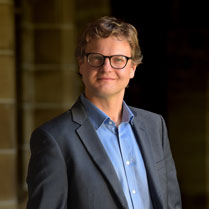
Gwilym Croucher,
University of Melbourne
Croucher, Elliott, Locke and Yencken (2020) define two types of Transnational Education (TNE): offshore campus-based and online. They are are cautiously optimistic about the future of Australian TNE, both in existing markets, particularly China, and new ones, such as Sri Lanka and Indonesia.

However,  I could find no mention of China's Belt and Road Education Plan, in the report. More recently with COVID-19 there is more emphasis on delivering courses online by China. This could prove attractive for students wanting a low cost education, which is aligned with the region's dominant economy.

Also, the authors don't mention a third form of TNE, a blended model using an onshore campus in Australia, plus online study in the student's nation. I suggest this could prove an attractive option for students and is, in effect, what many international students have been forced to do, due to COVID-19. It is also cost-effective and logistically easier for universities, as they do not have to maintain overseas campuses.

Australian universities already enhance their online courses through partnerships with universities in other countries. I saw this in action at the Sri Lanka Institute of Information Technology (SLIIT). This approach can be combined with the option of onshore study, so students undertake introductory studies online and at a campus of a local institution, and then travel to Australia for advanced studies.

James Guthrie,
Macquarie University
These options might form part of new business models for ten Australian universities which Guthrie et al. (2020) warn are at "high risk of financial default". The authors identify a "rapid expansion of onshore and offshore international students" as one factor threatening the viability of the universities, and the expanding Chinese higher education sector as a future risk. Their "probable" scenario, predicts onshore international students dropping 33.3% in 2021 due to COVID-19 and 60% by 2030 due to competition from China.

References

Gwilym Croucher, Kristine Elliott, William Locke and Edward Yencken (0 Mar 2020) Australia’s higher education delivery offshore and online – trends, barriers and opportunities, Melbourne Centre for the Study of Higher Education. URL https://melbourne-cshe.unimelb.edu.au/__data/assets/pdf_file/0009/3568275/Australias-higher-education-delivery-offshore-and-online.pdf

James Guthrie, Martina K Linnenluecke, Ann Martin-Sardesai, Yun Shen, and Tom Smith (January 2020). On the resilience of Australian public universities: Why our institutions may fail unless Vice-Chancellors rethink broken business models, Macquarie University Business School working paper. URL https://www.dropbox.com/sh/f3idf8xogq5r8rj/AAA35NWKaxYTmR2DF3V0FcFIa?dl=0


Saturday, September 1, 2018

Energy, Education and Mobile Devices in the Indo-Pacific

From 2 to10 October I will be giving three talks on Energy, Education and Mobile Devices, in Sri Lanka and Singapore.

My first talk is "Computer Professionals Providing Mobile Learning for the Digital Economy" at the Computer Society of Sri Lanka's National IT Conference (NITC 2018),  9 am 3 October. Speakers were asked "... how do we drive a digital economy? What should be the key measurements? ..." and I am answering this with mobile education.

Second talk is "Decreasing Campus Energy Use With Flexible Classrooms and e-Learning" at EduBuild 2018 in Singapore, 9 October, 5:20pm. This is a new part of the annual EduTech conference, focusing on classroom design and use.

The next day at EduBuild (10 October, 11:55am), I will be taking part in a discussion of "Learning to use new  tech-infused teaching spaces".

I am happy to give talks at other venues.  On a previous visit to Sri Lanka I talked to the Sahana Foundation on disaster management.

Thursday, August 2, 2018

Computer Professionals Providing Mobile Learning for the Digital Economy

The theme of the Computer Society of Sri Lanka  National IT Conference (NITC 2018),  2 to 4 October, is "IT Changes Everything". Australian speakers include Craig Horne the Vice President of the Australian Computer Society, Michael Johnson the ACS Director of Professional Standards, entrepreneur Carey Furze and myself.

My topic is "Computer Professionals Providing Mobile Learning for the Digital Economy". I suggest that teaching is an under-recognized skill for computing academics, they can be trained using mobile learning, and use it for teaching. There is a short promotional video and here are some notes:

Computer Professionals Providing Mobile Learning for the Digital Economy

by Tom Worthington
for NITC 2018, October, Colombo

IT Professionals Change Everything

IT developments depend on trained computer professionals to make them happen.
 Example: Async-Sync Learning System being built at ANU.

Drive the Digital Economy Through Education

Education is an under-recognized specialist area for  computer professionals.
Example: Free open online ICT Sustainability Course, delivered via the open source Moodle Learning Management System, by ACS, ANU, and Athabasca University for the last ten years.

Changes Needed in Education

  1. Qualify computer professionals as education specialists at higher education institutions.
  2. Accelerate their training, using mobile learning.
  3. Have these professionals design and deliver mobile learning.
  4. Teach these techniques to educators in other disciplines and other education systems.

Key Metrics

What proportion of your computer educators are dual qualified in computing and education?
What proportion of your computer education courses are offered on-line via mobile devices?

Register Now

NITC 2018, Colombo
2 to 4 October 2018
http://www.nitc.lk/2018/

Monday, June 18, 2018

Conferences, in Sri Lanka, Malaysia or Singapore September/October?

I am scheduled to speak at the National IT Conference in Sri Lanka (NITC 2018), 2 to 4 October 2018, organized by the Computer Society of Sri Lanka (CSSL). Are there any other computer, education or environmental events I could attend in in Sri Lanka, or in the week before, or after on the way through Malaysia or Singapore?

On a previous visit to Colombo I talked about "Mobiles and e-learning for PandemicFlu Response" to members of the Sahana Software Foundation, at Virtusa's Colombo Office. In 2015 I stopped off for the Second International Conference on Open and Flexible Education (ICOFE 2015) in Hong Kong on my way to the 10th International Conference on Computer Science & Education (ICCSE 2015) in Cambridge.

Tuesday, October 17, 2017

Mobile Phones for Health in Asia

Greetings from the Australian National University in Canberra, where Professor May O. Lwin (Nanyang Technological University) is speaking on "Social Media, Civic Engagement and Public Health: Experiences from a Mobile Initiative in Asia". Of particular is Professor Lwin's work on Dengue Fever in Sri Lanka (Lwin, Vijaykumar, Lim,  Fernando, Rathnayake & Foo, 2016). The produced an application called "Mo-Buzz". Professor  mentioned there would be an EpiHack conference on this in Colombo in early November, a five day hackathon to work on Dengue software.

It happens in 2013 I gave a talk for the Sahana Foundation in Sri Lanka to an audience of tropical disease experts in Colombo about "Mobiles and e-learning for PandemicFlu Response".  It turned out that there were a number of epidemiologists in the audience and the issue was Dengue fever not flu.

Reference


Lwin, M. O., Vijaykumar, S., Lim, G., Fernando, O. N. N., Rathnayake, V. S., & Foo, S. (2016). Baseline evaluation of a participatory mobile health intervention for dengue prevention in Sri Lanka. Health Education & Behavior, 43(4), 471-479. URL http://journals.sagepub.com/doi/abs/10.1177/1090198115604623