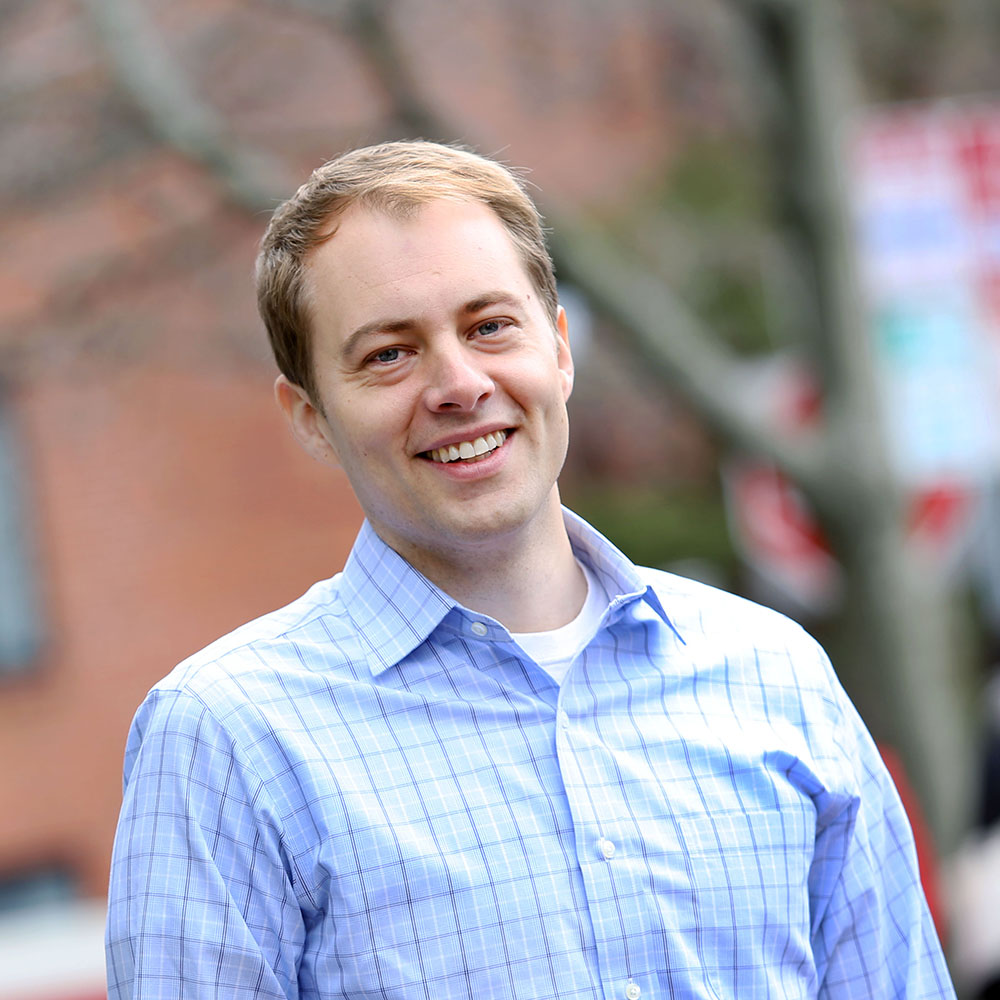
Greetings from the Australian National University in Canberra, where Professor David Deming (Harvard Graduate School of Education), is speaking on "What does education do?". This is a good counterpoint to the book "Open Knowledge: Institutions
In the next few graphs, Professor Deming showed that income had fanned out since 1964, based on education. That is, income has not increased for those without post secondary qualification, but increased markedly for those with advanced degrees. Curiously, Professor Deming put this in terms of rising inequality, rather than education equipping workers with valuable skills, which were rewarded with higher pay.
Professor Deming then displayed a graph showing US revenue to schools had been equalized between 1990 and 2010. That is, over time, government spending has been provided to schools in poorer districts, to bring them up to the level of richer districts. In contrast, community colleges receive about one quarter the funding of prestigious "research" universities. However, I suggest research universities don't just do education (they also do research), so I am not sure the comparison holds.
The next graph showed that students from high income families are 77 times more likely to attend an elite university. Someone in the audience interrupted with an explanation: rich parents have been bribing university staff to admit their children. However, elite universities do not necessarily provide better education than others. University reputation is largely based on research output, which is unrelated to the quality of education an institution provides. I have studied at TAFE (the Australian equivalent of US community college), at a regional university (the equivalent of a US state university), one of Australia's top research universities, and a Canadian online university. The education provided by these was designed for different students with different needs, but overall the research university rated lowest for quality of education, the regional Australian university, and Canadian online top.
The next graph was educational attainment between generations. Professor Deming focused on the USA not making progress in tertiary attainment. But what stood out for me was that Canada was ahead of the USA, and is still in front. I suggest there is little value in Australia looking to the USA for what to do with education, but perhaps we could learn something from Canada. I quipped to the speaker that I studied education in Canada, so perhaps I know better they they what to do.
I suggest that the USA could look to other countries, such as Canada, and perhaps could also ask experienced educators at US colleges what to do. At TALE 2019 last year I met educators from US colleges who had clear ideas on how to improve the system.
Australia has research on improving student outcomes, such as by the National Centre for Student Equity in Higher Education (NCSEHE). This includes work by Dr Cathy Stone on National Guidelines for Improving Student Outcomes in Online Learning.
Reinventing Universities" from the authors of The Moondyne Maanifesto. Professor Deming's work is obviously well researched, and of high quality, but is of little relevance to Australia.nifesto. Professor Deming is focused on equity in education, while the Moondyne Manifesto is about equity in access to research results.
Inequality in the US Higher Education System
Professor Deming argued that the demand for US college education is rising faster than supply, and they need to work out what skills will be required (some of this is in an article). He first displayed a graph showing that the "American Dream" is fading: the percentage of children earning more than their parents is falling. However, the graph started at 1940, and perhaps it just shows the end of the US boom from WW2. Also I don't see that infinite growth is worthwhile, or possible. Professor Deming then showed a graph indicating that income inequality exists in Sweden and Australia, as well as the USA (and another showing Australia is nearer Canada). So far I am not clear what this has to do with education.In the next few graphs, Professor Deming showed that income had fanned out since 1964, based on education. That is, income has not increased for those without post secondary qualification, but increased markedly for those with advanced degrees. Curiously, Professor Deming put this in terms of rising inequality, rather than education equipping workers with valuable skills, which were rewarded with higher pay.
Professor Deming then displayed a graph showing US revenue to schools had been equalized between 1990 and 2010. That is, over time, government spending has been provided to schools in poorer districts, to bring them up to the level of richer districts. In contrast, community colleges receive about one quarter the funding of prestigious "research" universities. However, I suggest research universities don't just do education (they also do research), so I am not sure the comparison holds.
The next graph showed that students from high income families are 77 times more likely to attend an elite university. Someone in the audience interrupted with an explanation: rich parents have been bribing university staff to admit their children. However, elite universities do not necessarily provide better education than others. University reputation is largely based on research output, which is unrelated to the quality of education an institution provides. I have studied at TAFE (the Australian equivalent of US community college), at a regional university (the equivalent of a US state university), one of Australia's top research universities, and a Canadian online university. The education provided by these was designed for different students with different needs, but overall the research university rated lowest for quality of education, the regional Australian university, and Canadian online top.
The next graph was educational attainment between generations. Professor Deming focused on the USA not making progress in tertiary attainment. But what stood out for me was that Canada was ahead of the USA, and is still in front. I suggest there is little value in Australia looking to the USA for what to do with education, but perhaps we could learn something from Canada. I quipped to the speaker that I studied education in Canada, so perhaps I know better they they what to do.
How to Help Disadvantaged Students
Professor Deming then introduced his CLIMB Research Initiative. This aims to answer the question: "How can colleges help students from disadvantaged backgrounds climb the income ladder?". I thought this wording curious as it refers to "colleges" only. Also it refers to "income ladder", not to encouraging enrollment, or improving completion. Unfortunately this appears to be an inward and downward looking study, of US research universities seeing what can be done to US colleges.I suggest that the USA could look to other countries, such as Canada, and perhaps could also ask experienced educators at US colleges what to do. At TALE 2019 last year I met educators from US colleges who had clear ideas on how to improve the system.
Australia has research on improving student outcomes, such as by the National Centre for Student Equity in Higher Education (NCSEHE). This includes work by Dr Cathy Stone on National Guidelines for Improving Student Outcomes in Online Learning.
Teaching Soft Skills to STEM Students
 |
| Engineering degree redesign for UCL, by, 2019 |
The ANU TechLauncher program, requires computing and engineering students to work in teams on projects for real clients. There are also courses teaching communication skills. This semester I am delivering a new blended learning module, to help then write a job application. The issue I have been working on for the last few years with my colleagues, is not if we should teach "soft skills", but how to. It turns out that soft skills are very hard to learn, and even harder to teach.
Don't Look to the USA for Education Policy
Professor Deming's work is obviously well researched, and of high quality, but is of little relevance to Australia.Australia does have problems with higher education, particularly with a lack of integration of vocational and university systems. However, the USA has its own unique problems, and is not a good model to follow.


