Showing posts with label Australian Parliament. Show all posts

Saturday, October 22, 2022

Inquiry into Australia’s tourism and international education sectors

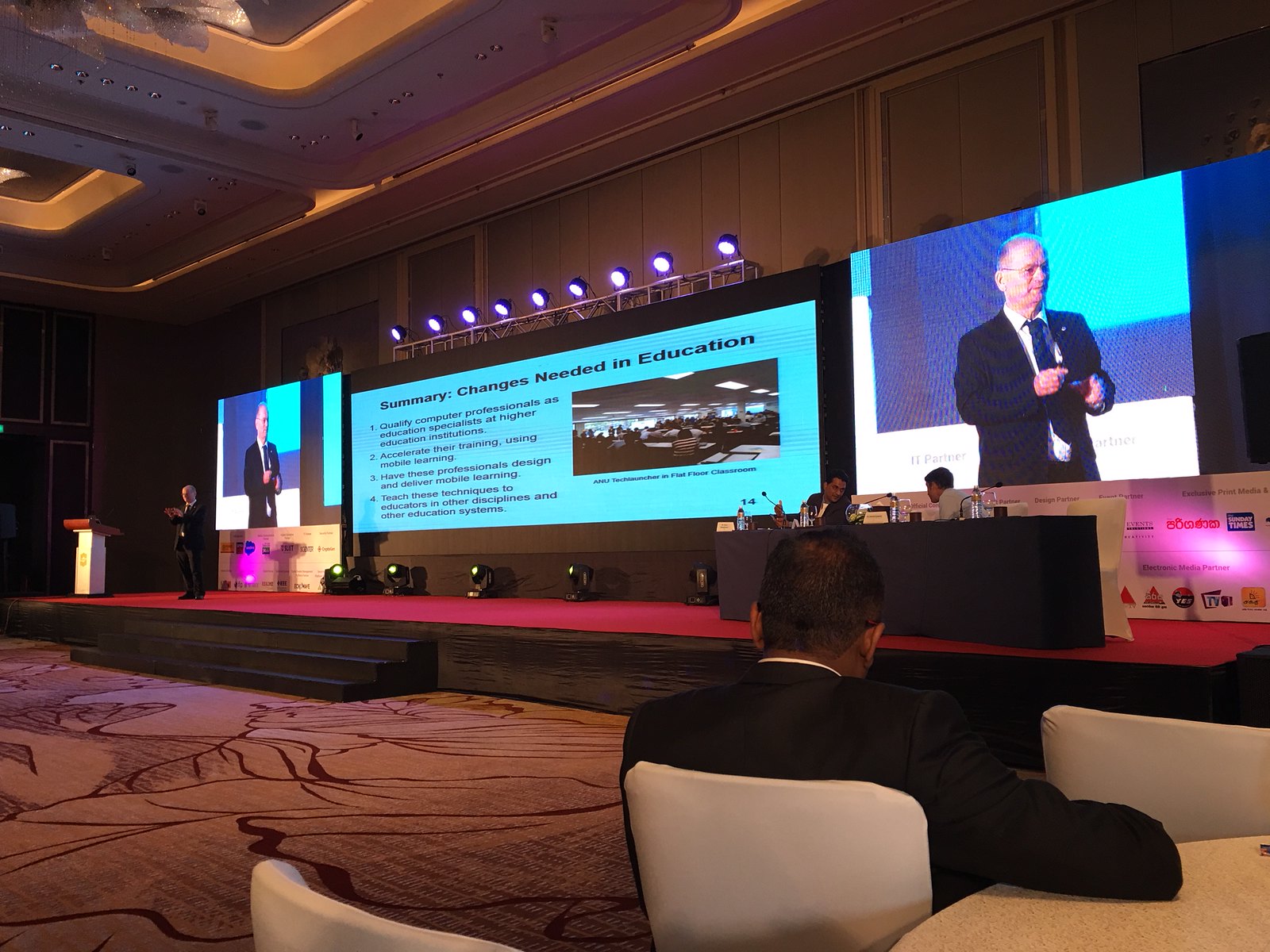
Tom Worthington Speaking at NICT 2018 in Colombo
Presenting on M-learing for the Indo-Pacific,
Colombo, 2018. 

The Australian Parliament's Joint Standing Committee on Foreign Affairs, Defence and Trade is holding an Inquiry into Australia’s tourism and international education sectors. The committee is accepting submissions. For  international education the terms of reference are:

  1. "challenges associated with the loss of international student numbers as a result of the significant disruption caused by the COVID-19 pandemic and effective measures to attract and retain students to Australia;
  2. online innovations in education delivery and potential opportunities to strengthen the sector's resilience;
  3. initiatives to ensure positive international student experience and support pathways to build their skills and contribute to Australia's prosperity; and
  4. opportunities for international education to support strategic and foreign policy objectives"
Some initial thoughts:

COVID-19: A White Swan Event

The COVID-19 pandemic was a shock for traditional campus based universities, especially those with a research focus. These universities had to quickly convert to online delivery to students, who were unable to get to campus. This was done by turning lectures into video conferences, and exams into online quizzes. However, the limitations of this approach was already well known in the distance education community. Also it challenged how teaching staff see their role, and what students want from a university. 

The institutions which had the lest difficulty were education-focused online, distance, and open universities. These institutions have been in the business of delivering education to remote students, in some cases for half a century, or more. Some more conventional campus based universities, particularly in Singapore, had practiced online delivery in an emergency, after their experience with SARS-CoV-1 in 2002 to 2004 (Chandran, 2010).

After being alerted to the need for an online alternative in an emergency, I investigated how this might be done for international students of an Australian research intensive university (Worthington, 2017). In 2016 and 2017 I gave a series of talks warning Australian universities to be ready with an online option in case international students were unable to get to campus. In the case of Australia, it seemed at that time that international tensions over the South China Sea were more likely to interrupt student access, rather than a pandemic.

In 2019 I redesigned the learning module I was delivering to allow for blended delivery, plus the option of full online delivery in an emergency (Worthington, 2019). This contingency was activated in 2020 for to COVID-19. No changes were required to content, or assessment. The face to face components were simply replaced with Zoom webinars (Cochrane, Et al., 2021). 

1. Measures to attract and retain students

Australia can continue to use essentially the same marketing techniques for attracting international students. These emphasize Australia as a safe place, with quality respected institutions, and job opportunities. Universities can continue to use their campuses as part of the marketing. However, in reality most students spent most of their time not in a classroom, even before COVID-19. Conventional lectures are a very poor way to learn, and exams a poor way to assess. Universities were replacing these with experiential learning, and project based assessment, and COVID-19 has accelerated this trend. Unfortunately, these are difficult to market learning formats, with parents wanting to see students in class, and potential employers seeing scope for cheating in online assessment.

The key to marketing the new educational techniques is through the person to person learning, for vocationally relevant outcomes. One example is Work Integrated Learning (WIL), where students learn, and earn course credit, while in a workplace. WIL is part of the requirements for membership of professions, including engineering, and computing, as it is way of providing students with so-called "soft" skills. This is attractive for students, especially where the WIL is through paid work. However, arranging sufficient work places is an expensive process for universities, which are currently undertaking this is an ad-hoc way, and competing for job placements.

Coordination of WILL opportunities with universities, industry bodies and government could improve the attractiveness of Australia as an educational destination, while also meeting staff shortages.

2. Online education for resilience

For those who were already using online learning, and those who had planned to use it in an emergency, the pandemic proved to be mostly business as usual. In particular, asynchronous learning to provide the scaffolding for a course, with embedded synchronous activities added (Worthington, 2013). This proved resilient to problems with equipment, bandwidth, and students and staff unavailable at set times. With this approach students are provided with all the materials they need, and all assessment tasks, at the beginning of a course. The student works through the materials on their own, or with others, occasionally checking in with a tutor. 

The approach to course design I suggested in 2016, and implemented in 2019, had a traditional distance education format, with face to face components for those who could get to campus, or online for those who could not. This approach evolved from that used by the Australian Computer Society for professional development, modified for delivery at university with face to face components. This approach is supported by education theory (Narayan, Et al., 2012).

3a. Providing a positive student experience

Unfortunately most online education delivery during the pandemic was not designed for online distance delivery, and undertaken by staff not trained in digital education. The students were not inducted into the distance format, and had to learn about it, at the same time as their instructors, as courses evolved. Despite these impediments, overall learning was achieved. However, with training, staff can deliver a much better experience. Decades of research shows that online and distance institutions provide a learning experience at least equal to face to face (Worthington, 2012). 

For students who are unable to get to campus due to cost, disability, employment or family commitments the distance option is their only best option. In the past Australian universities routinely discriminated against students by refusing to provide an online option which was feasible, affordable, but too much trouble. It would be unfortunate if universities were permitted to withdraw the online option, and return to discriminating against students. One promising development to provide 

3b. Pathways to build skills and contribute to Australia

The previous Australian government introduced undergraduate certificates, as a form of short university qualification. Universities responded by taking the first semester of their degrees and packaging these as the certificate. This was a worthwhile initiative, but does not provide the flexible "micro-credentials" talked about. For these to be designed and become useful universities will need to adopt the techniques for standardizing, and packaging short qualifications used in the vocational education and training (VET) sector (Worthington, 2018).

4. Supporting strategic and foreign policy

A key component of the cold war Colombo Plan was to provide subsidized education to people from developing nations of the Indo-Pacific region. This was done to help with development, and engender friendly relations with Australia. Now that Australia, and other western countries have switched to using education as a for-profit premium product, China has stepped in to offer low cost education, as an element of foreign policy. Australia can't compete directly with the scale of provision of low cost education by China, but could offer premium blended low cost education targeted at the region (Worthington, 2014). Delivery of education via low cost mobile devices has potential (Sinfield, Et al., 2020).

References

Chandran, R. (2010, May). National University of Singapore's Campus-Wide ELearning Week. In Global Learn (pp. 2062-3302). Association for the Advancement of Computing in Education (AACE). URL https://cpb-us-w2.wpmucdn.com/blog.nus.edu.sg/dist/0/119/files/2011/03/national-university-of-singapores-campus-wide-elearning-week.pdf

Cochrane, T., Narayan, V., Aiello, S., Birt, J., Cowie, N., Cowling, M., ... & Worthington, T. (2021, November). Back to the Future Post Pandemic Socially Constructed Blended Synchronous Learning-Vignettes from the Mobile Learning SIG. In ASCILITE 2021. ASCILITE.

Narayan, V., Cochrane, T., Aiello, S., Birt, J., Cowie, N., Cowling, M., ... & Worthington, T. (2021, November). Mobile learning and socially constructed blended learning through the lens of Activity Theory. In ASCILITE (Vol. 2021, p. 38th).

Sinfield, D., Narayan, V., Cochrane, T., Cowie, N., Hinze, M., Birt, J., ... & Worthington, T. (2020, December). A mobile ecology of resources for Covid-19 learning. In ASCILITE 2020: ASCILITE’s first virtual conference. ASCILITE.

Worthington, T. (2012, July). A Green computing professional education course online: Designing and delivering a course in ICT sustainability using Internet and eBooks. In 2012 7th International Conference on Computer Science & Education (ICCSE) (pp. 263-266). IEEE.

Worthington, T. (2013, April). Synchronizing asynchronous learning-Combining synchronous and asynchronous techniques. In 2013 8th International Conference on Computer Science & Education (pp. 618-621). IEEE.

Worthington, T. (2014, August). Chinese and Australian students learning to work together online proposal to expand the New Colombo Plan to the online environment. In Computer Science & Education (ICCSE), 2014 9th International Conference on (pp. 164-168). IEEE. URL https://doi.org/10.1109/ICCSE.2014.6926448

Worthington, T. (2017). Digital Teaching In Higher Education: Designing E-learning for International Students of Technology, Innovation and the Environment. ANU Open Research Repository. https://openresearch-repository.anu.edu.au/handle/1885/148737

Worthington, T. (2018, December). Blended learning for the indo-pacific. In 2018 IEEE International Conference on Teaching, Assessment, and Learning for Engineering (TALE) (pp. 861-865). IEEE.

Worthington, T. (2019, December). Blend and flip for teaching communication skills to final year international computer science students. In 2019 IEEE International Conference on Engineering, Technology and Education (TALE) (pp. 1-5). IEEE.

Friday, July 3, 2020

Online Learning for Remote and Complex Environments

Mr Andrew Laming MP,
Chair of the Committee.
The Australian Parliament is looking into the impact of COVID-19 on learning, as part of its inquiry into education in remote and complex environments. Public hearings are suspended due to COVID-19, although I suggest these could use video conferencing. The inquiry has received 64 submissions, including mine (number 50):

Train Teachers Online to Provide Blended Learning 

Submission to the Inquiry into Education in Remote and Complex Environments

This is a submission on online teaching during the COVID-19 Pandemici. Replicating the classroom using video conferencing is only a small part of the answer. University and school teachers need to be trained online to teach in blended mode, for the optimum combination of online plus face-to-face learning, to suit prevailing conditions. This approach made it possible to teach university students without interruption during the lock-down and is suitable for older school students, providing a smooth transition to normal teaching.

Blend Classroom and Online for Resilient Learning

In February 2020 with the prospect of COVID-19 keeping students from campus, I was able to quickly switch from blended learning, to fully online teaching at the Australian National Universityii. The course text and videos were already stored in the University's Learning Management System (LMS), which the students can access via the Internet from anywhere, at any time. Most student activities (forums, quizzes, and assignments), could already be undertaken online at any time. This left just the face-to-face workshops, to be replaced by video conferences. When students begin return to the classroom, video conferences can continue to link those who cannot attend, to their teachers, and more importantly, to the other students.
The ability to rapidly change from campus-based to online instruction is a by-product of a blended approach to teaching. To allow maximum flexibility, I first design for online delivery, then add campus activities, combining online and campus in chunksiii. If a student is unable to get to campus, they can still undertake most activities.
As an international graduate student of education, I had experienced the difficulties of studying at a distanceiv. In 2017 I realised my students could be stopped suddenly from getting to class and suggested preparing for this with online learningv.

Train Teachers Online to Teach Online

Australian universities and schools have the good fortune of access to high-quality LMS. One example is the Moodle product, developed in Western Australia, and now used by schools and universities across Australia, and throughout the world. Tools such as Moodle, allow a teacher to provide the materials the student needs, wherever they are. However, what is also needed are teachers trained to teach online, as well as in a classroom.
While we have the technology for teaching, what has been lacking during the COVID-19 Pandemic are university and school teachers trained to use that technology effectively. More important than technical training, is the ability to build a rapport with students who are remote from you. This can be done by having teachers experience being online students themselves. This dogfooding approach ensures that teachers understand the stresses of being an online studentvi. I suggest that school and university teachers should undertake at least one semester unit of instruction online, about how to teach online. This online learning should model good techniques, such as students working together to accomplish a task, peer assessment and an absence of formal examinationsvii.

Tom Worthington MEd FHEA FACS CP IP3P
22 May 2020


Biography: Tom Worthington is a computer professional and an honorary lecturer in computer science at the Australian National University. A Certified Professionalviii member of the Australian Computer Society, in 2015 Tom received a national gold Digital Disruptors Award for "ICT Education" and in 2010 was Canberra ICT Educator of the Year. He previously worked on IT policy for the Australian Government and in 1999 was elected a Fellow of the Australian Computer Society for his contribution to the development of public Internet policy. He is a Past President, Honorary Life Member, Certified Professional and a Certified Computer Professional of the Society as well as a Fellow of the Higher Education Academy, a voting member of the Association for Computing Machinery and a member of the Institute of Electrical and Electronics Engineers.
Tom has a Masters of Education in Distance Education from Athabasca University, a Graduate Certificate in Higher Education from the Australian National University and a Certificate IV in Training and Assessment from the Canberra Institute of Technology. He blogs as the Higher Education Whisperer and is the author of Digital Teaching In Higher Education.
While an Honorary Lecturer at the Australian National University and a member of the Professional Education Governance Committee of the Australian Computer Society, his views here do not necessarily reflect those of either organization.


i Home learning and teaching during COVID 19, Media Release, House of Representatives, 14 May 2020. http://www.medianet.com.au/releases/release-details.aspx/?id=931917&k=1145358
ii Learning to Reflect, Learning Module Notes for the ANU TechLauncher WPP Exercise, Tom Worthington, November 2019. URL http://www.tomw.net.au/technology/education/learning_to_reflect/learning_to_reflect_2_1.shtml
iii "Blended learning and learning communities: opportunities and challenges", Fleck, J. (2012), Journal of Management Development, Vol. 31 No. 4, pp. 398-411. https://doi.org/10.1108/02621711211219059
iv E-Portfolio for the Athabasca University Master of Education, Tom Worthington, 6 December 2016. URL http://www.tomw.net.au/masters_eportfolio/introduction.shtml
v Digital Teaching In Higher Education: Designing E-learning for International Students of Technology, Innovation and the Environment, Worthington, T., 2017. URL http://www.tomw.net.au/digital_teaching/introduction.shtml
vi Dogfooding: Learning About Teaching by Being an On-line Student, Tom Worthington, 2017. URL http://www.tomw.net.au/technology/it/dogfooding/
vii Blend and Flip for Teaching Communication Skills to Final Year International Computer Science Students, Tom Worthington, 2018 IEEE International Conference on Teaching, Assessment, and Learning for Engineering (TALE). In Press. Presentation notes: http://www.tomw.net.au/technology/education/learning_to_reflect/tale2019_blend_flip_worthington_final.pdf
viii Liability limited by a scheme approved under Prof. Standards Legislation

Saturday, May 23, 2020

Australian Parliament Looks at the Impact of COVID-19 on Learning

Mr Andrew Laming MP,
Chair of the Committee.
The Australian Parliament is looking into the impact of COVID-19 on learning, as part of its inquiry into education in remote and complex environments. The inquiry has already received 49 submissions, since starting in December 2019, but now wants to hear about the impact of the pandemic.
‘We want to expand our range of evidence into specific lessons and consequences of rapid and flexible home and online learning and teaching. The Committee hopes to learn more about how these new flexible approaches might continue to be applied in remote and complex environment long after schools return to ‘normal’ face-to-face teaching,’  Mr Andrew Laming MP, Chair of the Committee.

Thursday, May 14, 2020

Parliamentary Inquiry into Online Learning During COVID-19

The Australian Parliament is holding an inquiry into Education in Remote and Complex Environments and wants to hear about the impact of COVID-19 on learning and teaching. There have already been 49 submissions on other aspects of education.
"‘The Committee has been examining how education meets the learning needs of students and how barriers in the education journey are overcome. The response of Australian schools to the COVID-19 pandemic, and the need for rapid adaptation to home and online learning, has clearly accelerated the importance of flexible and well-supported responses,’ Mr Laming said.
‘We want to expand our range of evidence into specific lessons and consequences of rapid and flexible home and online learning and teaching. The Committee hopes to learn more about how these new flexible approaches might continue to be applied in remote and complex environment long after schools return to ‘normal’ face-to-face teaching,’ Mr Laming said."
From: Home learning and teaching during COVID 19, Media Release, House of Representatives, 14 May 2020. http://www.medianet.com.au/releases/release-details.aspx/?id=931917&k=1145358


Monday, June 4, 2018

Planning the Future of Work

Greetings from Parliament House in Canberra, where I have just talked to an Australian Senate Committee on the Future of Work and Workers, just after the Vice Chancellor of the ANU and alongside the AIIA. The committee had my short written submission. Here is what I planned to say. What I said and the Q&A will have to await the release of Hansard.


Educating the Future Workforce

Speaking Notes

Tom Worthington, MEd FHEA FACS CP

Good afternoon, I am a computer and educational technology consultant. As an Honorary Senior Lecturer in Computer Science at the Australian National University I teach computer professionals in skills for and with computers. As a member of the Professional Education Governance Committee of the Australian Computer Society I help set the education standards for future professionals. ANU and ACS have made submissions to this inquiry, but my views here as an individual interested in education for work.
 
As you have heard from other speakers, it is generally agreed that technology will eliminate many jobs. Workers will need better soft and technical skills, plus retraining for multiple careers. I am example of this having had one career as a computer programmer and then retraining in Australia and North America as an educator.
The Australian education system already allows for work-ready learning across schools, VET and university. Some minor adjustments can make the system more flexible.
  1. Strengthen the VET system and have it blended with secondary schooling at the lower end and university at the upper end. Students should be able to complete a VET qualification at secondary school, go on to further study in the VET system (while working part-time) and then to university, still while working. One area which can be addressed is to allow conditional student loans for shorter VET programs, particularly certificate IV.
  2. Make the university system more flexible. We need to encourage universities to offer nested, standardized programs which offer sub-degree entry and exit points. Students should be able to start with a sub-degree program and then continue their studies for a degree. Most university courses are already blended, but government policy and university practice needs to recognize that most university students now, in effect, studying on-line so they can work at the same time.One issue which needs to be addressed is international student visa conditions. Students are currently required to maintain a full time study load, which imposes considerable stress on them and their instructors. This could be reduced to a three quarter load and allow for more on-line study.
  3. Rather than focusing on traditional campus based three years university degrees, I suggest policy should prioritize on-line, nested, programs which offer sub-degree entry and exit points, with the flexibility to study off-campus. The ANU Vice Chancellor mentioned micro-credentials in his evidence.
  4. Soft skills can be addressed in specific university courses and in project work. Soft skills figure prominently in the ANU's "TechLauncher5 program of group project work for STEM students. Techlauncher students undertake team building exercises and have mentors, tutors and clients with industry experience. Some of this looks like fun, where students play with Lego, but there is also a lot of hard work on team and client relationship skills.
  5. In addition, we need teachers in schools, VET and university, who have training and formal qualifications in how to teach these skills. This is particularly a problem in universities where academic staff have higher research degrees, but minimal teacher training. Academics need formal teaching qualifications.

Thursday, May 31, 2018

Education for the Future of Work

The Australian Senate Committee on the Future of Work and Workers has invited me to speak to them on Monday at 2:10pm. The program for the day runs from 9am to 5pm:
 9.00 am PlanDo
 9.40 am Dementia Australia
10.20 am Break
10.35 am The Group of Eight
11.15 am Volunteering Australia
Australian Internships
11.55 am Department of Human Services
Department of Social Services
12.35 pm Lunch
1.30 pm The Australian National University
Professor Peter Whiteford
2.10 pm Australian Information Industry Association & Attachment 1
Mr Tom Worthington
 2.50 pm Break
 3.05 pm Australian Bureau of Statistics
Productivity Commission
 3.55 pm Department of Jobs and Small Business
Department of Industry, Innovation and Science
Department of Education and Training
 5.00 pm Adjournment
The committee has my short written submission. Committees usually don't want formal presentations, but I thought I would prepare one just in case:


Educating the Future Workforce

Tom Worthington, The Higher Education Whisperer

Submission to the Senate Select Committee on the Future of Work and Workers

2:10pm, Monday 4 June 2018, Senate Hearing Room 2S1


Education for a more flexible workforce

Australia needs an education system which is short sharp and mobile

For inquiry on the impact of technological and other change on the future of work and workers in Australia1, reference “6. any related matters”. 


Strengthen VET

Students should be able to complete a VET qualification at secondary school, go on to further study in the VET system (while working part-time) and then to university.


Make University More Flexible

  1. Encourage universities to offer nested, standardized programs which offer sub-degree entry and exit points. 
  2. Students should be able to start with a sub-degree program and then continue their studies for a degree. 
  3. Policy needs to recognize that most university students now studying on-line so they can work at the same time.

Teacher's Computing Skills


Teachers teaching computing should be fully, formally, dual qualified in computing and teaching. Australia already has better systems for doing this than the UK.

 STEM Subjects Addressing Real Issues

STEM student projects on real world issues, such as climate change. This requires, project based work addressing issues
Innovation and hacking competitions for school and higher education.


On-line Nested University Programs

  • Sub-degree entry and exit points
  •  Flexibility to study off-campus.


Soft skills

Soft skills through courses and project work. Example: ANU's "TechLauncher program


Train University Academics to Teach

Training is needed to be able to use RPL, RCL, e-portfolios and other tools.


See Also


  1. Inquiry Into the impact of technological and other change on the future of work and workersSelect Committee on the Future of Work and Workers, Australian Senate https://www.aph.gov.au/Parliamentary_Business/Committees/Senate/Future_of_Work_and_Workers/FutureofWork
  2. Higher Education in Australia: Short Sharp and Mobile, Higher Education Whisperer, March 19, 2018 http://blog.highereducationwhisperer.com/2018/02/higher-education-in-australia-short.html
  3. ICT Sustainability: Assessment and Strategies for a Low Carbon Future, Tom Worthington, 2018 http://www.tomw.net.au/ict_sustainability/introduction.shtml
  4. Canberra Start-up Business Boomerang, Tom Worthington, 2017 http://www.tomw.net.au/digital_teaching/instructional_design.shtml#cbb
  5. TechLauncher, ANU College of Engineering & Computer Science https://cs.anu.edu.au/TechLauncher/
  6. ANU Project Bootcamp with Lego and User Centered Process, Higher Education Whisperer, February 25, 2018 http://blog.highereducationwhisperer.com/2018/02/anu-project-bootcamp-with-lego-and-user.html
  7. Introduce Teaching as a Specialization for Computer Professionals, Higher Education Whisperer, January 10, 2017 http://blog.highereducationwhisperer.com/2017/01/introduce-teaching-as-specialization.html

Educating the Future Workforce

Speaking Notes

Tom Worthington, MEd FHEA FACS CP

Good afternoon, I am a computer and educational technology consultant. As an Honorary Senior Lecturer in Computer Science at the Australian National University I teach computer professionals in skills for and with computers. As a member of the Professional Education Governance Committee of the Australian Computer Society I help set the education standards for future professionals. ANU and ACS have made submissions to this inquiry, but my views here as an individual interested in education for work.
 
It is generally agreed that technology will eliminate many jobs. Workers will need better soft and technical skills, plus retraining for multiple careers.
The Australian education system already allows for work-ready learning across schools, VET and university. Some minor adjustments can make the system more flexible.
  1. Strengthen the VET system and have it blended with secondary schooling at the lower end and university at the upper end. Students should be able to complete a VET qualification at secondary school, go on to further study in the VET system (while working part-time) and then to university, still while working. 
  2. Make the university system more flexible. We need to encourage universities to offer nested, standardized programs which offer sub-degree entry and exit points. Students should be able to start with a sub-degree program and then continue their studies for a degree. Most university courses are already blended, but government policy and university practice needs to recognize that most university students now, in effect, studying on-line so they can work at the same time.
  3. Rather than focusing on traditional campus based three years university degrees, I suggest policy should prioritize on-line, nested, programs which offer sub-degree entry and exit points, with the flexibility to study off-campus. 
  4. Soft skills can be addressed in specific university courses and in project work. Soft skills figure prominently in the ANU's "TechLauncher5 program of group project work for STEM students. Techlauncher students undertake team building exercises and have mentors, tutors and clients with industry experience. Some of this looks like fun, where students play with Lego, but there is also a lot of hard work on team and client relationship skills.
  5. In addition, we need teachers in schools, VET and university, who have training and formal qualifications in how to teach these skills. This is particularly a problem in universities where academic staff have higher research degrees, but minimal teacher training. Academics need formal teaching qualifications.

Wednesday, May 30, 2018

Report of the Australian Parliament Inquiry into school to work transition

The Australian House of Representatives Inquiry into school to work transition has issued the report "Unique Individuals, Broad Skills" (30 May 2018). The report has missed that vocational education, university and other  higher education, along with much secondary education is moving online.

The report mentions online education once, with reference to apprenticeships, but does not discuss the implications for education. This is a little like discussing the future of the taxi or accommodation industries without mentioning Uber or Airbnb. Hopefully the Senate Select Committee on the Future of Work and Workers (which I am talking to Monday) will not make this mistake.

Recommendation 5 refers to the education of teachers, but could be applied to any vocationally related program:
"... accrediting programs, higher education providers be required to be able to demonstrate that their programs have evidence-based pedagogical approaches, effective integration of professional experience, rigorous and iterative assessment of pre-service teachers throughout their education, and final assessments that ensure pre-service teachers are classroom ready."
One interesting set of statistics in Figure 4.1 (page 75) has the  percentage of post school pathway for 2016 students. The largest is 69% going to university versus TAFE, college and apprenticeships at 21%. I suggest the latter needs to be higher.

 Contents

Terms of Reference
List of Recommendations
  1. Introduction
  2. Teaching and teachers
  3. Measurements of gain in school
  4. Opportunities to better inform and support students in relation to post-school education and training
  5. Students with disability
A. Submissions
B. List of hearings and witnesses

Thursday, April 26, 2018

ACS submission to the Select Committee on the Future of Work and Workers

The Australian Computer Society (ACS) submission to the Senate Select Committee on the Future of Work and Workers (Number 148) has been published*. ACS recommends evaluation of existing traineeships funding programs, a focus on ‘soft’ and transferable skills, and for government to lead the way on employment retraining.

The ACS identified six key trends:
  1. "The exponential growth in device connectivity, automation and artificial intelligence technologies ...
  2. A rising bar on the minimum skills needed to enter the workforce ...
  3. A ‘virtualised,’ on-demand workforce ...
  4. The era of the entrepreneur ...
  5. The growth in the need for ‘soft’ skills ... 
  6. Divergent demographics ..."
From (ACS) submission to the Senate Select Committee on the Future of Work and Workers, Number 148, 2018.

ACS Recommended:
  1. "Regular evaluation of State and Federal Existing Worker Traineeship funding programs ...
  2. A recognition of and focus on ‘soft’ and transferrable skills in funded skill training ...
  3. As the largest employer in the Australian economy, the government has an obligation to lead the way on employment retraining programs ..."
From (ACS) submission to the Senate Select Committee on the Future of Work and Workers, Number 148, 2018.

* I had some input to the ACS submission, as a member of the ACS Professional Education Governance Committee (and also made an individual submission).

Tuesday, April 3, 2018

Educating the Future Workforce: Submission 145 to the Senate Select Committee

My submission to the Senate Committee on the Future of Work and Workers has been published. Among the other 144 submissions so far, there is also one from the Australian National University (Submission 12).


Educating the Future Workforce

Submission to the Senate Select Committee on the Future of Work and Workers

Tom Worthington, The Higher Education Whisperer

This is a submission to the inquiry on the impact of technological and other change on the future of work and workers in Australia1, reference “6. any related matters”.
These are some thoughts on the subject of how well the education system suits the need for a more flexible workforce.
Australia needs an education system which is short sharp and mobile2.
The Australian education system already allows for work-ready learning across schools, VET and university. Some minor adjustments are needed to make the system more flexible:
  1. Strengthen the VET system and have it blended with secondary schooling at the lower end and university at the upper end. Students should be able to complete a VET qualification at secondary school, go on to further study in the VET system (while working part-time) and then to university.
  2. Make the university system more flexible: Encourage universities to offer nested, standardized programs which offer sub-degree entry and exit points. Students should be able to start with a sub-degree program and then continue their studies for a degree. Most university courses are already blended, but government policy and university practice needs to recognize that most university students now, in effect, studying on-line so they can work at the same time.
Teacher's computing skills should be developed as part of their normal formal education, not some ad-hoc bolt-on program. Teachers teaching computing should be fully, formally, dual qualified in computing and teaching. Australia already has better systems for doing this than the UK.
Students should be encouraged to undertake STEM subjects at school, through subjects which address real world issues of concern to students and having computer professional role models who students can identify with. This requires, for example, project based work addressing issues such as climate change3.
Innovation and hacking competitions4 can help make make STEM look exciting for students.
Rather than focusing on traditional campus based three years university degrees, I suggest policy should prioritize on-line, nested, programs which offer sub-degree entry and exit points, with the flexibility to study off-campus.
Soft skills can be addressed in specific university courses and in project work. Soft skills figure prominently in the ANU's "TechLauncher5 program of group project work for STEM students.
Techlauncher students undertake team building exercises and have mentors, tutors and clients with industry experience. Some of this looks like fun, where students play with Lego6, but there is also a lot of hard work on team and client relationship skills.
In addition, we need teachers in schools, VET and university, who have training and formal qualifications in how to teach these skills. This is particularly a problem in universities where academic staff have higher research degrees, but minimal teacher training. Academics need formal teaching qualifications7.
Diversity can be improved by offering STEM subjects which address real world issues of concern to students and having computer professional role models who students can identify with. This requires, for example, female computing teachers.
As well as students fresh out of school, the same techniques can be used for re-skilling adults. On-line and blended learning, incorporating recognition of prior learning (RPL) and recognition of concurrent learning (RCL) are particularly useful. E-portfolios can be used for ensuring skills standards are met. Australia's VET system was set up with this need in mind.

Tom Worthington, MEd FHEA FACS CP

Biography: Tom Worthington is a computer professional, who advises on using technology for teaching and also does some part time teaching of computing at tertiary institutions. A Certified Professional8 member of the Australian Computer Society, in 2015 Tom received a national gold Digital Disruptors Award for "ICT Education" and in 2010 was Canberra ICT Educator of the Year. He previously worked on IT policy for the Australian Government and in 1999 was elected a Fellow of the Australian Computer Society for his contribution to the development of public Internet policy. He is a Past President, Honorary Life Member, Certified Professional and a Certified Computer Professional of the society as well as a Fellow of the Higher Education Academy, a voting member of the Association for Computing Machinery and a member of the Institute of Electrical and Electronics Engineers.

Tom has a Masters of Education (specializing in Distance Education) from Athabasca University, a Graduate Certificate in Higher Education from the Australian National University and a Certificate IV in Training and Assessment from the Canberra Institute of Technology. He blogs as the Higher Education Whisperer and is the author of Digital Teaching In Higher Education. While an Honorary Senior Lecturer in Computer Science at the Australian National University and a member of the Professional Education Governance Committee of the Australian Computer Society, his views here do not necessarily reflect those of either organization.

1 Inquiry Into the impact of technological and other change on the future of work and workersSelect Committee on the Future of Work and Workers, Australian Senate https://www.aph.gov.au/Parliamentary_Business/Committees/Senate/Future_of_Work_and_Workers/FutureofWork
2 Higher Education in Australia: Short Sharp and Mobile, Higher Education Whisperer, March 19, 2018 http://blog.highereducationwhisperer.com/2018/02/higher-education-in-australia-short.html
3 ICT Sustainability: Assessment and Strategies for a Low Carbon Future, Tom Worthington, 2018 http://www.tomw.net.au/ict_sustainability/introduction.shtml
4 Canberra Start-up Business Boomerang, Tom Worthington, 2017 http://www.tomw.net.au/digital_teaching/instructional_design.shtml#cbb
5 TechLauncher, ANU College of Engineering & Computer Science https://cs.anu.edu.au/TechLauncher/
6 ANU Project Bootcamp with Lego and User Centered Process, Higher Education Whisperer, February 25, 2018 http://blog.highereducationwhisperer.com/2018/02/anu-project-bootcamp-with-lego-and-user.html
7 Introduce Teaching as a Specialization for Computer Professionals, Higher Education Whisperer, January 10, 2017 http://blog.highereducationwhisperer.com/2017/01/introduce-teaching-as-specialization.html


8 Liability limited by a scheme approved under Prof. Standards Legislation

Reference as

Worthington, Tom. (2018, March). Educating the Future Workforce, Submission 145, Inquiry into the impact of technological and other change on the future of work and workers in Australia, Senate Select Committee on the Future of Work and Workers, Australian Parliament. URL https://www.aph.gov.au/DocumentStore.ashx?id=83499a3a-5de3-4ed2-9a7e-84a96b02f4a2&subId=564671