In its latest social media promotion Torrens University has boasted "Think this ad was written by an AI expert? You'd be right. Apply now to graduate with a Graduate Certificate of Software Engineering". It is a bold move, but a little confusing as there is a lot more to software engineering than AI. Also a graduate certificate is only six months full time study. That would make a good start, but a lot more training & study is needed to be a software engineer.
At this time of year universities promote alternate forms of education and entry, for those students unable to enter via high school results. UNSW is promoting their diploma entry: "Missed the ATAR for your dream UNSW degree? Don’t let that stand in your way. A UNSW College Diploma is your seamless pathway to your preferred degree – without losing time".
Monday, January 6, 2025
University course ad written by AI

Monday, December 2, 2024
Virtual University in Australia?
 |
| Torrens Building, Adelaide, Wikipedia |
Tuesday, October 22, 2024
Research Whisperer on The economics of Australian universities
Jonathan O'Donnell, the Research Whisperer, has published a thoughtful item on The economics of Australian universities. Firstly he points out that Australian universities are ‘liberal arts’ institutions, and only a few are private. Income is mostly from student fees (domestic ones subsidised by government), with little from government research grants or private endowments. What not mentioned is that Australia law requires universities to undertake research in multiple fields: an institution which specializes in education, or research in one field, cannot be accredited as a university in Australia.
Dr O'Donnell points to the "pernicious culture of over-work in universities". The solution to this, I suggest, is professional training. Academics who have been trained only in research are open to exploitation. Not given enough time to carry out teaching or administration, a culture which sees long unpaid hours as heroic can develop. Instead staff can be trained to use tools and techniques to get the job done in the time available.
I am not sure I agree with Dr O'Donnell's characterization of Australian universities as ‘liberal arts’. While there is a separate system of vocational institutions for trades training, Australian universities were established and continue to provide doctors, lawyers, engineers and other working professionals. Recent reforms by government might be seen as a way to reinforce this emphasis on professional education.
Of Australia's 42 universities, 38 are public (set up by governments), and 4 private. One of the private universities, Torrens, is for-profit, with the rest non-profit. Torrens, is an unusual institution and deserving of more study.
Sunday, October 8, 2023
Future of Australian Higher Education is the Stage on the Stage in Sydney's Inner West
 |
| Italian Forum Cultural Centre |
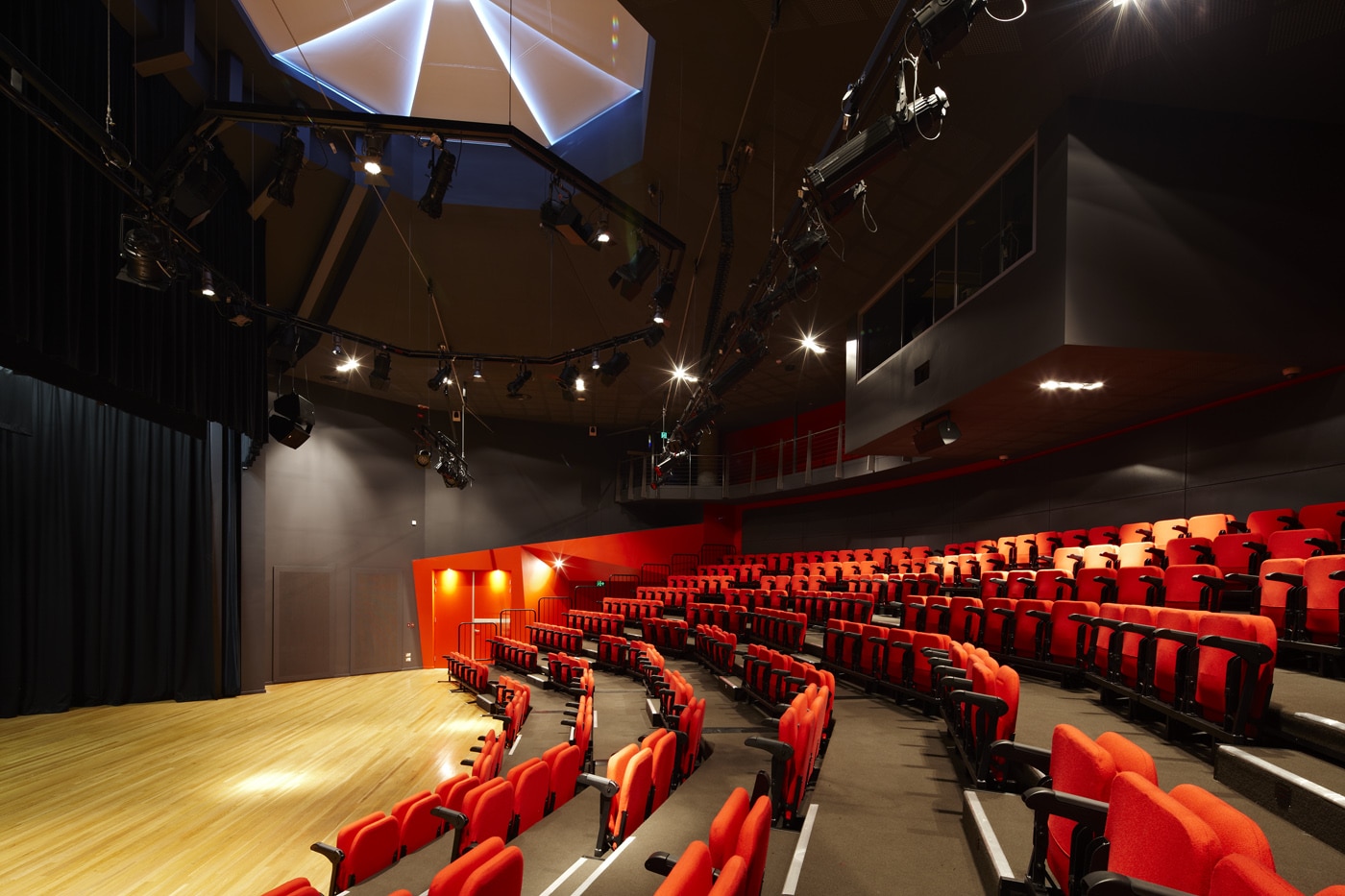
Occasionally you might see the students run out into the forum's piazza and perform free-form routines (pretending to be a tree). What I hadn't realized, until picking up a brochure in the forum last night, is that they also offer bachelor degrees, through Torrens University Australia. This provides one useful model for Australian higher education. A local campus, where students can receive hands on tuition (literally), for vocational qualifications, and also study for a degree.
Torrens University is a non-government, for profit organisation. However, there is no reason why Australia's not-for-profit universities could not have similar arrangements with government TAFEs, and private vocational training organisations. Some Australian universities already do this, being dual sector, and some TAFEs are accredited to issues degrees. But at present this is on a small scale.
Sunday, August 21, 2022
Delays in Live Streamed Video Can Cause Problems for Clicker Quizzes
 |
| Livia Lam, & Tom Worthington, hosting the Govhack 2022 Trivia, still from livestream, 20 August 2022 |
Myself and the co-host were on Zoom, which was relayed to a Facebook live stream. The participants used a QR code to get to the software asking the questions. One problem was the delay of several seconds between us speaking, and when we were heard. The application used for the questions did not have the delay, so the questions we were reading out were after the participants had already answered. The delay was longer than just with Zoom, as the video then had to go via Facebook's system. Perhaps the makers of the quiz system could build a delay into it.
Friday, October 26, 2018
Teaching Universities Proposed for Australia
Existing Australian Teaching University Models
Australian law currently requires universities to carry out research in at least three disciplines. The proposal is to have a new category of teaching university. There are already Australian institutions devoted to teaching, but these can't be called a "university", and so have difficulty marketing their programs.
However, there are Australian universities which have been able to operate under the current rules, with a teaching focus. Two examples are Open Universities Australia (OUA) and Torrens University Australia (TUA).
OUA is a consortium of universities offering online degrees. Students can choose courses from any institution, but then graduate from one. This provides the flexibility of an on-line program, but with the prestige of a bricks-and-motar one. TUA is registered as an Australian university, but with a relatively small staff. It is part of a international consortium of mostly teaching universities.
Research Reputation as a Key University Marketing Tool
What Griew, Borthwick, Barnes and Murali (2018) don't address is the role of research as a university marketing tool, particularly for attracting international students. Students, and their parents, look at university ranking when selecting an institution. This is despite these rankings having little to do with teaching quality, being largely based on research reputation. A teaching only institution will not rate well for research, and so not attract students.Will Teaching Only Universities Lower Costs?
The claim that separating research and teaching would lower costs would need to be tested, along with the claim that the savings would go to research. The UK has had the experience where government freed up fee setting expecting completion leading to lower fees, but universities charged as much as they were allowed to. Also if government take funding from fee subsidies, there is no guarantee this will be invested in research.
Focus on Fixing VET
The proposals for the VET sector are less contentious. Successive Australian state and federal governments have implemented poor policy, badly implemented, which has adversely effected VET and TAFE institutions. An approach which encourages students to study in the VET sector, before, alongside and after university should be introduced.
Reference
Robert Griew, Jessie Borthwick, Cameron Barnes & Arun Murali (October 2018). "
Diversity in Australian tertiary
education: turning words into action", Nous Group, url https://www.nousgroup.com/wp-content/uploads/2018/10/Diversity-in-Australian-tertiary-education-.pdf
Saturday, May 19, 2018
What Makes for a Good Student Experience?
The good news is that while some Australian universities rate better than others on student satisfaction, they all rate well. Universities are tending to move more of the teaching online. This provides students with better access to learning, but may result in overall lower student satisfaction results.
Most Australian universities scored between 70% to just above 80% on educational experience for undergraduate students in 2017. Three exceptions were Bond University, The University of Notre Dame Australia, and the University of Divinity, all over 90%. However, not all non-government universities did well. Torrens University Australia, the only private for-profit university in Australia, had a score of only 77.6%, below many government universities.
Torrens is essentially an online university and these tend to rate poorly on student satisfaction. The University of Southern Queensland, which also has many online students also rated poorly at 73.6% (I have completed two online courses at USQ and thought they were good).
Absent from the QILT report is Open Universities Australia (OUA), a consortium of universities offering online courses. OUA would be likely to have a low student satisfaction score, similar to USQ and Torrens. It would be easy to conclude that these institutions are doing something wrong. But they accept students who would otherwise not be able to study at all. Given a choice, I am sure these students are more satisfied being able to study, than not.
The QILT report mention of online study in the Executive summary (page iv):
"The largest variation was that external/distance students were less likely to respond positively about their Learner Engagement, 22 per cent and 63 per cent respectively. Older students also rated Learner Engagement less positively than younger students, but this difference is most likely associated with the prevalence of external or internal study modes in these age groups.
Large differences in results by study mode for Learner Engagement continues to suggest that this scale may be performing differently for internal/mixed mode students and external mode students. The Department of Education and Training is currently considering a reviewAlso section 3.3 "The postgraduate coursework student experience by study area":
of the Learner Engagement scale. As an interim measure, the QILT website, which reports SES results at the institution by study area level, will continue to exclude external mode responses for the Learner Engagement focus area. This report, however, which reports SES results at national and aggregate levels, includes external mode responses in all Learner Engagement results. ..."
"The widest range in focus area results was for Learner Engagement, with 34 percentage points separating the study areas with the highest and lowest results, Rehabilitation at 72 per cent, and Nursing at 38 per cent, which may be associated with the relative proportion of online or distance learning associated with the various study areas."
Wednesday, January 13, 2016
Globalization of Higher Education

1. Wealth and Stability of Developed Nations
Douglass (p. 11, 2005) points out that "... Advanced economies all have advanced systems of higher education ..." and developing nations "... have lower rates of access to higher education and have higher rates of students traveling to foreign soil to attend a university. ...". The author also points to the correlation between between countries with political and economic stability and the quality higher education. However, these I suggest, are correlations and not necessarily apply in all cases.Developing nations have been able to build hi-tech industries with help from developed nations and then go on to rival them. In some cases the developed nations lack of democracy might be seen as an advantage by investors, removing the political uncertainty of election cycles. Many developed nations have invited universities from developed nations to set up satellite and joint campuses with local institutions.
2. Balance of Demand and Supply
Douglass (p. 11, 2005), points out that demand is outstripping supply of HE in China, with the government encouraging outside providers. In contrast the USA has a balance of supply and demand. But I did not understand how this would hinder globalisation. If China follows the same path with education as it has with industrial manufacturing (such as for electronics), it will first try to compete on price, offering education of a lower quality but also a much lower price than US institutions. This will stimulate demand at the low end of the market. Chinese institutions can then steadily improve the quality of the product until it is equal to mainstream US institutions.China does not need to rival the most elite US institutions, in order to make this a profitable venture. Also China need not provide the service in the same way as US institutions and can use US institutions to retail the service. This might be termed "Walmart Education": while Walmart is considered a quintessentially American company, its products come primarily from China, through a China based distribution system. This model is now being applied to education in Australia by Torrens University Australia.
Torrens was admitted to the Australian National Register of higher education providers in July 2012, as an "Australian University", but as described in their Study Assist entry, is part of Laureate International Universities. A search of Torrens Staff on LinkedIn lists less than one hundred people. In comparison, LinkedIn lists more than 4,000 current staff for the University of Adelaide. While Adelaide has 25,000 students and Torrens only a few hundred, there is no requirement for Torrens to employ any more staff in Australia, as it could instead provide the tutoring via its international affiliates.
3. Nation/State Regulation and Initiatives
Douglass (p. 12, 2005) claims that the "vast majority of HE reform is coming not from entrepreneurial efforts of institutions, but from government regulatory initiatives". However, this does not take into account that many of these initiatives are designed to impose market forces on existing institutions. Also the national regulations may be outpaced by any international trade agreement. An agreement on free trade in services which includes education will require nations to allow offshore institutions to compete on an equal basis.Douglass (p. 12, 2005) points out that China requires foreign universities to partner with local ones, clearly with the intention of building up local capabilities, at least to provide the local market indigenously, if not to also compete internationally. The author claims, vaguely, that the UK shows "... strong cultural biases ...". That argument may well have been made about the UK car industry in the late 20th Century. However, in 1994 the Rover Group was sold to BMW, ending British-owned volume car production. Iconic British cars, including Bentley and Rolls-Royce are now foreign owned, but this has not harmed sales.
Douglass (p. 13, 2005) cites the examples of the University of Phoenix, which failed in the UK market and UK Open University, which failed in the US. However, this may simply reflect poor marketing on the part of these institutions, for failing to add a veneer of localization over their imported product.
In mid 2015 Torrens University Australia acquired the Chifley Business School, which was set up by the Association of Professional Engineers, Scientists and Managers, Australia (APESMA) in 1989 to provide postgraduate vocational qualifications. This is similar to the way VW and BMW acquired UK luxury car brands to broaden the appeal of their products.
Another approach car companies use could be applied here: first design the product for international requirements, then tailor it for local markets. As Douglass (p. 12, 2005) points out, some courses need considerable localization (such as accounting and tax law), but students are likely to respond favorably to courses which offer a global perspective.
5. Local Academic Culture
Douglass (p. 14, 2005) argues that university academics fearful of the loss of academic integrity tend to create semi-independent entities for tasks such as "extension" programs and this can be used for new international and on-line programs. In this way the author argues, the cultural changes implied by new forms of education will be kept isolated from the core university. This may be the case, but I can't see how it is particularly relevant to international education. Universities could retain their main campus and conduct research and education there. This would be a useful form of marking, giving prestige to their mostly on-line and satellite campus delivered products. This would be similar to the way Rolls-Royce emphasize the hand crafted finish provided on their vehicles in a UK, rather than the mass production of the mechanical components in BMW's German factories.6. Internet Promoting Local Products Globally
Douglass (p. 15, 2005) argues the "... investment required in order to develop a high quality academic course online, or even a hybrid course (mostly online, with some actual physical meeting of student and instructor) is relatively high". The author does not say relative to what, but presumably face-to-face courses. They go on to say this is because "... software for online courses (including commercial producers like Blackboard) is relatively difficult and primitive". This has not been my experience.Use of learning management system software can be frustrating, but designing a course does not require a "significant amount of programming" as Douglass (p. 15, 2005) suggests, nor a "team of professionals" to maintain content. I can manage to design, maintain and deliver courses, with occasional help from support personnel. The difference I suggest is that I have been trained in how to design courses and, in particular, how to design on-line courses. Also I have undertaking the training in how to use the software.
The problem, I suggest, is that university academics usually receive little training in how to design courses. This deficiency is much more apparent with on-line courses than face-to-face ones. It is not that it is harder to design an on-line course, just harder to cover up a badly designed one.
US Higher Education is Not Typical Internationally
After the countervailing forces, Douglass (p. 16, 2005) looks at the case of the USA. But as Douglass (p. 16, 2005) notes "The US lacks anything like a central ministry setting policy and funding for HE as in most other countries". Given that the USA is atypical, it is not clear why the author chooses only this country to study.Douglass (p. 19, 2005) notes, not surprisingly, that "... specialized schools have the largest percentage of students taking at least one online course", followed by community colleges, vocational/adult learning. The author asks rhetorically if this will be the future pattern in higher education? It would be surprising if it was not, as vocational institutions offering lower level shorter qualifications has been the traditional market for extension eduction and its natural evolution into on-line eduction. Offering on-line courses obviously attracts students who could not attend on-campus courses and the programs therefore need to be designed with such students in mind.
Some years ago I tried "night school" at an Australian university. This was promoted as being design for working people. What I quickly discovered was the only allowance made for for working people were classes at night. There were no special support services provided and none of the administration facilities were open at night. After a couple of weeks I withdrew from the program. Some on-line programs appear to be the equivalent of this and it is not surprising that they are not popular.
References
Wednesday, April 29, 2015
Australian Online For-profit University To Be Floated on US Stock Exchange
Tuesday, February 10, 2015
Adelaide's Offshore Higher Education Experiment Continues
 />
/>Torrens may well prove to be the success story of the three in Adelaide, as it uses a different business model to a typical Australian university. Torrens is part of Laureate International Universities, which provides education on-line to 800,000 students.
Torrens presents a challenge to Australian universities as it can teach students using its world wide on-line resources. This could serve as a useful wake-up call for Australian institutions to learn to compete, before offshore educational institutions take away their market. At the moment I am a student of a North American on-line master of education, to learn how to design such on-line programs for Australia.
Friday, December 20, 2013
Is Torrens University Australia's First On-line Unviersity?
Professor Jim Barber, UNE Vice-Chancellor is reported to have been advocating changes to government regulations to allow on-line universities to be established in Australia. Professor Barber announced that The University of New England will not charge on-line students a Student Services and Amenities Fee from 2014, but feels the regulations limit more changes. However, Torrens University Australia, as Australia's second private university seems to be primarly an on-line institution. An analysis of how it was able to meet the Australian university regulatory requirements could be useful for existing institutions which want to transition to on-line mode, as well as potential new universities.
Torrens University Australia was admitted to the Australian National Register of higher education providers in July 2012, as an "Australian University" and authorised to self-accredit courses.
Torrens was recognised by the South Australian parliament in the "TORRENS UNIVERSITY AUSTRALIA ACT 2013", with a campus in South Australia. The act is very short as most of the oversight of universities in Australia is now done by the Commonwealth Government. While Torrens has a campus in SA, there appear to be no requirement for the university to actually undertake administration, teaching or research at that campus, or anywhere else in Australia.
As described in their Study Assist entry, Torrens is part of Laureate International Universities, which provides "international" education online to 800,000 students. There appears to be no requirement under SA or Australian law for Torrens to employ a set number of administrative, teaching or research staff in Australia, or to conduct any of the administration, teaching or research in Australia. The SA Minister for Education's media release mentions Torres has "... plans for significant investment in higher education in Australia", but no funding amount or staffing figure is mentioned. However Torrens did advertise for a full time Associate Professor in September 2013, as well as a Lecturer in Education, Project Management and a Learning Resources Coordinator., and a Student Administration Manager. A search of Torrens Staff on LinkedIn resulted in only eight: Vice-Chancellor, Assistant Professor - Business (Project Management), Academic Director, Lecturer - Business, Enrolment Advisor, Student Administration Manager and a Coordinator of IT Services. In comparison, LinkedIn lists 3,416 current staff for the University of Adelaide, which has 25,000 students. Torrens may need to employ only one hundredth the number of staff in Australia as a conventional university, for the same number of students.
As noted in the Explanatory Statement, the Minister for Education decided not to conduct any consultation before approving Torrens, as they did not think it restrict competition. This could be a useful precedent to cite for others wishing to set up on-line universities.
Torrens appears to have had some difficulty meeting the requirement that all Australian universities deliver both undergraduate and postgraduate courses in at least three fields, including Masters and Doctoral Degrees by Research and also do research in those fields. Torrens gave an undertaking to commence on undergraduate degree (in Commerce) and postgraduate research degrees in Management and Commerce, Health and Education, by January 2014 and undergraduate degrees in the other fields by 2015. There appears to be no separate undertaking to do research in those fields, but perhaps the Tertiary Education Quality and
Standards Agency (TEQSA) thought the research undertaken by the Masters and PHD students would be sufficient.
It may seem surprising that TEQSA would accredit a university which does not currently meet the standards. However it seems reasonable that a new institution should be given some time to work up its teaching and research programs.
Tuesday, November 26, 2013
SA Teachers Require Masters Degree
Sunday, November 17, 2013
Torrens University Australia Marketing Courses On-line
Here are some of the Torrens ads:
- Connect with a New Perspective: Earn Your Graduate Degree Online.
- Torrens Uni Scholarships: 50% Scholarships Available Now For 2014 Enrolment. Enquire Today!
- Torrens Uni Scholarships - Inaugural Scholarships Available - Enrol by January 2014 to Qualify.MEd in Reading & Literacy - MEd in Early Childhood - Master of Public Health
- PhD in Education: Further Your Career & Earn a PhD Online at Torrens Uni Australia.
Monday, November 4, 2013
Torrens University Australia for the Mobile Generation

Torrens Website
The university website as a very simple design, with only one column of text on the home page. There are no animations, or photo transitions and few hypertext links in the text. The program pages have two columns, one with the main text and the other contact information. The two columns re-flow to be one on a small screen. Clearly this has been designed for mobile devices (using HTML5), but also works well on a desktop computer.
The web design is not perfect with seven errors detected by the W3C Markup Validation Service, had two critical failures on the W3C mobileOK Checker, and 6 known accessibility problems (WCAG 2.0 Level AA) with AChecker. However, these are less than the problems I have found with other Australian university websites.
As with the web design, the information provided appears to have been simplified compared to other Australian universities. As an example, there is no mention of international students, but international style English language proficiency requirements are specified. Universities normally have a special section where these requirements are specified with an explanation this is only for international students.
Torrens Initial Course Offerings
The university is starting with a limited range of courses in business, education and health. I checked to see what education courses the university would be offering.
Torrens is offering a Graduate Certificate and Master in Early Childhood Education, or Reading and Literacy, as well as masters and PHD by research. The coursework programs are only available on-line and are aimed at trained teachers, professional educators, administrators and policy makers.
The entry requirement for the Graduate Certificate of Education is a bachelor degree in any discipline, plus two years of teaching and an IELTS 6.5. The Master of Education requires four years of teacher training, or a bachelor degree and Graduate Certificate in Education. These programs appear intended for school teachers, not vocational or university educators.
The Torrens Graduate Certificate of Education requires completion of four courses. But unlike other such certificates in Australia there is no course choice, with only four courses offered, all core:
- Pedagogy and Learning
- Assessment and Evaluation
- Diverse Learnings Needs
- Education Policy and Law