Showing posts with label VR. Show all posts

Thursday, January 26, 2023

Metaverse will Fail

Trying HoloLens
at LinkedIn Sydney
I am not a believer in the Metaverse, and doubt I ever will be. The same claims were made for previous generations of VR, and Iwas proven right to doubt them. Metaverse is too much like Second Life, Google Glass, and real life, so will fail.

The hype over Metaverse sounds all too familiar, and the reality far short of what is claimed for the technology. It is not that I am particularly skeptical of this form of VR, but when there have been so many waves of hype, making the same claims, and producing the same disappointment, it is hard not to have skepticism as your default position.


I recall eight years ago when we were all going to be wearing Google Glass. I sat in one presentation where I was the only one not wearing some sort of gadget. Google Glass went the way of the Apple Newton: the subject of ridicule.


There is a role for VT (or more likely AR) in education, and particuarly training. This especially applies to hands-on training. It also has potential in language learning. However, VR may not be needed for this. Dr Jinghong Zhang pointed to grass roots use of TikTok for language learning in her seminar at ANU yesterday.


Building an online campus has advantages. But that has been done for decades, very successfully, without VR. Attempts to add VR have failed, not due to a lack of the technology, but because it was missing the point. Virtual campuses work not by emulating physical ones, but by getting rid of the physical limitations.


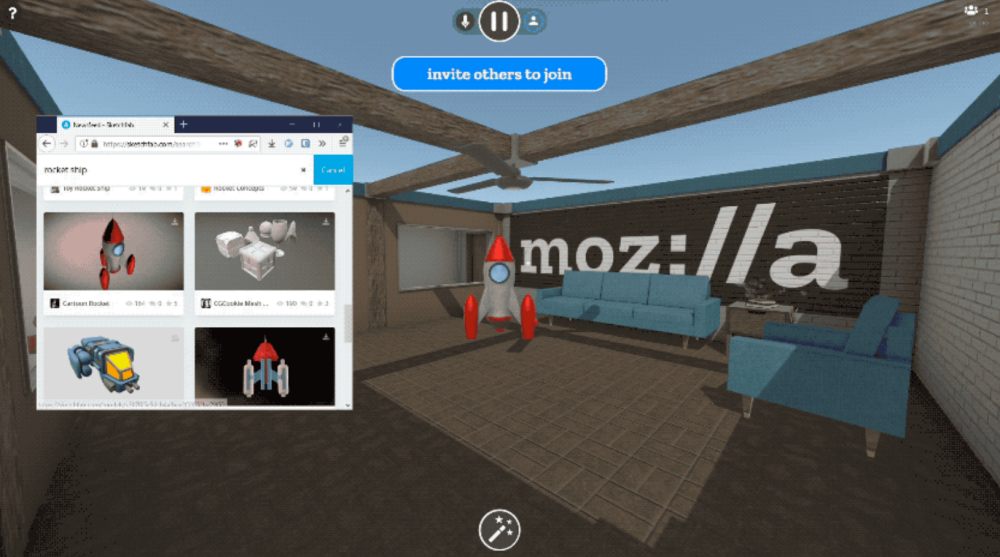
For the last ten years people have been showing me demonstrations of how Second Life, Mozilla Hubs and other assorted VR could emulate a university campus. Apart from being clunky implementations these all seemed to be missing the point. Virtual universities work by not emulating the features of a real campus. The silliest implementation I saw was of a library in a virtual university, complete with a virtual card catalog (real libraries no longer have card catalogs). A virtual lecture theatre showing rows of avatars perhaps makes an out of date lecturer feel good, but is emulating a poor learning experience.


This is not to say some form of VR/AR will not work, just as the Apple iPhone succeeded where the Newton failed. But it will take some inspired design to make the Meta-verse more than just another clunky old VR application. As an example, I found Microsoft HoloLens much better than Google Glass, despite having a much bulkier headset.

Thursday, June 9, 2022

Showing and Telling Virtual Reality in Health Education

Greetings from the ANU Medical School, where Dr Jane Frost, Associate Professor in Nursing, at University of Canberra, is talking about the use of extended reality, for teaching medical students. Jane is gently introducing us to how VR & AR can be used. She started with a view of a typical lecture theater, captured with a headset camera. This then switched to a simulated hospital ward, particularity useful for students who can't get to a real one, or one of the training wards with dummies the universities have.

Jane explained the difference between VR & AR, with AR overlaying an image on the wearers perspective, whereas VR provides everything. She also mentioned that use of VR requires safety protocol, so the students do not fall over objects they can't see. As well as training, Jane pointed out AR has potential to assist in everyday work.

It was good to see Dr Frost did not spend too long on simulated classrooms, as I don't think these are much use. We want students in a workplace, simulated or real, not a classroom (simulated or real). One compelling example was of a student looking at a simulated patient in a real hospital ward, responding as if they were real. Another was very disturbing, with a simulated patient screaming continuously (the lesson for students was that the noisy patient doesn't necessarily get priority). 

The event was chaired by Katie Freund, Manager of Technology-Enhanced Learning and Teaching (TELT), at ANU Medical School.

Friday, July 30, 2021

Virtual Reality in the Time of COVID

Generic disposable facial interface
Greetings from the weekly ASCILITE Mobile Learning Special Interest GroupThomas Cochrane raised the topic of how Virtual Reality (VR) can be used within COVID-safe restrictions. Expensive VR equipment has to be shared between students, but then how to do that safely? In response I did a quick search and found "Virtual Reality Head Mounted Display Cleaning and Disinfection Guide" (NSW Health, 2020). This recommended using a wipe-able and replaceable "facial interface" (the pad which goes around the wearer's eyes). Generic disposable facial interfaces look like a costume party mask, with elastic straps to fit over the ears. There are also Custom Disposable Hygiene Covers for specific headsets, such as the Oculus.

ESA UV-C
Headset Sterilization
The European Space Agency use a 
Phone Sterilizer
hand held UV-C light
 for sterilizing the entire headset, but that may not be safe for use in an educational environment. A few weeks ago I purchased a Phone UV Sterilizer, remaindered at a local store (KMART $2.50, similar units sold online for under $30). This is a USB powered box. The user closes the door and it floods the inside with UV-C for five minutes. A VR facial interface should fit in the box. 

However, I suggest looking at lower cost augmented reality (AR)  equipment which allows students to work together safely. An AR headset is not so closely coupled to the wearer's face. AR applications can also be used on the student's own smartphone, removing the need to share equipment. As well as reducing the risk of infection, this also makes it possible for students to see each other and work together, whereas a VR headset completely isolates them in the virtual environment. It should be kept in mind that social isolation is a threat to the student's health, brought about by infection control measures. There is little point in bringing students together in a classroom, if they are each isolated in their own VR bubble.

There is scope for innovation in the safe use of AR & VR for education. This does not require billions of dollars or the resources of a major technology company. Educators and technologists in schools, colleges and universities can make a useful contribution. They can then promote what works through local entrepreneurial centers. As an example, ANU students can get course credit working on software, hardware and business plans for new education initiatives. Staff and students can get training and business advice to set up a company at the government/university funded Canberra Innovation Center

Sunday, March 7, 2021

eXtended Reality Cooperative Research Centre Workshop

A workshop on a proposed Xtended Reality Cooperative Research Centre (XR CRC) will be held online, 1pm, 19 March 2021.

"Six Australian Universities; Deakin University, Charles Sturt University, Curtin University, Griffith University, The Australian National University and University of Technology Sydney, all with research and application expertise in immersive experience and solutions are working on the development of the eXtended Reality CRC (XRCRC) program proposal to Government.

The XRCRC aims to enable our partners transform for the new global environment and manage the impact and opportunity of accelerated digital experience and digital offerings.

With a focus on the integration of people content and technology, XRCRC research and development is relevant where human and digital worlds combine across the following sectors:

Education and Training
Health, Accessibility, Inclusion and Aged Care
Media, Entertainment and Creative
Advanced Manufacturing, Resources and Industrial Services
Agriculture,
Architecture and Construction
Emergency Services, Defence, Security, and Public Safety ..."

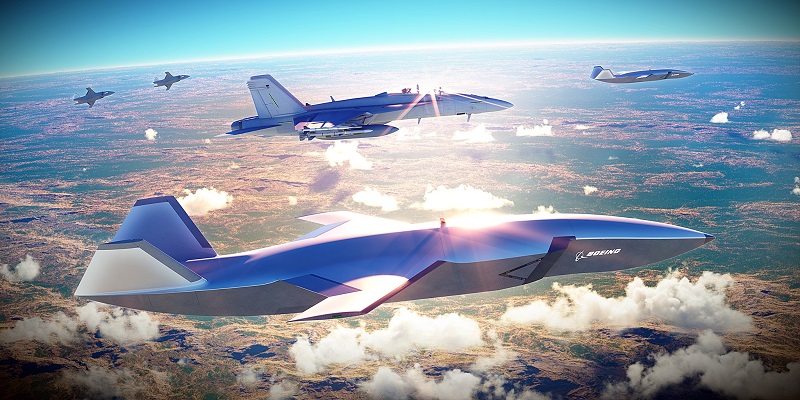
Loyal Wingman supersonic fighter UAV

ps: One use for XR could be to provide an interface for high performance drones, such as the proposed Loyal Wingman supersonic aircraft. The operator would sit in a flight simulator, controlling the remote aircraft.

Friday, August 21, 2020

Mozilla Hubs is Too Much Like Life

Mozilla Hubs Example
Greetings from the


Thursday, October 10, 2019

Defence Industry Workshop on Extended Reality in Canberra, 5 November

The ANU College of Engineering and Computer Science is hosting a Defence Industry Workshop on XR, Tuesday 5 November. Defence and government organizations, as well as industry, and academia. are invited to attend. The Australian National University (ANU), is investigating the establishment of an Extended Reality Cooperative Research Center (XR-CRC) with other universities.  The term XR includes augmented reality, virtual reality, and other forms of computer generated simulations, using wearable, and other technology. For more details contact Dr Penny Kyburz, Senior Lecturer, Human-Centred Computing, ANU CECS.

Loyal Wingman supersonic fighter UAV
ps: One use for XR could be to provide an interface for high performance UAVs, such as the proposed Loyal Wingman supersonic aircraft. With this approach the remote operator would sit in a flight simulator, controlling the remote aircraft. The movement of the simulator would provide additional feedback, needed for fast decision making in combat.The simulator could be made small enough to be loaded on-board and operated from the aircraft being protected, such as the KC-30A tanker.

pps:  It happens I was the Defence representative on a joint industry project to produce a graphical user interface in the early 1990s. Unfortunately the Web came along and made our work obsolete. ;-)

Wednesday, July 26, 2017

VR as an Educator

The stereograph as an educator
Came across an old sterograph captioned: “The stereograph as an educator ":
"Underwood patent extension cabinet in a home library … Photograph shows a woman viewing stereographs in her home; she is sitting in front of a fireplace with a cabinet for stereographs on her right.”
So I printed a copy of this sterograph and taped it over a hold cut in my Google Cardboard. This turns the virtual reality device into an old fashioned stereograph, showing VR from the Victorian era. ;-)