Showing posts with label virtual reality. Show all posts
Showing posts with label virtual reality. Show all posts
Friday, June 16, 2023
What to do and not do with Augmented Reality for Education

Tuesday, September 28, 2021
Australia India Business eXchange 2021

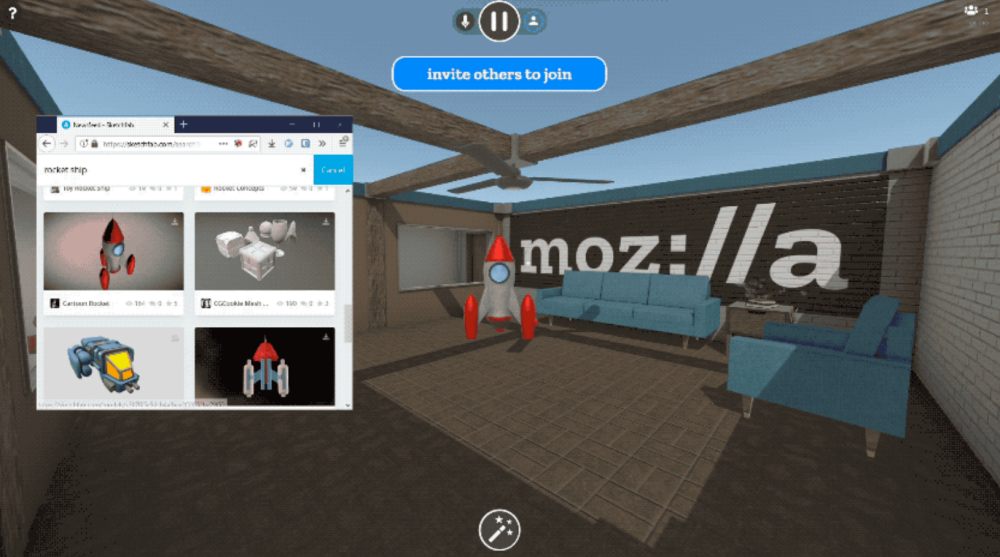
The main interface looks a lot like Second Life,or Mozilla Hubs, which is not necessarily a good thing. The physical meeting venue does not necessarily make for a good online interface, and might just slow things down. A more intimidate problem is that the interface is only available when live sessions are on. This makes no sense and differs from other online trade shows, where you can look at the program, browse virtual trade booths, and leave messages to arrange meetings, at any time.
Friday, July 30, 2021
Virtual Reality in the Time of COVID
 |
| Generic disposable facial interface |
 |
| ESA UV-C Headset Sterilization |
 |
| Phone Sterilizer |
However, I suggest looking at lower cost augmented reality (AR) equipment which allows students to work together safely. An AR headset is not so closely coupled to the wearer's face. AR applications can also be used on the student's own smartphone, removing the need to share equipment. As well as reducing the risk of infection, this also makes it possible for students to see each other and work together, whereas a VR headset completely isolates them in the virtual environment. It should be kept in mind that social isolation is a threat to the student's health, brought about by infection control measures. There is little point in bringing students together in a classroom, if they are each isolated in their own VR bubble.
There is scope for innovation in the safe use of AR & VR for education. This does not require billions of dollars or the resources of a major technology company. Educators and technologists in schools, colleges and universities can make a useful contribution. They can then promote what works through local entrepreneurial centers. As an example, ANU students can get course credit working on software, hardware and business plans for new education initiatives. Staff and students can get training and business advice to set up a company at the government/university funded Canberra Innovation Center.
Sunday, March 7, 2021
eXtended Reality Cooperative Research Centre Workshop

A workshop on a proposed Xtended Reality Cooperative Research Centre (XR CRC) will be held online, 1pm, 19 March 2021.
"Six Australian Universities; Deakin University, Charles Sturt University, Curtin University, Griffith University, The Australian National University and University of Technology Sydney, all with research and application expertise in immersive experience and solutions are working on the development of the eXtended Reality CRC (XRCRC) program proposal to Government.
The XRCRC aims to enable our partners transform for the new global environment and manage the impact and opportunity of accelerated digital experience and digital offerings.
With a focus on the integration of people content and technology, XRCRC research and development is relevant where human and digital worlds combine across the following sectors:
Education and Training
Health, Accessibility, Inclusion and Aged Care
Media, Entertainment and Creative
Advanced Manufacturing, Resources and Industrial Services
Agriculture,
Architecture and Construction
Emergency Services, Defence, Security, and Public Safety ..."
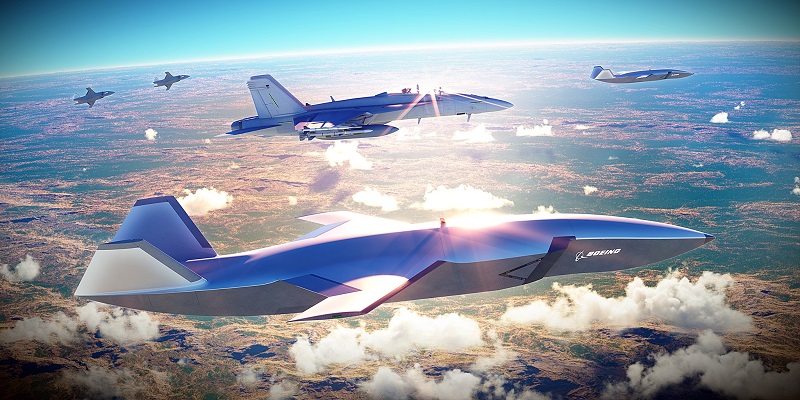 |
| Loyal Wingman supersonic fighter UAV |
ps: One use for XR could be to provide an interface for high performance drones, such as the proposed Loyal Wingman supersonic aircraft. The operator would sit in a flight simulator, controlling the remote aircraft.
Friday, August 21, 2020
Thursday, April 16, 2020
EduTech Asia with Avatars
 |
| Eric Hawkinson's avatar |
Something I did not expect is that EduTech sent me a signed certificate of attendance. I guess I can use this towards the 30 hours Certified Professional Development I have to do to keep my Australian Computer Society status.
ps: I prepared a talk for EduTech 2020, but don't know when, where, or how, I will get to present it:
Coronavirus Response with Flexible Learning
Images used under a Creative Commons License.
pps: This also allows for a gradual return to the classroom after a COVID-19 outbreak. It is not feasible to set a deadline when all classes return to "normal" campus-based teaching. Rather than having all students stop online learning at once and return to campus on the same day. On-campus components can be gradually added. However, the online components can be retained, in case of future emergencies, and to cater for individual student needs.In 2016, as part of research on higher education, Tom Worthington identified the risk to Australian universities from a sudden disruption of the flow of international students to Australia. To mitigate this risk, he developed an approach combining blending e-learning with flexible classrooms. This was trialed during 2019 in the new Marie Reay Teaching Centre at the Australian National University, and is now being implemented in response to the COVID-19 Coronavirus. All students access the same e-learning materials, including e-books, videos, quizzes, and discussion forums. There are then on-campus workshops in classrooms which can be quickly reconfigured for different teaching formats. Students who are unable to get tho the workshops in person, have the option of participating online. This approach allows one course design and one building design to be used for classes mixing on-campus and remote students.
Thursday, October 10, 2019
Defence Industry Workshop on Extended Reality in Canberra, 5 November
|
| Loyal Wingman supersonic fighter UAV |
pps: It happens I was the Defence representative on a joint industry project to produce a graphical user interface in the early 1990s. Unfortunately the Web came along and made our work obsolete. ;-)
Sunday, November 5, 2017
Derelict Campuses In Virtual Reality
 |
| Drop Box |
Before getting too excited about virtual reality (VR) for education, read Patrick Hogan's "We took a tour of the abandoned college campuses of Second Life" (13 August 2015). In this he looks at virtual campuses set up with much fanfare and then left abandoned when they were found to not be popular, or useful. These have the feel of the real empty schools in the documentary "Abandoned: St Louis Schools".
These educational institutions tried to emulate a real campus in the virtual world, which I think is missing the point. VR should be used to overcome the limitations in face-to-face education, not reproduce those limitations (and introduce more of its own).
On real campuses, education is becoming virtual. Creating VR representations of obsolete physical campus facilities will just confuse students. As an example, reproducing a library card index (which some VR environments have done) makes no sense, as most students have never seen, let alone used, a real card index.
When I was an on-line student in North America, a couple of years ago, the instructor told my class to submit our assignments in the "drop box". So I looked on the course web page for a link to the Dropbox file hosting service, but there was none. It turned out the instructor was using the term "drop box" generically and we were using the Moodle assignment module. My confusion was in part because the term "drop box" is not used in Australia, but also because it had been a decade since I had to put a printed-on-paper assignment in a physical box. In a VR environment having a box with a slot in the top would be even more confusing for a student who has never seen such a box.
Wednesday, July 26, 2017
Subscribe to:
Posts (Atom)
So I printed a copy of this sterograph and taped it over a hold cut in my Google Cardboard. This turns the virtual reality device into an old fashioned stereograph, showing VR from the Victorian era. ;-)