Showing posts with label open education. Show all posts

Wednesday, March 6, 2024

Open Education Week, 4-8 March 2024

Greetings from Athabasca University (AU), Canada, where I am attending an Open Education Week event on "Exploring Openness in Education 2024". The audience is mostly M.Ed. and Ed. Doc students and faculty. Am one of the alumni, having completed my MEd in 2017. The panel includes Dr. Rory McGreal, who was one of my Professors when I studied at AU. I am not actually in Canada (I have never physically been to AU), but using a video conference.

Dr. McGreal is enthusiastic on using AI to create educational content, and help teach students. Other panelists are more skeptical, and working on guidelines for this. 

ps: I hope to will have the opportunity to discuss these issues in person at OEGlobal 2024 in Brisbane, 13-15 November 2024.

pps: The audio cut out on my laptop after a few minutes, so I dialed in for the sound. I had just purchased low cost SoundPEATS RunFree Lite Open Ear Headphones. These look a bit odd, but worked remarkably well. I was inspired by Johnnie Moore, who uses a similar headset for making short philosophical videos..

Tuesday, March 16, 2021

Why open pedagogy and learning activities?

These are the notes for a webinar, Wednesday, 17 March 2021, 10 am AEDT Sydney time. This is part of the Microlearning Series at Maskwacis Cultural College in Canada, curated by Manisha KhetarpalPresentation Powerpoint and PDF available.

Athabasca University recently renamed their Master of Education in Distance Education (MEd DE) to be a Master of Education in *Open*, *Digital* and Distance Education (MEd ODDE). Join Tom Worthington, one >of the graduates, to discuss what open education is, what are the benefits and pitfalls and how to do it.

Pre-reading "Use of Open Education Resources", from Digital Teaching In<br>Higher Education, Tom Worthington, 2017. URL  http://www.tomw.net.au/digital_teaching/use_open_education_resources.shtml

Monday, February 25, 2019

Openness and Reproducibility in Science Workshop


Greetings from the Openness and Reproducibility in Science Workshop at the Australian National University in Canberra. Rosalind Attenborough (University of Edinburgh) talked on her PHD research on "Scientific openness: a new epistemic virtue?". The talk was a lot more accessible that the title of her research would indicate. She is interviewing researchers to get tier vies on what openness is, its perceived benefits and problems. 

Rosalind briefly mentioned open source software as a progenitor for open science. So I asked her why she did not look at the history of open source software. It seems to me that many of the issues with openness, particularly the reward structures for people working in it and resourced had already been solved by the software community. Open source software is now produced by everyone from individuals, to academics, government agencies, and multi-billion dollar corporations. We routinely teach computing students about the tools and techniques of open access, including how to make a career out of it.

Programme
9.00-9.30 Arrival, coffee
Session 1: Ideas of openness
9.30-9.40 Welcome and introduction Prof Joan Leach (ANU)
9.40-10.30 Talks: mapping the landscape of open science

A/Prof Sujatha Raman (ANU)
Ros Attenborough (Edinburgh)
10.30-11.00 Coffee break
11.00-12.30 Panel discussion: Why openness? What does it mean and what is it for? Prof Rachel Ankeny (Adelaide)
Prof Ginny Barbour (QUT, AOASG)
Dr Chris Cvitanovic (ANU)
Prof Kiaran Kirk (ANU) [TBC]
Prof Cameron Neylon (Curtin) [TBC]
Prof Adrian Mackenzie (ANU) [TBC]
12.30-13.30 Lunch
Session 2: Practices of openness
13.30-13.50 Talk: "What's So Open About Plant Pathology?"

A/Prof Adam Sparks (USQ) https://www.openplantpathology.org/
13.50-14.40 Intro, followed by open discussion:
"What are preprints and how do they accelerate science communication?"
Dr Sarvenaz Sarabipour (Johns Hopkins) via Zoom
14.40-15.00 Talk: “Building a local community: R-Ladies in Canberra" Dr Alice Richardson (ANU, R-Ladies Canberra)
Dr Petra Kuhnert (Data61, CSIRO, R-Ladies Canberra)
15.00-15.30 Coffee break
15.30-15.50 Talk:
"How to facilitate a global open science early career research community with local impact"
Dr Benjamin Schwessinger, eLife ambassador program, reproducibility for everyone
15.50-16.10 Talk: “For reproducibility, we need the methods behind the data.” Dr Lenny Tetylman (CEO of protocols.io) via Zoom
16.10-16.20 Wrap-up
16.20-17.00 Poster session and socializing
(posters on different topics related to reproducibility and rigour)
Posters organised by Dr Diep Ganguly (post-doc, ANU)

Thursday, June 14, 2018

OpenCon 2018, November 2-4, Toronto, Travel Scholarships

Travel scholarships are being offered for students and early career academics to "OpenCon 2018",  November 2-4 in Toronto. Normally I don't bother applying for such things because the paperwork is so tedious. But this one requires a relatively simple web form.
"OpenCon is the conference and community for students and early career professionals interested in advancing Open Access, Open Education and Open Data. OpenCon 2018 will be held on November 2-4 in Toronto, Canada. Each year, OpenCon brings together a diverse, representative, and engaged group of participants, with travel scholarships available to most participants. For this reason, attendance at OpenCon 2018 is by application only."

Thursday, October 19, 2017

Open Educational Resources: Short free online course starts Monday from ANU

A free on-line course "Open Educational Resources: A Continuum for Practice" is being offered by the Australian National University (ANU), starting Monday. This is in the ANU Online Coffee Course Series, where the student spends fifteen minutes a day studying for a week. There are no tests, just on-line discussion.
"In this upcoming course, you’ll explore some of the deeper issues surrounding open education; specifically, practical decisions and questions that should be asked when developing, reusing, and collaborating on open education activities. Each day the facilitators will provide stimulus for reflection and group discussion, as well as a synthesis of the previous days’ discussion."

Modules

  1. From Resources to Practice: why ‘mere access’ isn’t enough.
  2. ‘I’ll know it when I see it’, or, usefully defining quality in openness.
  3. Assessment in an open world: beyond the disposable assignment.
  4. Designing for reuse: PDF and the open practitioner.
  5. ‘Nothing new’ or radical reality? Putting openness into practice.

Facilitators

Photo of Adrian StaggAdrian Stagg, Manager (Open Educational Practice) for the University of Southern Queensland.

Photo of Emma PowerEmma Power, research assistant for the Pro-Vice Chancellor’s Office (SILS), at the University of Southern Queensland.


Thursday, July 30, 2015

Open, Mobile Online Education


I will be speaking on "Open, Mobile Online Education", at the Sydney Linux User Group (SLUG) meeting, at Google Sydney,  7pm, 31 July 2015:
"Tom will give impressions of his travels in July to Hong Kong and Cambridge University. He is attending the Second International Conference on Open and Flexible Education (ICOFE 2015) at Hong Kong Open University and a speaking at the 10th International Conference on Computer Science & Education at Cambridge University."

Open as in Education

The word "open" is used in several different contexts in education.  An Open University, is open in the sense of allowing entry to education to a wider range of people than usual for higher education. This can be by having lower fees, by allowing those without formal prerequisites, awarding course credit for prior experience, having classes outside business hours and having distance education.

Open Access is used to describe educational materials which are available free, or at low cost, for use, reuse, modification, directly by students, or by teachers. This is usually with a Creative Commons Attribution-ShareAlike Licence (CC BY-SA 3.0).

More Talk Than Action on Mobile and Open Education

My impression from attending a conference on mobile education is that while academics talk about it, there does not appear to be much done in practice. Also there sill does not appear to be a sustainable way to support open education: this is something done as an initiative, sometimes with a one off grant, but which then ends when the money runs out. At the same time universities continue with conventional courses which have on-line components added in an ad-hoc way. Meanwhile the universities nervously look over their shoulders to see if MOOCs from large US universities are going to take away their students. The reality is that MOOCs are mostly used as a form of university extension program, providing introductory courses to promote the real university programs which are not massive, open, on-line or low cost.

Dominance of Moodle for University E-learning

Institutions ranging from Hong Kong Open University to Cambridge University (UK) use Moodle for their Learning Management System. Australia could make more use of this to sell add-on products and services.

Hong Kong

ICOFE 2015

Second International Conference on Open and Flexible Education (ICOFE 2015) at Hong Kong Open University. HKOU uses Moodle.

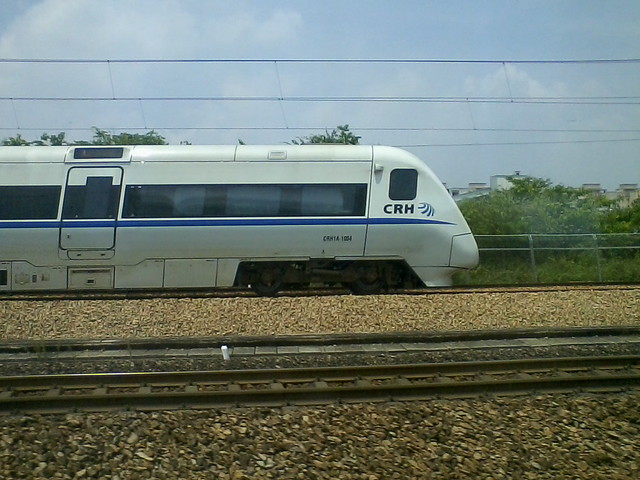
Chinese high speed trainWent from Guangzhou to Hong Kong by Train. Just about everyone on the train had a large screen smart phone and a second battery to keep it running on the journey. Seats with mains power are at a premium and USB charing sockets sought after at airports.


Open University of Hong Kong (OUUK) consists of two multistory buildings in Kowloon. There is no "campus" as such. The meeting room where the conference was held doubles as a basketball court (the hoops swing down from the very high ceiling).

Professor Rory McGreal, Centre for Distance Education Athabasca University, on "Why OER are essential in mobile and ubiquitous learning". Dr K S Yuen, the Director of Educational Technology and Publishing at OUKH on "Implementing effective e-Learning in Hong Kong schools through the adoption of Open Textbooks".


Cambridge

ICCSE 2015

10th International Conference on Computer Science & Education at Cambridge University:
    Chapel of King's College CambridgeFitzwilliam College Cambridge Auditorium
  1. Quickly developing online versions of learning materials for graduate students, Tom Worthington's talk for the Office of Scholarly Communication, University of Cambridge (UK). Also presented at ICCSE 2015. Notes by Danny Kingsley
  2. Time-shifted Learning: Merging Synchronous and Asynchronous Techniques for E-Learning, Tom Worthington, for ICCSE 2015,
  3. Denix Dai, Ataturk University is demonstrating a database of computer engineering education in Turkey.  
  4. Ben M. Chen, National University of Singapore on "Unmanned Systems Research and Education".
  5. Professor Clarence W. de Silva, British Columbia University, on "Sensing Issues in the Automated Monitoring of the Quality of Drinking Water"

Talk for Cambridge University Librarians

Cambridge University uses Moodle. Discussed "Quickly developing online versions of learning materials for graduate students" for library staff at Cambridge University (also Notes by Dr Danny Kingsley, Head of the University of Cambridge Office of Scholarly Communication).

Visit to Centre for Entrepreneurial Learning

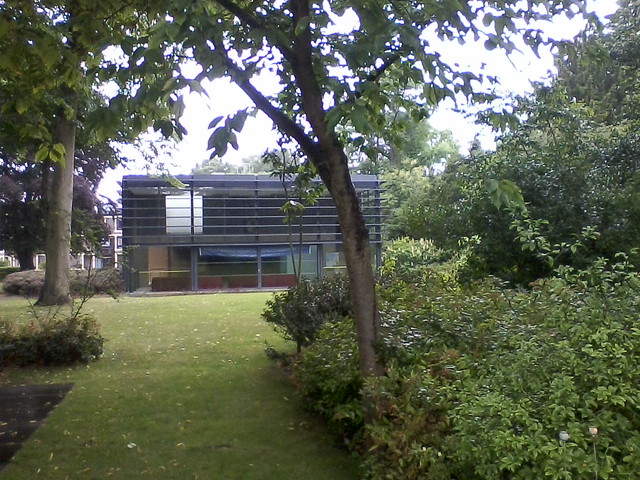
Cambridge Judge Business SchoolTalked to  Joanna Mills, Deputy Director,  Centre for Entrepreneurial Learning, Judge Business School, University of Cambridge about emulating the The Cambridge Phenomenon (Silicon Fen) in Canberra.

ps: It is worth attending a free SLUG meeting, to get to see the Google offices.

Friday, September 6, 2013

Preparing Materials for Open, Distance and Flexible Learning

The book "Preparing Materials for Open, Distance and Flexible Learning" (by Derek Rowntree, is another of the excellent series of books from the UK Open University on the mechanics of delivering higher education.While first published in the early 1990s, the techniques described are still applicable for today's Internet based education, as well as being of benefit for classroom teaching. Rowntree goes through the steps of planning, writing and rewriting materials for education, giving numerous examples. In the glamor of smart-phones, tablets and phablets, it is important to remember that education still relies on having good content, designed and delivered by people who know about teaching.