Showing posts with label student retention. Show all posts

Saturday, August 12, 2023

Designing Relationship Building Into University Programs

Lambert, Artze-Vega, and Tapia (2023) suggest five ways for college students (what in Australia are university undergraduates), to meet new friends and mentors. They suggest this is important to student success. I agree this is important, so important it should not be left as an ad-hoc extra curricular activity, it should be built into the core compulsory program. Rather than design courses and assessment where students learn alone, and are then punished for collaboration, instead teach studnts to work together, and reward them with grades for doing so. Delete technical content from the curriculum and replace it with vital teamwork skills.

The authors suggest that "Connections are everything" is good advice for new students. If that is the case, why don;t introductory courses devote more time to making connections? Perhaps the reason is that the experience of today's students differs from that of their professors. University marketing shows happy carefree studnts sitting around chatting in a leafy environment. Perhaps that was the case in the professor's day, but today's student is more likely to be rushing from their job to the classroom, then out to pick up their children.

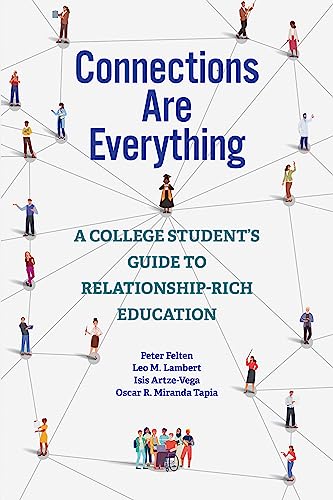
The Conversation article accompanies the publication of a book by many of the same authors (Felten, Lambert, Artze-Vega, and Tapia, 2023). Whhile titled "Connections Are Everything: A College Student's Guide to Relationship-Rich Education", I couldn't help thinking a better tile would be "Education for the Rich: Time to Make Connections to Stay Rich". That may sound harsh, but the advice given will be hard for a low SES student from a disadvantaged background to follow:

1. Talk to a professor

If there is a professor for 200 , or more students, exactly when and how long do you talk to them for? As a student if you focus is on passing, as quickly as possible, any interaction with staff has to focus on that. You need exemptions, and extensions. There is no time for an idle chat. 

2. Make a friend in class

University is a lonely, frightening experience, and not just for young undergraduates. As a graduate student I had a decade of experience teaching at a university, and was an adult, but even so the old nightmares about assessment returned, and I found I had little in common with the rest of the class. What helped me was where there were class activities devoted to meeting other studnts, and group projects. But even so study was still a frightening, agonizingly lonely experience.

3. Use the resources that are there for you

Universities do have staff and resources to support student learning. But unless you are introduced to these in a course, and told to use them, students are unlikely to do so. As a student you are focused on studying enough to do the assessment. So the use of these resources have to be built into your assessed coursework to be useful. An example of this is the Techlauncher program at the ANU. Rather than suggest students go to see a career councilor before they graduate, the councilor are brought into the classroom to teach the students. In conjunction with the councilors, academic staff administer assessment which requires students to look at what they have learned, and possible futures. This empowers the time poor student to do what would otherwise be an option extra-curricular activity, which they therefore would not do. I will be talking about this at EduTech 2023.

4. Participate in a ‘relationship accelerator’

Internships, undergraduate research, writing-intensive seminars, study abroad, and campus employment are all good, but only if they are for credit. If they are not compulsory, or provide credit to the student's degree, there is little point in providing them.

5. Connect with yourself

Imposter syndrome is a real thing at university. Telling students who feel anxious to talk to a professor will compound the problem, not solve it. Professors are not trained in student counselling, and likely to make the student more anxious, not less. The first step I suggest is to admit that study is a stress inducing experience, not the happy go lucky one depicted in university marketing. This is hard surprising as most of the staff the student interacts with are casual, or on short term contracts. The staff are constantly anxious about their jobs. What can be done is help students cope with the anxiety, or at least understand this is a normal part of the university experience.

Reference

Leo M. Lambert, Isis Artze-Vega, & Oscar Miranda Tapia. "Building relationships is key for first-year college students – here are 5 easy ways to meet new friends and mentors", The Conversation, August 11, 2023 10.37pm AES. 

Felten, P., Lambert, L. M., Artze-Vega, I., & Tapia, O. R. M. (2023). Connections Are Everything: A College Student's Guide to Relationship-Rich Education. JHU Press.

Saturday, June 9, 2018

Improving retention and completion for students in higher education

The report "Improving retention, completion and success in higher education" (Australian Department of Education and Training, 6 June 2018) makes 18 recommendations to improve student retention.  Many of the recommendations seem a little pointless, such as the first, suggesting institutions give students "the best chance to complete their studies". However, some are more significant, such as recommending nested courses and allowing for trimester structures. Unfortunately the report is of little practical value as it concentrates on internal on-campus students, whereas most Australian students are now studying externally online.
The report notes that the attrition rate for external students is about two and a half times that of internal students and the number of such students is rising. What the report does not point out that this is partly a correlation, not a causal relationship. The factors which cause students to enroll externally also result in the dropping out at a higher rate.
The report suggests that "Curricula for external courses must be designed with the external student in mind and must utilise the benefits of contemporary technology in course design". However, the report doesn't address the change which has already taken place in Australian higher education: most students now study externally online off-campus. Most of these students are officially enrolled as internal on-campus students, but don't come to lectures and only attend where required. 

Rather than address the needs of these students, government policies and some university practices are trying to force these students to attend when they do not need to or want to. Instead, I suggest the curricula for all courses needs to be designed with the external students in mind. Universities and government policy makers need to accept that students stopped coming to class years ago and change policy and practice accordingly.

"Recommendations

Expectations of completion in the current context

  1. As a first priority, institutions should ensure students who have the capacity to succeed in higher education are given the best chance to complete their studies through the appropriate provision of academic and other support services as required of them by the Higher Education Standards Framework.

Supporting students to make the right choices

  1. School students and mature-age people need better access to effective career advice. The National Career Education Strategy, due to be released in 2018, should be closely monitored to identify improvements in the area of student career advice, including study options and pathways, and information about the post school learning environment. This strategy should also be expanded to include mature-age students or a separate strategy should be initiated for this cohort.
  2. Career advice cannot be left to schools. Every higher education institution should ensure that their students are given the opportunity for career planning and course advice on entry to the institution and as they require it throughout their studies.
  3. Where and how student success, completions, retention and attrition data is made accessible to students should form part of considerations by the Department of Education and Training in the establishment of a new online information platform.

Supporting students to complete their studies

  1. Every institution should have its own comprehensive student-centred retention strategy, which is regularly evaluated. These strategies could include institutional retention benchmarks and, as appropriate, processes for entry and exit interviews, the integration of data-based risk analytics and targeted support interventions, a suite of support services and a means to re-engage with students who have withdrawn.
  2. Institutions should automatically review the enrolment of all students who have not engaged in their studies to an agreed level by the census date.
  3. Institutions should pay particular attention to ensuring their support services are meeting the needs of external students who are not regularly attending campus because these students are identified as at risk of not completing their studies.
  4. Every institution should have an institution-wide mental health strategy and implementation plan.
  5. Institutions should increasingly offer nested courses, which are appropriate and compliant with the Australian Qualifications Framework, to provide students with a greater range of exit options with meaningful qualifications.

Sharing best practice

  1. There is already a wide variety of approaches to sharing best practice within the higher education sector. However, these approaches are not always scalable or frequently evaluated. Peak bodies should collaborate to develop streamlined processes to collect and disseminate best practice, with support from the Department of Education and Training. A dedicated website could be established for this purpose.

Clarity of definitions and enhancing transparency

  1. The higher education community should work together with the Department of Education and Training to ensure a greater understanding and clarity of definitions in attrition, retention, success and completions data. The Department should continue to measure and publish adjusted attrition, retention, student success and completions data.
  2. At present some institutions have a trimester structure of teaching and this can lead to different timings for assessment, graduation and reporting. As a result, students who complete Semester 1 and 2 and enrol in Semester 3 but not Semester 4 are recorded as not completed. Consequently, the definition of attrition should be changed to reflect the trimester teaching structure.
  3. The adjusted attrition rate should be the primary measure of attrition published for domestic commencing bachelor students.
  4. The Department of Education and Training should further develop and publish the calculation of attrition rates that take into account key student characteristics so as to better reflect institutional differences.
  5. The Department of Education and Training should report attrition among non-university higher education providers on a similar basis to its reporting of Table A and B universities.
  6. The Department of Education and Training should publish attrition data at more disaggregated levels, for example, by institution, by study area and by student characteristics.
  7. The Department of Education and Training should establish a common student identifier to better understand student pathways across tertiary education with a view to working with State and Territory Governments to establish a common student identifier across all levels of schooling.

Accountability and regulation

  1. TEQSA already has sufficient powers in relation to provider compliance with the Higher Education Standards Framework in terms of the identification and tracking of students at risk with support strategies in place, analysis of student performance and evidence on reasons for attrition. TEQSA should continue to take account of every institution’s retention performance in assessing whether these standards are being met."
    From:  "Improving retention, completion and success in higher education" (Australian Department of Education and Training, 6 June 2018)


Thursday, June 15, 2017

Improving retention, completion and success in higher education

The discussion paper "Improving retention, completion and success in higher education" from the Higher Education Standards Panel, was released by the Australian Department of Education and Training, 9 June 2017. This seventy nine page report provides a comprehensive overview of efforts to measure and improve the retention of students in Australian university. It points out that many strategies have had limited success and asked what more can be done.

As the paper points out, Australian university students complete at about the same rate as in comparable countries. The report discusses categories of students less likely to complete, such as those who are part time, distance students from low socio-economic groups (p. 45). In a way this reflects the success of Australian Higher Education policy. Such students would previously have been excluded from higher education. Any policy to improve retention rates should be carefully designed so it does not inadvertently exclude these students (or allow an unscrupulous provider to deliberately do so to improve their statistics).

One change the points to  is "From 1 January 2018 Commonwealth support will be available to students at public universities in approved sub-bachelor courses." (Page 14). As the paper notes, this will provide a better transition to degree programs and for shorter work related qualifications.

However, sub-degrees present challenges for universities which are not used to offering such short, practical programs. Those institutions which offer vocational and educational training (VET), through an associated TAFE or Registered Training Organization (RTO) will have an advantage in staff and procedures to suit these shorter programs.

In discussing teaching quality, the paper notes that enrollments in Graduate Certificates in Teaching (the traditional qualification a university lecturer is expected to have) has been declining (p. 50). The paper suggests this be addressed by individual universities. However, perhaps a more centralized policy is needed. VET staff have a very high rate of completion of the equivalent qualification: a Certificate IV in Training and Assessment. This is because the qualification is required for VET teachers. No similar requirement exists for university lecturers.

I suggest requiring university lecturers to have a teaching qualification at least the same level as VET teachers: AQF level 4 Certificate IV, while retaining the option of a Level 8 Graduate Certificate. Those academics who also teach in the VET sector would be likely to opt for the Certificate IV and those exclusively in the university system the Graduate Certificate. In either case, this education should focus on practical aspects of teaching, with only as much theory as needed to support it. This should be offered on-line, using techniques including an e-portfolio and recognition of prior learning, both for convenience and to provide familiarity with the environment lecturers will be increasingly working in. and with the option of completion through an

Senior university academics should be expected to have completed a more extensive qualification on teaching, supervision and university administration. A Level 6 Advanced Diploma, or Level 9 Masters Degree would be appropriate.

One aspect of the paper which I find troubling, is the lack of appreciation for the change which on-line education has made, and will make, to Australian Higher Education. The assumption seems to be that most university students do, and will continue to, attend lectures on a campus regularly as full-time students. However, like the education provided by universities, this thinking needs to be flipped. University academics are well aware that only about one third of students attend the average lecture and that students have jobs and families. However, most academics have not been trained in how to provide education to this majority of students.

In March I completed a Masters of Education in Distance Education, focused on how to provide a quality education at a research orientated university catering to international students. Some of my colleagues have asked what the trick is to getting students to do the study expected of them. The trick, as I explain it, is to experience being a student so you understand what they are going through and becoming competent in your profession of teaching. It is then very much easier to teach, once you know how to do it and why.

Friday, March 3, 2017

Improving Student Success

Greetings from the National Convention Center in Canberra, where I am attending an "Improving Student Success" workshop, hosted by the  Learning and Teaching Support Unit, of the Australian Government Department of Education and Training. This is held in conjunction with the Universities Australia national conference.

The first speaker, Professor Deborah West, Charles Darwin University (CDU), discussed "Learning Analytics" (LA), that is carrying out an analysis of data about how students learn, usually from the learning management system. One issue was concern that the results of the LA would be used to replace staff with recommender systems, which automatically provide students with advice. It seemed to me that LA is only a small part of recommender systems, artificial intelligence (AI) can provide such systems using other techniques. Also many of the insights claimed for LA are already known by educators and part of routine teacher training. The problem is that academics are not trained to teach.

If conventional courses are being delivered, then there is little scope for use of LA after the course has been designed. As an example, if a problem with literacy is identified, then a course can be redesigned, and the prerequisites can be changed. However, once the course has started there is little that can be done.

One interesting point was that about 70% of CDU's student load is on-line, with 30% classroom based. This is close to my prediction for Australian universities generally, being 80% on-line by the end of the decade. Current Australasian universities are about 40% to 50% online (as most students not attending lectures for supposed face-to-face courses).

Professor West cited: Siemens, G., & Long, P. (2011). Penetrating the fog: Analytics in learning and education. EDUCAUSE review, 46(5), 30. Retrieved from https://net.educause.edu/ir/library/pdf/ERM1151.pdf

Next was Professor Sally Varnham, UTS, chaired a panel of students on the "Student Engagement Partnership" (TSEP) project. What I found lacking from th discussion was on-line student representation and integration into the curriculum. For the last five years I have been a part-time on-line postgraduate student. I felt disenfranchised as most actives and representation structures assumed I was on campus and had spare time to be engaged in extra-curricular activities. I was more than a thousand kilometers from the campus and when not studying I had paid work to do.

Next was Professor Karen Nelson, University of the Sunshine Coast, Queensland. Professor Nelson pointed out that research shows that even those students who do not complete a degree receive significant benefit from higher education. However, I suggest that those students would benefit more if the institution was to award them a sub-degree qualification.  Professor Nelson also pointed out that the usual parameters for students (full/part time, age, previous education and so on) accounts for only about 12% of the variation in student outcomes.

Professor Nelson pointed out that regional students are moving to capital city universities.  Yesterday an review into regional, rural and remote education was announced by the Australian Government. One way regional universities can compete, I suggest, is to provide quality on-line, vocationally relevant, VET articulated, nested programs.

The Australian Computer Society (ACS) announced yesterday the first advanced professional accreditation for an ICT degree, awarded to the University of Wollongong (UOW) Master of Information and Communication Technology (Advanced). The accreditation requires students to have skills in leadership and management,beyond what is expected in the usual degree. I suggest this will aid completion and engagement of students, as they will be working on work-relevant skills and realistic projects.

Associate Professor Sarah O'Shea, University of Wollongong, talked on first-in-family students. She pointed out this is an imprecise measure, however the research literature did have some useful pointers. Professor O'Shea, cited her research indicating that a large proportion of first in family students consider withdrawing. However, I would like to a statistical analysis to check that this is not a correlation, rather than a causal relationship. That is, it may be that first-in-family students have difficulties for the same reasons of disadvantage which prevented others in their family. If a family has not been wealthy enough in the past to support a university student, they are not likely to be able to do so in the future. Also it would seem that the Vocational Education and Training sector should provide a useful transition from school to university.

Professor O'Shea, quoted one student how felt an impostor at university and they did not really belong. This is curious as that is how I have always felt at university, even after teaching at one for eighteen years. As a graduate student I found it interesting to read the reflective portfolios of other mature students and find they felt the same. One of the things I learned being a student again was that I still was a student with all the usual fears, uncertainties and loneliness. 

O'Shea (2016) notes the "... students reported a sense of bewilderment in the initial weeks caused by fundamental institutional processes for example, enrollment procedures, financial requirements and timetabling". These are things which I struggled with, even as an experienced student studying how to design education programs. These are problems I suggest could be addressed partly by reassuring students that these are normal concerns common to students, but also by addressing these concerns.

Friday, August 12, 2016

Improve Student Retention in Australian On-line Higher education

Dr Cathy Stone, a Fellow at the National Centre for Student Equity in Higher Education, dropped in this week to talk about how student retention could be improved for on-line students. On-line courses provide access to education for students who would otherwise be excluded. However, like paper-based distance education courses which preceded them, on-line courses have a lower completion rate than face-to-face courses.

Cathy is and is undertaking research for "
improving student transition, participation and success in online higher education". She has visited Open University UK (OUUK), as well as University of New England (UNE),  and other Australian on-line institutions.  I pointed out to Cathy that some of the techniques later used by OUUK were developed in Australia at UNE.

While focusing on students from specific backgrounds undertaking on-line education the same techniques for helping these students can help students more generally. Some techniques suggested in Cathy's latest bulletin are to welcome the students, post regular bulletins and follow up missing students. These and other techniques are now incorporated into training for educators, but regrettably many academics do not receive this training and fewer implement it.

Cahty is currently in Canberra and is keen to talk to educators about improving on-line education.

Tuesday, August 2, 2016

Measuring and Improving Retention of University Students


The Doubters' Dilemma
The Doubters' Dilemma:Exploring student attrition and retention in university language and culture programs, by Mario Daniel Martín, Louise Jansen and Elizabeth Beckmann (August 2016) is available free on-line from ANU Press. While based on a study of student retention specifically in  Language & Culture programs at the Australian National University (ANU), this work provides a useful analysis of the prob elms with measuring student retention in general and possible alternatives. It also argues that it is not just beginning students universities have to worry about retaining, but those in later years.

One issue which the study does not address is structuring programs to fit with student's working and family lives. A student who has to leave a three year degree program after six months, a year, or two years receives no degree. These students could be awarded a certificate, diploma or advanced diploma.

Wednesday, August 26, 2015

Equity and University Completion Rates in Australia

Edwards and McMillan (2015) from the National Centre for Student Equity in Higher Education at Curtin University, report that students from a low socio-economic backgrounds, remote and regional areas are less likely to complete a degree than others. But the most striking finding is the high non-completion and drop-out rates for indigenous students.

This study focused on the university sector and it would be interesting to see if the results for VET were similar. Also it would be interesting to see if students to articulated from VET to university had a higher completion rate. The idea being that VET provides a more gradual transition from school to universality and also may keep students more engaged by teaching them more relevant hands on skills and using better trained teachers.

Also it would be interesting to see if providing quality e-leaning which allowed students to continue studies while meeting family and work obligations, would increase retention and completion. Also lower intensity courses extending over more of the year might help (one course, per term four terms a year, rather than two course, two semesters a year, for example).

Reference


Edwards, D. & McMillan, J. (2014). Completing university in a growing sector: Is equity an issue? URL  https://www.ncsehe.edu.au/wp-content/uploads/2015/08/Completing-University-in-a-Growing-Sector.pdf