Showing posts with label mentorship. Show all posts

Wednesday, January 28, 2026

Who Hacks Wins: Australian Defense Tech Hackathon

I am delighted to be mentoring teams in the Australian Defense Tech Hackathon, 6 to 8  February 2026, at UNSW Canberra. This is being held in association with the European Defense Tech Hub. The usual hackathon format is used, with teams spending a few days working on an idea & competing for prizes. But the point with a hackerthon is that you are not there to invent something, but to learn.

This will be my fourth time mentoring at defence hackerthon. 
Event canvas from NWIW 2020
by Paul Telling
Two were hosed by the Australian Computer Society for the DoD and one by Navy

Also I have volunteered to to run a workshop on how to present tech to senior people. This semester I will be also helping out with ANU's Software Construction course, which uses hackerthons for learning.

Focus areas include the expected topics of electronic warfare & drones, but also includes "Battlefield Economics & Scaling Production". While the headlines are usually grabbed by exotic high tech weapons, if you can't afford to buy them or can't build them, they are no use.

Also I have offered to run a workshop on how to talk to your client when they are a general. This is not that different to talking to senior executives in industry or government, but there are some unusual conventions.

ps: Yes, as one of my eagle eyed colleagues pointed out this is the "Australian Defense Tech Hackathon", spelled with an American style "S" US, not the "C" of Australian English. This is in association with a European organisation, so it is not like it is a US thing. NATO use a "C" for English documents and "S" for French.  When I worked in HQ ADF I had a complaint from a US journalist that we had misspelled "Defense" in a policy document. A short time later we received a groveling apology. ;-)

"Goals

​​1) Solve urgent defense and security challenges ...
​​2) Launch new careers and companies...

​​3) Strengthen Australia through defense innovation... 

Focus Areas ...

  1. ​SIGINT & OSINT
  2. ​Computer Vision & Edge AI
  3. ​Unmanned & Autonomous Systems (UxS)
  4. ​Electronic Warfare (EW)
  5. ​Modular Sensors
  6. ​Drone & Counter-Drone Tech
  7. ​Battlefield Economics & Scaling Production
  8. ​Hypersonics and Missile Defence ...

Agenda


Friday, February 6, 2026

​​12:00 - Doors open, Networking
​13:00 - Welcome and Opening Program
​14:00 - Workshops
​17:00 - Introduction to Mentors & Challenges, Last-Minute Team Formation
​18:00 - Start of Hacking

​Saturday, February 7, 2026

​Hacking continues all day

​Sunday, February 8, 2026

​12:00 - End of Hacking, Lunch Break

​Demo Day (Open to Visitors)

​13:00 - Pitches of the winning teams
​15:00 - Award Ceremony
​15:30 - After-party & Networking"

Saturday, August 12, 2023

Designing Relationship Building Into University Programs

Lambert, Artze-Vega, and Tapia (2023) suggest five ways for college students (what in Australia are university undergraduates), to meet new friends and mentors. They suggest this is important to student success. I agree this is important, so important it should not be left as an ad-hoc extra curricular activity, it should be built into the core compulsory program. Rather than design courses and assessment where students learn alone, and are then punished for collaboration, instead teach studnts to work together, and reward them with grades for doing so. Delete technical content from the curriculum and replace it with vital teamwork skills.

The authors suggest that "Connections are everything" is good advice for new students. If that is the case, why don;t introductory courses devote more time to making connections? Perhaps the reason is that the experience of today's students differs from that of their professors. University marketing shows happy carefree studnts sitting around chatting in a leafy environment. Perhaps that was the case in the professor's day, but today's student is more likely to be rushing from their job to the classroom, then out to pick up their children.

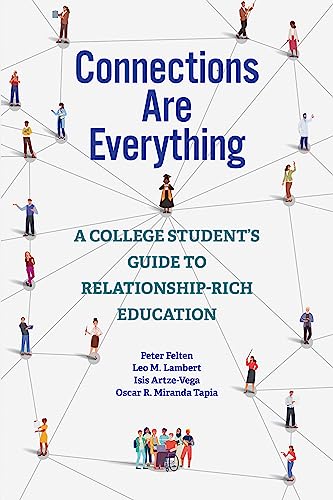
The Conversation article accompanies the publication of a book by many of the same authors (Felten, Lambert, Artze-Vega, and Tapia, 2023). Whhile titled "Connections Are Everything: A College Student's Guide to Relationship-Rich Education", I couldn't help thinking a better tile would be "Education for the Rich: Time to Make Connections to Stay Rich". That may sound harsh, but the advice given will be hard for a low SES student from a disadvantaged background to follow:

1. Talk to a professor

If there is a professor for 200 , or more students, exactly when and how long do you talk to them for? As a student if you focus is on passing, as quickly as possible, any interaction with staff has to focus on that. You need exemptions, and extensions. There is no time for an idle chat. 

2. Make a friend in class

University is a lonely, frightening experience, and not just for young undergraduates. As a graduate student I had a decade of experience teaching at a university, and was an adult, but even so the old nightmares about assessment returned, and I found I had little in common with the rest of the class. What helped me was where there were class activities devoted to meeting other studnts, and group projects. But even so study was still a frightening, agonizingly lonely experience.

3. Use the resources that are there for you

Universities do have staff and resources to support student learning. But unless you are introduced to these in a course, and told to use them, students are unlikely to do so. As a student you are focused on studying enough to do the assessment. So the use of these resources have to be built into your assessed coursework to be useful. An example of this is the Techlauncher program at the ANU. Rather than suggest students go to see a career councilor before they graduate, the councilor are brought into the classroom to teach the students. In conjunction with the councilors, academic staff administer assessment which requires students to look at what they have learned, and possible futures. This empowers the time poor student to do what would otherwise be an option extra-curricular activity, which they therefore would not do. I will be talking about this at EduTech 2023.

4. Participate in a ‘relationship accelerator’

Internships, undergraduate research, writing-intensive seminars, study abroad, and campus employment are all good, but only if they are for credit. If they are not compulsory, or provide credit to the student's degree, there is little point in providing them.

5. Connect with yourself

Imposter syndrome is a real thing at university. Telling students who feel anxious to talk to a professor will compound the problem, not solve it. Professors are not trained in student counselling, and likely to make the student more anxious, not less. The first step I suggest is to admit that study is a stress inducing experience, not the happy go lucky one depicted in university marketing. This is hard surprising as most of the staff the student interacts with are casual, or on short term contracts. The staff are constantly anxious about their jobs. What can be done is help students cope with the anxiety, or at least understand this is a normal part of the university experience.

Reference

Leo M. Lambert, Isis Artze-Vega, & Oscar Miranda Tapia. "Building relationships is key for first-year college students – here are 5 easy ways to meet new friends and mentors", The Conversation, August 11, 2023 10.37pm AES. 

Felten, P., Lambert, L. M., Artze-Vega, I., & Tapia, O. R. M. (2023). Connections Are Everything: A College Student's Guide to Relationship-Rich Education. JHU Press.

Friday, June 23, 2023

Teaching STEM students the job is not about tech

Before moving into education I worked at as a civilian computer policy advisor. This was mostly not about technical details, but working out what was needed, & how the relationships between the people in the organisation were stopping this happening. I try to help the interns I am mentoring, who are working in major government agencies & companies, with this. I talked about it yesterday with Patrick O'Shea for a forthcoming podcast in his "The Versatilist" series.

Friday, June 16, 2023

Projects & internships for student employability

I will be speaking on "Projects & internships for student employability" at 9:40am 25 August 2023 of EduTECH, in Melbourne. In this I will highlight my experience teaching in the Australian National University's Techlauncher program of student projects for real clients, and mentoring ANU interns at major companies, and government agencies. Comments and suggestions would be welcome. Also I am happy to give a preview webinar to practice, if someone has a venue.

"Universities are under pressure to turn out job ready graduates. But there is only one way to ensure a student is really ready for a job: put them in a real workplace. In this presentation hear how Australia's leading university runs group projects, and internships for computer students with major companies, government agencies. Tom will share insights from 20 years designing and delivering work integrated learning.
To will help you:
  1. Understand where to start with projects and internships 
  2. Understand how to effectively support work integrated learning 
  3. Critically review whether WIL is for your institution"

Tuesday, August 23, 2022

Mentoring Computer Professionals

 Greetings from the National Press Club in Canberra, where mentors & men


tees are talking about their experience in the ACS Mentoring Program. One lesson was "reality is harsh". I am one of the mentors.

Sunday, January 30, 2022

Mentoring Academic Educators

One of the things which kept me sane through two years of COVID-19 were activities of the professional bodies I belong to (and some I don't. An organisation which managed the pivot online well was ASCILITE (the Australasian Society for Computers in Learning in Tertiary Education). As well as attending a weekly ML-Sig (Mobile learning Special Interest Group), and presenting papers at two annual online conferences, I mentored an educator from another university in the CMP (ASCILITE Community Mentoring Program). Below is what we wrote in our report, presented at the 2021 conference.

I had mentored individual students and teams before, for startup projects. I had also given one off advice to colleagues (someone times solicited, sometimes not). But this was the first time I had a long term formal mentoring arrangement with a peer. After we were matched up I wondered why I was mentoring someone who had more experience in education than I had, and it turned into an equal exchange of ideas.

Purpose:

  • Mentee: Furthering my academic career through publication
  • Mentor: Decide if I have a future in academia

What We Did

  1. Managed to meet face to face over lunch once in early 2021, between lock-downs
  2. Met twice via Zoom.
  3. Email exchange each month or so.
  4. Once more by lunch in late 2021.

What We Found

Much in common, being experienced educators, not from an academic research background.

Outcomes

  1. Mentee: Goal accomplished, with paper submitted on the the flipped classroom to a journal. Got a new, higher paying, job.
  2. Mentor: Decided I have a future in academia.

Thursday, December 10, 2020

Navy Warfare Innovation Workshop 2020

Event canvas from NWIW 2020
by Paul Telling
Greetings from the Navy Warfare Innovation Workshop 2020 (NWIW), where I am facilitating one of the teams. This is the third and final day of the workshop, with Navy personnel joining with people from the defence community and  academia working on an idea. This is much like other hackerthons I have mentored this year, with the added bonus that we can again meet face to face (some teams are online for logistical reasons). 

The teams respond to a scenario, similar in format to one I prepared for ANU students. A visual summary of the projects was produced by Paul Telling. My team came up with TIDE: Threat Identification Detection and Effects for dealing with swarms of RAS (Robotic Autonomous Systems).

Participants use the same techniques as a business start-up competition, refining and presenting an idea, but one to defend the country. A panel of senior defence experts then select which merit further development.

However, the real value of such competitions is not to produce a product, but have the participants learn new skills and meet people they can later work with on projects. 

Saturday, August 22, 2020

Mentoring student group work online, 8am Wednesday


I will talk on "Tools to engage students online" Wednesday 19 August, 8-9 am, AEST (Canberra Time) as part of the Microlearning Series curated by Manisha Khetarpal at Maskwacis Cultural College in Canada. This is the third of six weekly sessions. Free, register now.

Higher Education After COVID-19

  1. Responding to the Coronavirus Emergency with e-Learning
  2. Open Content for e-Learning in Response to the Coronavirus
  3. Online Assessment with e-Portfolios in Response to the Coronavirus
  4. Tools to engage students online.
  5. Mentoring student group work online.
  6. Higher education after COVID-19: Not business as usual
These are online, open to all and free. Suggestions are welcome.

Mentoring student group work online

The best way for students to learn practical skills for a vocation is by practice. This can be in a real workplace as an intern, or in a team of students working on a real-world project. But many "real" workplaces are now virtual, with staff working online remotely. This requires new skills of those providing Work Integrated Learning.

Questions for participants:

1. How do you provide individual students, or teams, just enough advice, when you can't physically meet with them?

2. How can online mentoring techniques be used after face to face teaching and working resumes?

Mentors give guidance based on experience

Telemachus son of Odysseus and Mentor
from Aventuras de Telémaco
by Pablo E. Fabisch / Public domain

The tools a mentor uses may be much the same, but their role is different to other teachers. The mentor is experienced in what it is the student is learning to do.  The mentor answers questions and provides advice, rather than taking the student through a set of coursework. Other educators may have set out what the student needs to learn, the mentor helps with the practicalities. As an example, I tutor students undertaking team projects and mentor participants in hackerthons, not telling them how to do the project, but asking what they intend to do.


Work-integrated learning (WIL)


Dr Penny Kyburz,
Game Developer
 Take the learning to the workplace or the workplace to the learning.


Australia has Work-integrated learning (WIL) both in its Vocational Education (VET) sector and universities. I was trained in computing in the Australian Public Service (APS), through short courses by contracted professionals, and supervision in the workplace. Employers may also release staff to attend courses at VET institutions or universities. The APD trainees are called apprentices or cadets. There are also university courses where students work in a company as "interns". Students may also work in a team on a project for a client. 

Mentoring has a role here as these trainees need a form of supervision which takes account of their role as someone working but also learning. Ideally there will be someone with work experience working alongside an educator to ensure the trainee makes a practical contribution, learns from the experience and that can be formally recognized through a educational qualification. In some cases the professional is also an educator, such as Dr Penny Kyburz, Game Developer, and Dr Charles Gretton (AI Developer).


Project Audits

  • Project Audit 1 - Week 3, to set or reset the agenda and scope for the semester
  • Project Audit 2 - Week 6, to guide and evaluate progress, based on the project scope
  • Project Audit 3 - Week 10, to finalise and prepare for the next stage of the project
From: Project Audits (PA), ANU, 2020


Many Eyes Process

 
From: Many Eyes Process, ANU, 2020
 

Mentoring Online With Remo Conference


Remo Conference Example
Participants in Canberra's ZeroCO2 Hackathon 2020 took part in an online idea forming exercise this month. Teams were each allocated a table and booked sessions with a mentor. The mentors had their own virtual table where they could chat between mentoring sessions. At the end of each set time period a bell would sound indicating it was time for mentors to move to their next team appointment.

This format has been used at the Canberra Innovation Network (CBRIN), for fast paced start-up sessions for several years. The difference this year is that it has moved online due to COVID-19. The room and tables are virtual. While many video conference and forums tools could be used, Remo Conference was used for the ZeroCO2 hackerthon. This displays a floor plan of the virtual room, with participants seated.


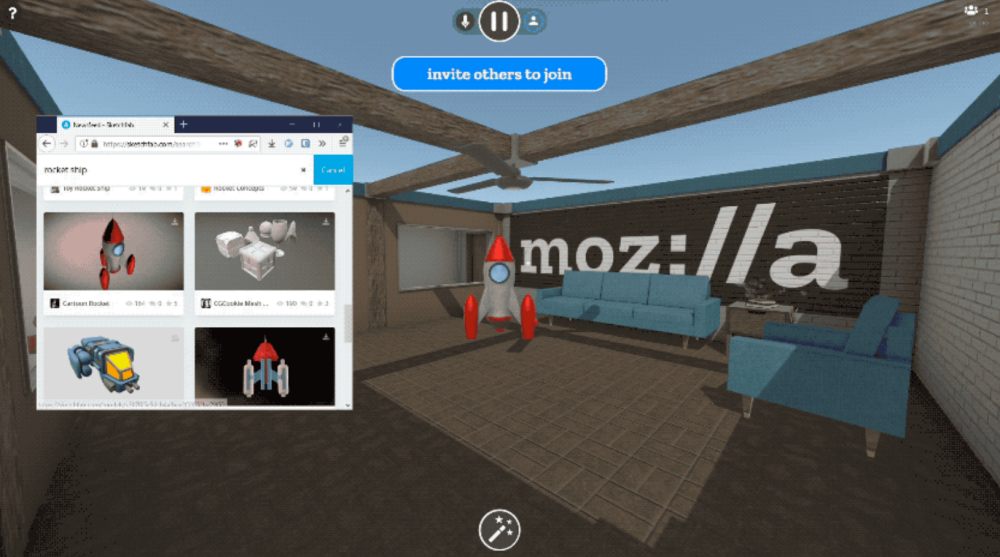
Mozilla Hubs is Too Much Like Life

Mozilla Hubs Example
Last week the


Thursday, August 15, 2019

Cyber security Mentoring Program

Greetings from the Canberra Innovation Network (CBRIN), where ACT Minister, Mick Gentleman, just launched the OKRDY Cyber Edition Mentoring Program. An online system will match people with cyber security experience (mentors), with those could benefit from it (mentees). Added to the usual difficulty of matching people, is the needed to considered security clearances.

"A Canberra-based cyber security mentoring program helping local students connect with cyber professionals, organisations and government. OK RDY Cyber Edition is NOT simply a once off event, but a program of activities across, panels, mentorship matching, employer tours, social media and much more.

Our goal is to foster Canberra’s local cyber ecosystem, demystify cyber careers and help employers identify emerging cyber talent. This activity will develop a pipeline of job-ready cyber graduates in Canberra and collectively help to achieve greater employability, diversity and cultural outcomes for the cyber industry."

Friday, September 15, 2017

OK RDY App to Connect Students with Mentors and Organisations

OK RDY Okay Ready
Canberra start-up "OK RDY" have announced they signed up Telstra and the Australian National University (ANU) to pilot an app for connecting students with mentors and organizations. The issue of how students get real world experience and non-technical “soft” skills is something which has recently come up with repect to cybersecurity professionals.

I am mentoring a team of students in the Innovation ACT competition who are refining OK RDY's product offering:
"OK RDY is a mentorship and skilled-volunteer matching platform with an initial focus on connecting students to professionals and organisations; helping improve employability, diversity and cultural outcomes. ...

OKRDY aims on bridging the gap between university students and corporations. The average university student pursues academia, however, beyond the books they often lack guidance to help them pave their way through this constantly changing corporate world. That’s where the OKRDY platform intervenes, it is a student mentor matching service which matches students to potential mentors who work within their relevant industry. The service will be web-based and will be on all the accessible platforms available to your average student. ..."