Showing posts with label moocs. Show all posts

Sunday, October 22, 2017

Educating Tomorrow’s Digitally Enabled Workforce

The report Tomorrow’s Digitally Enabled Workforce (Hajkowicz, Reeson, Rudd, Bratanova, Hodgers, Mason & Boughen, p. 87, 2016) suggests, not surprisingly, that education is critical for the future workforce. The researchers suggest new jobs require lifelong learning (and relearning) provided by the educational sector, with business and government.


One initiative the researchers point to is Iceland's ‘Innovation Education’ (Thorsteinsson & Denton, 2003), teaching students to identify, research and solve problems. They suggest using nationally developed teaching materials, which are then adapted for local use. A local example cited is the National Digital Learning Resources Network (NDLRN), used by Australian teachers.

Hajkowicz et al. (2016) touch on the potential of so-called Massive Open Online Courses (MOOCs), but point out their low retention rate. Unfortunately, the authors seem to be assuming that MOOCs are the only form of digital learning available, ignoring several decades of successful delivery of on-line courses by open and distance universities, which predates the now fading MOOC fad. The authors suggest "better understanding" is needed if digital learning is to be into traditional campus life. However, I suggest Australian universities have now passed the tipping point where most courses are blended. Better understanding of how such on-line materials are used is required, but essentially the change to e-learning has already happened.


Hajkowicz et al. (2016) suggest that workplace learning combined with mobile technology is a natural fit for re-skilling and training. I agree, but this is not as nascent as the researchers suggest. My work in the field suggests it is happening informally, driven by the needs of the students, even where not officially recognized, or endorsed by educational institutions. This is not being held back by technology (existing Learning Management Systems such as Moodle, have been retrofitted for mobile access). The problem is that while VET teachers are trained in workplace learning, their university counterparts are not.


While discussing the need for investment in re-skilling the workforce, Hajkowicz et al. (2016) don't address the need to re-skill university educators in how to provide this form of education. Initiatives such as the ACS Intern Program, currently running at the University of Melbourne and the Australian National University, require specialised supervisory skills.

Reference


Hajkowicz SA, Reeson A, Rudd L, Bratanova A,
Hodgers L, Mason C, Boughen N (2016)
Tomorrow’s Digitally Enabled Workforce: Megatrends and scenarios for jobs andemployment in Australia over the comingtwenty years. CSIRO, Brisbane. URL http://www.data61.csiro.au/~/media/D61/Files/16-0026_DATA61_REPORT_TomorrowsDigiallyEnabledWorkforce_WEB_160204.pdf


Thorsteinsson, G., & Denton, H. (2003). The development of Innovation Education in Iceland: a pathway to modern pedagogy and potential value in the UK. Journal of Design & Technology Education, 8(3). URL https://dspace.lboro.ac.uk/dspace-jspui/bitstream/2134/2261/3/4205.pdf

Tuesday, March 1, 2016

MOOCs a Screening Tool for E-learning Ready Students?

In "Better 21C Credentials: Evaluating the promise, perils and disruptive potential of digital credentials" Oliver (2016) points out that an alliance of six universities, including University of Queensland and the Australian National University are proposing to give students credit towards a university degree for massive open on-line courses (MOOCs) undertaken at each others institution.

Oliver suggests "The business plan underpinning this venture is likely to be aimed at scaling online degrees, and ensuring that students who convert from MOOCs are retained and complete remaining units at the usual university fee" (Oliver, p. 11, 2016). However, another reason for offering students credit for a MOOC is to screen applicants for their ability to complete a course relatively independently, at a low cost to the institution.

There are already several schemes for EdX students to earn university credit, however, these are mostly sponsored by a single university and limited to that university's edX courses. Global Freshman Academy, allows edX courses to be counted towards first year at Arizona State University, Charter Oak State College offer edX credit. The ACE Alternative Credit Project from the American Council on Education (ACE), offers an "official" ACE transcript, however, there are only three edX maths courses currently offered (through Boston University).

MIT Micro-Master's


The most unusual of the edX credit offerings is the MIT Micro-Master's Credential in Supply Chain Management. The other edX credit offerings have the student complete edX courses and then a capstone project, for credit towards the first year of an undergraduate degree. However, the MIT is offering a credential called a "MITx MicroMaster’s" on completion of the on-line courses and then a Masters degree, after the student completes a further one semester on campus.

The MIT Micro-Master's seems at odds with the idea of open access courses, which anyone can do with no prerequisites. A Masters degree normally requires the student to have completed a prior degree. The fine print says "the “MicroMaster’s, which will be granted by MITx (MIT’s online learning initiative) to students who do exceptionally well in a given set of graduate-level online courses and do well in a subsequent exam". Given that less than 10% of students complete an undergraduate level MOOC normally, the chances of them completing a set of graduate level courses and doing "exceptionally well" would seem remote (perhaps one in one thousand students). For the institution this low completion rate may not be a problem as MOOCs are designed for low cost delivery, but for the students and society, this is a waste of human resource.

MOOCs for Student Screening


MOOCs offer very limited staff support to the student and very few of those who enroll complete successfully (usually less than 10%). The students who can successfully complete a MOOC should therefore be more likely to complete a university program, than the average applicant. These students should be easier to teach, at a lower cost, requiring less human supervision. There could therefore be a very great incentive for universities to enroll these students, in preference to those who will require staff support.

Such a strategy will not work if the MOOC screened student is then given conventional lecture and paper based courses. The students may not respond to this format and the university will be wasting resources unnecessarily. But the educational institution does not need to prepare its entire degree program in the form of MOOCs, which would require very high levels of investment (and would be difficult for more advanced topics). Conventional distance education design techniques could be used, supplemented with face-to-face classes, where required.

In particular an institution does not need to make high quality videos, as these do not help with learning (students like videos, but these do not help them learn). Instead the student can be provided with an ebook and activities to undertake, via a learning management system. Courses can be structured to have students work in stoups for mutual support.

Wednesday, January 27, 2016

Credit for MOOCs from Australian, North American and European Universities

Grove (2016) reports that a consortium of the Australian National University, University of Queensland, University of British Columbia, Boston University and Delft University of Technology, are setting up a credit transfer system for MOOCs. All are members of the edX consortium and offer a small number of low cost on-line courses. Students who undertook a MOOC through one institution would be able to gain credit at any of the others.

What is interesting about this proposal is that the MOOCs are generally not integrated into the degree programs of the institutions offering them. Not only do the universities need to set up a system to recognize each others MOOCs, but their own. Also each institution only offers a small number of courses, which are usually a short part (typically 4 to 8 weeks) of an existing introductory course.

UQx Design Methodology for Course Development
MOOCs are currently used as a marketing tool by universities to give potential students a taster of a topic, not provide them with a complete educational program. Some of these universities also offer full on-line courses as part of degree programs, but those courses are not part of the edX system, are charged at a higher rate, delivered using different software and part of the same quality control system as face-to-face courses. The University of Queensland has a UQx Design Methodology for Course Development.

If this scheme follows the pattern set by other MOOC recognition schemes, it will not be free and will cost about the same as existing e-learning. Coursera offer "Specialization Certificates", where the student does a series of MOOCs, then a capstone project and receives a university certificate. An example is the University of California, Irvine's Virtual Teacher Program. The student undertakes four courses and a final capstone. The courses are each 2 to 4 hours a week over five weeks. Each course and the capstone is US$66, for a total of US$333.

That may sound cheap, but it is about the same cost as an on-line Certificate IV in Training and Assessment (TAE40110) offered by more than seven hundred Australian Registered Training Organizations (RTO). The RTOs are part of the Australian Higher Education system and as well as offering vocational courses (for plumbers and electricians) they also offer introductory programs for those wanting to go on to university. The MOOC consortia seem to want to reproduce this system, without acknowledging its existence.

References

Grove, J. (2016, January 4). Moocs: international credit transfer system edges closer. Times Higher Education. Retrieved from https://www.timeshighereducation.com/news/moocs-international-credit-transfer-system-edges-closer

Tuesday, February 17, 2015

On-line courses can support social interaction

Professor Jason Potts from RMIT, writes "Why MOOCs will fail – they're not dating sites" (Online Opinion, 11 February 2015).

Fixed: a team of students I mentored last year has built "Bringpeer", a social network just for university students, just for university students. It has been released first for Australian National University students in Canberra. ;-)

On-line courses can support social interaction

More seriously, as a student, designer and teacher of on-line university courses, one of the things I have noticed is the isolation the students can feel. On-line tutors are trained to counter this by getting the students to first introduce themselves. This is not compulsory, but each student is provided with a bio page, where they can put their photo and a little about themselves. Many advanced on-line courses also require students to form teams to do project work (I am meeting on-line tomorrow with a team from Kenya, Norway, Japan and Canada). Some institutions also provide a way for students to meet up face-to-face to study (but this requires some safety protocols).

Many MOOCS do not cover these social aspects well, not because the technology can't support it, but because the courses have not been well designed by competent instructional designers.

The case for MOOCs

The case for MOOCs is not, as Professor Potts suggests "they can deliver the same educational services, but at a fraction of the cost". Distance education (DE) courses, of one sort or another, have existed for more than one hundred years. Replacing paper with broadcasts, video tapes or the Internet has not made much difference. Such DE courses don't provide the same education and they are not necessarily that much cheaper. These courses provide access to a different form of education (in some ways better) for people who would otherwise not have access.

MOOCs are not cheap or easy

Professor Potts seems to think that MOOCs are cheap and easy. However, very few of the people who sign up for a free course ever finish it. Doing one MOOC will not get you the equivalent of a university degree. Some of the MOOC providers offer a "professional" program, but if you add up the cost of all the courses required, it is not necessarily cheaper than a conventional higher education program (especially as MOOCs have a lower completion rate).

Be it on-line or face to face, what I have learned as a student of higher education is that it is very hard work being a student.

But are MOOCs more effective ways of dating?

Given that many people now find their partners via an on-line service, there is no reason to believe that on-line eduction programs which have a social component can't be equally effective as face-to-face campuses.

On-line courses are going to challenge their business model

The real story is that on-line tools are already being used to supplement most university programs in Australia. It would be difficult to find a university course which does not provide some services to the students on-line. Many are now "blended" with the on-line component being an essential part of the course.

Very few courses and programs are offered entirely on-line. However, this will change in the next few years, so that the norm will be on-line courses, supplemented with classes. This will be a challenge for Australian universities, as they will then have to compete with those from around the world. Torrens University Australia is part of Laureate International Universities, which already provides education on-line to 800,000 students.

Even today there are enough on-line programs for a student who wants this option. When selecting a postgraduate program in higher education, I was able to select from several purely on-line programs offered in Australia (although I eventually decided to enroll in North America).

The argument about the viability of on-line courses seems a little outdated, like discussing the benefits of email was fifteen years ago. There were some people who "got it" and the rest had a few years to catch up. I started delivering on-line university courses in 2009 and, apart from the occasional guest lecture, have not been back in front of a class since then. The idea that myself and my students would have to arrange to assemble in one geographic location somewhere in the world, just so that I could talk at them for an hour now sounds weird (and research shows it is not a very effective teaching technique).

Wednesday, February 26, 2014

MOOCs and the Church of Reason

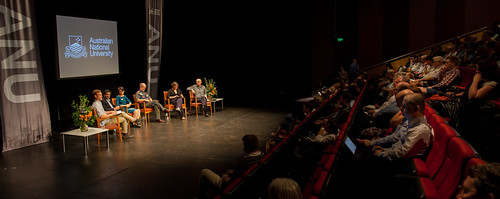
Greetings from the Australian National University in Canberra, where Professor Anant Agarwal, President of edX, and a panel of experts, is discussing "Blow up the lecture? Is the traditional lecture on the way out?". For those in Canberra, there will be a further presentation at 5:30pm this evening, and for others there will be a podcast version.

ANU is currently accepting enrollments for its first two edX on-line courses: Engaging India and Greatest Unsolved Mysteries of the Universe.

My view is that neither lectures, nor MOOCs (Massive Open Online Courses), are the future of university education. Lectures, live or via video, are a useful supplement to an education program, but are not essential. In Pirsig's 1974 semi-autobiographical work "Zen and the Art of Motorcycle Maintenance", a teacher and computer software documenter, argues that the physical campus is not the real university. Pirsig suggests in the Church of Reason” chapter, that is a community of scholars. This foreshadows today's discussion of the on-line university.

Four years ago, I gave up presenting lecture based university courses, and have been teaching ANU masters students on-line in an asynchronous (non-real-time mode) using text based materials. Where possible, I supplement this with some video materials and students can arrange to drop and and see me (or on-line in synchronous real time mode). But research shows that while students like to see and speak to their lecturer, and to watch videos, this does not improve their learning outcomes. So in my view lectures, and their on-line equivalent, should be offered as an optional extra for the mainstream of education, which will be on-line, task based and text rich.

Tuesday, February 11, 2014

Teaching Without Lectures at the Australian National University

Professor Anant Agarwal, President of edX, and a panel of experts, will discuss "Blow up the lecture? Is the traditional lecture on the way out?", at the Australian National University in Canberra, 2:30 PM, 26 February 2014 (register online).

ANU is currently accepting enrolments for its first two edX on-line courses: Engaging India and Greatest Unsolved Mysteries of the Universe.

However, my own view is that neither lectures, nor MOOCs (Massive Open Online Courses), are the future of university education. Lectures, live or via video, are a useful supplement to an education program, but are not essential.

Four years ago I gave up giving lecture based university courses and have been teaching ANU masters students on-line in an asynchronous (non-real-time mode) using text based materials. Where possible, I supplement this with some video materials and students can arrange to drop and and see me (or on-line in synchronous real time mode). But research shows that while students like to see and speak to their lecturer and to watch videos, this does not improve their learning outcomes. So in my view lectures, and their on-line equivalent, should be offered as an optional extra for the mainstream of education, which will be on-line, task based and text rich.
Information Session

Blow up the lecture?

Is the traditional lecture on the way out?

What will the classroom of the future look like?

Will the digital world transform the physical world of learning?

Will edX and other Massive Open Online Course (MOOC) providers change the face of education forever?

Technology is opening up new ways to teach and learn. It is also opening up new ways to understand how we learn.

What do you think the future of learning should look like at ANU?

Have your say and join us for an open panel discussion.

Featuring panellists
(register online).