Showing posts with label ACS e-Learning Special Interest Group. Show all posts

Friday, October 6, 2017

CANCELED: Improving participation in online higher education, Canberra, 11 October

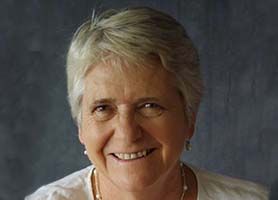
Dr Cathy Stone from University of Newcastle will be speaking on "Improving participation, success and retention in online higher education" at the ACS Canberra Education SIG: [
This event has been canceled, but a video of a previous presentation by Dr Stone is available.]
5pm 11 October 2017.Please RSVP.
Online learning has become a well-recognised part of the broader landscape of higher education. It is also proving to have a critical place in widening access and equity within this landscape. Increasing numbers of students from backgrounds historically under-represented at university are taking the opportunity to begin undergraduate study online, including through open-entry and alternative-entry pathways. However, retention in online undergraduate programs has been shown to be at least 20% lower than in face-to-face programs (Greenland & Moore, 2014; Moody, 2004), with an Australian Government Department of Education and Training report (2014) finding that only 44.4% of fully external (online) students, compared with a rate of 76.6% for face-to-face students, completed their undergraduate degrees over an 8-year period.
This presentation provides an overview of a national research project investigating the effectiveness of practices, supports and retention strategies in online learning at Australian universities and at the Open University UK. It discusses the background to this research, its findings and outcomes. Together with evidence from the international literature, the research findings informed a set of national guidelines for Australian institutions for improving the participation, retention and academic success of students in online education.
Full report: Opportunity Through Online Learning: Improving student access, participation and success in higher education, URL: https://www.ncsehe.edu.au/publications/opportunity-online-learning-improving-student-access-participation-success-higher-education/

About the Speaker

Dr Cathy Stone, from the University of Newcastle, is a 2016 Equity Fellow and a 2017 Visiting Research Fellow with the National Centre for Student Equity in Higher Education. Cathy has had many years’ experience in developing and managing strategies to improve student success and retention in higher education, with her research and publications focusing particularly on the experiences of mature-age and first-in-family students. Cathy’s work with Open Universities Australia between 2011-2014 developed her interest in researching the online student experience and ways in which to improve outcomes for diverse cohorts of online students.

Thursday, July 6, 2017

Mobile Learning with Totara and Moodle, ACS Canberra, 19 July

Matthew Burley, CEO of Sydney startup Mobile Learning, will speak on "m-Learning with Totara and Moodle", at the Australian Computer Society's ICT Educators forum, in Canberra, in the evening of 19 July 2017. Matthew is also available in Canberra that day for discussions with educators.

Friday, February 17, 2017

Digital Learning and the Future of Education

Digital Teaching In Higher Education (book cover)
I will be speaking at the ACS e-Learning Special Interest Group in Canberra, 5:30pm, 22 February 2017. The event is free, but you need to book a seat:

Topic: Digital Learning and the Future of Education

Speaker: Tom Worthington

In January Tom completed a masters in educational technology in North America, studying the design of on-line mobile courses and use of e-portfolios (Worthington, 2016). He will discuss the experience of being an international on-line student and the implications for Australian Higher Education. Tom argues that we can expect 80% of university education to be delivered on-line by 2020 and has produced a book on "Digital Teaching" available free on-line, to help get there (Worthington, 2017).

References


Worthington T. (2016). Capstone e-Portfolio for Master of Education in Distance Education. Athabasca University e-Lab. Retrieved from http://www.tomw.net.au/masters_eportfolio/

Worthington T. (2017). Digital Teaching In Higher Education: Designing E-learning for International Students of Technology, Innovation and the Environment. Tomw Communications. Retrieved from http://www.tomw.net.au/digital_teaching/

Presentation notes: http://tomw.net.au/technology/it/digital_learning/

Wednesday, December 14, 2016

Speak at ACS Canberra e-Learning Sig in 2017?

This is to invite speakers for the Australian Computer Society Canberra Branch Electronic Learning Special Interest Group (ACS e-Learning SIG) in 2017. Meetings are held 5pm to 7pm on Wednesdays each quarter at the ACS Canberra Branch office in Deakin. Meetings are scheduled for 2017: 22 February, 24 May, 19 July and 11 October.

Last years topics were:
  1. Teaching ICT in Schools, Joel Cowey, CSIRO, February 2016
  2. Training Police On-line, Helen M Lynch, May 2916
  3. Enabling the digital classroom, Michael de Raadt, Canberra Grammar School, August 2016
  4. Learning to Teach On-line, Tom Worthington, Australian National University, November 2016.
The format for the ACS e-Learning SIG is that the guest speaks for five to ten minutes then there are questions and discussion. Lecture style presentations are discouraged.

Please contact one of the co-chairs: Tom Worthington or Chris Johnson.

Thursday, April 7, 2016

Teach Coding at School Workshop in Canberra

The Australian Computer Society is hosting a "Do you want to teach Coding at your school?" workshop in Canberra, with "Code Club Australia", 19th May 2016.
"Code Club Australia is a nationwide network of free, volunteer-led, coding clubs for children. We create projects for our volunteers to teach at coding clubs. The projects we make teach children how to program by showing them how to make computer games, animations and websites. 
Code Club is about fun, creativity, and learning through exploring. It’s important that the children enjoy their time at Code Club. They should understand that they’re in charge of the computer, and can (and should) make it to what they want, not the other way around.

Other benefits of Code Club, such as learning about computational thinking, or developing expertise in coding, are secondary to these two objectives."

Friday, February 26, 2016

Training Police On-line

Helen M Lynch will speak on the "Distributed Content Environment" developed for the CSU School of Policing Studies, at the Australian Computer Society e-Learning Special Interest Group in Canberra, 5pm 11 May 2916.
"The distributed content environment (DCE) is a system developed and implemented for the School of Policing Studies, CSU, to customise, reuse, update and deliver teaching and learning resources in mobile ready formats to students, teachers and classroom. The DCE has wide application as it enables a truly “digital“ classroom and supports the use of mobile devices by teachers and students in and outside of the classroom. DCE enables the distribution of teaching and learning resources by harnessing a range of educational technologies that are common to most universities and TAFE institutions in Australia today.
 
The core technologies of the DCE are the digital object repositories and the online learning environment e.g. Moodle and Equella, as well as content authoring tools which when harnessed together create a seamless distribution of teaching and learning resources to a range of audiences.
 
This session explains the DCE and how it can be applied to a range of teaching and learning situations."

Thursday, February 11, 2016

Resources for Teaching ICT in Schools

Joel Cowey talked about the CSIRO ICT in Schools Program at the Australian Computer Society in Canberra, 10th February 2016. Joel explained how the program (ICTiS) partners volunteer ICT professionals and with school teachers who are teaching the new Australian Digital Technologies Curriculum. He showed some hardware used in schools for teaching ICT, as well as pointing out useful online resources. Here are some links:

For IT Professionals and Teachers:


  1. CSIRO ICT in Schools Registration
  2. InteACT ACT IT Teachers Association
  3. Australian Digital Technologies Curriculum
  4. Free Online Course for Teaches on the Digital Curriculum
  5. Teach for Australia Program for graduates to take up teaching
  6. Double degree for science teaching from ANU and University of Canberra
  7. Comp8440 ANU Free and Open Source Software Development

Activities for Students:


Hardware for teaching IT:


  1. Bee Bot a teaching robot for young students
  2. Arduino Low cost single board computer
  3. Arduino LilyPad Low cost computer designed to sew into fabric 
  4. Makey Makey Game controller for kids

Wednesday, December 23, 2015

CSIRO ICT in Schools program

Joel Cowey will speak on the CSIRO ICT in Schools Program (RSVP) at the Australian Computer Society in Canberra, 5pm, 10th February 2016.
ICT in Schools, a partnership program (ICTiS) creates and supports ongoing, flexible partnerships between volunteer ICT professionals and teachers, showcasing real world, contemporary ICT in the classroom.
ICTiS supports implementation of the Australian Curriculum: Digital Technologies and the ICT capabilities and how to fully utilise the knowledge, skills and capacity of ICT volunteer. Explore what makes effective, successful partnerships and where the program is going in the future.

Joel Cowey works in CSIRO Education and Outreach and coordinates the ICT in Schools a partnership program element. He sees the best way of improving ICT literacy in the community is through high quality STEM education and to ensure students get the opportunity to learn about STEM subjects at school.
Joel has spent 6 years as a purely ICT geek working for the Departments of Defence, Environment, and Education, 23 years as a teacher of science and ICT and three years as a science and IT education policy officer in the commonwealth Department of Education. There have been occasional stints tutoring IT at TAFE and university and time off for travel, study and parenting.

Monday, December 7, 2015

Speak at ACS Canberra e-Learning Sig in 2016?

This is to invite speakers for the Australian Computer Society Canberra Branch Electronic Learning Special Interest Group (ACS e-Learning SIG) in 2016. The dates available are 10 February, 11 May, 10 August, 23 November (Wednesdays 5:00pm for 5:30pm start and finishes at 7:00pm).

Last years topics were:

* Innovations in Teaching Innovation
* E-learning in developing countries
* Educational apps for free education
* Mobile Learning With Moodle for Higher Education in Australia and China

The format for the ACS e-Learning SIG is that the guest speaks for five to ten minutes then there are questions and discussion. Lecture style presentations are discouraged.

Please contact one of the co-chairs: Tom Worthington or Chris Johnson

Saturday, October 10, 2015

Mobile Learning With Moodle for Higher Education in Australia and China

Matthew Burley from Mobile Learning Pty Ltd. will speak on Mobile Learning With Moodle for Higher Education in Australia and China at the ACS e-Learning Special Interest Group, 5pm, 11 November 2015, Australian National University, Canberra.
At this event, Matthew Burley will outline how Sydney startup company, Mobile Learning, is working with the Higher Education and Vocational Education Training (VET) sectors to assist with mobile strategy. He will describe how they focus on the role of mobile devices for students and teachers to engage using the Moodle Learning Management System (LMS) via a mobile App.
 
In addition, Matthew will discuss the range of strategies Mobile Learning has to address low mobile digital literacy and entrenched teacher practices in Australian HE and VET. He will also briefly mention how an Australian education startup can target the different learning environments in China. http://www.mobilelearning.io/

Tuesday, July 7, 2015

Global Learning XPRIZE and Apps for Education

Harry Longworth, co-founder of the OATSEA Foundation, will speak on "Educational apps for free education" at a meeting of the ACS e-Learning Special Interest Group, Australian National University, in Canberra, 5:00pm 5th August 2015.
Teachervirus.org is the OATSEA Foundation's Open Source approach to addressing the problem of how do we provide high quality free education to those who can't afford to pay for education; and don't have access to the internet, teachers or schools.  It's also our entry into the Global Learning XPRIZE - an international $15 Million dollar competition to meet this challenge.
They are building a community of like minded educators, developers, teachers, parents and students who want to make the world a better place through the power of education.
Harry Longworth is one of the co-founders of the OATSEA Foundation Ltd - an Australian charitable not for profit based in Canberra dedicated to Open Access To Self Education and Assessment (OATSEA).
Harry has a strong background in innovation, technology, projects, startups and international capacity development and is passionate about solving the big problems. He has spent the last 5 years traveling the Asia Pacific region on behalf of the Australian government providing advice and conducting assessments of IT capacity and capability whilst working on a multi-million dollar technology project delivering capacity in PNG.

Friday, March 20, 2015

E-learning in developing countries

Dr Tim Turner and Dr Ahmed Imran will speak on "E-learning in developing countries" at the ACS e-Learning Special Interest Group, 5pm 6th May 2015, Australian National University in Canberra.

ACS e-Learning Special Interest Group

E-learning in developing countries

Unlike 1st world countries, e-learning in developing country has a different connotation, which is not readily understood without in depth research and experience of the context. We would like to share two cases: a study of a Regional Public University in the Philippines, and an e-learning portal on E-government management for public sector officials of developing countries. More at: http://www.ictforldc.com/pslp/

Biography


Dr Tim Turner is Director of Undergraduate Studies at the School of Engineering and Information Technology, UNSW Canberra. Dr Turner has been involved in the IT industry for over 20 years, with the focus on e-commerce, and particularly e-government, for over 15 years.

Dr Ahmed Imran is an Information System (IS) researcher at UNSW Canberra, whose research interest largely emerged from his personal experience that includes ICT adoption in public sector, e-government and ICT in developing countries.

Monday, December 8, 2014

Innovations in Teaching Innovation in Canberra

I will be speaking on "Innovations in Teaching Innovation" at the first Australian Computer Society e-Learning Special Interest Group meeting in Canberra for 2015, on Wednesday, 11 February:
Tom takes over teaching the Australian Computer Society's "New Technology Alignment" (NTA) postgraduate course from January 2015. This offered on-line directly by the ACS Virtual College and through Open Universities Australia. Earlier in the year he attended a conference in Canada on computer science education and met with Canadian academics to discuss flexible learning and teaching innovation. Tom discusses how this might be done in Australia, by blending on-line formal courses with face-to-face competitions. 
Topics and speakers for the next four meetings are needed:
  • Wednesday, 6 May
  • Wednesday, 5 August
  • Wednesday, 11 November
All will be held in the Graduate Lounge of University House, Australian National University, from 5pm for 5:30pm.

The meetings for 2014 were:
  1. Brenda Aynsley, President of the Australian Computer Society,  on "Teaching with Technology", 16 July 2014.
  2. Tom Worthington,Tutor at the ACS Virtual College and Adjunct Lecturer at ANU Research School of Computer Science, on "Teaching Students to Work Together Online", 3 September 2014.
  3. Jill Andrew, Future Learning Team, on "Integrating Technology into the Australian School Curriculum", 8 October 2014
  4. Dr McComas Taylor, Head, South Asia Program, ANU,  "The Joy of ePub", 5 November 2014

Thursday, November 6, 2014

Ebooks for education

Dr McComas Taylor, talked to the ACS e-Learning Special Interest Group last night at the Australian National University on role and nature of the "textbook" in the technology age. McComas described how he created a free open access multimedia electronic textbook: "The Joy of Sanskrit: A first-year syllabus for tertiary students".

The book is the first e-textbook available free for download from the ANU Press. The Joy of Sanskrit is available for iPad, iPhone or iPod touch, open The Joy of Sanskrit by McComas Taylor and Grazia Scotellaro was published in 2014 and is available in a version for Apple computers, iPad, iPhone and iPod touch, plus a separate version for  Microsoft Windows computers. 

Dr Taylor expressed frustration at the need for separate versions of the ebook for Apple and Microsoft computers and hoped that this could be overcome in the future. One of the audience members suggested use of HTML 5 could overcome these problems and make for a more interactive electronic book, with products such as Educanon. The EPUB 3 standard also offer more interactivity.

Dr. Taylor also talked of the frustrations with the process of producing ePub format e-books, where the rendering of the format took a long time even after small corrections to the content. He commented there were good tools for Apple format e-books but not for multiple platform development. 


For reading ePub ebooks, Android tablets, the App epubreader can be used, for Macs,  Bookreader Lite and  Windows, Azardi. I found that Calibre worked well for reading an epub ebook in the Linux operating system (although it is intended for creating ebooks).

Dr Taylor compared the use of  an "off-line" ebook for education, with  an on-line learning management system (LMS), such as the  Moodle system used by ANU (branded "Wattle" at ANU). He pointed out the ebook had the advantage that it needed to only be downloaded once at the start of a course, whereas the student needed a continual Internet connection to use the LMS. The disadvantage was that the ebook could not be as easily updated. The two could be used together with the ebook providing content and the LMS used for interactive exercises and for students to submit work. But Dr Taylor looked forward to advances in the technology which would allow interactive "formative" exercises in the ebook, with the LMS used for "summative" assessment.

Dr Taylor demonstrated an application on an Apple iPhone which allowed the language student to listen to a sample of speech, record their own and the play it back for comparison. He contrasted this with  the Wimba Voice Tools module for Moodle, which while function, was more cumbersome to use.

ps: Another epub ebook used at ANU is my own "ICT Sustainability: Assessment and Strategies for a Low Carbon Future", used for the course Comp7310. But unlike Dr Taylor's ebook, this has no multimedia, just text.

Wednesday, August 6, 2014

e-Learning: Australia's Next Major Export Industry?

I will be speaking on "Teaching Students to Work Together Online" at the ACS e-Learning Special Interest Group, in Canberra, 3 September 2014. Between now and then I will be on a panel and presenting a paper at a conference for Chinese academics on how we can teach our students jointly online. Here are some thoughts on the subject:

Australian International Education Export Industry at Risk


Education is Australia’s fourth largest export industry, according to the Australian Government's International Education Advisory Council, earning $15.7B in 2011. For May 2014, the federal Department of Education estimates Australia has 405,000 international students, with 117,000 from China, 40,000 from India, 109,000 from other Asian countries, and 140,000 from other countries.

The government's Ministerial Coordinating Council for
International Education (MCCIE) expects international enrolments to increase 30% by 2020, adding 117,000 students. However, such predictions assume that students will continue to be educated largely as they are now: on-campus. Higher education is changing to a blended and on-line model, where students learn the basics on-line and then (perhaps) go into a classroom.

My rule of thumb is that about 80% of Higher Education can be done online.The typical student will only need to come to the campus for one day in five. If Australian educational institutions do not adopt this way of working, instead of increasing 30% by 2020, I suggest international enrolments could drop 80%. At the same time domestic enrolments could also drop by 80%, with most students studying at off-shore on-line universities.

To remain competitive, Australian educational institutions need to learn to teach students on-line. These students can then spend part of their time studying in their own country and part of their time in Australia.

Move the New Colombo Plan On-line


Australian Government is providing $100M over five years for the New Colombo Plan for Australian students to study in Asia and the Indian Ocean region. However, this is only being offered for students who physically travel and study in a classroom in another country.

This year the ANU commenced the bilingual (English and Hindi) online course ANU Engaging India for Australian and international students. Those students undertaking professionally accredited courses, such as computing, already learn internationally defined skills (IP3). Students also undertake the same online courses in different countries (ICT Sustainability). 

Part of professional training is to learn Ethics, Teamwork and Professional Communication. I propose the New Colombo Plan could be expanded online, with students in different countries learning professional skills in multi-lingual online groups. Assessment could be by e-Portfolio and courses run jointly by Australian and other institutions. 


In this way Australian students would learn to wok with their regional neighbours, fulfilling the aims of the New Colombo Plan. This would also provide a competitive advantage to attract overseas students who would learn in a culturally sensitive environment, designed to introduce them to an international working environment. This would be attractive compared to courses which simply try to package on-line the on-campus courses of a foreign university.

See paper for ICCSE 2014: Worthington, T. (2014). Chinese and Australian students learning to work together online: Proposal to Expand the New Colombo Plan to the Online Environment.

Thursday, July 10, 2014

Teaching Students to Work Together Online

I will be speaking on "Teaching Students to Work Together Online" at the Australian National University in Canberra, 5:30pm, 3 September 2014. The talk is free (sponsored by the ACS e-Learning Special Interest Group), but bookings are required.

ACS e-Learning Special Interest Group

Teaching Students to Work Together Online

Can higher education institutions teach Australian and international students online together? Can students relate on-line, as they do on-campus? Join us to discuss the issues, after a brief talk by Tom Worthington.
Biography:

Tom Worthington FACS CP

Tom Worthington is an independent computer consultant and educator. He is an Adjunct lecturer in the Research School of Computer Science at the Australian National University and a tutor for the Australian Computer Society Virtual College. Tom is also studying for a Masters of Education (Distance Education), by distance education, at a North American university.
Tom is presenting a paper titled "Chinese and Australian students learning to work together online" at the 9th International Conference on Computer Science & Education (ICCSE) in Vancouver.

Wednesday, June 25, 2014

Teaching with Technology in Canberra

Brenda Aynsley OAM FACS CP, President of the Australian Computer Society, will speak on "Teaching with Technology" at the Australian National University in Canberra, 5:30pm, 16th July 2014. This inaugural meeting of the ACS e-Learning Special Interest Group (eLearningSig) is free and open to all those interested in technology for teaching and teaching about technology. Please register to attend.