Showing posts with label Interdisciplinary Teamwork. Show all posts

Tuesday, October 29, 2024

ANU Learning and Teaching Innovation Showcase

Greetings from the ANU Learning and Teaching Innovation Showcase in Canberra. Staff are giving short talks on their teaching innovation, and there are three workshops: 1: Blended Learning - Small Changes, Big Impact, 2: Creating Accessible Digital Content, & 3: Teamwork & Transdisciplinary Community of Practice. I picked the third workshop as I teach students to work in teams. 

Dr Andrew Carr
The first of the short talks was on teamwork, being by Dr Andrew Carr on the "Case Method", where he has students do stuff. He contrasted the traditional approach where you tell the student stuff, versus giving them the task of finding, sifting and making sense of information themselves. Dr Carr, learned about the case method at Harvard Business School. It is useful to see you can do this on a small scale, just for one lesson, as well as for semester long projects.
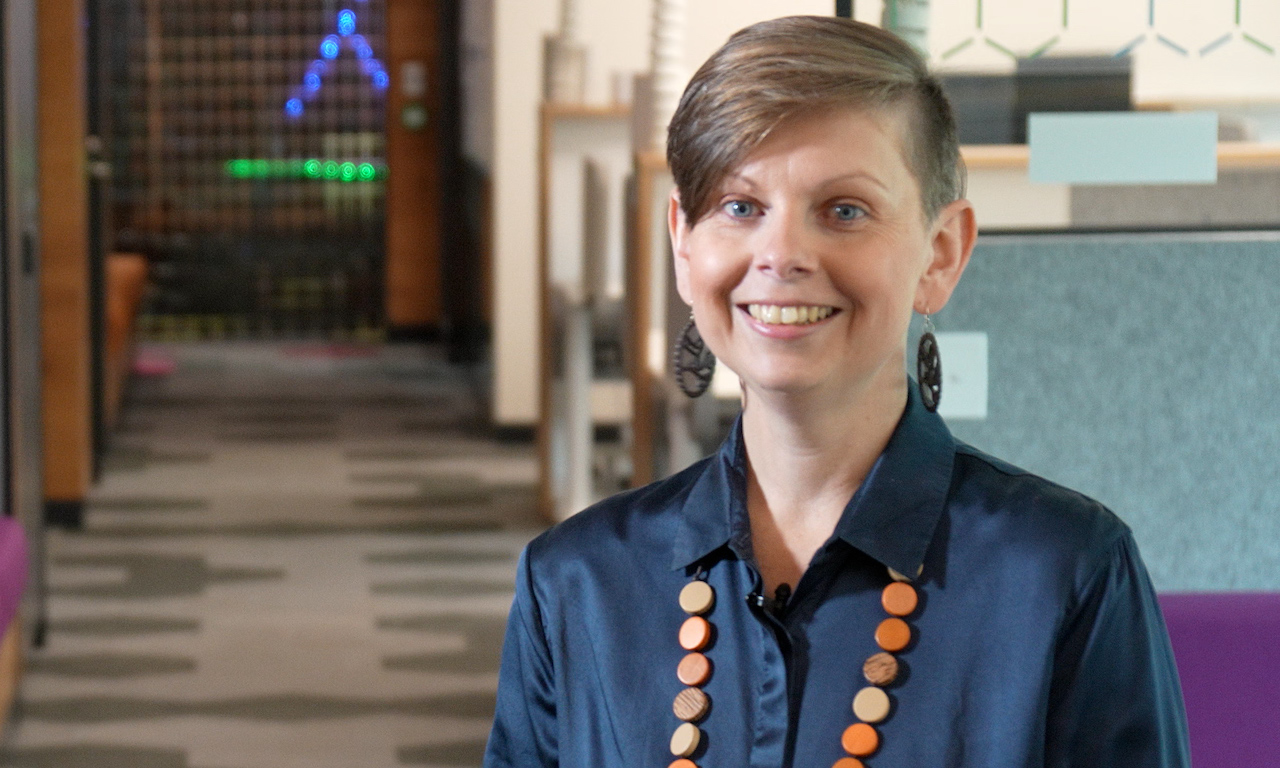
Dr Penny Kyburz
The second talk was by Dr Penny Kyburz on scaffolding for entrepreneurship. The problem is that students tend to select projects provided by external clients, rather than develop their own. Providing startup grants did not help. An alternative tried was to send students to an entrepreneurship competition run externally. With this experience a tech entrepreneurship program for ANU, between the business and computing faculty. 

Monday, August 26, 2013

Teaching Interdisciplinary Teamwork

The conference "Research Integration and Implementation" is being held at the Australian National University (ANU) in Canberra 8 to 11 September 2013. Digital posters for the conference are available on-line. One poster is "PROMOTING INTERDISCIPLINARY EDUCATION: Vice-Chancellor’s Courses at the Australian National University" by Richard Baker , Shayne Flint, Mary Kilcline Cody and Lawrence Cram. This poster describes four undergraduate courses introduced at the ANU in 2008 to encourage cross disciplinary study.

The not very usefully named "Vice-Chancellor's Courses" are:
  1. Leadership & Influence (VCUG2002),
  2. Creating Knowledge (VCUG2001),
  3. Unravelling Complexity (VCUG3001/6001), and
  4.  Mobilising Research (VCUG3002/6002).

I was one of the student mentors for "Unraveling Complexity". A group of students selected a project topic I wrote on e-waste" This was based on one of the modules of my masters course "ICT Sustainability":

What to do with old gadgets?

Australian had a problem with old computers and TVs being dumped in landfill. There is now a scheme for collection of equipment to be broken down and the material recycled. But is this resulting in equipment which still has a useful life being scrapped? Should this equipment be refurbished and reused, or will that result in increased energy use (new equipment is more efficient)? See:
The students narrowed down the topic to specifically address e-waste at their university. But the major issue for the students was not the subject matter, but how to work as an interdisciplinary team. Computer science and engineering students are trained in how to work in teams and evaluated on their team-working skills. However, those are relatively homogeneous teams of people from the one discipline. The interdisciplinary nature of unraveling complexity and the other ANU VC courses, throw up additional challenges, especially for undergraduate students with less experience. The challenge for myself, as a mentor, was to resist the temptation to solve problems for the students, as they needed to learn from the experience.

The ANU VC courses are intended for an elite of students who excel academically and want to undertake work beyond the normal program requirements. However, in my view this is not the correct approach to take with interdisciplinary studies for vocational courses. Those studying at university for a career can expect to have to work in interdisciplinary teams after graduation. Therefore teamwork and interdisciplinary work needs to be part of their degree program, not an optional extra for a few students. This should be part of teaching professional skills to all students in vocational programs.