 |
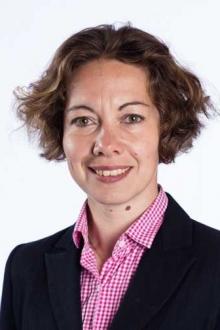
| Dr Marina Iskhakova |
One simple tip from Dr Iskhakova was to learn to pronounce student's names. But I found much of the material very challenging, perhaps being what the main text (Howe & Lisi, 2018) describes as a WASP. As part of the dominant culture of Australia, I don't notice a lack of cultural recognition, or discrimination, as I am not the one being discriminated against.
There were some cultural aspects which resonated with me, being from a low SES background. Also, unlike the discipline I teach (computing), which is dominated by male students and staff, as a student of education I felt very much the minority.
At the face to face workshop, we did some exercises, such as using a color every fifth word, to help understand how difficult it is for students speaking a second language. I only speak English, but the difficulty of this reminded me of being interviewed for a podcast (which I was this morning by Ben O'Shea for The West Live).
I teach mixed classes of domestic and international students, in degree programs accredited by Australian professions. So I am required to teach the students to fit into an Australian workplace, using techniques developed in the UK and USA. In professional programs the students are, in effect, being trained to speak, write and act in the customs of that discipline and culture. However, these students will be working in multicultural teams, in Australia, online and internationally, so some exposure to multicultural work practices would be useful for them.
Perhaps the approach applied to provide access for those with a disability could also be used for multicultural education. Rather than try to customize content and technique to each student, provide a variety of materials for them to choose from. This would avoid a flaw which apparent in the multicultural pedagogy which assumes that people have fixed "learning styles". Instead, all students, including those from a different culture, could choose the form of learning which suits them, at the time.
Unfortunately most of the texts in this field are from a USA perspective. While there are some similarities with Australia, particularly the exclusion of the indigenous population from educational opportunities, much is USA specific. At Chapter 8, Howe & Lisi (p. 216, 2020), started to get interesting and relevant, with "Instructional Approaches Needed by Multicultural Educators". However, an Australian text on this topic would be useful. The best source of such material currently is the National Centre for Student Equity in Higher Education, such as that by Dr Cathy Stone.
References
Howe, W. A., & Lisi, P. L. (2018). Becoming a multicultural educator: Developing awareness, gaining skills, and taking action. Sage Publications.
