Showing posts with label ANU Large Flat Floor Classroom. Show all posts

Sunday, August 8, 2021

Old ANU Chemistry Building Turned Into a State of the Art Teaching Facility

ANU Birch kitchen/meeting
area by Vibe FM
On Friday I attended two events at the Australian National University's Birch Building. I did not think much of this, as it was the old Chemistry building, which I had given occasional lectures in. But when I walked in, the building had been completely refurbished. This is not just new carpet and a coat of paint, significant structural work has been done by Taylor Thomson Whitting, along with fit-out by Vibe FM to make a state of the art teaching facility for the ANU College of Engineering and Computer Science. 

Structure of ANU Birch
building by TTW 

The two spaces I found most impressive are the kitchen built into the ground floor, and the flat floor space over what was the Chemistry lecture theater. The kitchen has seating and a large flat screen, perfect for informal events. The upstairs space has windows on three sides, large sliding doors and movable flip up tables on wheels.

Thursday, March 8, 2018

Whistle Pedagogy for the Large Flat Floor Classroom

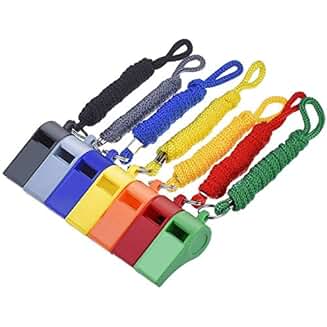
A few weeks ago I was helping out in one of the Australian National University's large flat floor teaching spaces. There were more than three hundred students and it was difficult at times to get their attention. The students would be come very engaged in their small group activities, which is good, but it was difficult to return their focus to the instructor, for the next exercise. So for the next workshop, which was to be a whole day, I purchased a $2.50 coach's whistle, on a bright yellow lanyard.

The whistle turned out to be very useful, both to get student's attention, and to mark out who the instructor was. In the following two weeks the whistle has been used at several events, including the Canberra Innovation Network's First Wednesday pitches and ACT Government energy workshop.

The only scholarly work I could find addressing the use of a whistle in the modern classroom was for law students in the SCALE-UP classroom: Student-Centred Active Learning Environment with Upside-down Pedagogies (Burke, p. 200, 2015):
"If the room is large, a wireless microphone is desirable because this type of learning space can become noisy. A low-tech option that this professor has used is the classic whistle."
However, I found in practice, even with a good quality public address system it is difficult to get the attention of 300 students. Playing tune from smart phone via the PA system did not work either: the echo noise cancellation function of the PA system filtered the music out.

Reference


Debra D. Burke (2015) Scale-Up! Classroom design and use can facilitate learning, The Law Teacher, 49:2, 189-205, URL https://doi.org/10.1080/03069400.2015.1014180

Thursday, February 22, 2018

Team Formation Exercise in ANU Large Flat Floor Classroom

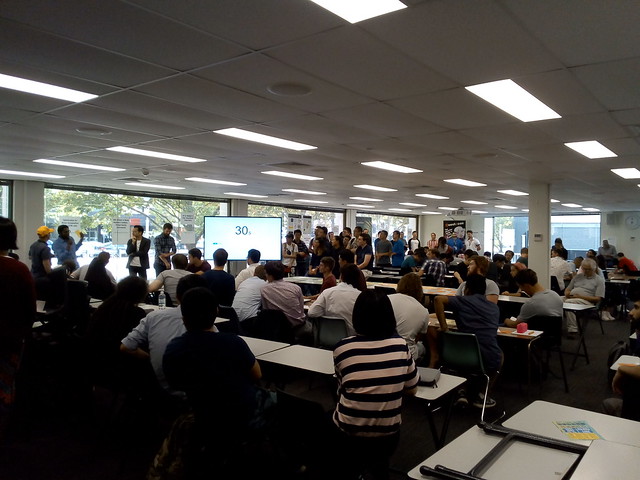
A flat floor large classroom at ANU, with large mobile LCD screens used to relay presentation to the back of the room.
Greetings from the TechLauncher Team Formation event at the Australian National University in Canberra. There are more than three hundred students hearing 30 second pitches from potential clients. The students then select the project they prefer and form a team. They have a year to build what the client wants, which is usually software, but could be engineering hardware. 

The room used in not on campus, as the
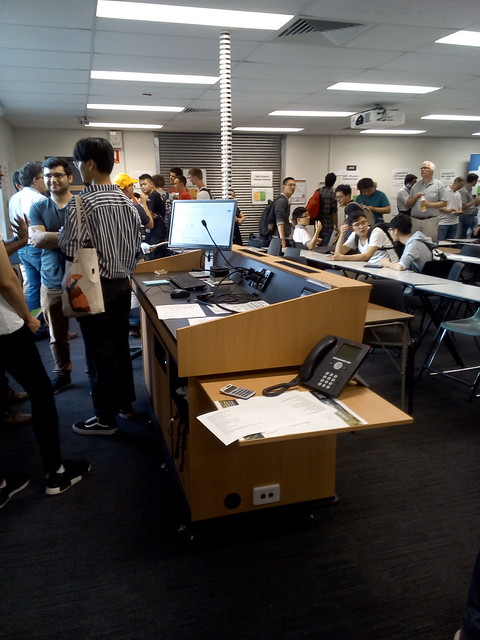
The control console for an Australian National University flat floor classroom.ANU Collaborative Learning (CLE) Building is still under construction. The university has leased space in an office building across the road from the campus. Without the usual internal office walls, the ground floor provides a large flat floor classroom. There is a standard lectern, with audio-visual controls at one end of the room. However, rather than being built in, this is on wheels and has an umbilical to the ceiling.

The "front" wall has power operated retractable screens for three ceiling mounted video projectors. There is also a small white-board on wheels. There are small fold up desks, one for each student, along with a lightweight plastic chair. The desks are in rows with two isles. 

To one side there is a recess for storing large LCD displays on wheels. These units do not appear to be as smart as Queensland University of Technology's MOCOWS (Mobile Computers on Wheels), using 84 inch entry level LCD panels (Panasonic Model TH-84EF1U). There are power sockets around the walls for the LCD screens, which show the same display as the front projectors. The screens could be used for group work, with students using their own laptop and standing around, or  the desks and chairs rearranged to suit. However today there are only two units deployed half way down the room, on each side, to relay what is on the main screens.

This is a temporary set-up, but looks reasonably usable. It is a little untidy, as there are no storage cabinets for equipment. However, this provides a similar atmosphere to the typical startup innovation hub, suited to student project work. One problem is that the standard height office ceiling is a little low for such a large space making.

The room is almost square, as is usual for TEAL style rooms. For the pitch exercise, the clients are spaced around the walls, each standing in front of the sign-up sheet for their project. One instructor (wearing a bright yellow baseball cap, so they can be seen) is going around the room with a wireless microphone, so each client can pitch. Another instructor is at the lectern controlling the timer. Several other instructors are roving the room, dealing with problems and queries.

The room is not silent: there is a low murmur of conversation (the floor is carpeted, but the ceiling could perhaps do with more sound absorption than standard ceiling tiles provide). The sound system is working well, but as with any flat floor large room, it is not easy to see the presenter. Perhaps there should be a roving video camera relaying the presenter to the screens around the room.

The desks are lightweight and are easily moved. However, these desks appear intended for examinations, with one student per desk. Larger desks with wheels (for six to nine people each) would be be better for collaborative work.

One good feature of the room is that it is lacking in unnecessary technical gimmicks. The control console is the same as in ANU lecture theaters, so instructors are familiar with its operation. The LCD displays are not built in, so the controls and sockets are easily accessible. Apart from the umbilical for the console and four slim columns, there is nothing to obstruct vision. All the power points are around the walls, so there are no boxes in the floor to trip over.