
Showing posts with label Intel. Show all posts
Showing posts with label Intel. Show all posts
Thursday, May 3, 2018
Technology for a Human Future

Monday, September 4, 2017
Genevieve Bell Heads ANU 3A Institute of AI

Dr. Bell will
be presenting the ABC 2017 Boyer Lectures and has been appointed the inaugural McKenzie Chair at the Australian National University College of Engineering and Computer
Science. She will also head the new "Three A" institute (although I am not sure what that is).
I first came across Dr. Bell, at the Realising Our Broadband Future forum, in Sydney, 2009, where it was refreshing to hear ideas about broadband for people to use. She talked at the Innovative Ideas Forum 2010 at the National Library of Australia, where she noted English was not longer the dominant language of the Internet. The next week I bumped into Dr Bell at the State Library of South Australia, where she had been the state's Thinker in Residence on South Australia’s Digital Futures.
You have to listen carefully to a speech from Dr. Bell, not just because she talks fast and with enthusiasm (reminds me of Pia Waugh).
Dr. Bell stared with a history lesson, on the start of the engineering as a profession at the time of the French Revolution in Paris, then Constantinople and the UK. She characterized engineers as managing systems and being certified and licensed by the state. She then jumped to the USA and the creation of the Wharton School of the University of Pennsylvania. I lost the thread at this point, but we ended up in the creation of Artificial Intelligence as a discipline.
The story then jumped to Australia, with the building of SILLIAC, an Australian 1950s computer (built after CSIRAC Australia's first computer, around 1949). But the story was really about how to combine theory and practice, plus what exactly is it that we want to research and do?
Dr Bell had three questions on Autonomy, Agency and Assurance. She suggested we need to think about in what sense machines are "autonomous". I am not sure this is such a new issue. We have had machines which can act on their own for decades and also have such legal structures as companies as persons. A non-trivial case is in the law of war, where autonomous weapons have existed for more than a hundred years.
The next question was how much Agency, machines should have. This seems to be the same question as the first, being how much autonomy there should be. A current example of this is the Commonwealth Bank, accused of 54,000 cases of money laundering. The Bank is not a person and it was automated teller machines which processed the cash, so who is responsible?
The third question is assurance: how we can be sure these machines are safe? This is also no a new question. Engineers and more recently software engineers, have had to consider how safe sould be and how to work out if it is. This is made more difficult by AI, but it is something I routinely as of students when I am teaching professional ethics.
At this point I finally worked out what the 3A Institute was to be: the Autonomy, Agency and Assurance Institute.
I first came across Dr. Bell, at the Realising Our Broadband Future forum, in Sydney, 2009, where it was refreshing to hear ideas about broadband for people to use. She talked at the Innovative Ideas Forum 2010 at the National Library of Australia, where she noted English was not longer the dominant language of the Internet. The next week I bumped into Dr Bell at the State Library of South Australia, where she had been the state's Thinker in Residence on South Australia’s Digital Futures.
You have to listen carefully to a speech from Dr. Bell, not just because she talks fast and with enthusiasm (reminds me of Pia Waugh).
Dr. Bell stared with a history lesson, on the start of the engineering as a profession at the time of the French Revolution in Paris, then Constantinople and the UK. She characterized engineers as managing systems and being certified and licensed by the state. She then jumped to the USA and the creation of the Wharton School of the University of Pennsylvania. I lost the thread at this point, but we ended up in the creation of Artificial Intelligence as a discipline.
The story then jumped to Australia, with the building of SILLIAC, an Australian 1950s computer (built after CSIRAC Australia's first computer, around 1949). But the story was really about how to combine theory and practice, plus what exactly is it that we want to research and do?
Dr Bell had three questions on Autonomy, Agency and Assurance. She suggested we need to think about in what sense machines are "autonomous". I am not sure this is such a new issue. We have had machines which can act on their own for decades and also have such legal structures as companies as persons. A non-trivial case is in the law of war, where autonomous weapons have existed for more than a hundred years.
The next question was how much Agency, machines should have. This seems to be the same question as the first, being how much autonomy there should be. A current example of this is the Commonwealth Bank, accused of 54,000 cases of money laundering. The Bank is not a person and it was automated teller machines which processed the cash, so who is responsible?
The third question is assurance: how we can be sure these machines are safe? This is also no a new question. Engineers and more recently software engineers, have had to consider how safe sould be and how to work out if it is. This is made more difficult by AI, but it is something I routinely as of students when I am teaching professional ethics.
At this point I finally worked out what the 3A Institute was to be: the Autonomy, Agency and Assurance Institute.
Saturday, January 28, 2017
Genevieve Bell at ANU Exploring Australia’s Digital Futures
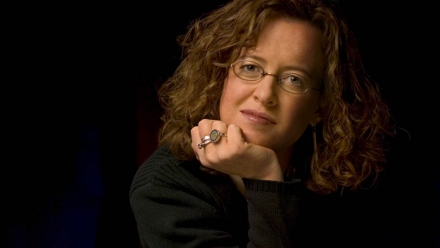
I first came across Dr. Bell, at the Realising Our Broadband Future forum, in Sydney, 2009:
"For me the event ended on a positive note with Genevieve Bell, on e-Community. It was refreshing to hear ideas about broadband for people to use, rather than as something done to them."Dr. Bell, was the first speaker at the Innovative Ideas Forum 2010 at the National Library of Australia in Canberra, April 2010, where I wrote:
"One insight was that the people in the growth areas for Internet use in Asia live much more densely and that English was not longer the dominant language of the Internet. Western, and particularly American, ideas of how information is organised, meaning is expressed will not necessarily continue to dominate the Internet.The next week I bumped into Dr Bell at the State Library of South Australia. What I had not realized was she had been the state's Thinker in Residence on South Australia’s Digital Futures (I was there to talk about open source for South Australasian defence industry).
Genevieve argued that old forms of media, such as television, will live on. Rather than television being subsumed as a VOD service, TV is influencing the design of computers and the Internet."
Monday, July 14, 2014
Assessment and Teaching of 21st Century Skills
The "Assessment and Teaching of 21st Century Skills" (ATC21STM) is a project between Cisco,
Intel, Microsoft, Singapore, the Netherlands, Finland, USA, Costa Rica and, in Australia, the University of Melbourne (Care, 2014). The ATC21S website says they are "... developing methods
to assess skills that will form the basis for 21st-century curricula".
That sounded interesting, but I could not find details of how this was being done.
In terms of assessing skills, I found the approach used for Australian Computer Society's postgraduate students most useful. With this you get the student to do whatever it is you are assessing, preferably in their workplace. This is much the same as the approach which I was trained in for assessment in the VET sector. I have applied this approach with masters students and it would seem applicable to fixing a light switch or developing a corporate strategy.
As an example, the assessment for my ICT Sustainability course, includes: "Write a report on the carbon footprint and materials use of the ICT operations of your organisation (or an organisation you are familiar with)".
In terms of assessing skills, I found the approach used for Australian Computer Society's postgraduate students most useful. With this you get the student to do whatever it is you are assessing, preferably in their workplace. This is much the same as the approach which I was trained in for assessment in the VET sector. I have applied this approach with masters students and it would seem applicable to fixing a light switch or developing a corporate strategy.
As an example, the assessment for my ICT Sustainability course, includes: "Write a report on the carbon footprint and materials use of the ICT operations of your organisation (or an organisation you are familiar with)".
Reference
Care, E., (21 January 2014), Assessing 21st century skills. Perspective Paper for the Centre for Education Research and Practice. Retrieved from https://cerp.aqa.org.uk/perspectives/assessing-21st-century-skills
Subscribe to:
Posts (Atom)