Showing posts with label ANU College of Engineering and Computer Science. Show all posts

Wednesday, August 21, 2024

Google on Designing Tech Policy for AI

Greetings from the"Special Conversation with Kent Walker: President of Global Affairs @ Google" hosted by the Australian National University. Dr Walker cautioned against over regulation of AI, suggesting this be by application depending on the output, not input. Regulation of technology is not easy. The Australian Computer Society elected me a fellow for my work on public policy for Internet regulation (or it may have been for bravery fronting up to explain the Internet to the Senate).

Dr Walker gave the example of requiring someone to walk with a red flag in front of motor vehicle as an example of over-regulation. However, this was at a time when roads were not designed for motor vehicles, there were no safety standards for cars, or driving tests. It was not acceptable then, and I suggest not acceptable now to see how many people the technology mames and kills, before considering regulation. That may sound an exxeration, but the Australian government is acquiring up to 10,000 smart sea mines, each capable of sinking a ship, along with funding the development of robot aircraft and submarines

Dr Walker argued for shorter qualifications to keep up with needs and provide more flexibility. 

Presumably Dr Walker will be having a similar discussion with lawmakers in Parliament House, just up the road. It is useful to know the thinking of one of the companies involved in developing AI. Google was caught out by the popularity of Chat GPT and it is good to see them now taking the issues seriously.

Wednesday, May 29, 2024

Researching Floods with AI

Dr Yossi Matias, 
Head of Google Research 
Greetings from the Australian National University in Canberra where Yossi Matias,  Head of Google Research is visiting to talk about their work. 

One example is Google's flood and fire information for the public. I first came on Google's work in this area 10 years at an unconference at ANU. I had helped with an emergency management system so was bemused when someone I took to be a school student got up and talked about emergency management. It turned out they were a Google engineer with extensive experience.

Wednesday, November 29, 2023

Batteries Included for Dunkelflaute: Future of Neighborhood Batteries in Australia Conference

Greetings from the 2nd Future of Neighborhood Batteries in Australia conference, at the Australian National University in Canberra. The event started with what we didn't know, which is if neighborhood batteries would "scale", that is with lots of them. One question I suggest needs to be answered is if there is value in community involvement in neighborhood batteries, or should these be something they just use.


ps: The word of the day is "Dunkelflaute". 

Thursday, November 23, 2023

ANU Bandalang Studio Launch


Greetings from the launch of Bandalang Studio at the Australian National University in Canberra. The Bandalang Studio at the ANU School of Engineering will explore indigenous knowledge systems in innovation, design, research and teaching. I tried the VR headset with Lynette Wallworth's 'Collisions', a 3d immersive film.
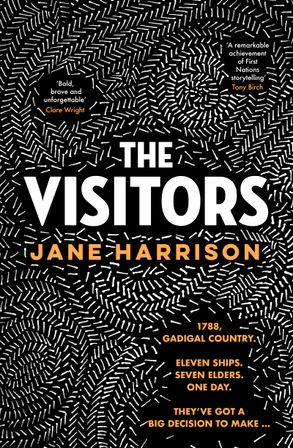
We are having a reading from the book "The Visitors", by Jane Harrison. The point of this is that Bandalang Studio can teach non-indigenous people about how to live with country.

"What is Indigenous Engineering Design?

Indigenous engineering design demonstrates a highly sophisticated transdisciplinary systems thinking approach towards solving problems. ...

What is the Bandalang Studio?

Bandalang is a Wiradyuri language name which means ‘joining’ or ‘junction’. The name Bandalang was gifted to the studio by Ngambri (Walgalu), Wallaballooa (Ngunnawal), Wiradyuri (Erambie) custodian, Paul Girrawah House. The name symbolises the spirit of collaboration which is integral to the mission of the ANU Bandalang Studio. The Bandalang Studio is a place in which Indigenous Knowledge and traditional Western practice can collaborate to find sustainable solutions to our future in engineering. ...

Bandalang Studio Founding Principles

The Bandalang Studio is founded on four principles which guide our strategic priorities.

  • Principle of Bandalang (Collaboration) bandalang = joining, junction (noun)
  • Principle of Wudhagarbinya (Listening ) wudhagarbinya = listen or winhangarra = listen, hear, think or ngattai = listen
  • Principle of Dhurinya (Equality) dhurinya = being, continuing to being
  • Principle of Gurray (Change) gurray = change or refreshment

The above languages include Walgalu, Wiradyuri, Dhurga and Ngunnawal/Gundungarra.

Bandalang Studio Mission

  • platforming Indigenous Knowledge Systems in engineering nationally and internationally
  • building Indigenous ways of thinking, being and doing into the ANU School of Engineering course structure, curriculum development and delivery
  • fostering interdisciplinary collaboration and partnerships that support Indigenous projects and enterprises
  • create life-long learning support pathways for Indigenous students, practitioners and researchers in engineering
  • to critically address existing traditions, norms and values in engineering and technology"

From  About Bandalang Studio Indigenous Engineering Design, ANU, 2023

Thursday, April 20, 2023

Join ANU Computing as a Guest Lecturer

The ANU College of Engineering, Computing and Cybernetics is looking for guest lecturers:

"As an expert in your field, join us and contribute your insights to our program and enrich our student's knowledge through your experience and knowledge in Foundations & Cyber Security, Data Science, AI/Machine Learning, Human Centered Computing, Software Engineering, Systems and Architecture and Computer Science.

Your expertise will be of great value to our program and students." Apply now.

Monday, November 21, 2022

Call for ANU Techlauncher Projects


Dr Charles Gretton
Dr Charles Gretton has invited project proposals for ANU Techlauncher, Semester 1 2023 (I help student with their reflective portfolios):

"We invite members of the community to participate in the Australian National University TechLauncher Program, as a project proposer/client, mentor, tutor and/or guest speaker. 

ANU TechLauncher is the initiative than enables mature students to work in teams with business, government, and academic experts to address real-world problems, or with experienced mentors to create start-up enterprises as part of their degree studies. It builds on over two decades of real-world group project work at ANU.

How simple is it to get involved? 

  1. (Re-)activate your account (https://redmine.cecs.anu.edu.au/redmine/), 
  2.  Pitch the cohort a project brief, or otherwise let them know how you are interested in engaging with them, and then
  3.  A program facilitator from the Australian National University will be in touch in due course to discuss the program, this model of engagement, and your project in more detail. 

Or.. just email us, or PM on the socials!

The deadline for project proposals is February 10th 2023. If we are oversubscribed, we shall allocate accepted places on a first-come-first-served basis. In case you have unsuccessfully pitched a project to students in the past, we very strongly encourage you to give it another go!

Thank you for your continued interest in the program. We are all looking forward to another ambitious and productive cohort next semester. You are strongly encouraged to forward this call on to others who may be interested in ANU TechLauncher, add this call to your circulars, socialise with your portfolio businesses and innovation ecosystem partners.

If you have any questions, please feel free to email myself and/or Priscilla Kan John."

Monday, September 5, 2022

Learning to Build a Nano-satellite

Greetings from the Birch Building at the Australian National University, where I am learning the basics of building a nano-satellite, from Dr Shinya Fujita, Senior Assistant Professor, Tohoku University, Japan. You have heard the expression "It is not rocket science", well this is. But we are starting with the simple stuff: what is a nano-satellite (1 to 10 kg). These craft are becoming popular, as advances in electronics make them more capable, relatively cheap, and able to be launched by more countries (such as Australia and NZ).

An innovation which has made nanosats popular is standardization. An example is the cubesat, made in units of 100 mm cubes, weighing no more than 
2 kg each. The standard units allow easy manufacture and packaging for launch of multiple satellites. Cubesats can be piggybacked on launches of larger satellites, fitted into empty spaces.  This is also a very familiar size, being about the width of a brick. 

Nano-satellites tend to be in a low earth orbit, so they can capture higher resolution images, and use smaller radios, but this requires ground stations which can track a moving target. 

Thursday, September 1, 2022

Digital Legislation

Greetings from the Australasian National University where Dr. Guido Governatori is speaking on "Digital Legislation" at a AI, ML and Friends Seminar. The idea is to have legislation which computers can read and interpret as computer code. Dr. Governatori commented he was not talking about Robodebt, which failed due to a data problem, with social services not having tax data. He said he would talk about smart contracts, which are neither smart, or contracts. The claim is that this will reduce the burden on business, as an automated system can work though all the legal obligations. However, I suggest this might increase the burden, as it would allow much more, and more intricate legislation to be written. Also not only black letter law, issued by the legislature will be need to be encoded, but also case law from courts. 

Thursday, April 7, 2022

Presenting from a Campervan

Natalie Lloyd, on screen from her camper-van,
in Teaching Lab 1.08, Birch Building, ANU.
Photo by Tom Worthington, CC-BY 7 April 2022 
Greetings from Teaching Lab 1.08 in the refurbished Birch Building at ANU. This the first time, in along time, the research students have been able to get together in person. A panel of experts is answering questions about research in Engineering and Computer Science. Most are in the room, but Natalie Lloyd has turned her camper-van into a mobile office* to take part from WA. Another online panelist, but from a conventional office, is noted Linux guru Kathy Reid.

The New teaching lab

Teaching Lab 1.08, as seen from the window
in the foyer of the ANU Birch Building.
Photo by Tom Worthington, CC-BY 7 April 2022
This is in a general purpose dry lab. There are 20 benches on wheels, each seating  seven students. There is a power board for each bench, on a retractable reel from the ceiling. One wall has six large flat panel displays.  There is a folding wall to divide the room in half. The folding panels are covered with white board material (the end panel can be used when the wall is retracted). 

There are two presenter's stations between the screens. There are two  eyewash  stations at the back of the room. There are windows on three sides, two with views of the garden and one into the foyer. There are adjustable stools on wheels with backrests, although when used for a lab many people will be on their feet.

This is a simple usable space, with none of the gimmicks that many flexible teaching spaces suffer from, such as matrix displays (they break), and benches with power built in (they can't be moved).

Not the First Mobile Office

George Bray, on the TechTrek
In 2001, George Bray, roving ambassador for the Internet Industry Association set out on an Australia wide TechTrek, in a campervan to showcase the Internet to regional Australia. With the popularity of Zoom today, perhaps there should be a green screen option for camper-vans. ;-)

Monday, August 30, 2021

ANU Computing Leadership Seminar Series, starts 11 am 21 September

Something I have been helping organize: The ANU Computing Leadership Seminar Series is a new initiative for 2021, where we aim to bring alumni and friends together, to share their career perspectives with current students, staff, and the campus community. The seminars are open to anyone, but each is followed by a workshop for ANU Techlauncher students. In the workshop students learn more about how to plan for their own career.

  1. Elena KelarevaElena KelarevaCEO / Founder at GippsTech, Tuesday, 21 September 2021, 11 am Canberra time. ANU PhD in Artificial Intelligence 2013. GippsTech is a Social Traders certified Social Enteprise, headquartered in Gippsland, founded with the goal of growing regional startup and tech ecosystems. The business grew from 0 to 11 employees in 2.5 years, winning the Gippsland Business Awards New Business category in 2018. Dr Charles GrettonJoin Elena in a fireside chat  with ANU's own Dr Charles Gretton, convener of the TechLauncher programRegister to attend via zoom for the first seminar. 

  2. Suvash SedhainSuvash SedhainMachine Learning Engineer, Recommendation Team, and Xi YangXi Yang, Staff Software Engineer at Twitter.  Tuesday,  28 Sept ember 2021, 11 am Canberra time. Suvash completed his PhD in Machine Learning at ANU in 2016 and been working for .Twitter in  San Francisco, since 2018. Xi has an ANU PhD in Computer Systems (2019) and has been working at Twitter in Sydney since December 2020. Professor Steve BlackburnThe format is a fireside chat in conversation with ANU's own Professor Steve Blackburn, leader of the ANU Computing Foundations Cluster. Register to attend via zoom for the second seminar.

The speakers, who are all successful ANU graduates, have been asked to talk about:

  1. What do you (or company) work on, what has been your career path?
  2. What do you need to know in order to succeed, that you don't learn in your classes or during an internship?
  3. How do you position yourself to work on interesting projects? How to find and define interesting projects?
  4. In a large company what strategies can an ambitious individual use to garner support for their objectives and initiatives?
  5. What is life like in a startup? If your goal is to start and grow your own company, where do you begin?
  6. How does one’s career change overtime?
  7. What are the pros and cons of less common career options, such as teaching high school computer science?
  8. Why might you choose graduate school vs. tech industry employment after graduation?

Lexing XieThe ANU Computing Leadership Seminar Series was created by  Professor Lexing Xie, leader of the ANU Computational Media Lab

Thursday, April 8, 2021

Will an Electric Ute Plugged into a Shed Save the Australian Electricity Grid?

Car charger at ANU
On my way to the cafe opposite my office at the Australian National University this morning, I stumbled across a new shed, holding the future of Australian motoring and perhaps the salvation of our electricity grid. This shed holds an electric car charger, as part of a vehicle-to-load (V2G) trial by the Distributed Energy Resource Laboratory (DER-Lab). Not only can an electric car be charged, but the energy fed back to the grid later.

I like the very understated, practical and Australian style of the ANU charging station. It is a plain grey steel shed, with a corrugated steel roof, like a rural bus shelter. So this approach could be called V2S: Vehicle to Shed. Add solar panels to the roof for Silicon Shed. ;-) The corrugated steel roofed shed was made a design icon by architect Glenn Murcutt, with his Lerida Estate Winery building outside Canberra.

Using a car to power the grid might seem a waste of money: why not just buy a stationary battery? However, range anxiety, along with Australians love of large vehicles, plus business finance and tax deductions, may come to the rescue of the grid.

The average commute is less than 40 km per day, but consumers are demanding electric cars with ranges of more than 200 km. Drivers worry that they will run out of energy and be stranded (so called range anxiety). So the electric cars will have excess battery capacity which could be used to store energy for a home or the grid.

Some newer vehicles come equipped with a plug to not only charge the car, but also return surplus energy back to the household (V2H), or the grid (V2G). A medium sized electric car has sufficient battery capacity to power the average Australian home for a day and still have more than enough power for the daily of commute. This could be particularly useful in Canberra, which has net renewable energy, but limited storage.

The question then is, having purchased an electric car with far more battery capacity than needed day to day, can you convince the consumer to make the surplus capacity available for the grid? One of my students is researching how to Cut City Air Pollution Using ICT.

The use of V2G is an example of where technology works, but how do you get people to use it? What type of interface will make V2G practical? Does this just need a button on the charger to request a top-up for extended driving, or does there have to be an app, where this can be scheduled? Could the system check the family's online schedule and predict when the car will be needed? Does the car owner need a cash incentive to plug in "Plug in now and receive a $5 cash bonus".

A problem with V2G is ensuring vehicles are plugged into be charged. Peak solar power is produced in the middle of the day, when a commuter's vehicle will not be at home. However, I suggest the vehicle could be plugged in at home, charging overnight from wind farms. After providing power for breakfast (the morning peak demand), the vehicle would be unplugged for the drive to work. Arriving before the mid-day solar peak, the vehicle would spend several hours charging. As the sun sets, the vehicle would be unplugged to be driven home, where it would power the evening peak demand. 

This scenario would require two charging stations for each vehicle: one at home and one at work. It has been assumed that domestic chargers could be low current, as they can charge overnight, whereas public charging stations require high current for driver convenience. An alternative would be to have a higher capacity V2G station at home and a lower capacity, lower cost, charge-only station at work (something as simple as an ordinary power point). There would be a cost in installing chargers, and a problem if drivers wanted to use their car at lunchtime, which is the solar peak.

There has been some concern that electric cars would not suit Australia conditions, where large vehicles with long range are needed, as exemplified by the trade's Ute.  However, the world's largest, most powerful land vehicles are electrically powered and several companies are preparing large SUVs and Utes for sale. The large batteries in these vehicles could power a home for several days and offer a solution for grid storage.

Australia folklore has it that the Ute was developed for farmers to take produce to market during the week, and the spouse to church on the weekend. Dual cab utes are now very popular to take tools to work during the week and carry the family's sporting equipment on the weekend. What is less well know are the financial reasons for the ute: classified as a business vehicle, the farmer could get a business loan for it. So will today's tradie buy an electric ute with V2G, using a business loan, and tax deductions? This could be called U2G: Ute to Grid, or U2S: Ute to Shed. ;-)

Before dismissing the idea of a ute powered grid, consider that Australia leads the world in solar panels on domestic rooftops. While other countries had policies for large solar farms, Australia almost by accident, has one quarter of homes with their own solar panels. Having shown a willingness to invest in home energy, will the same householders embrace V2G, to the extent needed to support the grid?

If half of Australia's homes with PV panels were each plugged in to a vehicle providing 20 kWh of storage for the grid, that would be 20 GWh in total. This is one hundred times the capacity of the SA Big Battery (officially known as the Hornsdale Power Reserve). 

However, V2G also presents a challenge to the current energy providers. With enough storage for several days use, available essentially for free, a household could decide to provide its own energy from their rooftop solar for all but a few days a year. Energy companies will receive no revenue from selling energy for most of the year, as it is used is "behind the meter", but then have to provide on demand for a few days. Companies will need to provide households an incentive to have their batteries for part of a grid system.

Saturday, March 20, 2021

Australian Government Acknowledges ANU TechLauncher Developing Professionals

 The Australian Public Service Commission has acknowledged the role of the Australian National University's TechLauncher program in "developing the next generation of tech professionals". This is a form of Work Integrated Learning where a team of students undertake a real project for a real client. But is not as easy as it sounds (I help out teaching the students soft skills).


The APSC also have a case study of GovHack on the same page. Hackerthons successfully transitioned to the online environment last year. I helped with some for ANU, ACS, CSIRO, and DoD. There is scope for hackerthons, in both technical and non-technical disciplines, to be used more. Hackerthons could be used as part of the curriculum to give students a short sharp experience of teamwork for course credit, as well as for their usual role of  learning as well as outreach (as with the ANU Singapore Health Hack 2019)?


Reference

Delivering for Tomorrow: APS Workforce Strategy 2025, Australian Public Service Commission, March 2021. URL https://www.apsc.gov.au/sites/default/files/2021-03/APS_Workforce_strategy.pdf

Sunday, March 7, 2021

eXtended Reality Cooperative Research Centre Workshop

A workshop on a proposed Xtended Reality Cooperative Research Centre (XR CRC) will be held online, 1pm, 19 March 2021.

"Six Australian Universities; Deakin University, Charles Sturt University, Curtin University, Griffith University, The Australian National University and University of Technology Sydney, all with research and application expertise in immersive experience and solutions are working on the development of the eXtended Reality CRC (XRCRC) program proposal to Government.

The XRCRC aims to enable our partners transform for the new global environment and manage the impact and opportunity of accelerated digital experience and digital offerings.

With a focus on the integration of people content and technology, XRCRC research and development is relevant where human and digital worlds combine across the following sectors:

Education and Training
Health, Accessibility, Inclusion and Aged Care
Media, Entertainment and Creative
Advanced Manufacturing, Resources and Industrial Services
Agriculture,
Architecture and Construction
Emergency Services, Defence, Security, and Public Safety ..."

Loyal Wingman supersonic fighter UAV

ps: One use for XR could be to provide an interface for high performance drones, such as the proposed Loyal Wingman supersonic aircraft. The operator would sit in a flight simulator, controlling the remote aircraft.

Tuesday, May 26, 2020

Continuous Delivery of Assessment

Dr Ben Swift gave a very interesting talk to tutors at the Australian National University recently about the work he has been doing using Gitlab and Continuous Integration (CI) for grading. In courses such as Art & Interaction in New Media, the tool Gitlab is used to provide an online repository of the work of each student. Students are given a template for submitting their work. As soon as uploaded, the CI feature of GitLab is  activated to carry out a series of checks specified by the lecturer of what the student submitted. These can be basic checks, such as verifying the student has included the statement it is their own work, comparison checks looking for plagiarism, and performance checks to see the code submitted does what it is supposed to. This has the considerable potential to be applied more widely to provide less stressful, more realistic assessment.

This approach might be applied beyond just computer code, to large bodies of written work with a complex structure. As Ben suggested, it would help get students out of the mindset of waiting until the last minute to submit. I suggest this could be taken further to apply the computer concept of "Continuous Delivery". With this approach the student would be expected to build a body of work in the repository, to the required standard, throughout their course. All of this work would be time and date stamped, and the student would be assessed on improvement over time, as well as quality of the finished product. A student who only deposited work in the repository shortly before a deadline would receive a grade of zero, regardless of the quality of their work, as they did not show improvement over time.

A byproduct of this approach would be to make cheating much harder. A student would have to steal, or pay for, a whole consistent body of work to be produced, not just individual assignments. They would have to deposit this work in the repository over time, in credibly sized installments, from Internet addresses consistent with their location. Multi-factor, or biometric challenges during submission could be used to make cheating even harder. Part of the student's assessment could be questions automatically generated from their own work.

Wednesday, March 11, 2020

Academic or Industrial Doctorate?

Greetings from the Australian National University, where Intel fellow Dr Brendan Traw is speaking on "Academic or industrial?". He is arguing the case that a PhD is a good foundation for a career in industry. As part of his case Dr Traw showed statistics that US doctoral degree holders earn significantly more than those with just a masters. However, these statistics cover all doctoral degrees: both PhDs and Professional Doctorates. Those with professional doctorates, particularly in the medical field, have high earnings, and so skew the statistics. I suggest we need more professional degrees in other fields, not to boost the income of graduates, but to provide graduates with skills specifically tuned for industry. A PHd is intended to train a researcher, but there are very few research jobs, in universities, and elsewhere. Most doctoral graduates end up in industry, so I suggest they should be gaining skills relevant to industry, as well as research. Perhaps rather than making students decide between a PHd and a Professional Doctorate (which are both at level 10 of the Australian Qualifications Framework), at the start of their program, we should allow them to choose somewhere on a continuum between.

Friday, November 15, 2019

Processing Telemetry from the Hawkie Armoured Vehicle

Hawkei
The Canberra Python User Group is hosting a talk on  Telemetry Data in an Armoured Personnel Carrier Using Python, at the Australian National University,
The Hawkie is a Armoured Personnel Carrier designed and built by Thales for the Australian Army. Neil was fortunate enough to be asked by the Australian Army to process and analyse both the CAM service and Telemetry Data produced by the vehicle."
ps: The Hawkei is named after a deadly snake, which was named after  ex-PM, Bob Hawke.

Thursday, October 10, 2019

Defence Industry Workshop on Extended Reality in Canberra, 5 November

The ANU College of Engineering and Computer Science is hosting a Defence Industry Workshop on XR, Tuesday 5 November. Defence and government organizations, as well as industry, and academia. are invited to attend. The Australian National University (ANU), is investigating the establishment of an Extended Reality Cooperative Research Center (XR-CRC) with other universities.  The term XR includes augmented reality, virtual reality, and other forms of computer generated simulations, using wearable, and other technology. For more details contact Dr Penny Kyburz, Senior Lecturer, Human-Centred Computing, ANU CECS.

Loyal Wingman supersonic fighter UAV
ps: One use for XR could be to provide an interface for high performance UAVs, such as the proposed Loyal Wingman supersonic aircraft. With this approach the remote operator would sit in a flight simulator, controlling the remote aircraft. The movement of the simulator would provide additional feedback, needed for fast decision making in combat.The simulator could be made small enough to be loaded on-board and operated from the aircraft being protected, such as the KC-30A tanker.

pps:  It happens I was the Defence representative on a joint industry project to produce a graphical user interface in the early 1990s. Unfortunately the Web came along and made our work obsolete. ;-)

Thursday, August 29, 2019

Global Urban Sustainability Science

Greetings from the Australian National University in Canberra, where Professor Felix Creutzig from Technical University Berlin is speaking on "Data-scientific approaches for a global urban sustainability science". This is very relevant to Australia, where, we have rapid unplanned growth of cities.

Professor Creutzig began by pointing out that cities are growing, and a large proportion of their carbon emissions are from building the cities. He then pointed out the New York City Green New Deal (OneNYC 2050). However, Professor Creutzig pointed out that most cities are too small to employ specialists to work on such strategies. Studies carried out by researchers, he argued,  tend to be on a large scale, without the fine scale specifics to be of practical use, while small local studies do not have the needed scale. We then got the pitch on how "typologies" with machine learning could be used to fill the gap.

Professor Creutzig started with some simple statistical analysis of cities characteristics. He the introduced a simple topology of cities, by characteristics features such as energy use, GDP, and population density. What I found odd was that the data analysis for this was carried out using published case studies, not actual data from the cities. It worried me this did not seem to e "big data" or machine learning, just a conventional meta-analysis. Also this has built in the biases of whoever collected the data, as to what they though important about cities. Researchers and statistical agencies collect data based on existing theories of cities.

What "big data" and machine learning now offers is the opportunity to use much more fine grained data. I thought Professor Creutzigwas going to go on to discuss this. But instead he talked about an analysis of papers on the use of machine learning applied to climate change mitigation. This might be of some use for someone who was considering setting out to apply AI to urban planning. However, it is not actually applying AI to urban sustainability.

Professor Creutzig has published extensively on the topic.

Friday, July 19, 2019

3Ai Masters 2020 Program Open

Applications are open for the 3Ai Masters 2020 program. This is at the  Autonomy, Agency and Assurance Innovation Institute (3Ai), set up by Professor Genevieve Bell, at the Australian National University in Canberra. Exactly what the Institute does it a bit hard to explain. They say "... we are building the knowledge and tools needed to ensure that as technology advances, humanity advances with it ...".

I have had the pleasure of sitting in the ANU Computer Science and Information Technology common room with the first cohort of students. They are a diverse and interesting collection of people. Some are hard core computer nerds, but with a wide range of interests.

Wednesday, March 27, 2019

Artificial intelligence and ethics: challenges and responsibilities

Greetings from the Australian National University in Canberra, where Brad Smith, Global President and Chief Legal Officer of Microsoft, is speaking on Artificial intelligence and ethics: challenges and responsibilities. In his introduction, the ANU VC expressed concern over the lack of broadband access around Canberra. He also mentioned the ANU 3AI Institute students who are looking at issues of technology and people (I am sitting in the audience with the students).

This is the second presentation this week on the implications of technology. Yesterday Lieutenant Colonel Keirin Joyce, UAS Sub-Program Manager for the Australian Army talked on "Drones for Good". He handed around a "Black Hornet Nano" advanced military drone, about the size of my thumb. He pointed out that such devices are not "intelligent", they only follow pre-programmed instructions. He also mentioned that drones had been used extensively for disaster relief in the recent Queensland floods.

Brad Smith also was downplaying the current state of AI. He suggested there had been and would not be a sudden achievement of AI. Instead increased computational power and access to data make AI gradually possible. He pointed out some AI is already in routine use, such as in cars for detecting people in the vehicle's path.

Brad Smith raised the issue of ethics with AI and weapons. While suggesting that the laws of war needed to take this into account, he had no specific proposals. I suggest a good start would be for Microsoft to call for China, the United States, and Russia to sign the Ottawa Treaty Banning Anti-Personnel Mines (Australia joined in 1999).

Brad Smith warned of a world like Nineteen Eighty-Four, with routine mass surveillance of the public, preventing free assembly. He proposed laws to limit such surveillance to where there is a court order or an imminent threat. However, Microsoft provides technology which could be used to create a surveillance state. One ethical approach would be for Microsoft to not supply its technology to countries which did not have suitable citizen protections.

Brad Smith ended by raising the issue of a need for a global approach to the issues. One of last slides in the presentation showed statues of Confucius, and Socrates, hinting at the differences of views between China and the West.

Well, I thought that was the end of the talk, but Brad Smith ended on a more positive note, by pointing out three Microsoft initiatives: AI for Earth, AI for Accessibility,  and AI for Humanitarian Action.