Greetings from the Australian National University in Canberra, where Director of the ANU Crawford School of Public Policy, Professor Rory Medcalf, is speaking on "Mapping our future: towards an Indo-Pacific strategy for Australia". He emphasized China's dependence on oil transported by ship through the Indian Ocean. However, China has embarked on the largest implementation of renewable energy, electrified railways and electric vehicles the world has seen. China does need oil from the middle east, for the present. But this may less important to China in the long term than it does in Australia and the USA.
Professor Medcalf suggested there is an unspoken consensus between the Australian government and opposition that Australia should participate in China's Belt and Road projects, on a case by case basis. He argues that China find the term "indo-pacific" politically loaded against it. Professor Medcalf also pointed out that France had called for an "Indo-Pacific Axis". That might be an even more unfortunate term, given the extent to which China suffered from the Rome–Berlin–Tokyo Axis in WWII.
"Rising China has been reshaping world order for
the last two decades, but this volume argues that we cannot accurately
understand rising China's global impacts without first investigating
whether and how its growing power resources are translated into actual influence
over other states' choices and policies. Concentrating on the
developing countries in East and South Asia, where the power asymmetry
is greatest and China ought to have the biggest influence, the volume
investigates China's influence in bilateral relationships, and on key
political actors from these countries within key issue areas and
international institutions. ..."
"
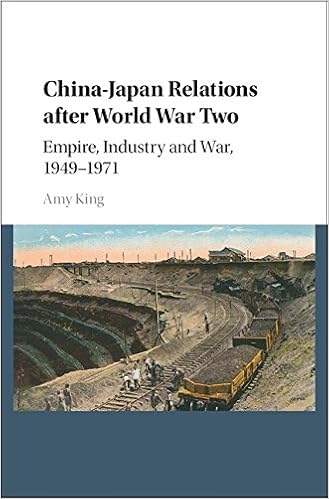
A rich account of how and why China rebuilt its economic
relationship with Japan so soon after the devastating experience of
World War Two. King argues that the period between 1949 and 1971 was an
important moment of non-Western modernisation stemming from the legacy
of the Japanese empire, industry and war in China."
When she launched the New Colombo Plan in December 2013,
Foreign Minister Julie Bishop said she hoped that Australian tertiary
students would come to see a period of study at an Asian university as
‘a rite of passage’ associated with their transition to adulthood.
This lecture suggests that much is being asked of the New
Colombo Plan, including the constant invitation to recall the successes
of the original Colombo Plan; but I also suggest that now is the right
time to be setting both research and policy directions in relation to
the subject of international students as a dimension of foreign
relations. Much has changed for connections between Asia and Australia
since the original Colombo Plan gave way to other aid programs and
revised thinking on international students in the 1980s. But one of the
most enduring sources of narrative about connections, and one that taps
directly into memories of the original Colombo Plan, is that of shared
learning and life experiences – the personal reflections that featured
in AusAID, and now feature in DFAT, stories about student experiences.
At a time of when international students are being considered elsewhere
as an under-appreciated dimension of foreign relations, Australians
should logically be extending their thinking in how best to ‘listen’ to
student reflections and communicate with overseas alumni.