Showing posts with label Pacific Ocean. Show all posts

Sunday, August 11, 2019

Australia Pacific Security College

Hon Marise Payne,
Minister for Foreign Affairs
Marise Payne, Minister for Foreign Affairs, announced the creation of an Australia Pacific Security College (APSC), 10 August. This will be established with the Australian National University, to "deliver strategic security and leadership training to Pacific security agencies".

An APSC Design Summary is available. It is envisaged the APSC activities could include "... workshops, seminars, courses, secondments and online resources...". I suggest that this could be flipped, to make online resources the priority. The Pacific is a big place*, and the students will learn better if they spend most of their time at work, in their own country, studying online. They can keep in touch with their teachers, and peers in other countries, in online forums. There are well established processes for doing this.
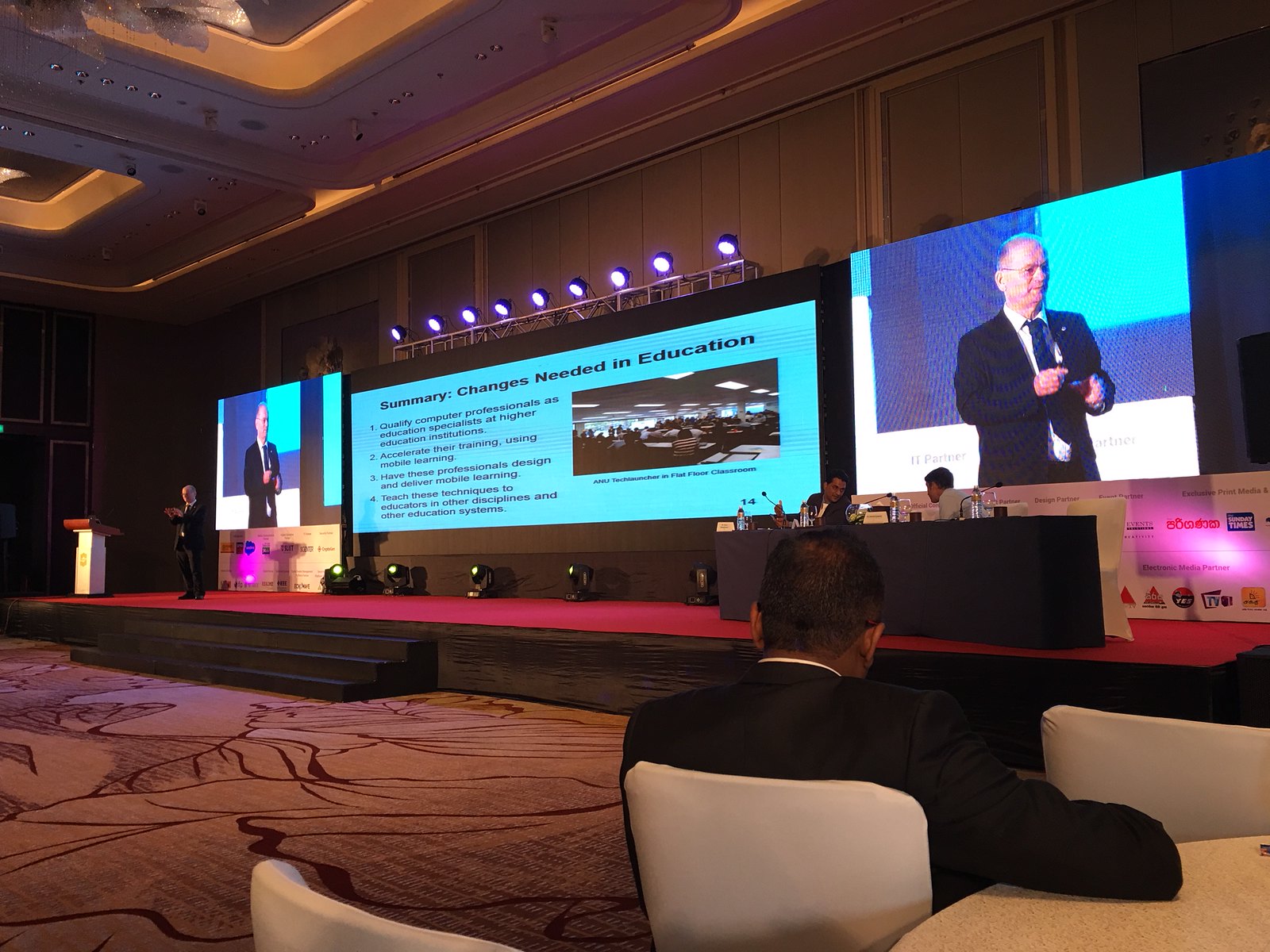
Tom Worthington speaking on e-learning in Colombo
One outcome expected of the APSC is an "... active network of security officials across the region ...". This network, I suggest, could be supported by a secure online network, linking the staff, students, and alumnus. Given the ANU has already been the victim of a data breach, the APSC will make a tempting target, so additional measures, such as two factor authentication, might be used.

* In 2005 I conducted a five day workshop in Samoa for staff from museums around the South Pacific region, on the use of computer and telecommunications technologies. I spent most of a day traveling to Apia, but due to the International Dateline, I arrived shortly before I left. ;-)

Monday, May 21, 2018

An Indo-Pacific Strategy for Australia

Greetings from the Australian National University in Canberra, where Director of the ANU Crawford School of Public Policy, Professor Rory Medcalf, is speaking on "Mapping our future: towards an Indo-Pacific strategy for Australia". He emphasized China's dependence on oil transported by ship through the Indian Ocean. However, China has embarked on the largest implementation of renewable energy, electrified railways and electric vehicles the world has seen. China does need oil from the middle east, for the present. But this may less important to China in the long term than it does in Australia and the USA.

Professor Medcalf suggested there is an unspoken consensus between the Australian government and opposition that Australia should participate in China's Belt and Road projects, on a case by case basis. He argues that China find the term "indo-pacific" politically loaded against it. Professor Medcalf also pointed out that France had called for an "Indo-Pacific Axis". That might be an even more unfortunate term, given the extent to which China suffered from the Rome–Berlin–Tokyo Axis in WWII.

Professor Medcalf mentioned soft power, including. The ANU now offeres courses in both defensive and offensive cyber-operations and teach a little on the ethics of cyber-warfare over the South-China Sea. He also mentioned aid and development. I was one of a team at ANU which prepared a proposal to provide high quality, accessible education across the Indo-Pacific: "Peace Through Superior Education".