
Showing posts with label Education and Training. Show all posts

Saturday, October 1, 2022

Learning to Innovate for Sustainable Computing

I will be speaking on "Learning to Innovate for Sustainable Computing" at the Tech in Government conference in Canberra, 25 to 26 October. In this post I am collecting my thought on what to say. Suggestions, comments, and corrections would be welcome.

Computers are part of the problem of global warming,

Computers > electricity > fossil fuel > CO2 > global warming.

photo by Marcus Wong Wongm, CC BY-SA, 18 August 2007

Computers, and the Internet, run on electricity. Most electricity today is generated by burning fossil fuel, which releases carbon dioxide (CO2) into the atmosphere. The CO2 is a greenhouse gas, which traps sunlight, causing global warming. These facts have been clear since 2007, when the Australian Computer Society (ACS) release a world first study. The study estimated 1.52% of Australian carbon emissions were attributable to computers and telecommunications. There have been later more detailed studies around the world, but these produce similar estimates of around 2%. This is a significant source of pollution, being around the same as from the airline industry.

Reference

Audit of Carbon Emissions resulting from ICT usage by Australia Business,
by Shadi Haddad, Ethan Group Pty Limited, for the Australian Computer Society, August 2007. URL https://web.archive.org/web/20070907015722if_/http://www.acs.org.au/acs_policies/docs/2007/greenictaudit.pdf

Computers can be part of the solution to climate change

Big Efficient Data Centers Linked to Handheld Devices 
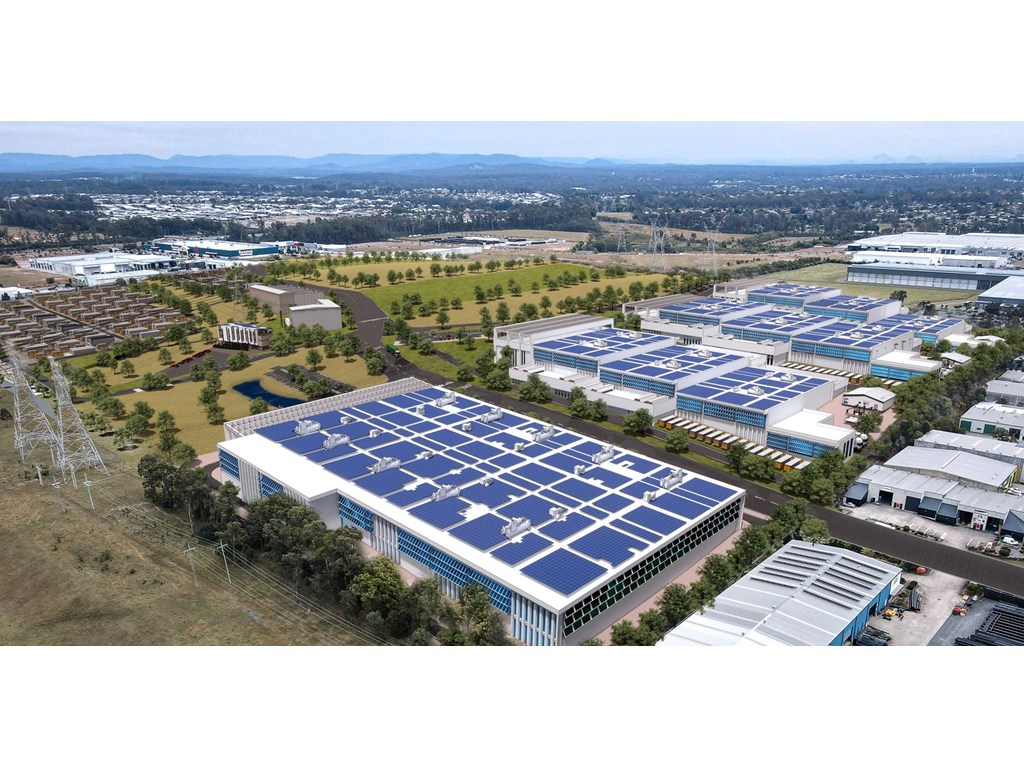
Brendale Supernode, Queensland,
by Quinbrook Infrastructure Partners, 8 July, 2022

Consolidating computing into large data centers, collocated with renewable energy storage, as is being done at the Berndale Supernode in Queensland, provides the opportunity to reduce carbon emissions from computing. These systems can also be used to replace activities which are carbon emitting. As an example, the recent COVID-19 pandemic has shown that much business travel can be replaced with video conferences. However this requires learning new skills, and habits.

Reference

Supernode set for Moreton Bay, Steven Miles, Deputy Premier of Queensland, 8 July, 2022. URL https://statements.qld.gov.au/statements/95682


We can teach how to measure and reduce emissions, with a smart phone

Small Chunks of Learning Delivered to Handheld Devices


Green course home page in landscape mode on a mobile device
ICT Sustainability Course on a desktop computer,
by Tom Worthington, CC-BY, 2007
Green course home page in landscape mode on a mobile device
ICT Sustainability Course on a phone,
by Tom Worthington, CC-BY, 2007
Vocational education at TAFE, and courses at university are now routinely provided online. What is not generally appreciated is that students don't have to sit down at a desk-top computer, to learn. The learning management systems used for teaching TAFE and university students automatically adjust to smart phone screens. It takes a little more work to design the course content for this mode, and to allow students to study while working.

In 2008, the Australian Computer Society commissioned me to design an online course to teach how to estimate and reduce carbon emissions from computers. This was implemented using the Australian developed Moodle Learning Management System, and has been running at Australian and North American universities since 2009.

Reference

Worthington, T., "A Green computing professional education course online: Designing and delivering a course in ICT sustainability using Internet and eBooks," Computer Science & Education (ICCSE), 2012 7th International Conference on , vol., no., pp.263,266, 14-17 July 2012 URL: http://dx.doi.org/10.1109/ICCSE.2012.6295070

Same Approach, Other Challenges

Needed Tech Skills for Defence by Smartphone


Event canvas from Navy Warfare Innovation
Workshop (NWIW), by Paul Telling, 2020
Australian government face the challenge of recruiting and training sufficient personnel for technical roles. Training using mobile devices can assist with this, by allowing in service professional development in new and interesting ways. One example are the hackerthons which I have assisted with in the last few years. Two  were hosted by the Australian Computer Society, for the ADF & NZDF, and one by the Australian Navy. These helped participants learn to collaborate online rapidly in a high stress environment.

Reference

Worthington, Tom (2022): Designing for scale: How to use mobile devices to recruit, train and equip the extra 18,500 defence personnel. University of Melbourne. Media. https://doi.org/10.26188/20742451.v1 Notes at: https://blog.highereducationwhisperer.com/2022/08/expanding-canberra-defence-training.html


Thursday, July 1, 2021

New Teaching Skills Standards Defined

Work is underway on Version 8 of SFIA (now in Beta), which proposes new skills for Certification Scheme Operation and Subject formation. The Skills Framework for the Information Age (SFIA) is a set of skills definitions for computer professionals. This is used in Australia by the Australian Computer Society, and some government agencies, to categorize the skills professionals have, and those they need for a job. While mostly about technical skills and the management of projects, there is a set of education skills described as "Skills management", for those who teach computing. 

New Skills management Skills 

It might be argued that running a certification scheme is much like running any education so comes under the existing skills definitions. But there are some differences, for example in Australia how a vocational institution does assessment (which is more like certification) versus a university. The vocational sector is more interested in of the applicant has the required level of skills and knowledge, not how they got them, or how well they do them. Similarly, Subject formation might be seen as part of the existing Learning design and development, but it appears to be intended to apply at a higher level, rather than the details of a particular lesson.

The Skills management skill in SFIA Version 8 (Beta) has:

  1. Learning and development management (ETMG) 3 4 5 6 7
  2. Learning design and development (TMCR) 3 4 5
  3. Learning delivery (ETDL) 2 3 4 5
  4. Competency assessment (LEDA) 3 4 5 6
  5. Certification Scheme Operation - new (CSOP) 2 3 4 5 6
  6. Teaching - restructured (TEAC) 2 3 4 5 6 7
  7. Subject formation -new (SUBF) 4 5 6 7
The codes in brackets are used for referencing the skill (there are hundreds of these codes). The numbers are the level the skill is defined at, from 1 low, to 7 high.

Friday, July 3, 2020

Online Learning for Remote and Complex Environments

Mr Andrew Laming MP,
Chair of the Committee.
The Australian Parliament is looking into the impact of COVID-19 on learning, as part of its inquiry into education in remote and complex environments. Public hearings are suspended due to COVID-19, although I suggest these could use video conferencing. The inquiry has received 64 submissions, including mine (number 50):

Train Teachers Online to Provide Blended Learning 

Submission to the Inquiry into Education in Remote and Complex Environments

This is a submission on online teaching during the COVID-19 Pandemici. Replicating the classroom using video conferencing is only a small part of the answer. University and school teachers need to be trained online to teach in blended mode, for the optimum combination of online plus face-to-face learning, to suit prevailing conditions. This approach made it possible to teach university students without interruption during the lock-down and is suitable for older school students, providing a smooth transition to normal teaching.

Blend Classroom and Online for Resilient Learning

In February 2020 with the prospect of COVID-19 keeping students from campus, I was able to quickly switch from blended learning, to fully online teaching at the Australian National Universityii. The course text and videos were already stored in the University's Learning Management System (LMS), which the students can access via the Internet from anywhere, at any time. Most student activities (forums, quizzes, and assignments), could already be undertaken online at any time. This left just the face-to-face workshops, to be replaced by video conferences. When students begin return to the classroom, video conferences can continue to link those who cannot attend, to their teachers, and more importantly, to the other students.
The ability to rapidly change from campus-based to online instruction is a by-product of a blended approach to teaching. To allow maximum flexibility, I first design for online delivery, then add campus activities, combining online and campus in chunksiii. If a student is unable to get to campus, they can still undertake most activities.
As an international graduate student of education, I had experienced the difficulties of studying at a distanceiv. In 2017 I realised my students could be stopped suddenly from getting to class and suggested preparing for this with online learningv.

Train Teachers Online to Teach Online

Australian universities and schools have the good fortune of access to high-quality LMS. One example is the Moodle product, developed in Western Australia, and now used by schools and universities across Australia, and throughout the world. Tools such as Moodle, allow a teacher to provide the materials the student needs, wherever they are. However, what is also needed are teachers trained to teach online, as well as in a classroom.
While we have the technology for teaching, what has been lacking during the COVID-19 Pandemic are university and school teachers trained to use that technology effectively. More important than technical training, is the ability to build a rapport with students who are remote from you. This can be done by having teachers experience being online students themselves. This dogfooding approach ensures that teachers understand the stresses of being an online studentvi. I suggest that school and university teachers should undertake at least one semester unit of instruction online, about how to teach online. This online learning should model good techniques, such as students working together to accomplish a task, peer assessment and an absence of formal examinationsvii.

Tom Worthington MEd FHEA FACS CP IP3P
22 May 2020


Biography: Tom Worthington is a computer professional and an honorary lecturer in computer science at the Australian National University. A Certified Professionalviii member of the Australian Computer Society, in 2015 Tom received a national gold Digital Disruptors Award for "ICT Education" and in 2010 was Canberra ICT Educator of the Year. He previously worked on IT policy for the Australian Government and in 1999 was elected a Fellow of the Australian Computer Society for his contribution to the development of public Internet policy. He is a Past President, Honorary Life Member, Certified Professional and a Certified Computer Professional of the Society as well as a Fellow of the Higher Education Academy, a voting member of the Association for Computing Machinery and a member of the Institute of Electrical and Electronics Engineers.
Tom has a Masters of Education in Distance Education from Athabasca University, a Graduate Certificate in Higher Education from the Australian National University and a Certificate IV in Training and Assessment from the Canberra Institute of Technology. He blogs as the Higher Education Whisperer and is the author of Digital Teaching In Higher Education.
While an Honorary Lecturer at the Australian National University and a member of the Professional Education Governance Committee of the Australian Computer Society, his views here do not necessarily reflect those of either organization.


i Home learning and teaching during COVID 19, Media Release, House of Representatives, 14 May 2020. http://www.medianet.com.au/releases/release-details.aspx/?id=931917&k=1145358
ii Learning to Reflect, Learning Module Notes for the ANU TechLauncher WPP Exercise, Tom Worthington, November 2019. URL http://www.tomw.net.au/technology/education/learning_to_reflect/learning_to_reflect_2_1.shtml
iii "Blended learning and learning communities: opportunities and challenges", Fleck, J. (2012), Journal of Management Development, Vol. 31 No. 4, pp. 398-411. https://doi.org/10.1108/02621711211219059
iv E-Portfolio for the Athabasca University Master of Education, Tom Worthington, 6 December 2016. URL http://www.tomw.net.au/masters_eportfolio/introduction.shtml
v Digital Teaching In Higher Education: Designing E-learning for International Students of Technology, Innovation and the Environment, Worthington, T., 2017. URL http://www.tomw.net.au/digital_teaching/introduction.shtml
vi Dogfooding: Learning About Teaching by Being an On-line Student, Tom Worthington, 2017. URL http://www.tomw.net.au/technology/it/dogfooding/
vii Blend and Flip for Teaching Communication Skills to Final Year International Computer Science Students, Tom Worthington, 2018 IEEE International Conference on Teaching, Assessment, and Learning for Engineering (TALE). In Press. Presentation notes: http://www.tomw.net.au/technology/education/learning_to_reflect/tale2019_blend_flip_worthington_final.pdf
viii Liability limited by a scheme approved under Prof. Standards Legislation

Saturday, May 23, 2020

Australian Parliament Looks at the Impact of COVID-19 on Learning

Mr Andrew Laming MP,
Chair of the Committee.
The Australian Parliament is looking into the impact of COVID-19 on learning, as part of its inquiry into education in remote and complex environments. The inquiry has already received 49 submissions, since starting in December 2019, but now wants to hear about the impact of the pandemic.
‘We want to expand our range of evidence into specific lessons and consequences of rapid and flexible home and online learning and teaching. The Committee hopes to learn more about how these new flexible approaches might continue to be applied in remote and complex environment long after schools return to ‘normal’ face-to-face teaching,’  Mr Andrew Laming MP, Chair of the Committee.