Showing posts with label COVID19. Show all posts

Sunday, July 17, 2022

Universities Must Prepare for the COVID-19 Peak by Keeping an Online Option for Courses, Meetings & Events

Australia's National Cabinet met on Saturday and agreed to reinstate, continue and introduce some new emergency measures due to rising cases of COVID-19. I suggest all universities must offer an online option for all courses, meeting, and events, at least until the end of 2022. Forcing staff and students to return to a classroom, will place at risk the lives of staff, students, and the general public. It will also place in jeopardy the ongoing operation of our educational institutions. 

Vice Chancellors, university executive members, and all academics who teach, have a duty of care. Allowing students to participate online, without requiring to specially apply, or get permission, is a way to meet that duty of care, and remain within the law.

As well as slowing the spread of disease, an option option will allow those in isolation to participate. Not offering them that option would be unlawful discrimination. It is not as if universities were not ready with an online option. Even those which failed to prepare in advance of the current pandemic, have now had two years to equip and train.

Wednesday, May 25, 2022

Learning from Wuhan on Helping International Students

While western universities have focused on the problems of their own students during the COVID-19 pandemic, it should be remembered that China also has international students. There are some interesting papers emerging from the experience of students, some at the epicenter of the Pandemic.  English, Yang,  Marshall, and Nam (2022) have written about the experience of international about 1,500 students facing Wuhan's 76 day lock-down (out of 8,000 pre-Pandemic). The authors note that the stress from the pandemic is in addition to the stress international student face from studying abroad.

Wuhan was locked down earlier than other locations, when little was know of the virus, which will have increased the stress level for students. Also, as the authors note, those in Wuhan faced the stigmatization and discrimination as being perceived as the source of the disease. However, it should be noted that Melbourne (Australia) experienced six lock-downs, of 262 days in total, more than the rest of the world. It would be interesting to compare the experience of Melbourne's very large international student population to that of other countries. Australian international students were stigmatized by the then Australian Prime Minister, who with a breathtaking lack of compassion, said of the students: "it's time to go home".

The authors report the stress and anxiety students felt, fear, worry, uncertainty, which were made worst by misinformation. Students were homesick and felt  abandoned by those able to leave. However, they were able to continue their education online. In my own studies of the potential for online education in China, I noted that it was not widely accepted (Worthington, 2014). Despite this, as the authors note, Chinese universities were able to switch to online learning, at scale. Another positive point was that international students were helped by the local community, reducing the sense of isolation.

The authors suggest universities could apply the prosocial behavior exhibited at Wuhan in dealing with mental health issues of students generally. In particular, peer support, and practical help for students, with food, and transport. Also social support from outside the international student body will reduce a sense of isolation. 

Wang (2022) makes similar points. However, they also point to the direct role of university medical personnel, and students, in treating patients. This included online support for the psychological effects of the pandemic. The author emphases the sense of "belonging" of China's students, which aided response to the pandemic. This may sound a little odd, to western ears, but Australian universities are similarly attempting to cultivate a sense of care for students. The use of social media, specifically WeChat, is mentioned, but unfortunately not detailed. Australian universities now routinely use social media to get messages out to students, but these can tend to be more in the form of announcements, which do not have the power to engage. 

References

English, A., Yang, Y., Marshall, R. C., & Nam, B. H. (2022). Social Support for International Students Who Faced Emotional Challenges Midst Wuhan's 76-day lockdown during Early Stage of the COVID-19 Pandemic. International Journal of Intercultural Relations. https://doi.org/10.1016/j.ijintrel.2022.01.003/

Wang, L. (2022). Belonging, being, and becoming: Tertiary students in China in the battle against COVID-19 pandemic. In J. S. McKeown, K. Bista, & R. Y. Chan (Eds.), Global higher education during COVID-19: Policy, society, and technology (pp. 39-56). STAR Scholars. https://ojed.org/index.php/gsm/issue/view/152

Worthington, T. (2014, August). Chinese and Australian students learning to work together online proposal to expand the New Colombo Plan to the online environment. In 2014 9th International Conference on Computer Science & Education (pp. 164-168). IEEE. https://doi.org/10.1109/ICCSE.2014.6926448

Tuesday, April 12, 2022

Flexibility With Work and Study in the Post-Pandemic University

Mark Carrigan writes of his experience of COVID-19 and "...how little the health of staff and students has figured in conversations about the post-pandemic university". I suggest universities should design work, research and study taking into account how staff and students will have times when they have to reduce their workload, for reasons of illness, disability, work, family or other issues. There should not need to be one off provisions for a pandemic. It should be part of the routine to be able to work or study from home, & at a lower intensity, when needed.


In 2008 I gave up giving conventional lectures, and moved my teaching online. https://blog.tomw.net.au/2008/08/my-last-lecture.html I then spent much of the time up to 2020 learning how to do this well. As part of this I stopped using examinations as a form of assessment. By late 2019 I had a reasonable idea how to teach this way, presenting a paper on how to blend and flip education (Worthington, 2019). Also I had floated the idea of fully online contingency in case of an emergency: https://portfolio.elab.athabascau.ca/user/tom-worthington/conclusion

One benifit of working and studying mostly online is greater flexibility. Due to my learning design, neither myself, nor my students, needed to be in a particular place at a particular time. I was able to work for and study at multiple institutions at the same time. After ten years this seemed routine, and I was taken aback in 2020 by colleagues shocked at the idea of suddenly having to work and teach online, asking if it worked and how to do it. While I helped them with a crash ad-hoc conversion, I was stuck by the idea that most of them thought of this as a temporary measure which could be abandoned as soon as the pandemic was over. I suggest universities need to set up for the new normal.

References

Worthington, T. (2019, December). Blend and flip for teaching communication skills to final year international computer science students. In 2019 IEEE International Conference on Engineering, Technology and Education (TALE) (pp. 1-5). IEEE.

Friday, March 25, 2022

Some Thoughts on Learning and Teaching Strategies

Hot Air Balloon Over Canberra,
Photo by Tom Worthington CC-by 3.0 1996
Some thoughts on Learning and Teaching Strategies:

Don't Fight the Last War

A well-known saying in the military is "Fighting the Last War". This is the tendency to make plans around whatever challenge was last. There is much talk of universities learning the lessons of COVID-19. However, those lessons were known before COVID-19, many were not learned then, and in any case, may not apply in the future.

Australian universities knew the risk that the flow of international students to Australia could be interrupted. As one of many, I warned of this (Worthington, 2017). Rather than practice teaching online in an emergency, as the National University of Singapore did in 2014, most of Australia's universities chose to instead hope this never happen, and when it did, claimed no one could have anticipated it.

Universities faced COVID-19 in an otherwise relatively benign environment, which can't be assumed to be the case in the future. An example of an upcoming challenge is high levels of cyber-attacks, which could commence without warning, and persist for months or years (Whitehouse, 2022). A longer-term challenge is increased online competition from international universities, and  institutions associated with China's education plan for the belt, and road program (Worthington, 2014).

Balance Research and Education

While useful for marketing, a university's research activities are of little practical value for student learning, if anything they are an impediment. Staff selected, and promoted, on their research record are not necessarily good educators, nor do they have an incentive to become skilled. Governments could solve this inherent conflict by un-Dawkinising Australian higher education, again splitting research, and education into separate institutions. Research universities would then only teach a few research students. To avoid that drastic solution, universities need to raise the status of teaching, with specific recruitment and promotional practices.

We already knew how to teach better before COVID-19

COVID did not bring disruption to those of us already trained and qualified in teaching, who were providing online, flipped, and blended learning. Some even had a contingency for online teaching in an emergency in place, activated for the pandemic.

The challenge for universities is not in imagining what learning, and teaching could be as that is already known, but how to provides incentives for our academics to skill-up to do it.

We already knew exams were a bad idea

Apart from being administratively convenient, examinations have little
to offer
in terms of quality assessment. Alternatives are well developed
and proven. The challenge is to train staff in modern assessment techniques.

Large classes are manageable when broken into small groups

There are well-established techniques for large classes. These involve the use of group work, peer feedback, and projects. The challenge is to train academics in how to use these techniques in a team, with educational specialists. ANU Techlauncher is one model for this approach.

Learning and teaching support

The key to systematic uplift of digital, and teaching skills is through the university's major teaching asset: tutors. These most marginal university employees, like non-commissioned officers of the army, are on the front line with students. They are also easier to influence in their teaching practices. While convincing a tenured professor to learn digital teaching techniques is difficult, it is much easier with tutors. Courses for tutors can be re-imagined as showcases of modern teaching techniques. The tutors would learn these techniques, by using these techniques.

Learning Spaces with flat floors and furniture on wheels

The flat floor classrooms of the ANU Marie Reay Teaching Centre provide a suitable model for future learning spaces (Worthington, 2019). These can be supplemented with some tiered spaces similar to ANU Manning Clark Hall.

Lifelong learning

Lifelong learning can be addressed through micro-credentials offering credit in certificates, nested into diplomas, and degrees. The major challenge here is to have staff with the needed skills in the design, delivery, and assessment of this form of education. There is much to learn from the VET sector, but academics are very reluctant to do so.

Development, and reward of teaching

There is no easy solution to getting academics to take the time, and effort needed to become skilled in teaching. One way is to get them when they are new, requiring new staff, especially early career academics, to undertake training.

Universities can offer courses, micro-credentials, certificates, diplomas, and degrees in education to both their staff, and students. This would signal that the sector is taking education seriously, and imposing discipline on those delivering it. Tutors who are students could be offered credit for their studies in education as part of their programs. As an example, education is recognized internationally as a skill for computer professionals, under the Skills Framework for the Information Age (SFIA).

Flexible for a sustainable future

One way sustainability can be improved is to build flexible options into educational offerings. By default, programs should be offered in blended mode, with the option of students studying entirely remotely online. While the typical student could be expected to be on campus for 20% of their studies, the option for this to be 0% should be built-in. As well as providing flexibility for individual students, this allows for future emergencies, which keep students from campus (I suggested Canberra's universities do this in 2016).

Some Frequently Asked Questions


What Should our Digital Infrastructure Look Like?

There is enough free open source educational software for universities, such as Moodle, and Mahara. What is needed is the training in education, and technology, for staff to use it effectively. Changing the LMS would be treating the symptoms, not the problem.

What does a Good On-campus Experience Look Like

ANU's Kambri is a good example of a lively modern campus experience. It looks like an entertainment center, but there are quality teaching spaces behind the bars, cafes.

How Can We Respond to Student's Concerns

Train, the teaching staff to teach, with an AQF qualification in education.This could be at a level somewhere between the certificate VET teachers must have, an the Masters for school teachers.

How can we make teaching easier in large classes?

Train, the teaching staff to teach, with an AQF certificate in education.


How can we make the experience of learning meaningful to students?

Train, the teaching staff to teach, with an AQF certificate in education.

Then teach the students to be professionals, who take responsibility for their learning. Have them undertake group project work from their first year.


How can we provide students flexibility?

Offer all courses in blended mode, with a pure online option. Eliminate
traditional examinations.

How do provide digital equity?

Include digital skills introductory courses. Ensure that course
materials meet accessibility requirements and will work over low
bandwidth broadband to a mobile device.

References


Act Now to Protect Against Potential Cyberattacks, The Whitehouse, US Government, March 21, 2022 https://www.whitehouse.gov/briefing-room/statements-releases/2022/03/21/fact-sheet-act-now-to-protect-against-potential-cyberattacks/

Worthington, T. (2014, August). Chinese and Australian students learning to work together online proposal to expand the New Colombo Plan to the online environment. In 2014 9th International Conference on Computer Science & Education (pp. 164-168). IEEE. https://ieeexplore.ieee.org/abstract/document/6926448/

Worthington, T. (2017). Digital Teaching In Higher Education: Designing E-learning for International Students of Technology, Innovation and the Environment. ANU Open Research Repository https://openresearch-repository.anu.edu.au/handle/1885/148737

Worthington, T. (2019, December). Blend and Flip for Teaching Communication Skills to Final Year International Computer Science Students. In 2019 IEEE International Conference on Engineering, Technology and Education (TALE) (pp. 1-5). IEEE. https://doi.org/10.1109/TALE48000.2019.9225921


Friday, March 11, 2022

Will Conferences Remain Online Post-pandemic?

Steven Fraser
Had a message from Steven Fraser at Innoxec asking me to pass on a Future of Conferences Research Survey. I miss being on the stage at a conference, wandering through the trade show, and bumping into acquaintances. But I also don't want to give up the convenience of being able to attend an international conference online, without a 10 to 20 hour flight. 

During the pandemic academic conferences transitioned well to an online format. Keynotes worked fine, as did panel sessions. ASCILITE 2020 & ASCILITE 2021, made a good attempt at including a casual get together. EDUtech Asia did reasonable well with commercial online conferences, with sponsored round-table sessions.

However, hybrid events which offered both in-person and online options did not work so well. This requires organizers to work very hard balancing the needs of in-person and online participants. Perhaps as more experience is gained with this workable formats will be found.

Thursday, February 24, 2022

One Way to Revive Higher Education Learning After COVID-19

Erin Lief
Monash University
In "Five Ways to Rethink Online and Blended Learning Post-COVID" Erin Lief (Monash University), provides a list of very useful techniques to improve university teaching. However, without incentives for higher education techniques to provide quality learning, institutions, and individual academics are unlikely to make the upfront investment needed.

As Lief points out, Australian universities did not really shift to online learning due to COVID-19. Some, particularly the regional universities, had already embraced online learning (a few have been doing it for decades). I suggest the more conservative capital city universities were doing a form of ad-hoc blended learning, but not admitting it. They provided recorded lectures and online assignment submission, while lecturers expressed mock wonder as to why students were not turning up. This was not good online learning, but it was online learning.

Distance education has been offered for 100 years for students from marginalized groups, and with the advent of the Internet over the last few decades, this continued online.  There are decades of research, and how to books, and training courses on this. 

The problem, I suggest, is not the availability of techniques, but providing incentives for universities and academics to use them. There is a large upfront cost in technology and training, which many institutions, and individuals are reluctant to invest in. 

Universities are well aware that reputation based on research output attracts students, even though this has little to do with teaching quality (and may even detract from it).  Promoting campus life has proved good marketing, even if it has noting to do with learning outcomes, and many universities see no reason to change this approach.

Individual academics know they will be promoted for research output, even if they spend most of their time teaching, and that is how they bring in the most money for the university. Until there are measures of teaching quality, and academics are rewarded for this, there will be little incentive for change. One way to do this is for universities who value quality education to develop and promote measures of it. The Webometrics World Ranking of Universities, from the Cybermetrics Lab is Spain, is a good example of how to do this.

Wednesday, November 24, 2021

Mobile and Socially Constructed Blended Learning with Activity Theory a Response to COVID-19

Next Tuesday at ASCILITE 2021, I have sixty seconds to speak on "Mobile learning and socially constructed blended learning through the lens of Activity Theory". The reason I have only a minute is that there are nine authors for the paper (Vickel Narayan, Thom Cochrane, Neil Cowie, Paul Goldacre, James Birt, David Sinfield, Alizadeh Mehrasa, Tom Worthington and Stephen Aiello). That might sound an impossible task, but we managed it last year at ASCILITE 2020. This is much easier to do online, than with a crowd of people on a stage.  

I am not much of a theory person, and the idea of applying Activity Theory comes from my coauthors. All I am doing is describing how I modified my teaching slightly last year for COVID-19. But the point we are collectively making I suggest is an important one. Mobile devices and collaborative tools were effective by connecting students with each other, and with their teachers. This I suggest has been far more important than replicating old fashioned lectures and examinations online. As an online student myself for years, I felt the loneliness of long distance study. With the pandemic behind us, it is important for Australian universities to engage students and not slip back into lazy habits of offering dull lectures and then blaming students for not attending.

Our paper differs from many recent ones which describe heroic and radical changes which had to be made to teaching practice to move from classroom based to online. The difference was that as tech literate educators we had less to do to move our teaching online. 

I moved to pure online teaching ten years ago, then in the last few years had been incorporating some classroom elements. As someone with a background in dealing with emergencies using tech, my teaching was designed with an online contingency, so that if an emergency kept students from campus, it could all be done online. That is what happened with COVID-19.


Thursday, November 4, 2021

Keeping the best bits of online learning after COVID-19, at EdTechPosium, Canberra, 10 December 2021.

The fourth in my Keep Calm and Carry Online Series, "Planning for the Online Learning Future: Keeping the best bits of online learning after COVID-19", is planned for 10 December 2021, at EdTechPosium, in Canberra. 
Poster generated using Keep Calms.

Recently I was interviewed by John Ross, for Times Higher Education, on the future of the lecture. As I see it, teachers who can have their students feel a personal connection, online and face to face, will make for a quality educational experience. You can continue to call these "lectures", if you want, but they need to be more interactive, and available online, with the classroom an optional extra. I gave up conventional lectures in 2008, and moved my teaching online. 

By 2019 I had a format suitable for students working in groups in a classroom, and online, just in time for COVID-19. 

This series is exploring how individual teachers and universities can better deliver learning through the use of technology on campus and online. These are aimed at the Australian university sector but may be of interest to other educators. Keep Calm and Carry Online" a sign on the wall behind me, during webinars from my lounge room for the last eighteen months. So that as the working title for this series of talks. Contributions, corrections and offers of where to present would be welcome.

  1. Some tips and tricks for e-learning, 7 September 2021 (also video 1),
  2. Creating an X-factor Experience for Students, ANU Computing Seminar, 20 October 2021 (also video 2),
  3. Keeping the best bits of online learning after COVID-19, in the Maskwacis Cultural College Microlearning Series from Canada, 3 November 2021.


Friday, July 30, 2021

Virtual Reality in the Time of COVID

Generic disposable facial interface
Greetings from the weekly ASCILITE Mobile Learning Special Interest GroupThomas Cochrane raised the topic of how Virtual Reality (VR) can be used within COVID-safe restrictions. Expensive VR equipment has to be shared between students, but then how to do that safely? In response I did a quick search and found "Virtual Reality Head Mounted Display Cleaning and Disinfection Guide" (NSW Health, 2020). This recommended using a wipe-able and replaceable "facial interface" (the pad which goes around the wearer's eyes). Generic disposable facial interfaces look like a costume party mask, with elastic straps to fit over the ears. There are also Custom Disposable Hygiene Covers for specific headsets, such as the Oculus.

ESA UV-C
Headset Sterilization
The European Space Agency use a 
Phone Sterilizer
hand held UV-C light
 for sterilizing the entire headset, but that may not be safe for use in an educational environment. A few weeks ago I purchased a Phone UV Sterilizer, remaindered at a local store (KMART $2.50, similar units sold online for under $30). This is a USB powered box. The user closes the door and it floods the inside with UV-C for five minutes. A VR facial interface should fit in the box. 

However, I suggest looking at lower cost augmented reality (AR)  equipment which allows students to work together safely. An AR headset is not so closely coupled to the wearer's face. AR applications can also be used on the student's own smartphone, removing the need to share equipment. As well as reducing the risk of infection, this also makes it possible for students to see each other and work together, whereas a VR headset completely isolates them in the virtual environment. It should be kept in mind that social isolation is a threat to the student's health, brought about by infection control measures. There is little point in bringing students together in a classroom, if they are each isolated in their own VR bubble.

There is scope for innovation in the safe use of AR & VR for education. This does not require billions of dollars or the resources of a major technology company. Educators and technologists in schools, colleges and universities can make a useful contribution. They can then promote what works through local entrepreneurial centers. As an example, ANU students can get course credit working on software, hardware and business plans for new education initiatives. Staff and students can get training and business advice to set up a company at the government/university funded Canberra Innovation Center

Wednesday, June 2, 2021

Why Are COVID-19 Vaccination Booking Websites So Difficult to Use? Webinar 2pm 9 June


There has been concern about the slow take-up of COVID-19 vaccinations. The Australian federal, state and territory governments and non-government clinics are providing website for eligible members of the public to book. 

In this seminar I will explore the questions:

  1. How hard are these websites to use? 
  2. How could this be made easier?
The content will be based on the blog post "Why Are the Federal & ACT COVID-19 Vaccination Booking Websites So Difficult to Use?" and and developed further here in this blog (contributions welcome). The draft presentation slides are available and a video presentation.

Topic: Why Are COVID-19 Vaccination Booking Websites So Difficult to Use?

Speaker: Tom Worthington, Honorary Lecturer, Computer Science, ANU

Time: 2pm Wednesday 9 June 2021, UTC+10 hours

Location: Seminar Room N101, CSIT Building, Australian National University, Canberra & via Zoom


Biography: Tom is an ANU honorary lecturer and former IT policy adviser to the Australian Department of Defence. He helped with the design of the humanitarian award winning Shana emergency system. Tom has lectured at ANU on the design of pandemic websites, as well as to emergency forums globally. He is a Past President and Honorary Life Member of the Australian Computer Society.


Thursday, May 27, 2021

Australian Universities Should use the Pandemic to Reform

Baré, Beard, Marshman and Tjia ask "Does the COVID-19 emergency create an opportunity to reform the Australian university workforce?" (2021). They suggest that Australian universities could change, if those in the sector had the will to do so. The authors suggest the university workforce requires knowledge of digital and artificial intelligence (AI), capability to innovate, skills for  engagement with industry/government/community, flexibility, learner-centric approaches, and team skills. Those are all achievable, assuming staff and potential staff, are given incentives to acquire those skills. However, I suggest some of the structural reforms suggested appear contrary to this and internally inconsistent. 

Baré, Beard, Marshman and Tjia suggest  more flexibility in university employment conditions, but also job security and better pay for casual academic staff. However if universities gain more ability to hire and fire "permanent" staff, why would they want to give this up for the staff they already can already hire and fire: the casuals?

In taking on increasing numbers of international students over the last decade, universities realized that this source of revenue could cease quickly. For that reason universities have relied on large numbers of casual staff and those on short term contracts. When COVID-19 struck, these staff had no jobs. This was not an unintended consequence of the pandemic: it was the activation of a planned contingency. That was not some secret plan by heartless bureaucrats: just a fact of life. If universities don't have the revenue to pay staff, they can't pay them.

Unlike other employers, universities are able to train staff, but have someone else pay for this training (either the students, or the government or both). There are many more research academics graduated than there are academic positions for. As a result, for most jobs, universities have no incentive to offer career paths, permanent positions or competitive salaries.

There are plenty of people with academic training who are ready and willing to take on a job at a university. This is similar to the entertainment industry, where there are many more artists and musicians than jobs for. Some can earn a living teaching, but most need another career outside entertainment. 

Baré, Beard, Marshman and Tjia suggest a role for "third space professionals", who could undertake both academic and professional roles at universities. I suggest this is too inward looking and narrow an approach. Instead I suggest a role for professionals, who have skills for a role outside university, but can also undertake administration, education, and some research at a university. As an example, those teaching students need to know a lot about their discipline, but also a little about teaching. The can work alongside educational designers and other specialists. Those carrying out roles requiring innovation or industry liaison will also require extra skills.

It is not possible for universities to provide long term permanent employment for increasing numbers of research graduates, in the face of uncertain demand for their services. Instead, I suggest the graduates should be prepared for roles outside academia and research. A few of them will get secure jobs at universities, but the majority should be ready to work in government and industry. Some of those can have part time, temporary jobs at university, as and when needed, bringing with them their real-world experience.

I bring to my university work experience from the computing industry.  I can carry out the role as an educational designer, having postgraduate qualifications in the field, but also teach practical skills to  computing students, being a certified computer professional. As part of this I teach alongside professionals from the university's careers unit. Those teaching do need some knowledge of research techniques, but do not need to be rock stars of the research worls, as research shows that while a popular academic might appeal to students, this does not improve the quality of their learning (Uttl,  White, & Gonzale, 2017).

References

Uttl, B., White, C. A., & Gonzalez, D. W. (2017). Meta-analysis of faculty's teaching effectiveness: Student evaluation of teaching ratings and student learning are not relatedStudies in Educational Evaluation54, 22-42. https://doi-org.virtual.anu.edu.au/10.1016/j.stueduc.2016.08.007

Tuesday, April 27, 2021

Skill-up to escape the academic treadmill

Linus Tan
The Research Whisperer has a helpful article on "Starting a consultancy can be like finding a date" (by Linus Tan, 27 April 2021). As they point out, universities are laying off academic staff and not renewing contracts. This most effects casual staff and those on short contracts. So many are looking for non university work, some as consultants. Suggestions provided are: 1. Let people know you are available, 2. Make yourself presentable, 3. Don't do it alone, 4. Select the right area, 5. Select the right project, 6. Keep working part time at university. This is all good advice, but I have a few more suggestions, from 20 years as a freelance consultant and part time academic. After all, as the saying goes: Those who can't research, teach; those who can't teach, become consultants. ;-)

More suggestions:

1. Job skill-up at your university

If you are considering work outside academia, I suggest taking advantage of the training and support provided to university staff and students. Universities provide detailed training and tools for students in how to work out what sort of job you might get and to apply. I work with people at ANU Careers teaching computing students how to think about a job, as their last assignment before graduating. 

2. Business skill-up at your local start-up center

Universities also provide training in business skills. Don't dismiss entrepreneurial training at start-up centers around the universities. Even if you don't want to set up your own business, the training in how to plan, budget and present is valuable. I have taken part in the workshops at the Canberra Innovation Network (CBRIN). 

3. Get training and insurance cover from your professional body

Also I suggest looking to your professional body for training and assistance. As an example, the Australian Computer Society provides training and also low cost liability insurance . Keep in mind that if you are going to be a consultant, you or the company you work through, will need to have insurance, which can cost thousands of dollars a year. 

4. Teach your students to be professionals, not just academics

In the longer term, as I suggested before COVID-19, universities and supervisors should start educating graduate students first of all for jobs outside academia, as there are very few secure well paid ones in it. If you are supervising a student, I suggest you have an obligation to make it clear to them that they have next to no chance of a secure, well paid job at a university. So encourage your student to first get skills and qualifications for work outside academia. If they are exceptionally gifted in research, they may then consider that, after they have ensured they will not be trapped in the academic system.

Monday, April 26, 2021

Working toward a fault tolerant university system

In "Working toward generous scholarship – during and after COVID-19" Professor Andrea MacLeod at the University of Alberta, suggests changes to reduce the impact of the pandemic on careers. I suggest going further and building in permanent changes to the university system to be ready for future shocks and improve conditions for all students and staff.

Like Professor MacLeod, I was in a good position to cope with the pandemic. As an "honorary lecturer", I don't depend on a university income (rather I donate money to the institution). Also I am trained to design and deliver courses online. My focus in recent years has been on how Australia's research intensive universities could deliver a quality experience to to students not on campus. However, for academics dependent on a precarious income and who have been told by their supervisors for years that working and teaching online was not worth worrying about, these are difficult times.

Professor MacLeod suggests using the shared experience of reduced productivity to build a more generous academic community. Rather I suggest we need to train our academics in new ways of working which are at least as productive, if not more so. We can first educate ourselves on how to do this and then teach our students. 

There is a need, as Professor MacLeod proposes, to extended deadlines for doctoral students with extended funding. However, funding providers are unlikely to look favorably on this unless universities also put in place long term changes. One area would be improved metrics to measure research output. More real world impact measures, rather than grants got, papers papers published and citations received, can be developed. These new metrics will reduce the discrimination in the current system against those who have interrupted career paths.

The pandemic did not bring about a radical change in the way I worked. In 1994 I went on a trip to Europe with a pocket computer, a modem and an Internet account. While away I collaborated on a policy paper with a colleague in Australia. Internet access was patchy, and I had to beg, borrow, or steal access at places like the Oxford Computer Center. I applied this experience to help the Department of Defence to work online. In 2018 I gave my last lecture and moved my teaching online for ten years, then developed a flipped, blended approach with optional face to face teaching, a year before COVID-19 stuck. This was not easy, taking years of training. Such techniques are now better developed, but it will take effort and money for academics to adopt them.

Individual academics, universities and policy makers need to get past the mindset that sees the current pandemic as an abbreviation. Disasters happen, and there are changes occurring in how education is delivered and research is conducted, with new competition for traditional institutions. There will be reasons in the future why students and staff suddenly can't get to campus, but most will not need to be there anyway. Technology has for decades provided a way for people to work and study at a distance. National and state systems, universities and individual academics, need to learn to use the tools and techniques, if they wish themselves, their students, their institutions, and their community, to prosper.

ps: As it happens I studied open, digital and distance education at Athabasca University, in Alberta in Canada, the same province as Professor MacLeod, not far away but a very different institution. I have never been to Athabasca, having studied entirely online. I was able to complete graduate studies, and design a course which is still offered at Athabasca, without ever setting foot on campus. I have a productive relationship with the staff, but have only ever met two face to face, at conferences in Hong Kong and Sydney.

Monday, April 12, 2021

Online learning with well trained teachers can replace face-to-face

Professor Andrew Norton
Professor Andrew Norton, in  Online learning will never be a substitute for face-to-face, points out that Australian university student satisfaction hit its lowest point last year. He argues this was, understandably, due to students not having contact with each other and suggests a return to campus. However, if that is not possible, well trained teachers, using the right techniques, can produce a successful satisfying online student experience. Not providing that places the future of Australian higher education at risk.

Not surprisingly, as Professor Norton points out, it was on-campus students who had the largest decrease in satisfaction from 2019 to 2020. Results come from the  Student Experience Survey (SES) for undergraduates. 

Professor Norton argues that "A return to on-campus teaching is the obvious way to lift face-to-face contact between students.". However,  I suggest the students need contact with others students, not necessarily on a campus. and not necessarily in person. The instructor can help facilitate this, but that can be done online, if need be. 

A return to on-campus teaching is not necessarily the best way to promote student interaction. Universities can put in place resources, forums and activities for students to meet and interact online. Universities can also train their teaching staff online, to learn to teach online, preferably by experiencing being a student online

Professor Norton commented that "... it is hard to predict what campus life will look like in two or three years time.". I disagree: it is very easy to predict what higher education will be like. A few years ago I predicted that the typical student will be studying online by 2020. My rule of thumb is that the typical student needs to be in a classroom, or a relevant workplace, for 20% of their study, with the rest online. I have no doubt that is going to happen, the difficult part is ensuring Australian universities are part of that future. 

Unless our universities invest in training and support for educators in online learning, and offer students flexible programs which given them the option of studying online, the students, both domestic and international, will take their business elsewhere, offshore, to other providers.

There are other shocks to the Australian economy and education system which could happen, without warning, in the next few years. Individual academics, and institutions, need to be ready for them.

Tuesday, March 30, 2021

Training for the Next Emergency at Your University


The COVID-19 pandemic is not over yet and there are other foreseeable challenges as great in the near future, so perhaps it is time for universities to ensure they have staff qualified in Emergency Management. TAFE NSW National Center for Emergency Management Studies are offering qualifications and training in areas very relevant to higher education, such as Critical Incident Messaging, Working with Spontaneous Volunteers,  Commanding Under Pressure, Political Acumen for Emergency Management, Business Continuity Planning, and Exercise management for emergencies.

An emergency becomes a disaster only if we are not prepared for it. In early 2020 I activated the online option I had built into my learning design. It was still not easy, but much easier if I had not planned for this foreseeable event. 


Thursday, March 25, 2021

University of Canberra Campus Master Plan

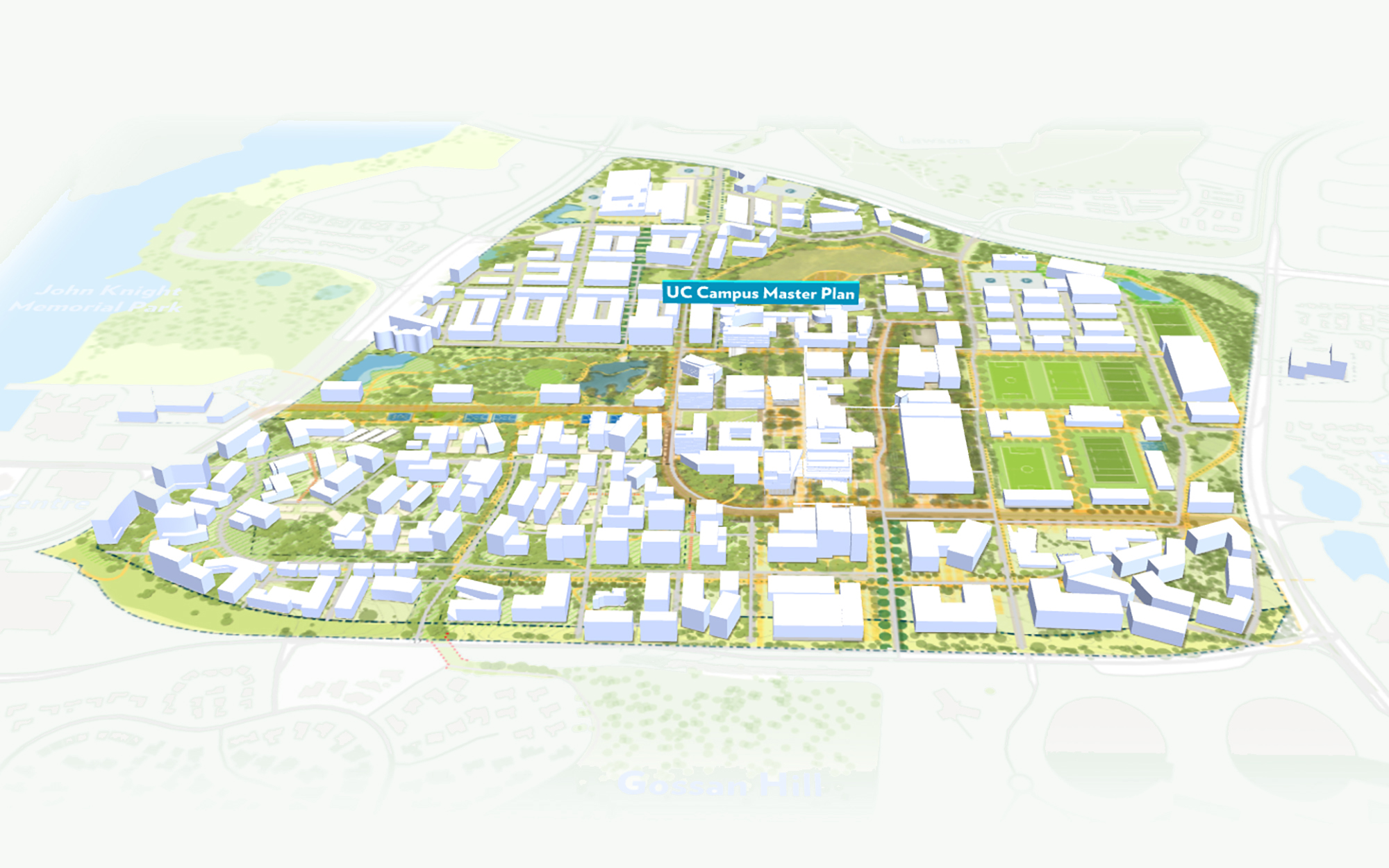
Greetings from the University of Canberra Inspire Center, where the latest Campus Master Plan is being launched. The physical plan is by is by Rob McGauran, of MGS Architects. The Vice-chancellor  said they are aiming to build a town center linked to the community, health, research and community facilities. He reflected the unviersitey was built in a quad, surrounded by a moat, which could not be seen from the outside. 

The university is now outward looking and he made an ambit claim to be on a future light rail route to the city. In my view, it is a challenging time to plan a university, with COVID-19, and the prospect for further disruptions to international students in the short term due to regional tensions. There will also be increased competition from online international providers in the next decade, as online education becomes the default option for domestic and international students. 

The VC is looking to partner with the ACT Government, industry and the community. What wan't mentioned, and featured in past plans, were links to vocational education. The UoC 2012 Campus Master Plan, envisioned a polytechnic, as a "practice-led higher education institution with strategic partners delivering employer relevant programs". This was to have 5,000 students accommodated in dedicated premises.

The new plan places more emphasis on industry partnerships for innovation, with more than 18,000 non-university staff in210,000 m2 of office space.

Wednesday, March 24, 2021

How do you plan a university campus post-COVID-19?

The University of Canberra will launch an updated Campus Master Plan on Thursday. It will be interesting to see how this differs from the current plan, which was released in 2012. Flexibility, I suggest, should be the priority, with most students mostly studying online, even after COVID-19.

The university planned to have 10,000 full-time equivalent students on campus. Also there were plans for a bridging programs with 1,000 full-time equivalent students, including international ones, operating from purpose-built premises. The plan also designated a health precinct, which has seen the building of the University of Canberra Hospital.

As COVID-19 shows, there are predicable and foreseeable events which can case havoc for institutions which fail to plan for them. Australia's universities now face the prospect for further disruptions to international students in the short term due to regional tensions. There will also be increased competition from online international providers in the next decade, as online education becomes the default option for domestic and international students.

As I pointed out in 2012, the typical university student of 2020 and beyond "... will be on campus for only about 20% of their studies, with 80% on-line away from the campus ...". This has implications for the types of spaces provided. Buildings need to be able to be repurposed and flexible in day to day use. 

Tuesday, March 16, 2021

Why open pedagogy and learning activities?

These are the notes for a webinar, Wednesday, 17 March 2021, 10 am AEDT Sydney time. This is part of the Microlearning Series at Maskwacis Cultural College in Canada, curated by Manisha KhetarpalPresentation Powerpoint and PDF available.

Athabasca University recently renamed their Master of Education in Distance Education (MEd DE) to be a Master of Education in *Open*, *Digital* and Distance Education (MEd ODDE). Join Tom Worthington, one >of the graduates, to discuss what open education is, what are the benefits and pitfalls and how to do it.

Pre-reading "Use of Open Education Resources", from Digital Teaching In<br>Higher Education, Tom Worthington, 2017. URL  http://www.tomw.net.au/digital_teaching/use_open_education_resources.shtml

Thursday, March 11, 2021

Captioned Recordings for Students

Professor Katie Ellis, Curtin University
Kent, Ellis, and Peaty (2017) suggest that captions and transcripts of recorded lectures are of benefit beyond those with a disability they were originally intended for. While this paper was published in 2017, it is very relevant in the COVID-19 era, where lecturers are struggling to communicate to students online. Providing a transcript and captions on videos is an un-glamorous but effective way to improve learning, particularly for students who are not studying in their first language.

ps: I discovered this paper recently because it cites my blog (this blog): Worthington (2015).

References

Kent, M., Ellis, K., & Peaty, G. (2017). Captioned Recorded Lectures as a Mainstream Learning ToolM/C Journal20(3), 1-1. URL https://journal.media-culture.org.au/index.php/mcjournal/article/view/1262

Worthington, Tom. “Are Australian Universities Required to Caption Lecture Videos?” Higher Education Whisperer 14 Feb. 2015. URL http://blog.highereducationwhisperer.com/2015/02/are-australian-universities-required-to.html


Wednesday, February 24, 2021

Learning to Reflect Module Version 4.0 the 2021 Blended Edition


"Learning to Reflect" is a module for the ANU TechLauncher program, where students reflect on what they have learned, by writing an application for a real job, as their last assessed task before graduating. This was developed in late 2018 and first run in semester 1, from February 2019. This was designed for blended delivery, with the option of easy conversion to full online delivery. That option was needed for Semesters 1 and 2 in 2020 due to COVID-19. The 2021 version is intended to be run online, with a blended delivery option ready for a return to the classroom and is available under a CC-BY licence.

Two small workshop exercises have been added for a 2% mark each, in place of the quizzes and forums used previously. The first assignment has been dropped, to make the assessment less complex. An optional student logbook has been added, to aid student reflection and deter plagiarism. 

A paper on the design and blended delivery of the module is available: