Showing posts with label Vocational Education. Show all posts

Friday, April 17, 2026

ICT Training Package Update

Greetings from the ICT Training Package Update - Scoping Webinar. There has been criticism of the relevance of education to jobs. The vocational education and training (VET) sector takes this very seriously & are currently reviewing offerings for computing, cyber and other ICT.

The ICT Training Package currently consists of 11 qualifications. The highest is an Advanced Diploma of Information Technology, then there is a Diploma, three Certificate IV in IT, Telecommunications Engineering, Telecommunications Network Design, three Certificate IIIs, & two Certificate IIs. There is also work being done on a vocational degree in IT.

Some issues are a high non-competition rate and a lack of interest in micro-credentials. ICT skills are in demand, shorter vocational courses are supposed to be a good way to deliver this, so what are people not enrolling and not completing? What are the current areas in demand? The universities should be undertaking a process like this. 

One issue which came up was the role of vendor certifications as a substitute for, or complement to, formal qualifications. I see things like Microsoft certification as a complement to formal qualifications, but employers may see certification as preferable. Some VET providers and universities offer training towards vendor certification as part of their courses.


Wednesday, September 10, 2025

VET Option Can Lower Student Stress

Ben Edwards & Jessica Arnup have detailed the stresses Year 12 students face in choosing a career in"New research shows Year 12 students face many pressures – far beyond study and exams (The Conversation, September 8, 2025). However, the situation is not as bleak as the researchers depict. The key to this optimism is the the last part of the article, where the authors note more interest in Vocational Education and Training (VET). This aligns with the government's target for study, which is not for 80% completing university by 2050, but "... 80 per cent of the workforce will have a TAFE qualification or a university degree" (Jason Clare, 18 December 2024). 

More young people want to, and can, go to VET, instead of, or as a preparation, for university. Having a VET option reduces the stress for young people, providing a lower cost option, without high stakes exams, with nested, nationally standardised programs. 

VET students can take a low cost, or free, short course to get an entry level job. They know study & what they do at work, will count towards further qualifications. VET competency based assessment removes the pressure to excel, which exams induce.

There is still an important role for universities. But they should learn from the VET approach

Friday, August 22, 2025

New Canberra Institute of Technology Building

One of Canberra Institute of Technology's new TV studios.
Photo by Tom Worthington, CC-BY, 21 August 2025
Yesterday I had a tour of Canberra Institute of Technology's (CIT) new building in Canberra.  I studied Audio-Visual Video (for training) at what was then the ACT TAFE in 1989 (my last assignment was "Bicycles"). I enrolled again in 2013, at what was then called CIT, for a Certificate IV in Training and Assessment. When I studied video, we used magnetic tape and monochrome studio cameras, so It was a revelation to see the new building. CIT will be showcasing the building and its courses, Thursday 11 September (book online). 

CIT in Woden, 
Photo by Tom Worthington, CC-BY, 21 August 2025

CIT's new building is similar in feeling to Ngee Ann and Temasek Polytechnics in Singapore, which I toured in 2024. There are no lecture theatres, as found in old style institutions. There are some general purpose classrooms, but much of the space is used for specialist teaching rooms. Some of the specialist rooms look like a classroom but with  equipment added for each student to use. Other spaces look like the workplaces the students plan to work in. The chefs learn in a state of the art kitchen (all electric: no gas). The bar staff learn in a bar, restaurant staff in a restaurant, musicians in a recording studio, hairdressers in a salon and video producers in a TV studio. 

Recycling bins at CIT. 
Photo by Tom Worthington, CC-BY, 21 August 2025
The CIT building has one large multipurpose space, which can be used for large scale teaching, events, and musical performances. The spaces between the specialist areas are given over to places where students can sit together to study and work on projects. The building is unusually quiet, in part due to the acoustic panels on walls and lack of a false ceiling. There is the most complicated set of recycling bins I have ever seen: do they really need bins for X-ray and file alarm recycling? ;-) 

There is technology woven into the fabric of the CIT building, but not in an obtrusive way. The classrooms are equipped with the usual digital displays, cameras and video conferencing. But so are booths for small groups of students in the common areas. The large multipurpose space has a huge projection screen which can be lowered to cover one wall. Less obvious are remote control cameras around the room. Throughout the building there are CoWs (Computers on Wheels), which can be positioned to turn anywhere into a learning space.

Lego Cyber Range at CIT Woden, 
Photo by Tom Worthington, CC-BY, 21 August 2025
The cybersecurity teaching area has an unusual cyber range. This is a simulation of the Internet used for practicing detecting and defeating hacking attacks. The cyber range's network is isolated from the public Internet so that no harm is accidently caused to real systems. A cyber range is usually a very abstract place, only existing online. CIT have made an effort to make it more real with a large Lego City layout, depicting part of Canberra. Students can see the effect a cyber attack has on the Lego light rail, public buildings, and airport.

Universities are currently going through a painful process working out what their role is and how they can fund their activities. The vocational education and training (VET) sector doesn't have this problem, as their role is clear and they have always had difficulties with funding. There are some challenging questions for CIT and similar large VET institutions: will universities cooperate with them and leave a role for them, or should they offer their own degrees? Students in the past would undertake a diploma or advanced diploma in VET, and then seek credit towards a university degree. However, universities are now seeking to provide more short and flexible training, encroaching on VET territory. Should VET institutions respond by offering their own vocational degrees?

Wednesday, March 26, 2025

Indonesia’s EV Policy an Opportunity for Australian Higher Education

Greetings from "Indonesia’s industrial policy: downstreaming and EV supply chain" seminar at the Australian National University in Canberra. Hilman Palaon from the Lowy Institute pointed out that while the Indonesian government has a policy to encourage local processing of nickle for electric vehicle batteries, there is a lack of expertise at local universities to train workers. China is looking to meet this demand for education, but I suggest Australian universities and vocational educators could have a role. Also both nickle and aluminum refining requires large amounts of electricity. This could be a use, I suggest, for renewable energy exported by cable from northern Australia.

Sunday, March 23, 2025

With Vocational Degrees is there Much Left for Universities to Do?

Vocational Degrees were added to the Australian Qualifications Framework on 17 February 2025. These are at the same level as a university bachelor's degree (AQF Level 7), but deliver by Vocational Education institutions and with an emphasis on work skills, including those gained via an apprenticeship.  It is not clear if this signals a Dedawkinsation of Australian higher education. In 2024 I visited two of Singapore's Polytechnics and was impressed with their work. 

In my discipline of computing it would be difficult to see the difference with a vocational degree. Students are required to do practical training, through a project, group work or internship, for their qualification to be accredited, regardless of what type of institution is delivering it.

In the late 1980s Education Minister John Dawkins reformed Australian higher education. This "Dawkins Revolution" resulted in degree awarding colleges merging and becoming universities. Having VET sector institutions awarding degrees could be seen as a partial undoing of this revolution, although they will not have the autonomy universities have to define their own degrees.

Australian universities only need a few students undertaking undergraduate training oriented to research in order to provide candidates for advanced research in academia and industry. The majority of undergraduates are undertaking vocational training for a job. If the VET sector can now provide Vocational Degrees for these students, will university education need to be scaled back?

Vocational degrees are being introduced at the same time AI is developing. New degrees could be AI enabled, providing each student with a synthetic personal tutor.

ps: I happened to bump into John Dawkins a few years ago at the ANU campus and was delighted to be able to point out the new buildings to him.

Thursday, December 12, 2024

Every business is a tech business


Speaking at the launch of the ACS Digital Pulse report John Griggs, ACS CEO, said "Every business is a tech business". This is at the National Press Club in Canberra. The point wat that all businesses need technical staff. The problem is that as the report details, universities cannot produce enough graduates and school leavers don't want to enrol anyway.

The ACS solution is non-traditional paths, through certification, and microcredentials. One problem I can see is convincing the workers, employers and regulators that the alternative pathways are as good as traditional education. This is similar to the poor reputation online learning has had: research shows it is as good, if not better than classroom based learning, but there is still a perception it is inferior. 

Friday, November 8, 2024

Ngee Ann Polytechnic


Next on the EduTech Asia 2024 tour of Singapore higher education is Ngee Ann Polytechnic. We are in the Optometry Centre. This is a fully functional centre open to the public and staffed by students.

This is conceptually similar to the Hive in the computer science building at ANU. It is set up as a computer consulting company's office for students to work on projects for real clients.
 
The polytechnic 
features digital automated eye test equipment as well as traditional analogue tools in their space. 

Temasek Polytechnic Singapore


Greetings from Temasek Polytechnic in Singapore. The closest equivalent in Australia would be a large TAFE, such as Canberra Institute of Technology. This is part of the EduTech Asia 2024 conference. We are in the T P Interactive Digital Experiments with AI Studio (IDEAS). This has a false floor, similar to a computer room, allowing easy recalling. There is a theatre style framework to attach screens, lights, & sensors. Students projects using augmented reality are on display.


For engineering students, TP has an advanced manufacturing lab. As well as computer controlled machines, there is a stimulated control centre, with workstations and a wall display. These have been cleverly located in the foyer of the engineering building, rather than hidden away.

Wednesday, December 20, 2023

Train Career Advises at TAFE to Provide More Balanced Advice

Felicia Jaremus, 
University of Newcastle
Jaremus, Sincock, Patfield, Fray, Prieto and Gore (2023) from the Teachers and Teaching Research Centre, at University of Newcastle, have raised timely concerns about the dangers of pressuring young people into attending university, rather than vocational education. The researchers looked in detail at 22 Australian students during their schooling, and then 1 to 5 years after. The researchers found "... young people face immense pressure to attend university, even if their career aspirations do not require a degree, while other post-school pathways are derided...", and they warn of the risks to mental ill-health as a result. They suggest this is made worse by a lack of careers counselling. 

The researchers point out that professional jobs account for less than 20% of the total in Australia. However, they cite research by Gleeson, Walsh, Gallo Cordoba, Mikola, Waite, & Cutler, (2022) that 40% worried they would not have a professional career. With almost half of young Australians now having degrees, this is inevitably going to lead to frustration, when most of them cannot get a professional job.

One way to address the problem of a lack of careers advice, particularly on vocational education, I suggest, would be for schools to accept a Vocational Education Certificate IV, as a suitable qualification for careers advisors, as an alternative to a Graduate Certificate. That would acknowledge the role of vocational education, allow more advisors to become qualified, and also increase their familiarity with vocational education. 

Also it would be useful to integrate careers skills into the school curriculum, rather than having it as extra curricular activity. An example of where this is done in the higher education sector is the Australian National University's computing project and internship programs for work integrated learning. Students are guided through a series of exercises by professional careers advisers from ANU Careers, working in conjunction with academics. The student's last assignment is to write a job application for a real job, in which they detail the relevance to that job of the project, or internship they have just undertaken.

A corresponding problem exists in the higher education sector, where advanced research degrees are seen as the phttps://doi.org/10.1080/00131911.2023.2287417referred goal for all students. Those who leave after a first degree, or peruse coursework postgraduate studies are made to feel inferior. This has the unfortunate consequence of pressuring students in to a a PhD, despite there being few well paid secure positions available after. I suggest that instead career advice should be integrated into degree programs, with students encouraged to first explore jobs outside research and academia. Universities have a vested interest in encouraging research students, and so may need an additional financial incentive to do otherwise.

Reference

Felicia Jaremus, Kristina Sincock, Sally Patfield, Leanne Fray, Elena Prieto & Jennifer Gore (13 Dec 2023): Pressure to attend university: beyond narrow conceptions of pathways to a “good life”, Educational Review, DOI: https://doi.org/10.1080/00131911.2023.2287417

Gleeson, J., Walsh, L., Gallo Cordoba, B., Mikola, M., Waite, C., & Cutler, B. (2022). Young women choosing careers: Who decidesMonash University, Melbourne, DOI10, 20448213. 

Friday, May 19, 2023

Education's Role in Providing a Flexible Workforce for the Australian Public Service

Yesterday I talked to Lish Fejer on ABC Radio Canberra, about federal government plans to contract in. They were interested to hear about my own experience as someone trained by the public service, who then became a contractor. 

There is scope for the Australian Public Service (APS) to increase the recruitment of entry level professionals, through cadet and intern programs. Universities and the VET sector can assist with this by providing training while students are working. This can be in project and people management skills, as well as technical aspects. The problem comes at the upper level, retaining staff with advanced skills. 

The APS has difficulty paying such staff appropriately, as traditionally salary is based on how many staff you supervise. The Australian Defence Force uses direct cash bonuses to retain personnel with specialist skills, such as pilots. Something similar will likely be needed for high level internal contractors and consultants. 

A difficult problem which will remain is how to efficiently allocate staff to tasks. Agencies can currently use the market to decide the allocation. Whichever government department is willing to pay the most for contractors gets them. However, with an internal system, there is likely to be less scope for market based decisions.

Wednesday, May 10, 2023

Cyber Gets Funding in 2023/24 Budget

The 2022/23 Australian Federal Budget Papers are available online. Here are some items of interest on information technology and higher education. 

From Statement 1: Budget Overview, Page 31 (emphasis added):

"Small business cyber security program

The Budget provides $23.4 million to support small businesses to build resilience to cyber threats. Small and medium businesses are the target of 60 per cent of cybercrime, which is now costing Australia more than $33.0 billion in reported losses per year. The Cyber Wardens program will address this vulnerability by equipping small businesses with the foundational skills they need to improve cyber safety. This program will be delivered by the Council of Small Business Organisations Australia and will support more than 15,000 small businesses.

Investing in a stronger, more productive and safer digital future

Data and digital transformation continue to present new opportunities for governments, businesses, communities, and households to change the way Australians live and work. This Budget ensures Australians are at the forefront of the digital economy while protecting them from the potential risks of the digital transformation. The Government is investing more than $2.0 billion in 2023–24 in digital and ICT to deliver easy, accessible, and secure services for people and businesses.

Consumer Data Right

The Government is continuing its investment in the Consumer Data Right (CDR) with $88.8 million to support the CDR in banking, energy and the non-bank lending sectors, progress the design of action initiation and undertake a cyber security uplift. This provides Australian consumers, both individuals and small businesses, with a more secure way to safely share data online. The CDR gives consumers an enhanced ability to control and benefit from the sharing of their data. The CDR will empower consumers to make better informed decisions and find better prices from everyday utilities to the most competitive home loans for their circumstances."

Tuesday, April 25, 2023

Greetings from the Bangalore Club

At the Bangalore Club
Greetings from the Bangalore Club, in downtown Bengaluru. I am in India for a wedding, and our hosts have put up the wedding party at their club. The club was Founded in 1868 for British officers, and is an oasis of tranquility in the bustle of the city. The club is a good metaphor for India, and Bengaluru is particular, rushing headlong into a high tech future, while attempting to retain traditions, and come to terms with its colonial past. 

Each day I receive a newspaper under the door (yes, they still provide newspapers at the Club, which can be read in the stuffed leather chairs). Sunday's headline was "Skills training: An incomplete solution to India's jobs crisis" (Deccan Herald,  E T B Sivapriyan, 23 April 2023). The article took up most of pages one and two, indicating the importance given to education in India. The issues are very similar to Australia: How useful is formal training in getting a job? Why are so many students failing to complete? Are they getting the right skills? Do centrally funded training programs work?  

If Australia can work out solutions to these issues domestically, there is potential for export of training systems to India. But it might be better to work with India, on common solutions, than assume Australia has all the answers.

Wednesday, October 26, 2022

Australian 2022/23 Budget Lacks Funding for More Flexible Telecommunications and Education Options

The 2022/23 Australian Federal Budget Papers are available online. Here are some items of interest on information technology and higher education. 

IT Items

The big ticket items for IT are $2.4B for NBN Co fibre to 1.5 million premises, and $757.7M for rural mobile and broadband. What this lacks is a strategy to incorporate new options, such as low earth orbit satellite access to small fixed locations, and direct to mobile phones. Also lacking is a way to encourage, or  require telcos to share mobile infrastructure in regional and remote areas, for more coverage, at lower cost.

Higher Education

The big ticket items for education are $921.7M for 480,000 fee‑free vocational education and training (VET) students, and $485.5M for 20,000 extra university places. The university funds will be targeted at First Nations, first in family, rural and remote students to do teaching, nursing, engineering, and other priority courses. The VET places will target jobs and regions in need, but there is no mention of priority for disadvantaged groups, as there is for the university places. That is unfortunate as VET is a good first step to higher education. 

One small program of interest is the $15.4M Startup Year, with 2,000 loans for recent graduates, postgraduate and final year undergraduate students per year. The students will do a one‑year accelerator program at a university.

I could find no mention of micro-credentials, or other more flexible forms of education in the budget. This lack of flexibility will continue to be a barrier for students from disadvantaged groups. It is all very well to be offered a place in a university, but if this is 1,000 km from home, because the university has cancelled the online study option introduced during COVID-19, then many rural and remote students will have difficulty attending. This also applies to those who cannot leave their job, children, aged parents, or cultural commitments, to study full time for years, to get a qualification. We need policies, and incentives, which see universities introducing the sort of flexibility, for short, part time, online courses, already in place in the VET sector.

Also there does not appear to be any funding to support Australia's international education industry, which faces threats from technological change, and geopolitical tensions. In 2016 I warned Australian universities to be ready to teach online, in case geopolitical tensions kept international students outside Australia. That didn't happen, but COVID-19 showed what could still happen to Australian education, if there is a military confrontation in our part of the world, with no warning, which stops students attending Australian campuses.

From Budget Paper No. 2, Part 2: Payment Measures:


Infrastructure, Transport, Regional Development, Communications and the Arts

Australian Communications and Media Authority – spectrum management

The Government will provide $27.7 million over 5 years from 2022–23 (including $15.3 million in capital funding) for the Australian Communications and Media Authority to deliver a new spectrum management system and auction capability for spectrum licences.

Better Connectivity Plan for Regional and Rural Australia

The Government will provide $757.7 million over 5 years from 2022–23 to improve mobile and broadband connectivity and resilience in rural and regional Australia,.including:

  • $400.0 million over 5 years from 2022–23 to support the roll out of mobile base stations to improve highway and underserviced community mobile coverage, and initiatives to improve the resilience of communications services to support the roll out of base stations to improve highway and underserviced community mobile coverage

  • $200.0 million over 5 years from 2022–23 for two additional rounds of the Regional Connectivity Program to fund the delivery of telecommunications infrastructure to improve digital connectivity in regional, rural and remote Australia

  • $40.0 million over 3 years from 2022–23 for an improving mobile coverage round of the Mobile Black Spot Program to implement commitments for new mobile infrastructure to improve mobile coverage and reception quality across Australia

  • $39.1 million over 5 years from 2022–23 for two additional rounds of the Peri‑Urban Mobile Program to improve mobile reception in peri‑urban areas that are prone to natural disasters

  • $30.0 million over 5 years from 2022–23 for the On Farm Connectivity Program to support farmers and agricultural businesses to purchase and install on farm connectivity equipment

  • $20.0 million over 5 years from 2022–23 to conduct an independent audit of mobile coverage to better identify black spots and guide investment priorities

  • $6.0 million over 3 years from 2023–24 for the Regional Tech Hub platform to provide free and independent advice on telecommunications connectivity and services in regional and rural Australia

  • $2.5 million over 5 years from 2022 23 to establish a First Nations Digital Advisory Group to lead consultation with First Nations people on the design and delivery of digital inclusion initiatives.

This measure will redirect funding from the 2019–20 Budget measure titled Stronger Regional Connectivity Package, 2021–22 MYEFO measure titled Digital Economy Strategy – additional funding and 2022–23 March Budget measure titled Government Response to the 2021 Regional Telecommunications Review.


Improving the NBN

The Government will provide an equity investment of $2.4 billion to NBN Co over 4 years from 2022–23 to upgrade the National Broadband Network (NBN) to deliver fibre‑ready access to a further 1.5 million premises by late 2025.

The additional investment will support nearly 90 per cent of Australia’s fixed line footprint to have access to world class gigabit speeds by late 2025.

The Government will also provide $4.7 million over 3 years from 2022–23 to support the delivery of free broadband for up to 30,000 unconnected families with school aged students during the 2023 calendar year.


Post Secondary Education

Outcomes of the Jobs and Skills Summit
  • $8.9 million over 3 years from 2023–24 to establish a Productivity, Education and Training Fund to support employer and union representatives to improve safety, fairness and productivity in workplaces

Startup Year – establishment

The Government will provide $15.4 million over 4 years from 2022–23 (and $2.8 million per year ongoing) to establish the Startup Year program to deliver income contingent Higher Education Loan Program loans to up to 2,000 recent graduates, postgraduate and final year undergraduate students per year. The Startup Year will support students’ participation in a one‑year, business‑focused accelerator program at an Australian higher education provider, which will encourage innovation and support Australia’s startup community.


Strengthening Australia’s Higher Education Sector

The Government will provide $491.8 million over 4 years from 2022–23 (and $570.1 million over 11 years) to boost higher education and strengthen Australia’s university system. Funding includes:

  • $485.5 million over 4 years from 2022–23 (and $563.8 million over 11 years) for 20,000 additional Commonwealth supported places at universities and other higher education providers commencing in 2023 and 2024. These places are dedicated to students under‑represented in higher education, including First Nations peoples, those who are the first in their family to study at university, and students from rural and remote Australia. The places are for courses in areas of skills shortage, including teaching, nursing and engineering

  • $3.6 million in 2022–23 to the Department of Education to develop a business case for a new university and schools payment system, to manage the timely and accurate administration of entitlements

  • $2.7 million over two years from 2022–23 to deliver an Australian Universities Accord, a review of Australia’s higher education system by a panel of eminent Australians delivering recommendations to drive accessibility, affordability, quality, certainty, sustainability and prosperity.

The Government will also achieve savings of $144.1 million over 4 years from 2022–23 (and $484.9 million over 11 years) by ending the 10 per cent discount for students who elect to pay their student contributions upfront rather than defer payment through the Higher Education Contribution Scheme – Higher Education Loan Program.

Teacher Shortages

The Government will provide $310.4 million over 9 years from 2022–23 (and $7.9 million per year ongoing) to attract and retain high‑quality teachers and improve student outcomes. Funding includes:

  • $160.1 million over 8 years from 2023–24 for up to 5,000 bursaries of $10,000 per year to students, with an ATAR of 80 or above, who undertake a teaching degree. Bursaries will be available to undergraduate and postgraduate students with an additional $2,000 made available for students who complete their final year placement in a regional area

  • $78.8 million over 5 years from 2022–23 to expand the High Achieving Teachers program to support an additional 1,500 high achieving professionals to transition into teaching through employment‑based pathways

  • $60.6 million over 9 years from 2022–23 (and $7.1 million per year ongoing) to implement the Quality Initial Teacher Education Review’s recommendations, including the expansion and development of new micro‑credentials courses in classroom management and phonics

  • $10.9 million over 9 years from 2022–23 (and $0.8 million per year ongoing) to the Department of Education for administrative costs associated with this measure.

Vocational Education – fee‑free TAFE and TAFE Technology Fund

The Government will provide $921.7 million over 5 years from 2022–23 to strengthen Australia’s Vocational Education and Training system and address skills shortages. Funding includes:

  • $871.7 million over 5 years from 2022–23 to provide 480,000 fee‑free Technical and Further Education (TAFE) and vocational education places in industries and regions with skills shortages

  • $50.0 million over two years from 2022–23 to establish a TAFE Technology Fund to modernise IT infrastructure, workshops, laboratories, telehealth simulators, and other facilities at TAFEs across Australia.

Around 180,000 fee‑free TAFE and vocational education places will be delivered in 2023 in areas of highest skills need as part of a one‑year National Skills Agreement with the states and territories commencing 1 January 2023, which was an outcome of the Jobs and Skills Summit.

Saturday, October 1, 2022

Learning to Innovate for Sustainable Computing

I will be speaking on "Learning to Innovate for Sustainable Computing" at the Tech in Government conference in Canberra, 25 to 26 October. In this post I am collecting my thought on what to say. Suggestions, comments, and corrections would be welcome.

Computers are part of the problem of global warming,

Computers > electricity > fossil fuel > CO2 > global warming.

photo by Marcus Wong Wongm, CC BY-SA, 18 August 2007

Computers, and the Internet, run on electricity. Most electricity today is generated by burning fossil fuel, which releases carbon dioxide (CO2) into the atmosphere. The CO2 is a greenhouse gas, which traps sunlight, causing global warming. These facts have been clear since 2007, when the Australian Computer Society (ACS) release a world first study. The study estimated 1.52% of Australian carbon emissions were attributable to computers and telecommunications. There have been later more detailed studies around the world, but these produce similar estimates of around 2%. This is a significant source of pollution, being around the same as from the airline industry.

Reference

Audit of Carbon Emissions resulting from ICT usage by Australia Business,
by Shadi Haddad, Ethan Group Pty Limited, for the Australian Computer Society, August 2007. URL https://web.archive.org/web/20070907015722if_/http://www.acs.org.au/acs_policies/docs/2007/greenictaudit.pdf

Computers can be part of the solution to climate change

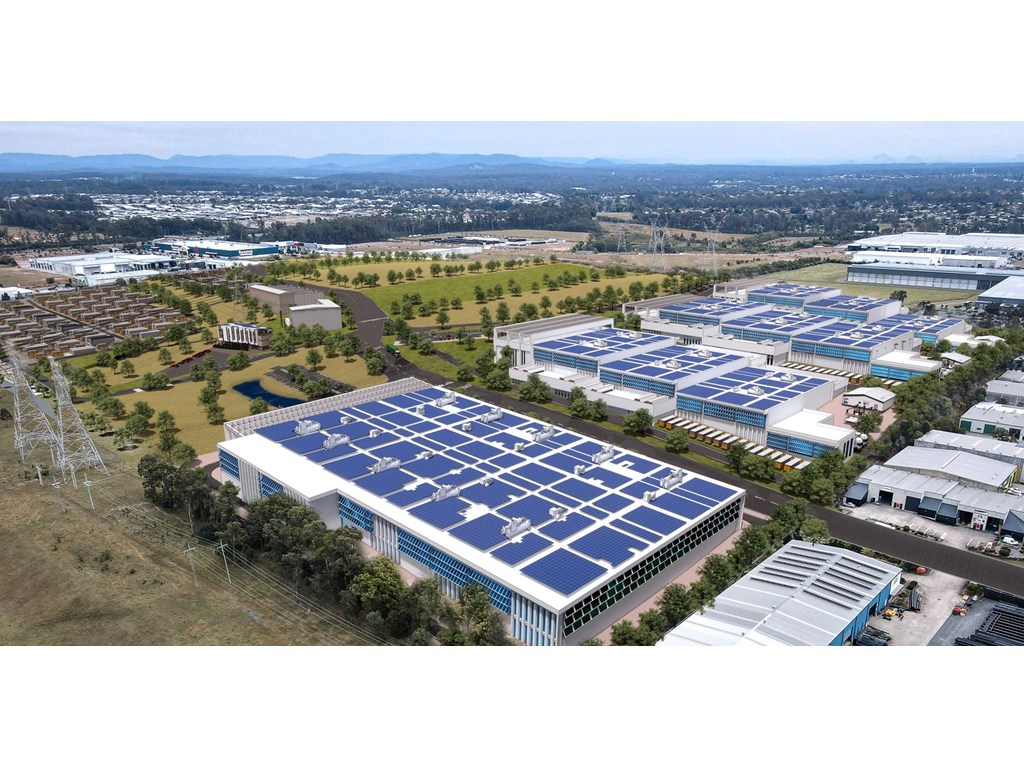
Big Efficient Data Centers Linked to Handheld Devices 

Brendale Supernode, Queensland,
by Quinbrook Infrastructure Partners, 8 July, 2022

Consolidating computing into large data centers, collocated with renewable energy storage, as is being done at the Berndale Supernode in Queensland, provides the opportunity to reduce carbon emissions from computing. These systems can also be used to replace activities which are carbon emitting. As an example, the recent COVID-19 pandemic has shown that much business travel can be replaced with video conferences. However this requires learning new skills, and habits.

Reference

Supernode set for Moreton Bay, Steven Miles, Deputy Premier of Queensland, 8 July, 2022. URL https://statements.qld.gov.au/statements/95682


We can teach how to measure and reduce emissions, with a smart phone

Small Chunks of Learning Delivered to Handheld Devices


Green course home page in landscape mode on a mobile device
ICT Sustainability Course on a desktop computer,
by Tom Worthington, CC-BY, 2007
Green course home page in landscape mode on a mobile device
ICT Sustainability Course on a phone,
by Tom Worthington, CC-BY, 2007
Vocational education at TAFE, and courses at university are now routinely provided online. What is not generally appreciated is that students don't have to sit down at a desk-top computer, to learn. The learning management systems used for teaching TAFE and university students automatically adjust to smart phone screens. It takes a little more work to design the course content for this mode, and to allow students to study while working.

In 2008, the Australian Computer Society commissioned me to design an online course to teach how to estimate and reduce carbon emissions from computers. This was implemented using the Australian developed Moodle Learning Management System, and has been running at Australian and North American universities since 2009.

Reference

Worthington, T., "A Green computing professional education course online: Designing and delivering a course in ICT sustainability using Internet and eBooks," Computer Science & Education (ICCSE), 2012 7th International Conference on , vol., no., pp.263,266, 14-17 July 2012 URL: http://dx.doi.org/10.1109/ICCSE.2012.6295070

Same Approach, Other Challenges

Needed Tech Skills for Defence by Smartphone


Event canvas from Navy Warfare Innovation
Workshop (NWIW), by Paul Telling, 2020
Australian government face the challenge of recruiting and training sufficient personnel for technical roles. Training using mobile devices can assist with this, by allowing in service professional development in new and interesting ways. One example are the hackerthons which I have assisted with in the last few years. Two  were hosted by the Australian Computer Society, for the ADF & NZDF, and one by the Australian Navy. These helped participants learn to collaborate online rapidly in a high stress environment.

Reference

Worthington, Tom (2022): Designing for scale: How to use mobile devices to recruit, train and equip the extra 18,500 defence personnel. University of Melbourne. Media. https://doi.org/10.26188/20742451.v1 Notes at: https://blog.highereducationwhisperer.com/2022/08/expanding-canberra-defence-training.html


Thursday, August 18, 2022

Expanding Defence Training via Mobile Devices


I will be speaking on "Designing for scale: How to use mobile devices to recruit, train, and equip the extra 18,500 defence personnel", at the Mobile Learning Special Interest Group meeting of the Australasian Society for Computers in Learning in Tertiary Education (ASCILITE), 10 am Canberra time, Friday, August 26, 2022. All are welcome, via Zoom (no need to register). In this post, I am collecting my thoughts for the presentation. Comments, corrections, and additions are welcome. Presentation slides are also available, along with a video preview (made with a synthetic voice*), and the video recording of the live event (Worthington, 2022).

Reference

Worthington, Tom (2022): Designing for scale: How to use mobile devices to recruit, train and equip the extra 18,500 defence personnel. University of Melbourne. Media. https://doi.org/10.26188/20742451.v1 

Why Expand the Australian Defence Force?

On 10 March 2022, the then Prime Minister announced that the Australian Defence Force personnel will increase 30% by 2040, at for $38B. As the PM noted, “You can’t flick a switch to increase your army, navy and air force overnight, growing the type of people and skills we need to face the threats of the future takes time, so we must start now so critical skills can be taught and experience gained". While the government has changed since then, there is bipartisan support for a stronger military to meet increased challenges.

Volodymyr Zelenskyy speaking to ANU, 3 August 2022, 
(still image from ANU TV)

Russia invaded Ukraine in February 2022. Volodymyr Zelenskyy, President of Ukraine, made an impassioned speech to staff and students of the Australian National University, on 3 August, via video. He acknowledged Australia's contribution as the largest non-NATO provider of military assistance to his country. That assistance included not only Australian-made armored vehicles, but training in cyber defence.   

On 4 August 2022 China commenced air and naval exercises involving live fire, around Taiwan, including ballistic missiles fired over the islandTaiwan responded with its live-fire exercises on 7 August. Fortunately, the situation has not escalated, but tension remains. 

On 3 August, the new Australian Prime Minister announced a review of Australia's Defence posture and structure, to report by March 2023, for mobilization needs in 2032-33. An interim report is to be provided, but no deadline for this has been made public. While the review documentation mentions infrastructure, estate, disposition, logistics, and nuclear-powered submarines, the skills required of the members of the ADF, and the people who support them, are not mentioned. 

What New Skills Will Defence Personnel Need?

Conduct Cyberwarfare

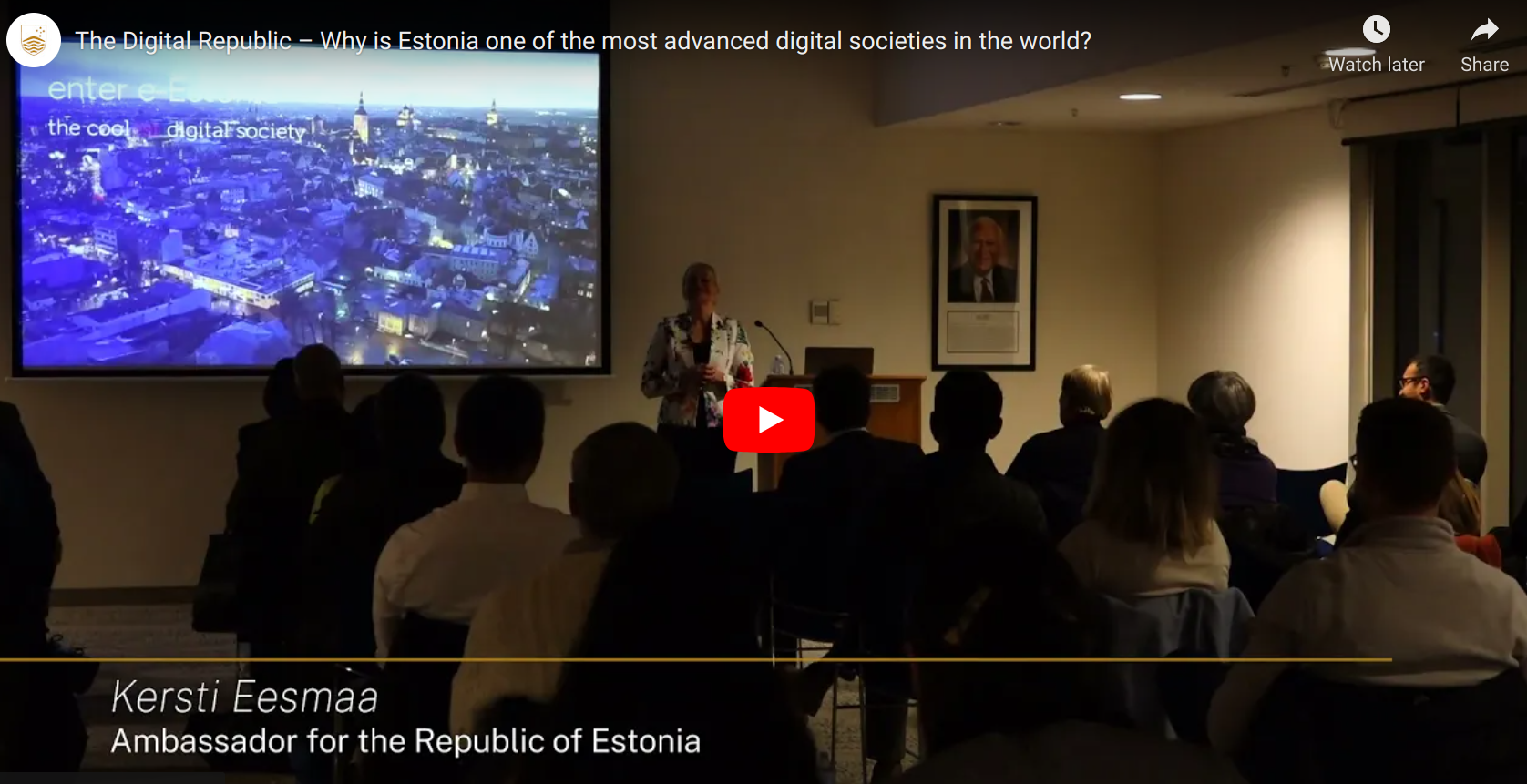
Eesmaa Public Lecture, ANU, 30 July 2021
In July 2021, Ms. Kersti Eesmaa, Estonian Ambassador to Australia, talked at the ANU about how her nation was developing a sophisticated digital economy. Part of this was protecting government and civil infrastructure from cyber attacks. In April 2007 cyber-attacks were launched against Estonia, suspected to be from Russia. In response, NATO created a Cooperative Cyber Defence Center of Excellence (CCDCOE) in Tallinn, Estonia. CCDCOE now offers a comprehensive set of courses related to defensive and offensive cyberwarfare.

Coordinate Information Warfare

Mr. Myroshnychenko,
speaking in the ANU Moot Court.
Photo by Tom Worthington, CC-BY 30 March 2022

In March 2022 Ukraine's new Ambassador to Australia made an unscheduled speech at ANU on 
"Russia's Invasion of Ukraine". He said Ukraine destroyed the myth of Russian invincibility. Mr. Myroshnychenko pointed out he doesn't have a background in diplomacy, but in strategic communications, and co-founded Ukraine Crisis MediaBefore coming to Australia he ran Information warfare for Ukraine. He pointed out US Starlink satellite communications system had been useful for both civilian and military communications in Ukraine. He also pointed out how Russia sought to manipulate public opinion using messages different for internal and external audiences. The Ambassador also suggested Australia could play a useful role in countering Russian propaganda in the Pacific. 

Information Warfare Division
Australian Department of Defence
Mr. Myroshnychenko referred to the use of talk shows by Russia, which manipulates emotions, modeled on those popularized in the USA. He then looked ahead to how difficult it will be to reeducate the people influenced by Russian messages. He pointed out how difficult this was, with people in Germany after WWII. But perhaps a better analogy today would be with those convinced by QAnon conspiracy theories.

The day after the Minister's speech, the  Australian Government announced a doubling of the staff of the Australian Signals Directorate, and an expansion of offensive cyber operations. However, there was no mention of increasing the staff of the ADF  Information Warfare Division.

The ADF will need personnel with very deep technical skills in how to protect our computer systems, and attack those of our enemies. They will also need a deep understanding of how to provide convincing information, directly online, and through the media.

Operate Large Armed Air, Sea & Land Drones


In the 2022 Australian election campaign, the Australian Liberal Party has proposed an "Autonomous undersea warfare capability for Australia's navy" as part of its electoral platform (5 May 2022). The new Labor government is reported to have accelerated this program, with the first drone submarine to be built in Sydney in 2023 (Robotic submarines fast-tracked for build at a site on Sydney harbor to plug capability gap, Tory Shepard, SMH, 18 August 2022). These drones, at 30 m long, are larger than the midget submarines which attacked Sydney harbor in WWII. ADF personnel will need to know how to operate and maintain the drones. 

Loyal Wingman supersonic fighter UAV

Work is also progressing on a high-performance pilot-less aircraft for the air force, the Loyal Wingman, to be built in Queensland. As well as operators, the ADF will need personnel to understand the complexities of the AI software used,  and how the aircraft will operate alongside crewed aircraft. The operators may use VR headsets to fly the aircraft, while on the ground personnel would use wrist-mounted controllers.  

Work with Industry


Event canvas from NWIW 2020
by Paul Telling
In December 2020 I coached a team in the Navy Warfare Innovation Workshop 2020 (NWIW), at the Australian Defence Force Academy. Mixed teams of defence personnel from the Army, Navy, and Air Force, worked with civilian government personnel, and staff from defence companies, on ways to combat threats with new technology. My team came up with TIDE: Treat Identification Detection and Effects for dealing with swarms of RAS (Robotic Autonomous Systems). An important part of this exercise was having ADF personnel get used to working in diverse teams to come up with quick solutions.


How Can Mobile Devices Help With Skills?

VT to Learn to Drive the Drones

ANU  Defence Industry Workshop on XR,
5 November. 2019
VR headsets, AR glasses, and handheld devices are increasingly used as the interface for modern weapons and equipment. This allows for integrated training, using the same equipment and interface as for operation. Increasingly this is using ruggedized consumer-derived equipment, rather than bespoke hardware. This also allows for lower-cost consumer devices to be used in training, even by the personnel at home.

The ANU College of Engineering and Computer Science hosted a Defence Industry Workshop on XR, 5 November. 2019 as part of a national Extended Reality Cooperative Research Center (XR-CRC) bid.

Learn to Work Together Using a Smartphone

Robert Lester sending a report from K95

An important military skill is working with others. This is where mobile devices can be as important as operating drones. Personnel will need to be able to distribute
Tom Worthington at TT97
information and make decisions, with military personnel from other services, and civilians. It will not be possible to bring everyone to a central location, instead decisions have to be made on the fly (literally). Working at the Department of Defence in the 1990s, I observed military conferences in offices, in the field, and at sea. These initially required a satellite dish several meters wide, & a room full of equipment. Later this was reduced to umbrella, and briefcase size. The same capability is available in a hand held-unit. 

Promote Reserve Defence Careers via Mobile Devices


Detail from"Here to guide you there" (video), 
Open Universities Australia, 11 April 2022 
https://www.youtube.com/watch?v=pHo7-hxLz64

Australia can't afford to pay for all of the personnel needed with advanced technical skills to be employed full-time in the ADF. This requires expansion of reserve part-time personnel. This provides the opportunity to use mobile devices to train, and coordinate part-time recruits. Traditional war planning assumes that reserve personnel will be mobilized when required. However, the fast tempo of modern warfare may not permit reserves to be called up in time to be of use. Also, there are likely to be months, or years, of "grey-zone" operations, which do not meet the criteria for all out-war. In these situations, it would be useful to be able to call on reserves, for a few minutes or hours of work, much like the gig economy. These people need not leave their usual workplace but instead, work via a secure mobile device.

The ADF tends to use advertising promoting an outdoors active dynamic lifestyle to attract recruits. However, something more like Open Universities Australia's  marketing of online university courses may be more appropriate for STEM reserve recruits. In the TV ad, the student is shown leaping from place to place but then ends with them sitting studying on a smartphone. The message is that this is something that can fit into everyday life.

Hackathons for Recruitment and Training


In addition to 
the Navy Warfare Innovation Workshop  (NWIW), there were two defence sponsored hackerthons run by the Australian Computer Society ran in 2020. These used Slack, Zoom, and the usual collaboration tools. These had hundreds of participants and about 80 mentors. The Shockproof hackerthon on Secure Supply Chains for the Australian and NZ Defence Forces was unusual as it was aimed at defence force personnel, but open to anyone. 

A Role for Universities in Research & Teaching ADF via Mobile Devices

The need to recruit and train an expanded Australian Defence Force in new technical areas will challenge the capacity of current trainers and techniques. This provides an opportunity for Australian university academics to assist, particularly using the skills and knowledge gained over the last two years of the COVID-19 pandemic. Australian universities have been forced to rapidly evolve from places that offered classroom teaching, to ones where most learning is now done online. In particular, the use of VR for training rescue (Pedram, 2018), and emergency medical personnel (Aiello, Sevigny, & Cochrane, 2021), can be directly applied to the ADF. 

Some Ways to Scale

Mobile Recruiting

Recruiting, training, and managing more than ten thousand extra defence personnel is a daunting task. The technology can be used to help manage this. One way is to use mobile devices to provide potential recruits with information and guide them through the application process. Ideally, an applicant should be able to do this online with their phone in a couple of sessions, without needing to speak to anyone, unless they need to clarify something.

The first time I was a graduate university student, I had to fill in a paper form and hand it in at an office. The next time I filled in an online form, the university called me a few seconds later, to check something. The third time it was all done online: I never spoke to anyone from admin, before, or during, three years of study.

Mobile Trainers

The military traditionally provides quality training for personnel. However, this can be at a high cost to the organisation, and also in terms of time for reservists. Mobile and online learning can allow personnel to train and be trained with the minimum of standing around waiting.

Industry Standard Training

A major incentive for personnel to join and remain in the military is free training. For this to be an effective inducement, the training needs to be well delivered,  relevant, and recognized outside the Australian Defence Force. The military should adopt Australian civilian standards for qualifications of their trainers, and courses. Personnel should be formally trained in how to teach, particularly online, as part of leadership training. The students can also be trained in how to provide feedback online and assess fellow students, to reduce the need for specialist instructors. Students can be shown how to prepare an e-portfolio to showcase their skills. All of this will need to be done mindful of security requirements, as individual skills are a valuable source of information for potential enemies. 

Uber War 

Preparing reports from K95, 1995 
Members of a militia traditionally keep their rifles at hand to be ready to fight at any time. Members of Australia's reserve should treat their government security-approved smartphones the same way. Rather than having to muster at a military base, they should be able to train and fight, from wherever they are. This may be for only a few minutes at a time, in between a regular civilian job, over days, months, or years, of a conflict.

Earlier I showed a photo of someone from the Australian Defence media unit, sending reports from Exercise Kangaroo 95. There is a companion photo, of me receiving the reports. But I was not at my desk in Headquarters Australian Defence Force. I happened to be on holiday, so I was receiving the reports via a pocket modem (this was last century), and adding them to the Department of Defence website, using a laptop computer. That could now all be done on a pocket-size smart device. Some personnel would require devices with higher levels of security, and which do not depend on public data networks.

References

Aiello, S., Sevigny, C., & Cochrane, T. (2021). The Affordances of Immersive Virtual Reality Clinical Simulation Within Healthcare Education: A Scoping Review Protocol.

Pedram, Shiva, Evaluating Virtual Reality-based Training Programs for Mine Rescue Brigades in New South Wales (Australia), Doctor of Philosophy thesis, School of Computing and Information Technology, University of Wollongong, 2018. https://ro.uow.edu.au/theses1/441

Worthington, Tom (2022): Designing for scale: How to use mobile devices to recruit, train and equip the extra 18,500 defence personnel. University of Melbourne. Media. https://doi.org/10.26188/20742451.v1