Showing posts with label Seoul Accord. Show all posts

Monday, May 24, 2021

Global Education in Australia

Greetings from the "Global Educators Workshop" at the Australian National University. This follows on from last week's Cross-Culturally Responsive Teaching Strategies Workshop and online Cross-Culturally Responsive Teaching the week before. We have had presentations on China and Indian educations systems. This raises the question as to if Australian universities should adjust teaching techniques and content to suit the students, or are we teaching them skills, including learning skills, which are not offered in the own education system.

I teach computing and engineering students in programs accredited by Australian professional bodies. The national requirements are aligned with international professional standards, through the Seoul and Washington Accords. However, these are heavily influenced by the USA, UK and Australia. Also they do not specify the pedagogy to be used.

Wednesday, October 3, 2018

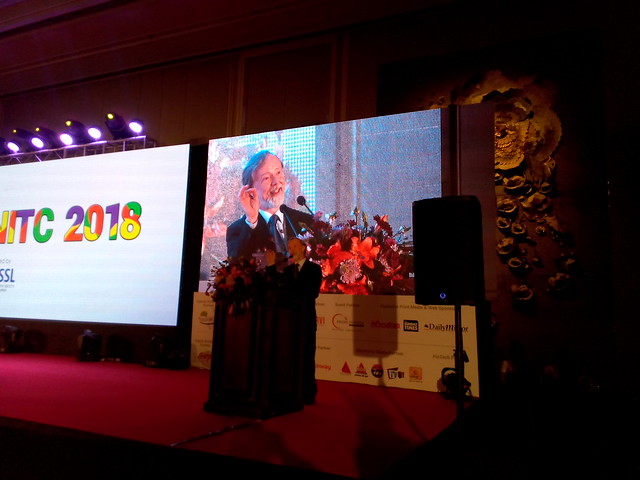
NITC 2018 in Colombo: Day 1

Professor Michael Johnson
at NITC 2018
Greetings from the fist day of the Computer Society of Sri Lanka (CSSL) National IT Conference (NITC 2018) in Colombo. Last night it was announced that CSSL has become a provisional member of the Seoul AccordProfessor Michael Johnson of the Australasian Computer Society explained the way the Accord provides mutual recognition of professional qualifications in the global IT industry.  On the second day of the conference I am speaking on how mobile devices, micro-credentials and blockchain could be used to make qualifications more flexible.

Tuesday, July 11, 2017

Master of Computing International Qualification

Master of Computing qualifications have been added to the Seoul Accord, which sets the standard for international qualifications in the computing field. Previously only bachelors degrees were recognized. The new recognition allows someone who already has a degree in another discipline to become professionally recognized via a two year Masters, rather than having to undertake another three year degree.

The Australian Computer Society, which is a signatory to the Accord, has already accredited Masters programs at several Australian universities.