Showing posts sorted by relevance for query engagement. Sort by date Show all posts

Monday, April 8, 2024

What have you done to improve online student engagement?

I will be speaking on "Teaching Green Computing Online: 15 Years of Student Engagement via Nudging" at the free Online Engagement in Higher Education Special Interest Group Webinar, of HERDSA, 1pm, this Wednesday, 10 April 2024. HERDSA didn't want this to be just me talking, so as well as ten slides, I prepared four questions for the participants to answer, & discuss live:
"1. What have you done to improve online student engagement?
2. What level of granularity is best for feedback to students: hourly, daily, weekly, monthly?
3. Do students get tired of boilerplate replies?
4. Will they get annoyed by AI generated feedback?"

"In 2008 the Australian Computer Society commissioned Tom Worthington to design an online course in green computing. This course formed part of the Australian Computer Society’s professional development program. This was later run at the Australian National University as a masters course, and is still offered fifteen years later through Athabasca University (Canada).

The course uses a conventional text-based distance education format, with no video, and no webinars. Why? What was the rationale? This presentation shares key design principles of this unique format that has positively impacted student engagement. As a means of facilitating student engagement nudging techniques have been employed.

This HERDSA Special Interest Group, Online Engagement in Higher Education, will discuss the factors that have improved online student engagement and consider implications and applications of their own online courses, including a coordinated nudging process. This event will provide insights for those looking to adopt a nudging approach to better facilitate student engagement and learning.

Join this to see how this works, and can be applied at your institution."

Wednesday, February 28, 2024

Teaching Green Computing Online: 15 Years of Student Engagement via Nudging

I will be speaking on "Teaching Green Computing Online: 15 Years of Student Engagement via Nudging" at the HERDSA Online Engagement in Higher Education Special Interest Group, 1pm, 10 April 2024.

"In 2008 the Australian Computer Society commissioned Tom Worthington to design an online course in green computing. This course formed part of the Australian Computer Society’s professional development program. This was later run at the Australian National University as a masters course, and is still offered fifteen years later through Athabasca University (Canada).

The course uses a conventional text-based distance education format, with no video, and no webinars. Why? What was the rationale? This presentation shares key design principles of this unique format that has positively impacted student engagement. As a means of facilitating student engagement nudging techniques have been employed.

This HERDSA Special Interest Group, Online Engagement in Higher Education, will discuss the factors that have improved online student engagement and consider implications and applications of their own online courses, including a coordinated nudging process. This event will provide insights for those looking to adopt a nudging approach to better facilitate student engagement and learning.

Join this to see how this works, and can be applied at your institution."

Presentation available.


Saturday, May 19, 2018

What Makes for a Good Student Experience?

The Australian 2017 Student Experience Survey (QILT, 2018), shows three non-government universities with much higher undergraduate student satisfaction than other institutions. It would be easy to conclude that private institutions do better, but is that the case? It may be what they teach and who they teach, as much as how.

The good news is that while some Australian universities rate better than others on student satisfaction, they all rate well. Universities are tending to move more of the teaching online. This provides students with better access to learning, but may result in overall lower student satisfaction results.

Most Australian universities scored between 70% to just above 80% on educational experience for undergraduate students in 2017. Three exceptions were Bond University, The University of Notre Dame Australia, and the University of Divinity, all over 90%. However, not all non-government universities did well. Torrens University Australia, the only private for-profit university in Australia, had a score of only 77.6%, below many government universities.

Torrens is essentially an online university and these tend to rate poorly on student satisfaction. The University of Southern Queensland, which also has many online students also rated poorly at 73.6% (I have completed two online courses at USQ and thought they were good).

Absent from the QILT report is Open Universities Australia (OUA), a consortium of universities offering online courses. OUA would be likely to have a low student satisfaction score, similar to USQ and Torrens. It would be easy to conclude that these institutions are doing something wrong. But they accept students who would otherwise not be able to study at all. Given a choice, I am sure these students are more satisfied being able to study, than not.

The QILT report mention of online study in the Executive summary (page iv):
"The largest variation was that external/distance students were less likely to respond positively about their Learner Engagement, 22 per cent and 63 per cent respectively. Older students also rated Learner Engagement less positively than younger students, but this difference is most likely associated with the prevalence of external or internal study modes in these age groups.
Large differences in results by study mode for Learner Engagement continues to suggest that this scale may be performing differently for internal/mixed mode students and external mode students. The Department of Education and Training is currently considering a review
of the Learner Engagement scale. As an interim measure, the QILT website, which reports SES results at the institution by study area level, will continue to exclude external mode responses for the Learner Engagement focus area. This report, however, which reports SES results at national and aggregate levels, includes external mode responses in all Learner Engagement results. ..."
Also section 3.3 "The postgraduate coursework student experience by study area":
"The widest range in focus area results was for Learner Engagement, with 34 percentage points separating the study areas with the highest and lowest results, Rehabilitation at 72 per cent, and Nursing at 38 per cent, which may be associated with the relative proportion of online or distance learning associated with the various study areas."

Friday, November 30, 2018

Increasing Engagement and Impact of Research

Greetings from the Canberra Innovation Network, where the Australasian Research Management Society (ARMS) is holding an Engagement and Impact Assessment Panel Discussion. The panel is asked to reflect on how a recent Impact and Engagement assessment of research went and what could be done better. The panel was also asked making the public aware of, and engaged in, "the value of the tertiary sector and research in general".

The question I put to the panel was:
'Would engagement and impact be improved by increasing the number of "professional" doctorates? As the AQF points out, these involve research, but emphasize practical outcomes.'

Background, in my Higher Education Whisperer blog: https://blog.highereducationwhisperer.com/search/label/Doctoral%20Education"
The panelists generally seemed to think this was a good idea. However, one of the audience asked what a professional doctorate was, the concept not being as well known in Australia, as the USA. As the University of South Australia puts it:
"A professional doctorate is a rigorous program of advanced study and research, designed to meet the needs of industry and professional groups. ... Professional doctorates usually blend coursework and research ...".

In contrast research doctoral students undertake less coursework, and focus on research. However, as one of the panel pointed out, 80% or more of these research doctorates end up not working in academia on research. ANU has researched what industry jobs research graduates would be suitable for.

As the Australian Academy of Science pointed out (AAS, p. 152, 1974):
"The PhD degree was established in Australia in 1948 specifically to help staff Australian universities."
The number of PhD students has increased far faster than the demand for research staff at universities, government and industry. Even those working at university are spending only part of their time on research, with time spent on administration, teaching and staff supervision. PhD students receive no training in any of these fields as part of their degree program (unless this happens to be their research topic).

Some research doctorates do have a more practical orientation than others, for example it is easier to demonstrate engagement and impact of graduates in engineering. ANU's Dr Lachlan Blackhall, in an opinion piece in the media today, outlined what needs to be done to secure reliable, affordable, electricity supply for Australia. In addition to his energy research work, Dr Blackhall co-founded a company which has built a system to help make this future possible. By setting out clearly what the community needs to do, and building a company to help get there, Dr Blackhall has demonstrated more engagement and impact than by writing a thousand research papers.

Reference

Australian Academy of Science. Science, & Industry Forum. (1974). PhD education in Australia: the making of professional scientists. The Forum.

Tuesday, April 18, 2023

Is engagement the same for face-to-face and online?

I will be taking part in the HERDSA panel “Is engagement the same off and online?” (Wednesday 19th April 1pm, Sydney time). So are my thoughts on the subject:

The question should be: "What is engagement? How do we know when we have achieved it?"

Engagement is the same for face-to-face and online. The challenge is to make person-to-person connection with the student, more importantly *between* the students, and ideally with an external client. This can be done online, just as, or more effectively, than face to face.

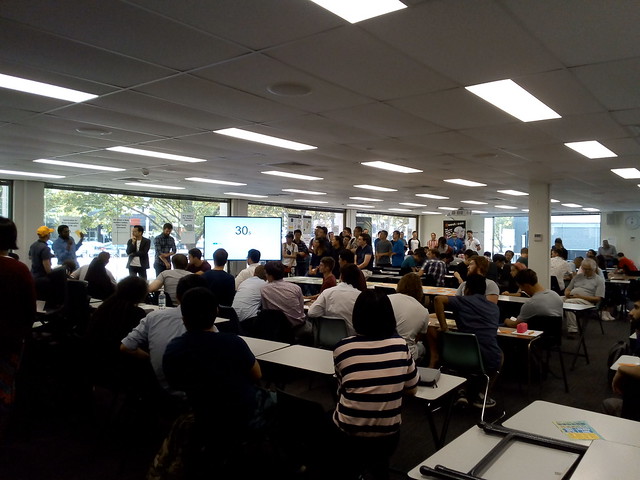
For eight years I have been helping with the Techlauncher program at ANU. This has hundreds of students in teams of a half dozen, working on projects for clients, from academia, business, industry and government. It was designed for face to face delivery. Clients give 60 second pitches competing for students, in an intensive two hour session, on campus. Teams form and then work for a year on the project.

The format worked fine. But in 2016 I suggested Canberra's universities should be ready if a regional crisis kept international students off shore. I argued international and Australia students could work together online.

In 2019 I described flipping the classroom activities for part of Techlauncher, and adding a pure online option ready for an emergency (Worthington, 2019). This was implemented for COVID-19 in 2020 (Worthington, 2020). There was no change to the course content, or assessment, replacing classrooms with Zoom rooms. A key part was the use of a Learning Management System (Moodle), online forums (Piazza), and specialist project management tools (Slack), which are routinely used for running software development teams spread around the world.

This semester I have been mentoring a dozen interns, doing individual projects at workplaces in Canberra, and across Australia. Most of those in Canberra have opted to come to the campus to talk face to face. But this is not an option if they are in Perth, and Zoom works fine. One who was in transit between workplaces Zoomed from a car (not driving). The shaky-cam made me slightly sea-sick, but otherwise this worked okay. ;-)

The key part of the student engagement is for the teacher to be trained in how to teach real world relevant skills. It helps if they have been trained to do this using online courses. I had the advantage of training at TAFE, and online universities, in these skills. We need to have our teaching academics routinely exposed to these tools and techniques, to get them away from the nonsense of lectures and exams.

Reference

Worthington, T. (2019, December). Blend and flip for teaching communication skills to final year international computer science students. In 2019 IEEE International Conference on Engineering, Technology and Education (TALE) (pp. 1-5). IEEE. https://doi.org/10.1109/TALE48000.2019.9225921

Worthington, T. (2020, April). Responding to the Coronavirus Emergency with e-Learning. Athabasca University. https://news.athabascau.ca/beyond-50/responding-to-the-coronavirus-emergency-with-e-learning/

Thursday, December 5, 2013

Australasian Survey of Student Engagement

The Australian Council for Educational Research conducts the Australasian Survey of Student Engagement (AUSSE). This uses three surveys instruments Student Engagement Questionnaire (SEQ),  the Postgraduate Student Engagement Questionnaire (PSEQ), and Staff Student Engagement Questionnaire (SSEQ). Universities take such surveys very seriously, on the assumption that students tell the truth when filing in the survey and take notice of the results when selecting where to study.

Sunday, May 1, 2016

Australian Government Strategy for International Education to 2025

The Australian government has released a "National Strategy for International Education 2025". Also there is an "Australian International Education 2025 Roadmap" and "Australia Global Alumni Engagement Strategy 2016–2020". The aim is to increase Australia's share of international students above the current 6%. That may sound a modest goal, but with increasing on-line competition and new institutions in China and India, it will be difficult for Australia to maintain its market share, let alone increase it. If, as I expect, on-line becomes the primary teaching method for global higher education in the next five to ten years, Australia will no longer be competitive, in attracting international students, or in the education of domestic students. Australia's share of international students will then have dropped to less than 0.5% and the share of domestic students to less than 20%, with most Australian students enrolling in offshore programs.

The strategy and roadmap mention on-line learning several times (noted below), but this is not core to the approach and there are no specific measures proposed. This is not sufficient for Australia to remain competitive, either in attracting international students, or retaining domestic students.

Strategy

The strategy has three "pillars", each with a number of goals:
The Minister's Forward to the strategy mentions blended delivery models and online professional development.   Action 1.1 of the Strategy (Developing Australia’s role as a global leader in education, training and research), states "Learning will increasingly occur in-market and online, as well as onshore.". Action 3.1 (Maintaining strong quality assurance systems) says "The system is underpinned by legislation and based on strong partnerships between regulators, governments, industry and providers. It covers all modes of delivery, including online, distance, onshore and offshore.". Action 9.1
(Building on innovative education and training services to meet student and employer needs), says "In particular, improved technologies enable us to be a borderless society, where learning can occur anywhere at any time. This is fuelling new ways of education delivery, including onshore, in-market and online.".

Also Moodle, the Australian developed Learning Management System, is mentioned in two paragraphs on page 32 of the Strategy: "... From its beginnings in Perth in 2001, Moodle has expanded to a global community of more than 70 partners, 200 active developers and 65 million users. ...".

Roadmap 

The Roadmap mentions Massive Open Online Courses
(MOOCs) as "One of the most influential developments in education over recent years...". Unfortunately the roadmap is incorrect in stating "Learning management systems, adaptive learning technology, education applications, online continuous professional development are all examples that have followed..." All of these preceded MOOCs and have not followed them. The report urges consideration of  in-market,
online and onshore delivery as a "cohesive borderless offering" (p. 5) and "harnessing the data generated from online delivery" (p. 11). However, what appears absent from both the Strategy and Roadmap is the need to have teaching staff who are qualified in teaching and, more specifically, trained in how to design and deliver on-line courses. The assumption appears to be that if there are standards and technology in place, quality education will result. However, education, even with technology, still requires teachers. Currently Australian university teaching staff are not required to be formally qualified in course design, assessment or in teaching in the classroom, let alone in the more demanding on-line environment.

Australian Global Alumni Engagement Strategy

The Alumni strategy has a different focus, being from the Department of Foreign Affairs. This strategy is seen as part of strengthening Australian diplomatic influence, as well as improving business linkages, in the Indo-Pacific region. The Strategy mentions "This includes engagement through
online and social media channels ..." (p. 15), "Showcase through digital profiles" (p. 15), "Collect and curate a
library of digital profiles of Australia’s global alumni and of Australians who have studied in the Indo-Pacific region" (p. 18) and "Profile alumni business connections online ..." (p.18), however, those are the only mentions of on-line engagement. Given the rapid growth in the use of smart phones in the Indo-Pacific region, relegating on-line techniques to a minor mention will make this strategy all but irrelevant. The Department of Foreign Affairs needs to "flip" the strategy, to provide engagement on-line through smart phones, devoting most effort to that and then supplementing this with other techniques. Glossy brochures and cocktail parties may give the appearance of action, but count for very little and are at high cost, compared to effective social media.

Tuesday, April 28, 2020

Five Reports on the Impact of Remote Learning on Vulnerable Children

The Australian Government commissioned five reports on the  impact of remote learning on vulnerable children during the  COVID-19 emergency. These were done very quickly, but are by Australian researchers who have extensive knowledge and experience.

Brown, Te Riele, Shelley, and Woodroffe found that nearly half students are at risk of significantly compromised learning, and this is not confined to low socio-economic status families. They call for a social workers, psychologists, speech pathologists, and school nurses to be on site when students return to school. This seems to me to be unrealistic, and it is likely help will be by professionals who now provide online support.

Drane, Vernon and O’Shea  estimated 20% of students would face "long-term educational disengagement, digital exclusion, poor technology management and increased psychosocial challenges". They cite UNESCO's "COVID-19 : 10 Recommendations to plan distance learning solutions" (2020).

Masters pointed out that younger children need more scaffolding and support, particularly those who are vulnerable. This is supported by Lamb, who also points out the challenges for indigenous students, who had less less experience with ICT before COVID-19.

Clinton recommends increased digital inclusion. I suggest that while the focus should be on teaching return to the classroom quickly, the potential benefits for all students from online learning to supplement classroom education should not be neglected.

While the government has relied on these reports to justify the reopening of schools, the reports themselves were made difficult to find on the Department of Education's website, so here they are:
  1. Brown, N., Te Riele, K., Shelley, B. & Woodroffe, J. (2020). Learning at home during COVID-19: Effects on vulnerable young Australians. Independent Rapid Response Report. Hobart: University of Tasmania, Peter Underwood Centre for Educational Attainment. URL https://www.dese.gov.au/system/files/doc/other/learning_at_home_during_covid_-_utas_natalie_brown.pdf
  2. Masters. G. (2020). Ministerial Briefing Paper on Evidence of the Likely Impact on Educational Outcomes ofVulnerable Children Learning at Home during COVID-19, Australian Council for Educational Research. URL https://www.dese.gov.au/system/files/doc/other/ministerial_briefing_paper_covid19_and_vulnerable_children_acer_22april2020.pdf
  3. Clinton, J. (2020). Supporting Vulnerable Children in the Face of a Pandemic: A paper prepared for theAustralian Government Department of Education, Skills and Employment. Centre for Program Evaluation, Melbourne Graduate School of Education, The University of Melbourne. URL https://www.dese.gov.au/system/files/doc/other/clinton_-_supporting_vulnerable_children_.pdf
  4. Lamb, S. (2020). Impact of learning from home on educational outcomes for disadvantaged children: Brief assessment. Centre for International Research on Education Systems, Victoria University. URL https://www.dese.gov.au/system/files/doc/other/lamb_-_impact_of_learning_from_home.pdf
  5. Drane, C., Vernon, L., & O’Shea, S. (2020). The impact of ‘learning at home’ on the educational outcomes of vulnerable children in Australia during the COVID-19 pandemic. Literature Review prepared by the National Centre for Student Equity in Higher Education, Curtin University, Australia. URL https://www.dese.gov.au/system/files/doc/other/literature_review-learning_at_home_-_covid19_0.pdf
While online learning is now taking place on a scale not seen before, it is worth keeping in mind it is not new. The impact of distance education is a well researched field. There thousands of studies over decades, most involving just a few dozen, or a few hundred students, but some with thousands, or tens of thousands. I had to sift through a lot of this stuff as a graduate student of education. I have attended education conferences with, and talks by, many of the people who wrote these reports, and it is not like they just started think about the implications of e-learning in the last few weeks.

This is not an entirely new, or unanticipated situation. After SARS, educational institutions in the region planned how they would switch to e-learning if students where quarantined at home.

The level of preparation by Australian education departments and institutions, might be a useful area for any Royal Commission into the pandemic to explore. This would be along with an investigation of the general preparedness by Australian governments, and if Ministers exercised their duty of care by initiating, and participating in, pandemic preparedness exercises.

Some excerpts from the reports:


Brown, N., Te Riele, K., Shelley, B. & Woodroffe, J. (2020). Learning at home during COVID-19:Effects on vulnerable young Australians. Independent Rapid Response Report. Hobart: University of Tasmania, Peter Underwood Centre for Educational Attainment.

Executive summary

FINDINGS

Nearly half the national school student population are at risk of having their learning and wellbeing significantly compromised by not being at school because they are either an early years’ student or are in a vulnerable group. As soon as health restrictions permit there is an urgent need to reconnect these students to the physical context of school-based learning to support their learning and
wellbeing outcomes. Concurrently there is a need to invest rapidly in developing significant capability in schools to deliver education both online and on-site. ...

HOWEVER, THE HOME-BASED, ONLINE MODEL IS HARMING LEARNING, ESPECIALLY IN THE EARLY
YEARS AND IN VULNERABLE GROUPS

Nearly half (46%) of Australian children and young people are at risk adverse effects on their educational outcomes, nutrition, physical movement, social, and emotional wellbeing by being physically disconnected from school.

It is already clear that nationally, children and young people are experiencing learning losses. This means that there will not be the expected cognitive gains for these students over the period of learning at home. These losses will cause a delay in cognitive gain and achievement in some students and result in others being lost to the education system. ...

The reason for these losses is that many families lack the physical spaces, technology and other resources to support learning at home. Additionally, many parents and caregivers lack the time needed to support their children’s learning. This is occurring irrespective of socio-economic status, with full-time waged and sole parent-waged families reporting difficulties. ...

A TARGETED STRATEGY OF PHYSICAL RE-ENGAGEMENT AT SCHOOL COULD MITIGATE MANY OF THE NEGATIVE IMPACTS ON LEARNING AND ENGAGEMENT

There is a need for a coherent cross-jurisdictional communications strategy and implementation plan to incentivise and support vulnerable students to physically attend school. The strategy should:

• Ensure schools have the safety protocols in place for physical reconnection of a significant number of students including ensuring that allied professional staff (social workers, psychologists, speech pathologists, and school nurses) are able to provide services on site where possible.

• Where full time reconnection of significant number is not going to be possible for safety or logistical reasons plan for a blend of on-line and physical presence through a week.

• Encourage universal full-time on-site attendance for pre-school to year 2 nationally

• Utilise direct and personalised invitations to specific vulnerable school students and their families/carers to see those students attend school and complement this group with invitations to a balanced cohort of students to reduce stigmatisation of specific groups and ‘normalise’ attendance.

• Enable universal on-site attendance at dedicated Flexible Learning Options, Schools for Special Purposes and Re-Engagement Programs nationally.

• Invest in targeted and personalised learner engagement for students who are not physically attending and who cannot access online learning, are not engaging in learning, or are at risk of disengaging over the short and long term

• Invest in, and support, teachers:

- to manage the increased workload of teaching both offline and online by providing additional staffing on a short-term basis: teachers, teacher assistants, and social/youth workers; and
- with professional learning for skills and expertise in the creation of non-school based learning strategies, such as high-quality online content, lower technology radio, as well as television content; and
- for re-engagement and trauma-informed approaches for the most vulnerable students.

Recognising the necessary input from parents to support learning at home goes beyond physical provision of resources. Many families require additional support beyond the current web-based material (eg. utilisation of television and radio, as well as outreach through community networks, and support in the moment).

THIS STRATEGY HAS ONLY MODERATE COST AND REGULATORY ISSUES
 
Most of the cost will likely be related to additional resourcing at the commencement of the strategy and short to medium terms, as well as for teams with ongoing responsibility for implementation and oversight of operations, and reporting. Immediate investment can achieve social impact through maximising the value created by Commonwealth Government and State and Territory Government spending on education.

The financial costs may include:

• provision for teachers to have time to enhance skills in, and implement, online pedagogy;
• additional resources for allied professionals within schools;
• co-construction and implementation of an Indigenous strategy;
• attendance incentivisation strategies;
• resources to facilitate learning in the home (eg. a national hotline for parents supporting their children’s learning; TV and radio content; enabling part-time employment for a period with Commonwealth support to sustain full-time equivalent superannuation entitlements); and
• provision to effectively resource and implement Australian Health Protection Principal Committee (AHPPC) safety regimes.
There could be a consideration of regulatory changes to enable final year pre-service teachers to work on Limited Authority to Teach or as Teacher Assistants; and counting those hours worked towards practicum. This group may provide a valuable additional resource for schools.

THERE ARE KEY RISKS AND SENSITIVITIES TO THE STRATEGY

There are risks and sensitivities in targeting specific groups to attend school as it can be stigmatising and counterproductive. The risk of stigmatisation does not only include students who may be classified as ‘at risk’ or vulnerable, but also children of essential workers, who may be perceived by other parents/children to be carrying the virus.

• States and Territories may resist elements of a national approach. Integrating the communications plan with known positions can mitigate this risk.
• Negotiating a consistent cross-sectoral approach (public, Catholic and independent schools) will alleviate parent and care-giver confusion.
• There is a risk that employers are unable to effectively meet workplace health and safety and other industrial relations obligations on school sites.
• There is a risk of industrial disputes if changed practices are not effectively negotiated and lawfully implemented. ..."
Masters. G. (2020). Ministerial Briefing Paper on Evidence of the Likely Impact on Educational Outcomes of
Vulnerable Children Learning at Home during COVID-19, Australian Council for Educational Research. URL https://www.dese.gov.au/system/files/doc/other/ministerial_briefing_paper_covid19_and_vulnerable_children_acer_22april2020.pdf
"Summary points

● Vulnerability in this paper is considered from two interrelated perspectives: social and educational.
● Socially vulnerable children are over-represented among the group of students who are educationally vulnerable.
● The negative impact of educational vulnerability on students’ capacity to learn across all areas of the curriculum is exacerbated by their reduced access to resources at home (e.g., adequate food and shelter, ICT, a quiet place to work, books, learning support from parents), and is associated with social vulnerability. This is, in effect, a continuous cycle of disadvantage.
● While parents play a crucial role in remediating educational disadvantage, the level of education, socioeconomic status, and consequent capacity to provide home learning support and resources for students is lower among parents of educationally disadvantaged students than in the broader community.
● The likelihood of any positive impact of educational programs on vulnerable students will be greatly increased if support is also provided to deal with their basic needs.
● The basic profile of educationally vulnerable children appears to be consistent across students, regardless of their age.
● While this paper focuses on vulnerable students, it is important to note that high proportions of primary-school children are not able to work independently when using technology, and need scaffolding and support. The level of support needed is higher for younger students and those who are vulnerable.
● Schools and teachers play a vital role in supporting vulnerable children. However, most schools do not have the requisite infrastructure to support remote learning, and many teachers do not currently have the confidence or skills to manage remote learning and require support.
● While access to digital technologies and the internet is high in Australia, there is still evidence of a digital divide, with poorer Australians and those in remote locations being relatively disadvantaged.
● Many remote-learning programs exist and may be leveraged to help support the learning of vulnerable students at home. However:
○ the basic human needs of students must first be met in order for education programs to be able to succeed;
○ there is no one-size-fits-all approach that can work; and
○ programs should be tailored to meet the specific needs of vulnerable students."

Clinton, J. (2020). Supporting Vulnerable Children in the Face of a Pandemic: A paper prepared for theAustralian Government Department of Education, Skills and Employment.

 "Executive summary

This paper particularly focuses on factors that will impede access to quality education, of the effects on the more vulnerable groups, and it outlines models of support and recovery that evidence suggests are useful. This brief synthesis draws parallels from literature on natural disasters and school interruptions such as school holidays, teacher strikes, economic downturn, and natural disasters such as earthquakes and hurricanes.

According to the Productivity Commission, disadvantage in Australia needs to be assessed against three metrics: relative income poverty, material deprivation (inability to afford life’s essentials), and social exclusion. Children experiencing these metrics can include those living very low SES contexts, jobless households, children with special needs either physical or psychological, children with language other than English backgrounds and refugee populations, rural and remote contexts, and Indigenous Australians and Torres Strait islanders. Recently, low digital inclusion has been considered an additional category particularly when this interacts with the other categories.

It is useful to consider the impact of the current pandemic from a Population Life Course perspective which illustrates the determinants of Education and its efforts in in reducing vulnerability. The figure below illustrates the trajectory for those in the existing vulnerable, the potential vulnerable and the protected categories within the population along with those determinants of education that drive the curve up or down.

Australian children living in poverty will experience exacerbated risk as a consequence of the COVID-19 school interruption. For children at risk of missing approximately 10 weeks of in school education, (with the possibility of further disruption over a longer period), given the context in that they live; it’s probable that there will be a significant interruption of learning, access to support for health and well-being, a decrease in the development of individual protective factors, and a lack of surveillance systems to identify issues that school provides.
Subsequently, the equity gap will increase and for many, the chance of recovery from the impact of living in these vulnerable contexts will be diminished. Essentially, there is the probability that across this education life course, the size of the vulnerable group will increase. Those on the cusp of vulnerability will have the greatest movement.

Currently we can define our major disadvantaged groups, and it is expected that students with the following characteristics (Table 1) are most likely to be affected by the current suspension of normal schooling. We expect that these students will experience an interactive effect of CoVID19 and any prior disadvantage. Specifically, as a consequence of the pandemic, students are likely to experience:
1. Increased stress, social and emotional concerns with possible behavioural issues arising.

2. Struggle with low self-regulation to maintain learning progression, that has been highly dependent on the teacher
3. No access to quality learning strategies and guidance necessary to promote development
4. Less educational resources and activities relative to peers in particular in relation to limited digital engagement
5. Continued and reaffirming experience of past lack of progress in school
6. Will have little concept of themselves as a learner at school, and likely the same at home. Hence impacting on future engagement in schooling such as absenteeism and dropouts
7. Lack of facility in critical reading and numeracy skills to move to the next level, and more likely to become part of the ‘low Matthew effect’
8. Living in homes which are not safe havens (for many of these students, school is the safe haven), there will be an exacerbation of physical and emotional health issues
9. Parents who have low capacity or desire to engage them in the schoolwork at home and who ignore or permit no engagement with schoolwork.

10. Upper high school preparing for high stakes exams will lose the opportunity to engage
The Table below attempts to summarise the depth of ‘risk exacerbation’ as a consequence of the pandemic by indicating with Green for a minimum effect, Orange for a medium effect, and Red, for the greatest level of exacerbation. The figure demonstrates the relationship between exiting risk categories and like area of impact.

Many of these students are likely to be already ‘at risk.’ The absence from regular class, and support suggests that the level of risk and the number of comorbidities is likely to be exacerbated. Hence the recovery will be much more difficult.

It must also be acknowledged that within these categories there are subsets of students who are successful despite the categorisation of some level risk and in fact some will do better as a consequence of the current crisis.

Recovery and Support: what does the evidence suggest? The are many ideas and much rhetoric about recovery, however there is little consolidated evidence on the support needs for vulnerable children and families in times of crisis. The following present a brief over of a number recommendation gleaned from multiple sources.

Recovery takes time There are many national and international frameworks that provide a foundation for recovery after a disaster. The UN Disaster Risk Reduction model (UN, 2015) for example, conceptualises disaster risk relief as a “Build Back Better” system.

This model argues that resilience emerges from a continual, interplaying dynamic cycle between response (immediate) recovery (short-term) and preparedness (medium-term). The domains of action include teaching & learning; capacity and capability; engagement, coordination, and communications; infrastructure; assessment, policy, and planning.

Recovery measures must redress damage & develop resilience-building measures (Shah, 2015).

Disaster response and management has several phases and it is worth drawing on these phases to consider educations response to the current COVID-19 crisis and beyond. In many recovery programs, the government-assisted stage can be separated into distinct but overlapping phases that delineate an early recovery phase. This is important as it stresses the transition from the immediate response to recovery efforts over time, as in the figure below (The Community Recovery Handbook, 2018, p. 32).While the framework below, is based on a community response model it provides a valuable template for the school sectors phased response to the current crisis and particularly for vulnerable students.

Invest in Support community & cultural engagement Evidence based multisectoral approaches Students stay home with contact options and suggestion of activity digital or otherwise.

...

Understand the context: Successful recovery is based on an understanding of the community context.

1. Recognise complexity: Successful recovery is responsive to the complex and dynamic nature of both emergencies and communities.

2. Use community-led approaches: Successful recovery is community-centred, responsive and flexible, engaging with communities and supporting them to move forward.

3. Excellent diagnosis of every student comparing their expected growth prior to COVID-19, to detect where extra attention and programs is needed.

4. Coordinate all activities: Successful recovery requires a planned, coordinated and adaptive approach based on continuing assessment of impacts and needs.

5. Communicate effectively: Successful recovery is built on effective communication between the affected community and other partners.

6. Recognise and build capacity: Successful recovery recognises, supports and builds on individual and community strengths.

Ultimately, it is important that education recovery operations must draw attention to incorporating “children’s unique mental health, physical health, educational, childcare, and juvenile justice needs into all phases of the disaster life cycle”.

Recommendations

1. Recovery needs a collective response that builds long term relationships
2. Success is dependent on teachers and schools
3. Shift the focus and build adaptive resilience through the provision of services to support socially and emotionally
4. Ensure ongoing communication with vulnerable children and families
5. Support and professional learning for teachers is essential
6. Provision of targeted content
7. Consider the investment in multiple forms and mode of resources for all.
8. Increase digital inclusion
9. Building an evidence basis: Evaluation assessments, monitoring data linking "

Lamb, S. (2020). Impact of learning from home on educational outcomes for disadvantaged children: Brief assessment.

"The situation for indigenous Australians also presents challenges. ICT inclusion of indigenous Australians remains lower than the national average and while it has risen in the past year, the rate of this rise is slower than the national average (Thomas et al., 2019). Indigenous students tend to have less experience with ICT, with only 37 per cent of indigenous students reporting more than seven years of computer experience, compared with 51 per cent of non- Indigenous students (Fraillon et al., 2013). Fewer indigenous students report using computers at least weekly at school compared with non-indigenous students (ACER, 2013)"
Drane, C., Vernon, L., & O’Shea, S. (2020). The impact of ‘learning at home’ on the educational outcomes of vulnerable children in Australia during the COVID-19 pandemic.
"... Globally, while some countries have opted for a mass school shut-down, many schools remain open for more vulnerable students (UNESCO, 2020a). This "partial closure" is not only to enable learning in smaller targeted groups but also to offer a "safe" sanctuary for those who desperately need a regulated and secure environment including the provision of "free" hot food and also, company.

In summary, currently within Australia if there were mass school closures there is potential for around four million students to be affected: 
  • In 2019, there were 3,948,811 students enrolled in 9,503 schools, with 2,263,207 primary students and 1,680,504 secondary students.
  • If 20 per cent of these young people are living in financially disadvantaged or low socioeconomic status (SES) communities and are required to study off campus then around 800,000 will be subjected to a range of barriers and/or risks including:
    • long-term educational disengagement
    • digital exclusion
    • poor technology management
    • increased psychosocial challenges.

UNESCO (2020b) have developed 10 key recommendations to ensure that learning remains uninterrupted during the COVID-19 crisis (see Appendix One). There is global evidence of countries adopting, to some degree, at least seven of these recommendations during mass closures, which include:
• examining the readiness of the school for closure (including the technology available)
• ensuring distance learning programs aim for inclusivity
• prioritising solutions to address psychosocial challenges before teaching
• providing support to teachers and parents on the use of digital tools
• blending appropriate approaches and limiting the number of applications and platforms used
• developing distance learning rules and actively monitoring students’ learning process
• creating communities that enhance connection."

Thursday, May 24, 2018

Improving Teaching and Learning at ANU

ANU has released " A Vision for Teaching and Learning at The Australian National University" prepared by consultant Diane Joseph (2017). This recommends consulting the University community on a Teaching and Learning Strategy. Teaching development and building programs were two areas to be explored.

The draft Vision for Teaching and Learning at the ANU is (p. 3):
"Our students are future ready, capable of solving problems not yet imagined to improve their lives, the lives of others and their communities."
 This is covered by four pillars (p. 4):
  1. "Determined Students
  2. Inspiring Academics 
  3. An Enriching Environment
  4. A Connected Community
  5. High quality teaching and learning is underpinned by the ANU values"
The interesting question then is how to achieve these. There are nineteen recommendations of the report (p. 4), including:
"... 4.1 Identify, encourage and support lead practitioners to model and share effective collaborative learning pedagogies in the CLE Building ...
5.1 Develop a Teaching and Learning Strategy ...
6.1 Support and encourage distinctive approaches to education, including technology-enhanced learning ...
7.1 Develop a Teaching Professional Development and Resourcing Plan ...
8.1 Identify requirements for potential building programs to enable the Vision for Teaching and Learning ..."

Suggestions for the ANU Teaching and Learning Vision


As a member of the ANU community (former student, donor and honorary lecturer) with an interest in teaching, I have six suggestions for advancing the vision:
  1. Increase teaching effectiveness with good course design
  2. Increase student engagement with real-world challenges
  3. Teach university academics to teach
  4. Give teaching staff a modern student experience
  5. Personalize the student experience without reducing the student to staff ratio
  6. Prove flexible new buildings and adapt old ones 
In detail:

1. Increase teaching effectiveness with good course design

Teaching effectiveness can be increased by designing courses and programs using project design techniques. First consult the prospective employers as to what skills and knowledge graduates will require. Then translate those requirements into learning objectives.  Design assessment to test for those objectives. Lastly provide educational materials and learning activities to prepare students for the assessment tasks. The time of the staff and students need to be carefully budgeted to achieve the required assessment results.

An example of this top-down design is the course "ICT Sustainability", offered as COMP7310 by ANU and COMP635 by Athabasca University, Canada. This is designed around the Skills Framework for the Information Age (SFIA), used for international accreditation of computer professionals. The SFIA skills are mapped to learning objectives in the course, with major assignments for each objective. There are small weekly exercises to help students build the skills and knowledge needed for the assignments.

The time needed for students to undertake readings, videos, quizzes and discussion activities where estimated for ICT Sustainability and budgeted to fit in the available study time. This included an estimate of the words in readings multiplied by the average reading time of a graduate student (from published research). The time needed for the instructor to run the course and conduct assessment was also budgeted. In this course lectures are not used and the weekly work is by automated quizzes and peer assessment, to free up the teacher's time to help students.

2. Increase student engagement with real-world challenges

Student engagement can be increased by providing real-world problems for students to solve and authentic assessment (not end of term examinations). Every task we ask students to undertake can be mapped to the problem solving exercises they will have to undertake. To keep students on task, learning skills and knowledge for this challenge, they can be given frequent small assessment tasks with rapid feedback.

The students in ANU TechLauncher have to work in teams building an engineering or software solution for a real client. Students are evaluated on their teamwork and problem solving by their peers, the tutors and the client.
Students also have the option of working on a start-up in the Innovation ACT competition. This approach has been utilized at other universities, such as UBC Electrical and Computer Engineering, with their "New Venture Design" course (APSC 486).

3. Teach University Academics to Teach

Those teaching at university need to know how to teach. However, university academics are reluctant to enroll in conventional classroom based training courses. The same approaches used to improve student engagement can be applied to staff: providing real-world problems to solve in the workplace, with authentic assessment.

Education for staff can be conducted using the techniques the institution aims to use for students. In particular learning should be primarily on-line, supplemented with blended and flipped classes in flat floor classrooms. Group activities, capstone projects and e-portfolios should be used for learning and assessment. There should be a minimum of lectures and no paper based examinations.

Short courses and online tips can be provided (ACU have some good ones). However, as with school and  vocational teachers, those teaching at universities would benefit from having formal qualifications in education. The aim should be to have junior teaching staff with an AQF Level 8 Graduate Certificate in education (or a Certificate IV in training for those who also teach in the VET sector), mid-level academics a Diploma of Education (or Graduate Diploma), and senior academics a Bachelor Degree or Masters Degree of Education (Coursework).

Staff should also be encouraged to join learned societies, such as HEA and HERDSA, as a supplement to formal qualifications in education.

4. Give Teaching Staff a Modern Student Experience

Local workplaces should provide support and encouragement for staff to undertake study for educational qualifications. In particular staff need to do "Dog-Fooding": experience what it is like to be a university student in the modern environment, so they have an understanding of the pressures imposed on their students. Staff on education courses should be encouraged to undertake projects for their studies in the workplace and to immediately apply what they have learned in their teaching. It should be noted that academics who supervise research students are also engaged in education.

5. Personalize the student experience without reducing the student to staff ratio

The student to staff ratio is unrelated to the quality of learning. High quality education can be provided with large classes, if the learning is well designed by qualified educators using proven techniques. Providing realistic tasks for students to undertake in groups, with the use of peer feedback and assessment, supported by automated tools helps.

6. Prove Flexible New Buildings and Adapt Old Ones

Interactive group learning requires new classrooms. Tiered lectures theaters are unsuitable for interactive group activities. Large rooms with flat floors, and preferably with furniture on wheels, are required. These can be new built, or adoptions of existing buildings.

Multipurpose Auditorium at Fitzwilliam College Cambridge
An example of such a facility is the Auditorium at Fitzwilliam College Cambridge (UK). Electrically operated, retractable tiered searing allows rooms to be used for flat floor teaching and, and at the push of a button, convert to a lecture theater. This design is now being implemented for the ANU Kambri Development.

A flat floor large classroom at ANU, with large mobile LCD screens used to relay presentation to the back of the room.
 However, the new teaching spaces will require staff to be trained in new teaching techniques, including the on-line elements which support the classroom experience. Also this may require some minor items of equipment.

Experience with the existing temporary large flat floor classrooms at ANU shows that a room with 300 students working in groups is feasible, but requires good teaching team coordination. Some of the equipment can be low tech, such as a whistle to get student's attention when they were deep in discussion.

Australian Department of Foreign Affairs Diplomatic Academy
The recently opened Foreign Affairs Diplomatic Academy  shows that an exiting office building can be converted to attractive flexible flat floor classrooms. The Academy's impressive new premises have large rooms which can be divided for smaller classes.

See also:

  1. A Green Computing Professional Education Course Online, 2012
  2. Digital Teaching In Higher Education (e-book), 2017.
  3. Educating the Future Workforce, Submission  to the Senate Select Committee on the Future of Work and Workers, 2018.
  4. Education for Sustainable Development, Submission to the Senate Foreign Affairs, Defence and Trade Committee on the United Nations Sustainable Development Goals (SDG), March 2018.

Friday, August 2, 2013

Interactive Engagement In Place of Tutorials at ANU

The College of Arts and Social Sciences (CASS) at the Australian National University (ANU), is phasing out tutorials, according to two reports in the Canberra Times ("Staff freeze and bug exposure leave ANU students susceptible", and "Small is out at ANU, worrying students", Emma Macdonald, 2 August 2013) and one in the ANU student newspaper ("CASS Tutorials an Art of the Past", Sam Bradley and Vincent Chiang, Woroni, 1 August 2013).

Tutorials will be replaced with what are described in the articles as "large interactive workshops and forums", "forums/workshops" and "flip the classroom". Dr Royston Gustavson, CASS Associate Dean (Education) is quoted:
''... Such forums/workshops are typically run by the course lecturer, rather than tutors, thereby giving students a significantly increased opportunity to interact with their lecturer. ...'' From: Staff freeze and bug exposure leave ANU students susceptible", Emma Macdonald, Canberra Times, 2 August 2013
A student quoted in the second Canberra Times article makes the point that they didn't attend lectures as an undergraduate, but learned in tutorials.

There were no further details, but the large classroom format with a lecturer and interaction appears similar to the flipped classroom approach which Dr Adam Butt describes being used for teaching Actuarial Techniques at ANU:
Butt, Adam, Student Views on the Use of Lecture Time and their Experience with a Flipped Classroom Approach (November 8, 2012). Available at SSRN: http://dx.doi.org/10.2139/ssrn.2195398

Dr Butt describes how he converted the lecture notes into readings for students before a class. The classes started with questions from students about the readings. The readings also had exercises to be completed in class (which took up most of the class time). Dr Butt also made use of Votapedia, this is a free student feedback system, similar to the use of "clickers, but using a mobile phone, smart phone or web application (developed in the CIST Building on the ANU campus by Dr Ken Taylor, of CSIRO). Students were surveyed on the teaching technique with 75% seeing it as beneficial.

Rendering of the TEAL classroom at MITIn 2007 Philip Long and Mark Schulz visited ANU to talk about the iCampus implementation of the Technology Enabled Active Learning (TEAL) at MIT and later at University of Queensland for teaching science to undergraduates. The Technology Enabled Active Learning (TEAL) project at MIT adapted what was essentially a laboratory style of teaching to other science subjects, with a technique called "interactive engagement". Short lectures are interspersed with group work in a room holding about 100 students, clustered around tables. Display screens are placed on all walls to allow students to see a presentation without the need for a mobility-limiting raked lecture theater.

The Canberra Times articles imply that tutorials would be replaced to reduce staff costs. However, MIT's research on TEAL rooms indicates they produce superior educational outcomes. Also it is not just a matter of one lecturer with a class of one hundred students: tutors are still required to assist student groups.

It should be noted that many on-line courses now incorporate live "Webinars" which use the interactive engagement technique. There are short presentations  interspersed with student activities, using the communication facilities of the webinar software for students to be able to respond. As with large face-to-face classes, it is not feasible for the presenter alone to run such a class on-line, they need assistants to help the students.

In my course ICT Sustainability I have weekly asynchronous forums for students to discuss topics. This format has proven very popular with students. Relaxing the real time constraints of a face-to-face classroom allow one teacher to handle a large class.

It should be noted that use of Interactive Engagement requires a significant investment in new course materials, teaching skills, equipment and new classrooms (when not delivered on-line). The course materials need to be carefully packaged into units of work which can be completed during the sessions. The work students need to do in advance of a workshop must be carefully considered and incentives put in place for them to actually do the work. Lecturers need new skills to teach intensively in short bursts "in the round". Tutors need to learn to think on their feet to support the fast pace. Rooms are required with furniture for small groups and display screens "in the round". Assessment needs to be designed in to enhance the student's learning.

Changes to teaching methods can't be made overnight and require years of planning. As an example, after the 2007 presentation at  ANU about TEAL rooms, I looked at how I might use these. But that would require reconfiguring current teaching spaces. Most university campuses currently have a large lecture theaters with raked floors and small tutorial rooms with flat floors. TEAL rooms are as large as a lecture theater, but with a flat floor like a tutorial room. The best example of such a facility in Canberra is the Inspire Centre at University of Canberra, with specialist furniture and a TEAL Teaching Room. But this is a new purpose built facility.

To see how an existing building might be reconfigured, in 2007 I discussed "Turning a classroom into a flexible learning space" and updated this in 2012 as "Designing a Decision Support Centre".


Monday, January 7, 2019

Teaching Degrees Should Not be Limted to High ATAR Students

Tanya Plibersek, Deputy Leader,
Federal Opposition (Labor Party),
on ATAR.
Media reports indicate a Labor government would bar low-scoring ATAR students from becoming teachers. However, while students with higher ATARs have proven to be better teachers, this is not the most important factor. Wurf and Croft-Piggin(2015) found that engagement, and motivation were more important that ATAR.

Instead of increasing the ATAR, I suggest improving the quality of teaching degrees, particularly using "dog-fooding". Students should be provided with structured education using digital technology, working in teams, with support from tutors. University instructors should focus on improving the engagement and motivation of their students, and teach how this support can be provided to school students.

Wurf, G., & Croft-Piggin, L. (2015). Predicting the academic achievement of first-year, pre-service teachers: the role of engagement, motivation, ATAR, and emotional intelligence. Asia-Pacific Journal of Teacher Education, 43(1), 75-91. URL https://www.tandfonline.com/doi/full/10.1080/1359866X.2014.932328

Friday, January 3, 2014

Group Interaction in MOOCs

In his presentation "Open Education: New Developments,Needs, and Opportunities for Research", June Ahn, from University of Maryland, suggested that 30 to 40 students are needed in a MOOC group. This is far larger than the groups of students for a typical face-to-face or on-line tutorial. The reason for the larger groups he suggests are so that there is a core of people to continue the online discussion. An open course typically has a 10% completion rate. So if you start with 30 to 40 students, you will have 3 or 4 left still actively contributing at the end.

Much of what Dr. Ahn had to say might seem obvious, such as that what new students want is clear instructions and clear sense of what the course is about. Once familiar with the course what is important is  interaction with other students.

Dr. Ahn  asked how an open course could retain learners without the sort of rules about enrolment and completion of a conventional institution. I think it is necessary to have the student develop a sense of investment in an on-line course. A student in a conventional course has paid a fee, passed an entry test and has an expectation of some form of reward, in terms of public recognition, or a better job, on completion. I suggest reproducing some of this with "open" courses would increase completion rates. It would be useful to have some form of self-assessment test at the beginning of an open course so students can see if it suitable for them. Some form of progressive assessment (be it called "badges") would help students continue once they have started a course (as it does with conventional on-line and face-to-face courses). Also formal recognition of the courses would provide an incentive for completion.

This of course assumes that the object of the exercise with MOOCs is to reproduce conventional educational experience. There is an alternative approach where open education would allow a student to explore a topic for their own interest, not to learn what someone else had predetermined or for recognition. This would be more like postgraduate research degrees, where the student is given some guidance but it is up to them what they "learn".  However, the completion rate for such a form of education is likely to be much lower than for current MOOCs (where about one in ten complete), perhaps as low as one in ten thousand.

Here is the text of Dr. Ahn's slides:

Open Education: New Developments, Needs, and Opportunities for Research

June Ahn
Assistant Professor
University of Maryland,
College Park
College of Information Studies
College of Education

Agenda

•  Introduce Myself
•  Open Education: Why Now?
•  The Case of Peer 2 Peer University
(P2PU)
•  Fruitful Directions

Assistant Professor

http://ahnjune.com/
Design
Implement
Study

CASCI: Center for the Advanced Study of Communities and Information

OCEL Group
Open Communities for Education and Learning
http://casci.umd.edu/impact-domains/ocel/

What’s Changed?

  • Access
  • Bandwidth
  • Tools
  • Production

What’s the Same?

•  It’s still online learning
•  Limited by our own imagination

Put another way...

Conditions are Changing

Learning Remains

Peer to Peer University

p2pu.org

 What is P2PU?

Open Schools

Open Badges

Open Community

Open Experimentation

Our Project with P2PU

•  Data Sharing + Data Science
•  Learning Groups in the Mechanical
MOOC
•  How do Open Learning Communities
Function?

How should organizers design courses?

Ahn, J., Weng, C., & Butler, B. S. (2013). The dynamics of open, peer-to-peer learning: What factors influence participation in the P2P University? Proceedings of the 46th Annual Hawaii International Conference on System
Sciences

•  Seven teacher professional
development courses
• ~2-3 organizers
•  20-30 participants
•  20-40 followers
•  600-1000 unidentified visitors
•  7 courses x 13 weeks
(n = 91)

How should organizers design courses?

Ahn, J., Weng, C., & Butler, B. S. (2013). The dynamics of open, peer-to-peer learning: What factors influence participation in the P2P University? Proceedings of the 46th Annual Hawaii International Conference on System Sciences
•  Organizer Activity -> Important for Returning
Members
•  Clear prompts -> Important for New Members

What does P2PU Look Like?

Ahn, J., Butler, B. S., Alam, A., & Webster, S. A. (2013). Learner participation and engagement in open online courses: Insights from the Peer 2 Peer University.  MERLOT Journal of Online Learning and Teaching, 9(2), 160-171.

Over 2,000 Projects Started

368 (~18%) went “live”What does P2PU Look Like?
Ahn, J., Butler, B. S., Alam, A., & Webster, S. A. (2013). Learner participation and engagement in open online courses: Insights from the Peer 2 Peer University.
MERLOT Journal of Online Learning and Teaching, 9(2), 160-171.

Over 41,000 Registered Learners

6,483 (~16%) returned at least once

Current Work

•  Ecological Perspective
•  Production
–  How to create supply of open learning
courses?
–  How to support the organizers?
–  How to design for engagement?

Recreating Education Systems?

Or New Design Patterns?

Back to the Learner

  • OER is Not Enough
  • Who is the learner?
  • Where do they come from?
  • What do they bring to an experience?
  • How do they engage? Collaborate?
  • What do they gain?
  • How do pathways develop?
  • Who are we neglecting?

Thank You

June Ahn
@ahnjune
http://ahnjune.com/
From: "Open Education: New Developments,Needs, and Opportunities for Research", June Ahn, from University of Maryland, for CIDER, Jan 08, 2014 11:00 AM Mountain Time (Canada) 

Other CIDER talks which caught my attention were: 2010 State of the Nation: K-12 Online Learning in Canada and The Chinese Top Level Courses: Improving the quality of online courses in a new educational climate.

Tuesday, May 14, 2019

Getting academics to do professional development

In the last few days I have been approached by several people asking for help to use ed-tech for academic professional envelopment. One of the paradoxes of higher education is that while academics insist that training and testing is needed by their students, they are reluctant to do any training themselves in how to teach.

Botham (2018) looks at the issue of engagement in a professional development scheme to develop teaching skills. They concluded that institutional policies encouraging, or requiring, PD got staff into such programs, but it was not enough to get them to completion. I suggest this may require a change in doctoral education, and university hiring practices. If universities want good educators, they will need to include teacher training in graduate  programs, and select staff based on their teaching qualifications. Selecting the best researchers and then trying to turn them into educators does not work.

At a practical level it should be possible to train academics, using the same sort of blended techniques which are used to get students through a course they do not have an aptitude for, or interest in. That may not turn the average academic into an enthusiastic expert educator, but can at least make them reluctantly competent.

Reference


Botham, K. A. (2018). An analysis of the factors that affect engagement of Higher Education teachers with an institutional professional development scheme. Innovations in Education and Teaching International, 55(2), 176-189. URL blob:https://www.tandfonline.com/bbabfffd-2eb4-42a9-ad72-a1300abb9d64

Saturday, July 23, 2016

Books on University Teaching

Recently I was searching for some references on evaluating graduate teacher training programs. Some books I could read via the university libraries I have subscriptions to, some though Google Books, but for others I had to use Amazon.com's "look inside" feature to read excerpts. Amazon the emailed me an unsolicited list of books. Normally I am annoyed by such an intrusion, but this looks a useful list:


Teaching for Quality Learning at University (Society for Research Into Higher Education)
Teaching for Quality Learning at University


Student Engagement Techniques: A Handbook for College Faculty


What the Best College Teachers Do


Learning to Teach in Higher Education


How Learning Works: Seven Research-Based Principles for Smart Teaching


Visible Learning and the Science of How We Learn


Becoming a Critically Reflective Teacher


Learner-Centered Teaching: Five Key Changes to Practice


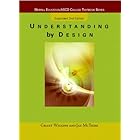
Understanding by Design, Expanded 2nd Edition


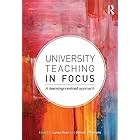
University Teaching in Focus: A learning-centred approach


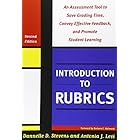
Introduction to Rubrics: An Assessment Tool to Save Grading Time, Convey Effective Feedback, and Promote Student Learning
Introduction to Rubrics: An Assessment Tool to Save Grading Time...


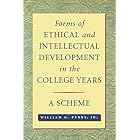
Forms of Ethical and Intellectual Development in the College Years: A Scheme
Forms of Ethical and Intellectual Development in the College Years...


Add to Wish List
Teaching at Its Best: A Research-Based Resource for College Instructors
Teaching at Its Best: A Research-Based Resource for College...


< See even more similar items