Showing posts with label ANU Climate Change Institute. Show all posts

Tuesday, June 4, 2024

Reducing consumption by making Minimalism Cool

Sarah Boddington and Rebecca Blackburn at ANU
Greetings from "Addressing climate change by reducing consumption and phasing out gas cooktops" by Sarah Boddington and Rebecca Blackburn at the Australian National University in Canberra. 

Rebecca has researched minimalists. This is a philosophy and lifestyle of owning less and less disposable items. Those surveyed wanted smaller homes, and put surplus items back in circulation. Environmental benefits were not the most important for minimalists. 

It would be tempting to evangelize minimalism for environmental reasons, but would it work? Would enough be able to adopt this behavior to be worth the effort?

Sarah is researching consumers decisions to switch from gas to an electric cooktop. Will environmental concerns and government incentives overcome social practices which see gas as better. She pointed out that new appliances brought new practices, such as the fridge making cooking in batches common.

One surprise is consumers see an efficient electric cooktop as part of installing solar panels. However they didn't realize ACT government loans are for appliances as well as panels. This could be an opportunity for companies offering solar and appliance packages. One financial benefit rarely mentioned is disconnecting gas save the supply fee.

Monday, February 5, 2024

Climate Update 2024: Extraordinarily Hot Globally

Greetings from the Climate Update 2024 at the Australian National University (ANU) where Genevieve Bell, the new Vice-Chancellor reflected on Nugget Coombs, who took her ten pin bowling. Dr Coombs is better know as one of the founders and early VCs of the ANU. Dr Bell pointed out that her predecessor had envisaged the University not just carrying out scholarship for its own sake, but addressing social issues.

Professor Mark Howden, Director of ANU Institute for Climate, Energy & Disaster Solutions and Vice-Chair of the UN Intergovernmental Panel on Climate Change then gave us the bad news on how the planet is heating faster than expected "Extraordinarily Hot Globally". There is much for those working on mitigation and adaptation.

Wednesday, March 8, 2023

ANU New Research Showcase: Climate, Energy & Disasters


Greetings from the ANU New Research Showcase: Climate, Energy & Disasters. where the Vice Chancellor is opening the event. He mentioned recent "natural" disasters at ANU. This included a flood through the Library behind him, and a hailstorm, after which the roof is still being repaired (you can see the orange plastic wrap in the photo). 

Despite the topic, the symposium has an upbeat tone, as it is about what ANU researchers have been doing to help lessen the impact of severe weather events. An example is the first presentation is on AI for prediction of cyclones.

Friday, November 9, 2018

Katharine Murphy on Climate Change

Greetings from the ANU Climate Change Institute in Canberra, where journalist Katharine Murphy is speaking on politics and climate change. She started by using a metaphor of car manufacturing from her book "On Disruption". She claimed that the "disruption" to journalism by the Internet was unexpected and sudden, like car workers turning up and funding their jobs replaced by robots. However, I don't find the claim the Internet's changes to journalism were unexpected to be credible.

A better metaphor would be if some car workers were seconded to a robot development program, and rather than keep this secret, gave their fellow assembly line workers regular reports over a decade warning the robots were going to take their jobs. The assembly line workers dismissed the reports, and rather than look for another job, re-skill for the change, or raise opposition, just kept working on the assembly line until one day they were replaced. This is essentially what happened with the media.

Katharine Murphy suggested that climate policy should not let "perfect be the enemy of good". She criticized the Greens for opposing Keven Rudd's carbon policy. She suggested we needed to "harness the moment" for climate policy. One of the audience asked about what was the role of scientists to support the young on climate change. In reply Katharine Murphy pointed out how many of the young registered to vote for marriage equality. She went on to express concern that the public become numb to news reports of climate catastrophe.


Getting back to the issue of the Internet's disruption of journalism, something similar is now taking place in universities. Students are not attending most lectures, to the point were universities are demolishing lecture theaters. Students now study mostly on-line, but most university "lecturers" do not accept this reality. At some point in the next few years the change will become very public, with closures of campuses, consolidation of institutions, students studying online at overseas institutions and unemployed academics. At that point the lecturers who ignored calls for change for years will express shock at this "sudden" and "unexpected" change. Those of us who re-skilled for the change and proposed how to adapt, will have to just say "that is unfortunate".

Wednesday, April 11, 2018

A Sunburnt Country We Can't Love

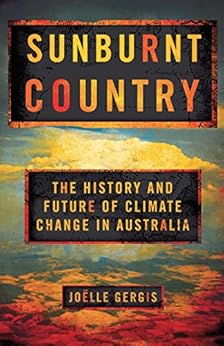
Greetings from the Australian National University, where the Climate Change Institute is hosting a talk by Dr JoĆ«lle Gergis on her book "Sunburnt Country: The History and Future of Climate Change in Australia" (April 2, 2018). This started with an excerpt from Dorothea Mackellar's poem My Country: "I love a sunburnt country ...". Then some historical climate records about great droughts and floods were discussed. The story then went back further to natural records in tree rings and coral growth. Worryingly, the records show that Australia has been subject to extreme heat, drought in the past and this will become more extreme due to global warming. Dr Gergis' book is both scholarly and entertaining, even if makes for uncomfortable reading. If you want to read the raw science, which is still readable,  Dr Gergis' thesis is available on-line.

Reference


Gergis, J. L. (2006). Reconstructing El Nino-southern Oscillation: Evidence from Tree-ring, Coral, Ice and Documentary Palaeoarchives, AD 1525-2002 (Doctoral dissertation, University of New South Wales). URL http://unsworks.unsw.edu.au/fapi/datastream/unsworks:943/SOURCE01?view=true
ps: One point I don't agree with Dr Gergis on is that global warming is the biggest intergenerational challenge ever faced. I spent my childhood expecting to die in a nuclear war. That risk is now again increasing and it is a challenge which is yet to be faced. Ironically such a war would solve global warming, by causing a nuclear winter.

Tuesday, June 20, 2017

Finkel Review Explained?

Greeting from the Australian National University (ANU) in Canberra, where I am one of the packed lecture theatre, to heard a panel of experts have promised to explain the Explain the Finkel Review of of the National Electricity Market. This is hosted by the 
ANU Energy Change Institute. I am a member, but my expertise is confined to ICT and energy use.  From a quick reading of the report, I was not impressed. Previously, Dr Evan Franklin, Senior Lecturer, ANU Research School of Engineering, an excellent seminar "Electrical power systems with high penetration of renewables: the physics behind the political bluster".

The chair,  Professor Ken Baldwin, Director, ANU Energy Change Institute, presented the "energy trilemma": environment, security of supply and affordability. The problem is to maintain supply and contain costs, while also reducing carbon emissions, which Ken characterized as a "wicked problem" and Australia was "leading the OECD pack from the rear" on emissions. He gave a quick overview of the differences of Finkel's proposal, a Clean Energy Target, compared to Australia's previous scheme and no scheme at all. He then summarized the proposal for a mandated Generator Reliability Obligation. However, to me the central problem is not the engineering and economics, but the politics of the issue. As Ken points out Australia is in the current difficult situation due to a lack of planning. The question, I suggest, is if politics will allow this planning to happen.

Ken proposed a "Expert Foresighting Group", this sounded to me a little too much like the fictional "Nation Building Authority" in the TV comedy "Utopia". What are needed is a much smaller group of experts who are able to give government quick, politically feasible options quickly. University academics are used to having weeks, months or years to come up with a "quick" answer, whereas the political process needs answers in seconds, minutes or, at worst, "Action This Day".

Next to speak:
  1. Professor Quentin Grafton, ANU: Questioned the reliability of
  2. Honorary Associate Professor Hugh Saddler, ANU: Pointed out that land clearing changes have made dramatic reductions to emissions. Apart from that he pointed out that electricity generation is one of the few areas where reductions can be made.Also he pointed out that rooftop home solar generation is not regarded as part of the national generating system. Most interestingly, Professor Saddler suggested that state targets could result in a much larger reduction in emissions than the Finkle proposals. It may be that the policy log-jam at the federal level is irrelevant.
  3. Dr Matt Stocks, ANU: Dr Stocks stated up front he assumed the future was photovoltaics, which need storage and a network. He asserted that Australia does not have a robust national network, rather a series of state networks joined together, in a line, which increases the cost of electricity. Dr Stocks pointed out that renewable supplies generally do not provide the "inertia" which coal, gas and hydro provides. Curiously, rather than suggest that this could be provided by upgrading existing conventional generators, or creating new rotating inertia sources, he suggested batteries would be used. A battery will provide power for days, not the fractions of a second inertia will. The high tech equivalent is not a battery but a super-capacitor. Battery technology is being driven (pun intended) by the automotive industry. However, some vehicles, such as the Mazda 6 use a super-capacitor for fast, short term energy storage.
  4. Mr Dan Harding, ACT Government: Pointed out that many of the Finkle report recommendations have been included in previous expert reports, but it packages these all together into a coherent whole.
  5. Dr Nathan Steggel, Windlab: Suggested that the Finkel report overestimated the cost of wind generation. He suggested that market alternatives to a Generator Reliability Obligation should be investigated. 
Overall the panel was positive on the Finkel report recommendations. 

Tuesday, December 8, 2015

Nobel Laureate on Climate Change

Greetings from the opening of the Australian National University in Canberra, where Nobel Laureate,  Professor Brian Schmidt, just opened the 2015 ANU Energy Update. In doing so he mentioned the "The Mainau Declaration 2015 on Climate Change" issued by a meeting of Nobel Laureates. At a more down to earth level he suggested that ANU staff and students should start a conversation on climate change with the government neighbors in Canberra.

The next speaker is Byron Washom, speaking on University of San Diego's Microgrid.

Monday, December 7, 2015

Live Report from Paris Climate Change Meeting

Greetings from the Australian National University in Canberra, where Associate Professor Frank Jotzo is speaking live on-line from the United Nations Climate Change Conference (UNFCCC) in Paris. He describes the mood at the conference as "cautious optimism". Frank commented that the approach having heads of state speak at the beginning, rather than then end was working well. Australia was seen to be having a positive note "Australia is back", but as significant as Canada. Frank said Australia is supporting language for a 1.5 degree target. He commented that the alternative wordings in the draft agreement were "very strong", but there would need to be a mechanism to "ratchet up" the targets. All claims from developing countries are unlikely to be accepted. Australia has pledged $200M to the green climate find and is charing that part of the negotiations. Lastely Frank commented that the section of the agreement about what countries will do domestically was "A mess of square brackets" (this being the way not-agreed text is indicated).

Frank then discussed ANU research on what Australia might do to be carbon neutral by 2050. This would be by shitting down the high polluting brown coal fired power station and replacing them with solar power.  He argued this could be done "without tears".

Later today I will be talking about how I teach ANU students to use ICT to reduce carbon emissions.

Tuesday, September 15, 2015

Microgrids Powering Australia and Indonesia

Greetings from the ANU University House at the Australian National University in Canberra, where I am taking part in a workshop with researchers from Indonesia on micro-grids to power our nations. The workshop is run by the AIC Energy Research Cluster of the Australia-Indonesia Centre.

A microgrid has small electricity generators connected to a local load. The microgrid can be connected to a larger national grid, or operate autonomously. In my graduate course "ICT Sustainability" I teach how to estimate the energy used by computers and telecommunication and, more importantly for micro-grids, how to reduce energy consumption by using ICT. Micro-grids depend on having computer systems to ensure the production and consumption of power are balanced. I will be looking at how to keep and analyze the large amounts of data needed to do this for Indonesia and Australia.

One option I have suggested is displaying energy data using mobile phone compatible web pages. Some buildings have flat screen displays dedicated to energy monitoring, but these are rarely looked at and themselves consume energy (and cost money).   A small simple web page can be displayed on a smart phone. To check it is compatible you can use the
W3C mobileOK Checker (the Australian W3C Office is at ANU).   

Some work has been done in the USA on energy data analysis:
One I idea I suggested to the workshop was to clone the ANU TechLauncher program and the Canberra Innovation Network for energy start-ups in Indonesia.

ps: It is an interesting time to be doing this, as Australia has a new government today, which may have new policies on climate change and energy use.

References

Khamphanchai, W., Saha, A., Rathinavel, K., Kuzlu, M., Pipattanasomporn, M., Rahman, S., ... & Haack, J. (2014, October). Conceptual architecture of building energy management open source software (BEMOSS). In Innovative Smart Grid Technologies Conference Europe (ISGT-Europe), 2014 IEEE PES (pp. 1-6). IEEE. http://dx.doi.org/10.1109/ISGTEurope.2014.7028784

Friday, August 14, 2015

Reducing Australian Electricity Demand

Dr Hugh Saddler will speak on "Electricity demand and Australia’s renewable energy targets: where to?" at the Australian National University in Canberra, 12.30pm, 26 August 2015.
"Average annual electricity consumption per residential consumer has been falling steadily in every state since around 2009. The presentation will examine the factors which may explain this reduction and speculate on where electricity consumption may go in the next few years. It will also include some preliminary results from an analysis of how low income households use electricity."

Thursday, July 24, 2014

Climate and Energy Research

Greetings from the "2014 ANU Climate and Energy Research Student Expo" at the Australian National University in Canberra. The event goes until 5pm and there is plenty of room, if you would like to join in.

Dr. Margi Bƶhm (CSIRO) started by talking on post PhD career pathways. But so far she has just been repeating some of the professional lessons which students should learn when they first arrive at university. Hopefully we will get on to climate and energy research soon.

Tuesday, April 1, 2014

Australian Climate Change Authority Final Report

Anthea Harris, CEO of the Australian Climate Change Authority will speak on "Australia's Targets and Progress", at the Australian National University in Canberra, 11am-1pm 29 April 2014.

First Climate Change Colloquium to Discuss Australia's Targets and Progress

This public event aims to bring some life to public debate on the question of Australia’s fair contribution to mitigating global climate change. In particular it aims to generate debate on the “Targets and Progress Review Report” recently released by the Climate Change Authority. The colloquium, which features Anthea Harris as the main speaker and a number of distinguished academics as commentators, will focus on four key scientific and policy issues: the global target for emission reductions (accounting for risks associated with targets and also scientific uncertainty); Australia’s fair share of that global responsibility; the economics of greenhouse abatement; and the path of international negotiations towards the 2015 UNFCCC conference in Paris. Panel speakers include CCI Director Professor Michael Raupach and Associate Professor Frank Jotzo from the Crawford School of Public Policy as well as Scott Ferraro from ClimateWorks. The ANU Climate Change Colloquium is a series of discussions that examines various scientific and policy aspects of climate change, featuring an expert panel of academics and practitioners. The colloquium is free and open to the public. Registration is essential, please do so at http://cci-colloq-antheaharris.eventbrite.com.au

Thursday, September 19, 2013

Climate and Energy Research Expo

The Australian National University (ANU) is hosting a "2013 ANU Energy Change Institute Student EXPO", 12-6pm, 17 October 2013, in Canberra. Students of the ANU, University of Canberra and the Australian Defence Force Academy (ADFA) are invited to report on their research at the event.

Friday, August 9, 2013

ANU Seeking Director for Climate Change Institute

The Australian National University in Canberra has advertised for a new Director of the ANU Climate Change Institute (A348-13NC Professor salary about $140,000).
We are seeking an outstanding leader to enhance the University’s reputation in climate change research and education; communicate a broad range of climate change research; inform public policy development; promote outreach and engagement with government, industry and the community and develop and implement the Institute’s strategic plans in research and education. The position of Director is a full Professor (Level E), negotiable as renewable as Director or revertible to a standard Professorial position at the end of the five year term.