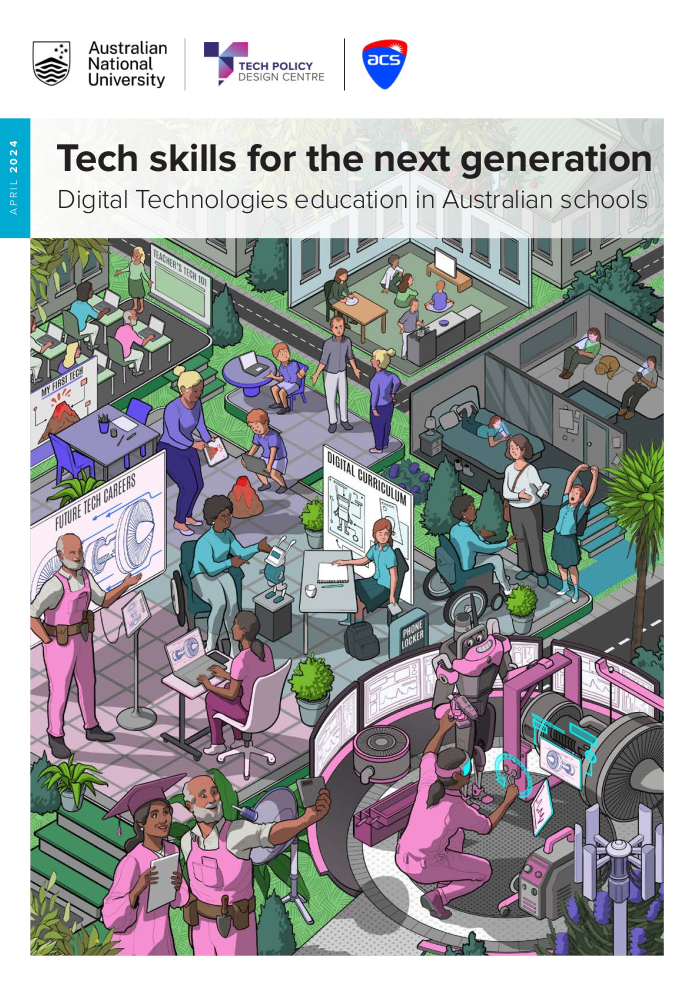
The Australian Computer society has released "
Tech skills for the next generation: Digital Technologies education in Australian schools". The report makes 11 recommendations, in 4 categories. Initial Teacher Education is the area where I suggest there is the most scope. Teachers could be trained using digital technology to effectively use it in their teaching and administration. Rather than this being seen as adding to the burden of teaching and administrative responsibilities teachers already have, digital technology could be a way to make their jobs easier.
Ensuring there are accessible ready-to-use teaching resources
1. Expand support for, and increase visibility of, the online Digital Technologies Hub to ensure teachers have access to best practice exemplar teaching modules for the DTC.
2. Improve schools’ internal information management processes regarding digital teaching resources to ensure they reach teachers who need them in the classroom.
3. Support cross-fertilisation amongst professional associations and communities of practice for the DTC.
Embedding digital-readiness training in Initial Teacher Education (ITE)
4. The Australian Institute for Teaching and School Leadership (AITSL) should incorporate into ITE accreditation a requirement that ITE programs demonstrate their capacity to prepare our future teachers to:
• teach with digital technologies (as expected by AITSL standards)
• use digital technologies within all learning areas (including Digital Literacy development)
• teach the F–10 Digital Technologies subject and/or senior secondary computer education courses.
This could be supported through the Australian Technologies Teacher Educators Network (ATTEN) to provide end-user input from Digital Technologies teachers based in each state and territory.
Supporting ongoing professional development and training for teachers
5. Ensure that training courses suitable for teachers are available and accessible across all essential areas of digital technologies knowledge and skills.
6. Identify and promote existing recommended courses that provide training in software tools and core principles of digital technologies for teachers of all year levels.
7. Invest in initiatives that support teachers to attend suitable training for digital technologies skills and in turn this will increase the number of skilled teachers at each school.
Elevating awareness of the Digital Technologies Curriculum in the community
8. Empower parents with the tools and capabilities to understand and communicate at home the value of digital technologies, including the types of technology careers that can be pursued and how the skills can be applied to solve problems in a range of industries.
9. Ensure that tools and capabilities that empower parents are inclusive and increase visibility of underrepresented groups in STEM fields, such as women and girls and Aboriginal and Torres Strait Islander Peoples.
10. Establish a national coordinated data collection of DTC learning outcomes, and communicate these outcomes to the community to build better understanding and awareness of learning and career outcomes.
11. Recognise and reward excellence in digital technologies education to increase visibility to parents and the education community and promote best practice-teaching in Australian schools.