Showing posts with label ANU Defence Studies Centre. Show all posts

Friday, September 8, 2023

VR and Virtual internships and VR for Crisis Management

The Australian Crisis Simulation Summit at the Australian National University has wrapped up after a successful week's hard work. One reason I volunteered to mentor, was to see how this was done. I have done some training at Australian Staff College, back in the days when bits of paper were used, and wanted to see how teaching in this area has evolved. Some of these techniques might be used for computer students.

What was most striking about the ACSS, was the use of video conferencing for a hybrid mode. Base of operations was in Canberra, but with groups of students, and some presenters, distributed around Australia, and a couple of US universities. This format fitted well with the subject matter. The students at each remote site were playing the role of a government agency crisis team. In reality, each team would be communicating with their counterparts electronically. Those in the main venue were in separate rooms, and also used electronic means to communicate.

Conducttr crisis simulation software was used for the simulated news items, and social media. Zoom was used for 24 hour news service. Microsoft Teams was used for team to team video. Google dos was used for group document preparation. It might be worth considering the use of a tool such as Slack, which could incorporate all these functions. However, the use of the tools which are used in the real workplace is worthwhile.

It might be interesting to include specialist technical students in the simulations. This one features cyber security, satellites, submarines and other defence related technology. One of the problems experienced in a real crisis is to quickly get usable, understandable, relevant advice from experts. It would be useful to have teams of law, computer, and engineering students practicing providing time critical advice. 

A professional media company, Shoelace Creative, was brought in to produce live TV news for the simulations, using a student with media experience as the interviewer.  For smaller scale events, this might be replaced with an AI newsreader.

A difficult question is if such simulations could be incorporated into the curriculum. This requires assessment. There is a risk that assessing the simulation would take the fun out of it for the students, and the external mentors. I suggest this could be handled in a similar way to internships: documents generated as part of the process are used for group assessment, plus an individual personal reflection. Rubrics can be used to reduce the burden of assessment for staff. 

Some VR and AR might make the simulations more realistic. One gimmick demonstrated at EduTech 2023 Australia recently was a hologram-like booth, which showed a remote presenter. A simpler form of this could be done by positioning a conventional flat screen behind a podium, so the presenter appears to be standing there. 

Thursday, September 7, 2023

Cyberwar Breaks Out at Australian Crisis Simulation

ACSS Domestic Briefing, 
in the ANU Moot Court.
Photo by Tom Worthington CC-BY 2023
Greetings from the Australian Crisis Simulation Summit at in the Moot Court at the Australian National University in Canberra. Game play became very interesting in the last round, when one team took a fake news item as real and spread it through the government agencies, causing confusion and consternation. The game masters discussed intervening. I suggested letting the game run as this was a very realistic possibility and a good learning experience. But this was disrupting the play, and so a mentor provided some advice to teams to get things back on track. 

ANU Moot Court  tea urn & banana, 
Photo by Tom Worthington CC-BY 2023

Today is "domestic" with a focus on crisis in Australia, rather than the region. Ominously, the head game-master quoted 
General Dwight D. Eisenhower's Order of the Day (1944) "You are about to embark upon the Great Crusade, toward which we have striven these many months. ...". Amidst this drama I noticed the ANU's Moot Court was equipped with a tea urn, and a banana. ;-)

More drama occurred at the start of the domestic simulation, with a system glitch. This required the team to reschedule, and also was a useful learning experience of what happens when you depend on a computer based system.

Last night there was a celebration with Canberra participants, and sponsors. This was a slightly unusual combination of glamour event, with representatives from allied government, and displays from secret government agencies (who recruit the students). 

Tuesday, September 5, 2023

Cyber Crisis Simulated

James Weatherman interviewing
Tom Worthington on SBC. CC-BY
 
Greetings from the Australian Crisis Simulation Summit at in the Moot Court at the Australian National University in Canberra. A scripted simulated cyber attack has just happened, and the pretend company representative is being interviewed on the fictional SBC (Summit Broadcasting Corporation). I thought the student playing the role was putting on a fake american accent, but it turns out they are in a team at a US university. Earlier in the day I was interviewed. The fake news channel is being provided by Shoelace Creative, with one of the studnts providing the news anchor. 

This infrastructure takes a lot of work. A lower effort way to do this would be with a synthetic newsreader, working from a prepared script.

Crisis in the Moot Court

Briefing in the ANU Moot Court.
Tom Worthington CC-BY 2023
Greetings from the Australian Crisis Simulation Summit at in the Moot Court at the Australian National University in Canberra. A team of ANU students are running simulations of national security situations (with cyber-attacks, grey-zone & information warfare, plus natural disasters), for teams students across Australia to respond to in real time. I am mentoring some local teams, using my experience working at HQ ADF. 

The Moot Court turns out to be ideally suited to running such an exercise. The main room, which is set up like a mock courtroom is used for briefings, which are sent out via Zoom. The setup resembles the sort of government briefing rooms used for real briefings. The room has a folding wall which has been deployed, so one crisis team can work in half the room. Outside is an area used for breaks. Opposite are two small Harvard style tutorial rooms, being used for smaller mentor briefings, and team work. There is a glass walled kitchen at one side of the tutorial rooms, which the student team is using as their HQ. This way they can look out to see what is happening. 

The students are wearing black lanyards resembling those worn by public servants, adding to the authenticity. Some have earpieces and walkie-talkies, looking very James Bond. ;-)

ps: It easy to dismiss the simulation as just a training exercise, and the students as just students. But some of the students work in major government security agencies, and the mentors have experience in various government roles. The scenarios they have prepared are disturbingly close to current regional and world events. At the outbreak of the Falklands War the UK Royal Marines were conducting Mountain and Arctic Warfare training. The class and trainers were sent to the Falklands to put the training into immediate practice. Hopefully a crisis in the region will not require the ACSS participants to do the same.

Tuesday, June 27, 2023

Drones, human-machine teaming, strategic influence and mass warfare

Mick Ryan
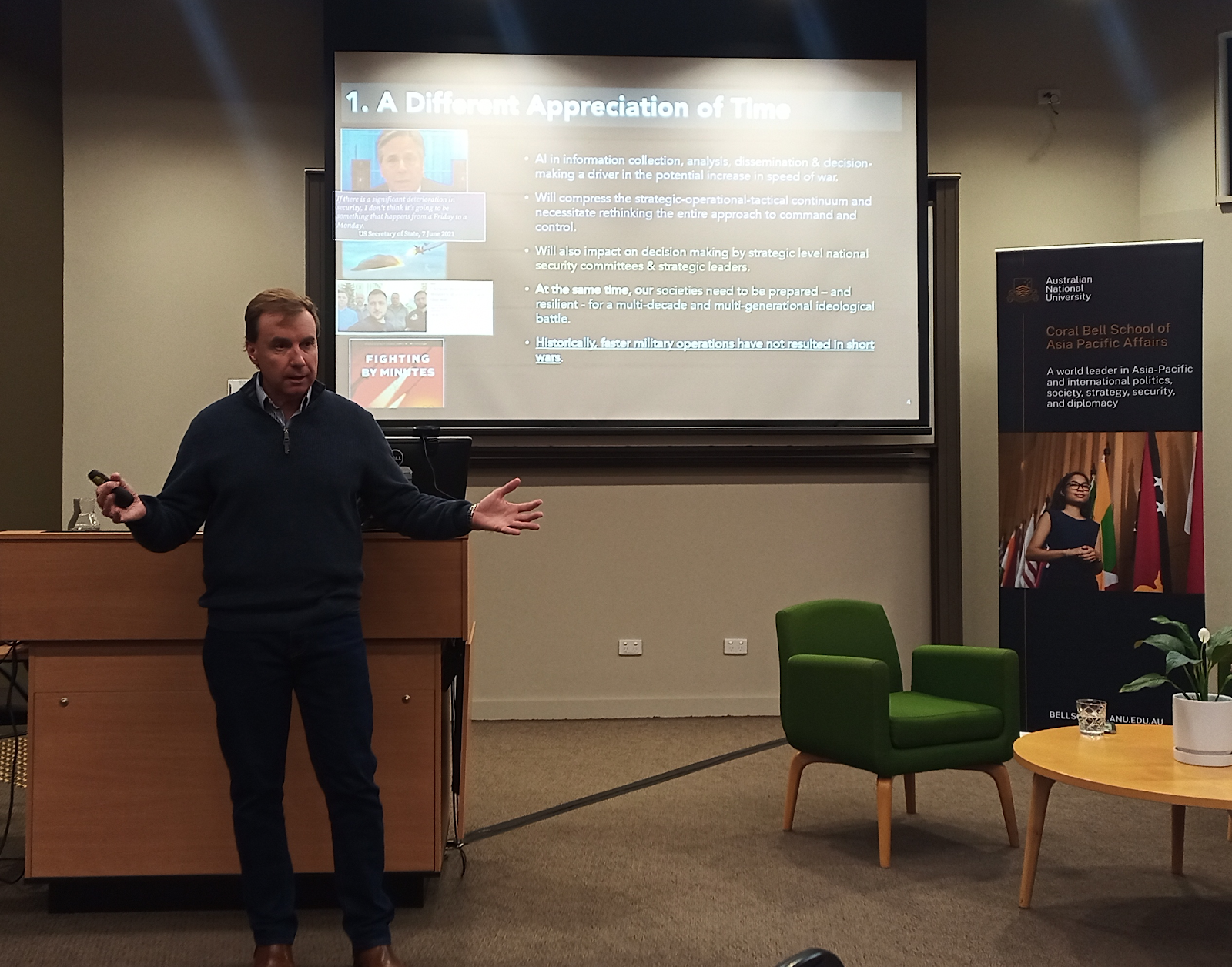
Greetings from the Australian National University, where former Major General Mick Ryan, is speaking on "Thinking About Future War: Drones, Mass, and Other Trends". His first slide had as a backdrop a map showing how to invade Taiwan (from a WWII study), but then went on to talk about Ukraine. This seminar is part of a series associated with research funded by the Australian Department of Defence (the audience has a who's who of modern military thinking, here for discussions). He pointed out the amount of time between being detected and attacked had been reduced to about two minutes, requiring very mobile forces. However, war still doesn't happen quickly. He asserted that no military trains its personnel to "partner" with machines, and that this will become more important, when there are many more autonomous systems than personnel. He also suggested we have not seen the use of drones yet (swarm countermeasures were one topic at the Navy Warfare Innovation Workshop 2020 which I helped with).

Mick went on to talk about integrating political, and military objectives, and operations. He asked for new ideas for Australian defence. He pointed out that some of Russia's new ideas have "not worked out that well". He contrasted this with Chinese new thinking, and suggested Australia needs do this. He suggested organizing the defence force differently, as current battalions are based on old Russian legions. 

I suggest one thing the Australian military can do is make better use of universities, as industry are. Each semester, ANU has about 200 students working on group computer projects and 50 interns. Some of these people work on defence and security projects, mostly in companies contracted to the Australian Government. Examples are testing new radar for missile defence (an Australian system Ukraine has asked for), and testing cyber security of software for government.  Universities across Australia are working on AI, cyber security, drones, and all that stuff. 

In answer to a question about the potential for war over Taiwan, Mick Ryan suggested drone submarines would be more useful than nuclear powered ones. Another interesting point was what is the legal liability of civilians who help with defence online. Some seem reasonably clear to me: if you report a military aircraft going over, you have become a target. A great question from a public servant in the audience was what does a mass AI western influence operation look like? The first part of the answer surprised me: NATO (as a political influence organisation). The second part was to teach children that not everything on the Internet is true. 

Thursday, October 20, 2022

US Power and Restraint in China’s Rise

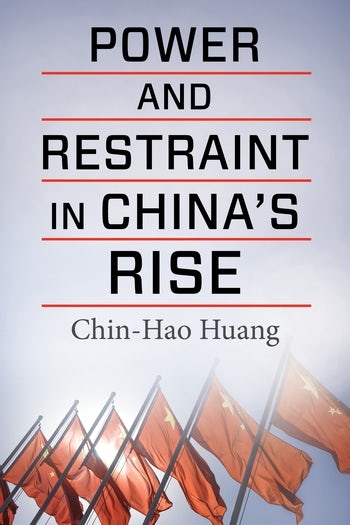
Greetings from the Australian National University, Strategic & Defence Studies Centre (SDSC) in Canberra, where Chin-Hao Huang, from Yale-NUS College is speaking on "Power and Restraint in China’s Rise". He pointed out that spending, as a percentage of GDP is falling for countries in the region is falling, so they can't be too worried about China. He suggests that collective influence of ASEAN is an alternative, being the only longstanding security architecture in existence. Professor Huang has influence not by confrontation, but consensus. I suggest this must be frustrating for the USA, Australia, and other western countries used to firmer military alliances, but is more suited to the nuances of the relationship with China.

Professor Huang outlined the Scarborough Shoal Dispute, which has been taken over by China, despite the Philippines invoking a defense pact with the USA. I suggest the problem is not so much a lack of US resolve, but not having an effective military response to grey-zone tactics. The US 7th Fleet is a very powerful military force, but a nuclear armed carrier strike group is ineffective against fishing boats crewed by militia. What are needed are large numbers of locally flagged, small paramilitary fisheries patrol and coastguard vessels, and aircraft, which can call in conventional military assets, when required. To prevent escalation, incidents can be characterized as a response to fish poaching, pirates, and other civilian criminal activities.

Professor Huang contrasted the  Scarborough Shoal situation, with Hai Yang Shi You 981 standoff, between Vietnam and China. He characterized the latter as a success for regional pressure, without US engagement. Later he pointed out that Vietnam has experience in responding to China, both politically and militarily.

Professor Huang ended by reminding us that there is policy debate in China, and the actions of other countries can give support to this who favor restraint by China.

Wednesday, March 30, 2022

Ukraine Destroyed the Myth of Russian Invincibility Says Ambassador Designate to Australia

Mr Myroshnychenko,
speaking in the ANU Moot Court.
Photo by Tom Worthington, CC-BY 30 March 2022

Greetings from the Moot Court at the ANU, where  Ukraine's Ambassador Designate to Australia is making an unscheduled speech, opening day two of
 "Russia's Invasion of Ukraine: A Colloquium". He said that the Ukraine destroyed the myth of Russian invincibility. Mr Myroshnychenko pointed out he doesn't have a background in diplomacy, but is a businessperson. However, his biography shows he is a specialist in strategic communications, and co-founded Ukraine Crisis Media. Mr Myroshnychenko will become the ambassador to Australia officially on Friday.

In answer to a question Mr Myroshnychenko said that the US Starlink satellite communications system had been useful for both civilian and military communications in the Ukraine. He also pointed out how Russia sought manipulate public opinion using messages different for internal and external audiences.

Mr Myroshnychenko referred to the use of talk shows by Russia, 
which manipulate emotions, modeled on those popularized in the USA. He then looked ahead to how difficult it will be to reeducate the people influenced by Russian messages. He pointed out how difficult this was, with people in Germany after WWII. But perhaps a better analogy today would be with those convinced by QAnon conspiracy theories.

Information Warfare Division, 
Australian Department of Defence
The Australian Government yesterday announced a doubling of the staff of the Australian Signals Directorate, and expansion of offensive cyber operations. As well as technical operations, to hack into enemies computers, I suggest it would be prudent to spend some of this money on the softer side of cyber operations, with information warfare. Australian personnel have been assisting Ukraine with cyber-security training, but I suggest there is much Australia could learn from Ukraine about information warfare.

In the Q&A I asked if Australian could learn from the information warfare situation in Europe. Mr Myroshnychenko replied that Australia could play a useful role countering Russian propaganda in the Pacific. Also Dr Robert Horvath, La Trobe University, suggested Australia could learn from Estonia's experience countering cyber attacks.

Tuesday, March 29, 2022

Alliances, Nuclear Weapons and Escalation at ANU

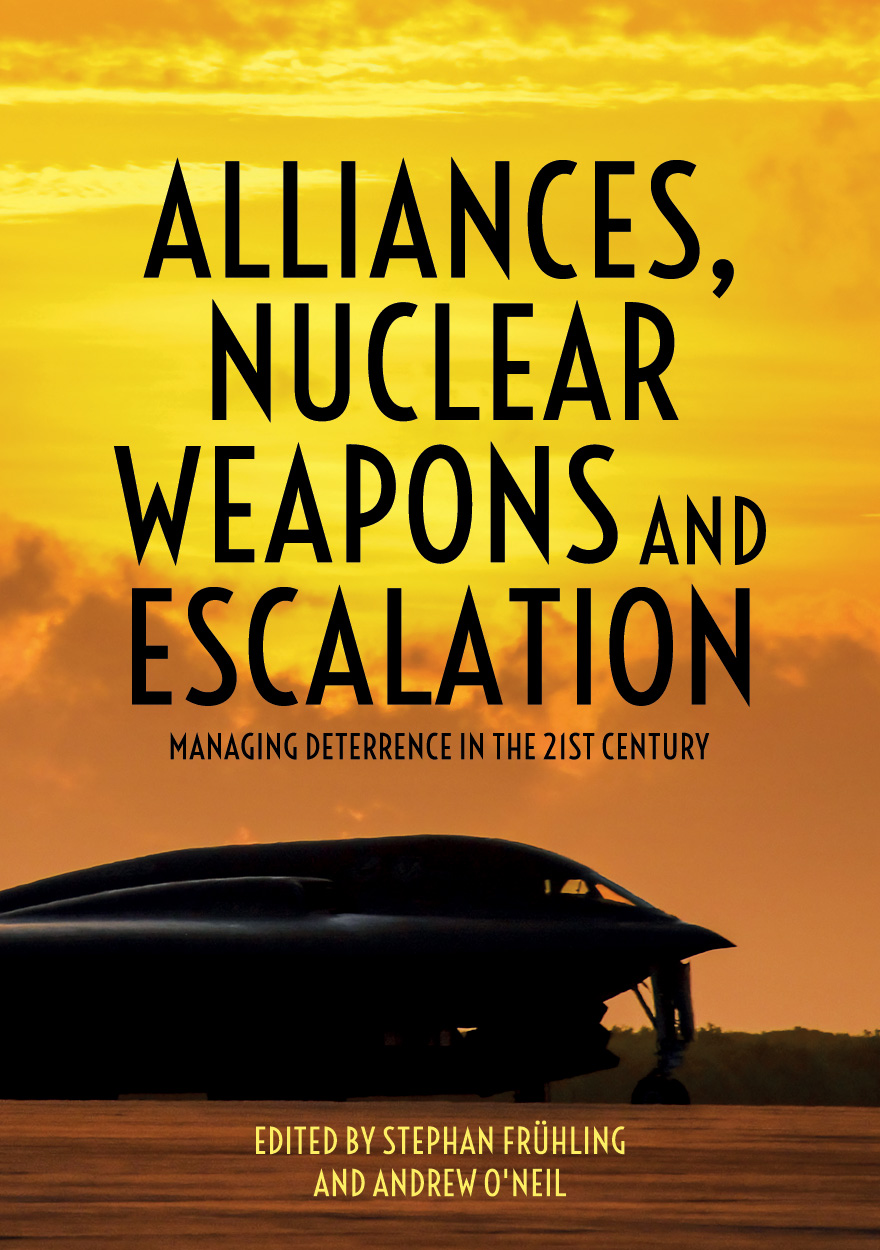
Greetings from the ANU for the launch of the book "Alliances, Nuclear Weapons and Escalation" (Frühling & O’Neil, ANU Press, 2022, available online for free).

His Excellency Ambassador Shingo Yamagami spoke first, emphasizing he was giving his own views, not necessarily those of the Japanese government. He pointed out that China's nuclear arsenal was growing, without any international agreements in place to curb expansion. Also he pointed out the irony that if Ukraine had not surrendered the nuclear weapons on its territory  at the end of the USSR, Russia would be hesitant to invade. "The penalty for complacency on nuclear weapons is, quite simply, extinction".

Dennis Richardson, former Secretary of the Australian Department of Defence pointed out that operational matters for Australia's military can quickly become policy issues. He used the example of an Australian warship operating with the US 7th fleet, in the region. As he pointed out this might seem a routine matter, but the fleet could be called into action at any time, and Australia could not simply withdraw its ship. On a personal note I saw this first had, when I spent the day on the 7th Fleet Flagship. Working on as a civilian IT expert for the Australian DoD, I was visiting my US counterpart, a naval officer. While this a joint training exercise, it was clear the fleet was ready to go to war at any time. If they did, I would have to go with them, in my borrowed uniform. 

Skylar Mastro, from the Freeman Spogli Institute for International Studies at Stanford University erased the idea of international alliances covering non military matters. One example was if China threatened to stop their students coming to Australia, the USA would ban them. Dennis Richardson pointed out that the USA and Australia have interpreted their alliance as covering cyber attacks.


 Alliances, Nuclear Weapons and Escalation, table of contents for the free HTML version:

First Page

Monday, March 28, 2022

European Ambassadors Discuss Russia in Ukraine in Canberra

 Chancellor Bishop opening the
Greetings from "Russia's Invasion of Ukraine: A Colloquium", at the Moot Court of the Australian National University in Canberra. Chancellor Bishop is opening the colloquium. With a row of distinguished European ambassadors, flags, and a judges bench behind, it is perhaps a foretaste of the war crimes tribunals to come. But those are likely years away.  

The colloquium is an example of one of the uses of a research university. Whatever the topic,  you can likely find an expert on it at a major university. This event has the ambassadors today, and the the ANU's strategic experts give their views Wednesday. 

One ambassador, mentioned the effect of cyber attacks on European countries, another the unexpected unity, but this will be tested as sanctions harm European economies, as well as Russia. Unexpected unity was mentioned again. The claim was made the war was "unprecedented", which seems at odds with Europe's bloody history. The prospect of chemical, biological and "other" (ie: Nuclear) weapons were mentioned, with the suggestion European countries needed to be ready with a response. Option may be limited as US doctrine call for a response in kind, if a weapon of mass destruction is used against it. So what happens if a stray chemical, biological, or nuclear weapon which causes mass causalities of US personnel deployed to a European ally? Also it was chilling to hear ambassador's saying their countries were preparing for war, and that under the NATO alliance, an attack on one country is an attack on all. In particular the representatives of the smaller European countries on the western edge of the EU think of themselves as already at war, by proxy. 

In his response Mr Kyle Wilson, Visiting Fellow,  ANU Centre for European Studies, suggested that the conflict started with a cyber attack on Estonia in 2007.

"Day 1: A diplomatic perspective from Europe

Panel 1: Collective responses to shared challenges

  • H.E. Dr Michael Pulch, Ambassador of the European Union
  • H.E. Mr MichaÅ‚ KoÅ‚odziejski, Ambassador of the Republic of Poland
  • H.E. Ms Satu Mattila-Budich, Ambassador of the Republic of Finland
  • H.E. Ms Kersti Eesmaa, Ambassador of the Republic of Estonia

Panel 2: The future of Europe’s security architecture

  • H.E. Mr Jean-Pierre Thébault, Ambassador of the French Republic
  • H.E. Ms Pernille Dahler Kardel, Ambassador of the Kingdom of Denmark
  • H.E. Dr Thomas Fitschen, Ambassador of the Federal Republic of Germany
  • H.E. Ms Betty Bernardica Pavelich, Ambassador of the Republic of Croatia

Day 2: Liberal democracies and threats to the rules-based international order

Date and time: 30 March, 9.30am-4.30pm

Australia’s leading authorities on Eastern Europe will examine Russia’s invasion of Ukraine from political, strategic, historical and cultural angles, and will reflect on the possible threat the conflict poses to the rules-based international order.

The speakers include Dr Robert Horvath (La Trobe University), Prof Paul Dibb (ANU), A/Prof William Partlett (The University of Melbourne), Dr Stephen Fortescue (UNSW), Mr Petr Kuzmin (President of Svoboda Alliance VIC), Mr Bertil Wenger (Konrad Adenauer Stiftung), Dr Matthew Sussex (Australian Defence College), Dr Sonia Mycak (ANU), Dr Elena Govor (ANU).

See the program and speakers here."

Thursday, July 27, 2017

Stability in the Indo-Pacific

Admiral Scott H Swift
at ANU in Canberra
Greetings from the Australian National University in Canberra, where Admiral Scott H Swift, Commander, U.S. Pacific Fleet (COMPACFLT) is speaking on Stability in the Indo-Pacific: the roles of the US and Australian navies. He had just come from taking part in  Exercise Talisman Sabre 2017 in Queensland. 

The Admiral criticized China over its actions in the South China Sea, without mentioning the country by name: "US forces will continue to fly, sail, and operate, wherever international law allows". In response to a question, Admiral Swift mentioned how being part of Operation Praying Mantis had broadened his thinking as to the role of military operations. Answering another question he spoke positively of China's One Belt One Road Initiative.

Tom Worthington aboard USS Blue Ridge
Tom Worthington
on USS Blue Ridge
I suggest that Australia needs to place an emphasis on soft power, including through the provision of aid, including education, to countries of the region. In 1997 I observed a joint Australian-US exercise on board the USS Blue Ridge, flagship of the 7th Fleet in the Coral Sea. A US Carrier Strike Group is an impressive force, however it is an expensive resource and can't everywhere all the time.

Tuesday, March 22, 2016

Why China Shouldn't Join the INF Treaty

Yesterday Professor Bradley Thayer, University of Iceland talked at the Australian National University in Canberra on "INF Treaty: Why China Should Join". Professor Thayer argued for joining the USA and Russia in the Intermediate-Range Nuclear Forces Treaty (INF), which banned ground-launched missiles with ranges of  500–5,500 km from Europe. He argued this would improve strategic stability for China. However, Professor  Thayer  undermined his argument by claiming Russia violated the Treaty by testing a land based cruse missile.

https://en.wikipedia.org/wiki/Northrop_Grumman_X-47B
The geography of East Asia and the technology of 2015, I suggest, is different to that of Europe in the 1980s. The INF addressed a potential land conflict in Europe. China has a long coast and faces a threat from the sea. The INF would ban Chinese land based missiles, while allowing the sea based weapons of its potential adversaries. Also it is not clear if armed UAVs (pilot-less aircraft), on land or sea based, would be banned under the treaty.

Professor Thayer also claimed that China was not transparent as to its military strategy. However, a quick web search finds the full text of "China's Military Strategy" (State Council Information Office of the People's Republic of China, Peoples Daily, 26 May 2015). The strategy is as clear as the recent Australian Defence White paper.

Tuesday, August 13, 2013

Learning Counterinsurgency at University

Greetings from the Australian National University in Canberra, where Dr. John A. Nagl, Lieutenant Colonel, United States Army (Retired) is speaking on "Learning to eat soup with a knife - counterinsurgency Iraq and Afghanistan". He is the author of "Learning to Eat Soup with a Knife: Counterinsurgency Lessons from Malaya and Vietnam" (University Of Chicago Press, 2005).

Dr. Nagl explained the title of his book (and thesis) came from  T. E. Lawrence's ("Lawrence of Arabia") book Seven Pillars of Wisdom. (on page 136 of the Wilder Publications 2011 Edition). His thesis is that the US Army was not prepared for counterinsurgency in Vietnam and after learning the lessons in that war decided not to do so again. As a result the US Army had to relearn counterinsurgency in Iraq.

Dr. Nagl explained how counterinsurgency depends on intelligence information rather than firepower. He detailed the importance of providing infrastructure (roads, water sewage) to the civilian population, which required liaison with the civilian aid agencies. He likened the current conflicts as being similar to the Cold War, being dependent on economic development, rather than military force.

Dr. Nagl suggested that the Afghanistan government will survive, provided 15,000 US and European military personnel are kept in country indefinitely, along with funding.

Dr. Nagl  asked why great power conflict had reduced. He suggested this was due to nuclear weapons deterring large wars and general improvements in economic conditions reducing the impetus for war. He suggested the photocopier brought down the Soviet Union and the smart phone would bring down the Communist Party of China. This seemed an overly simplistic view to me. Professor Christian Goebel, Vienna University, will provide a more useful analysis in "E-monitoring and regime improvement in China: technical capabilities and systemic limitations", at ANU 4:00pm 10 September 2013.


I asked Dr. Nagl if the US Army should be able to conduct counterinsurgency, as this is more a role for the US Marines and special forces. Most medium to large countries have their military structured with a large conventional force and smaller more flexible forces for counterinsurgency. He responded that Iraq required more personnel than the special forces had. He suggested that as the US reduces its armed forces, the more experienced NCOs and Colonel should be retained to retain corporate knowledge.

It would be interesting to hear Dr. Nagl  views on the Australian Army. The ADF appears to be planning to re-fight US Navy's war in the Pacific in World War Two, building up a long range submarine force and carrier battle groups with amphibious assault capabilities. It is unlikely that the Australian government will provide sufficient resources to purchase all of the hardware required, or the even more expensive personnel and if they did it is not clear how such a force would be used. It is more likely that the ADF will be involved in counterinsurgency operations where sophisticated equipment is, at best ineffective and may actually make the situation worse by isolating the personnel from the local population.

In my view the ADF and the Australian Government are failing to invest sufficient resources in cyber-warfare. For this I proposed a "Australian CyberWarfare Battalion".

This was one of a series of talks at the ANU Strategic & Defence Studies Centre. The center teaches senior military officers the Australian Defence College, as well as public servants and others.