Showing posts with label disaster management. Show all posts

Tuesday, August 6, 2024

Minister says we are still putting homes in harm's way

The Hon Stephen Jones MP,
Assistant Treasurer and Minister
for Financial Services

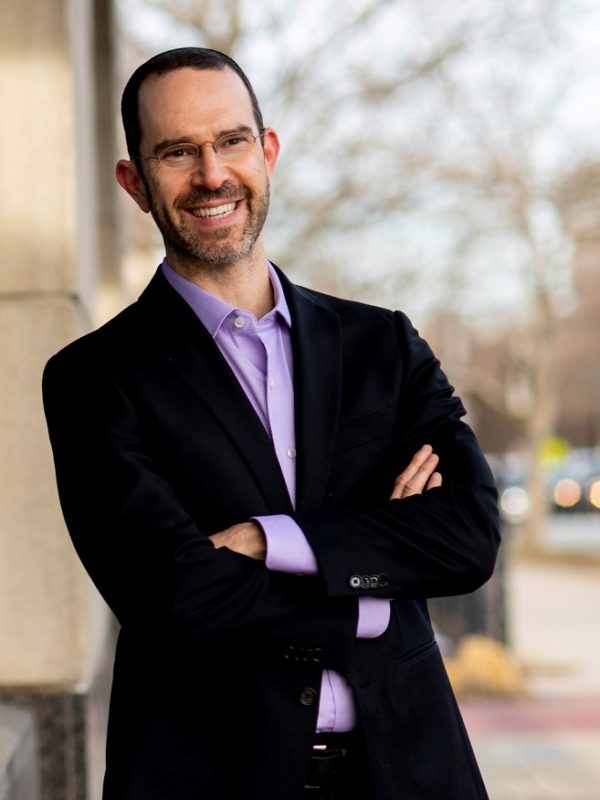
Greetings from the ANU Disaster Solutions Update 2024, with Stephen Jones, Minister for Financial Services giving the keynote at the Australian National University's Institute for Climate, Energy & Disaster Solutions. He pointed out that in the past government have not done a good job, for example building low cost housing in areas which flood: "Its the fact that we are still putting homes in harm's way" , "We have to stop doing dumb things." He then went on to point out the importance of insurance, not only in paying out, but also influencing what gets built where. He went on to discuss what measures government needs to take to reduce the risk, encouraging people to put in place mitigation measures, as well as action by government.

The event is available live online

Thursday, August 3, 2023

Catastrophic Events as the New Normal

Greetings from the ANU Disaster Solutions Update 2023 at the Australian National University. This event from the ANU INSTITUTE FOR CLIMATE, ENERGY & DISASTER SOLUTIONS is a bit like a disaster move. The part where the scientists calmly tell the decision makers about all the terrible things which are going to happen, which can't be prevented due to previous inaction, just mitigated. We can take measures to lessen the impact of fires, floods, and storms, but we can't stop them increasing in frequency, and intensity.

ANU is also offering a  Disaster Solutions Professional Short Course16 August.

Tuesday, May 9, 2023

Social infrastructure stronger than concrete

Daniel Aldrich
Greetings from the ANU College of Asia and the Pacific, where Daniel Aldrich is speaking on "Modest but critical: how we overlook social infrastructure at our peril". He argues that facilities like parks, churches, and libraries make communities more resilient when there is a disaster, to such extent that they reduce deaths due to a disaster more than hard infrastructure, such as sea walls. I asked about online social infrastructure and Dr Aldrich suggested that hybrid was best, combining physical infrastructure and online. 

It occurs to me that hybrid also makes public funding easier. It will be much easier to convince a politician to spend money on online forums, if they are associated with a building they can open. However, this may require new skills, and tools of those managing the infrastructure. As an example, public libraries host events, but these are purely physical. Similarly the act of going in to borrow a paper book is social, in that you might bump into someone. However, if you borrow an e-book, or audio book, online, it is just you and the computer. It would not be difficult to add some social aspect online, given you know what books people are interested in. However, libraries tend to use off the shelf electronic borrowing systems without a social aspect.
In answer to another question, Dr Aldrich speculated that there might be social spaces where leaders congregate. There are, and occasionally I stumble into them. One is the green room at a conference, and another is the cafe at Parliament house Canberra. There are a plethora of such places for different groups, such as the Bangalore Club (which I stayed at recently),  and affiliated institutions.

Tuesday, June 22, 2021

Solving the Big Problems

 Greetings from the Superfloor of the Marie Reay Teaching Centre at the Australian National University, were I am taking part in a planning meeting of the new Institute for Climate, Energy and Disaster Solutions (ICEDS). This merges three previous institutes, on disaster, energy and climate. The new name also emphasizes finding solutions, not just identifying problems. The Vice Chancellor emphasized this in his opening address, while reminding us of the challenges the university had faced recently, with fire and flood, as well as COVID-19, he suggested a positive attitude for the future.

After some speeches the people from across the university will look at what to concentrate on. There is a list of dozens of potential topics proposed, which needs to be refined.

Wednesday, March 23, 2016

Modeling Disaster Resilience

Greeting from Habitat for Humanity Australia's office in Sydney, where I am taking part in a workshop on building a disaster simulator for training emergency workers. This is part of research by University of Newcastle and RMIT University on "Modelling disaster resilience: enhancing student learning through trans-disciplinary simulation of wicked scenarios" (RES-SIM). The Project Team is Dr Jason Von Meding, Dr Sittimont Kanjanabootra, Dr Helen Giggins and Dr Vanessa Cooper. Also University of Newcastle has also become an International Training Centre for the United Nations Institute for Training and Research (UNITAR).

This is of interest as I use scenarios in training ICT students in ethics. This year I prepared a "Cyberwar Over the South China Sea", for teaching ICT ethics. This has created interest from emergency and security organizations for training staff. It was designed as purely a paper exercise, but as if there is interest it could be provided with IT support. This what the RES-SIM project is proposing to do, but I have in mind just using the same e-learning software used for courses, rather than specialized simulation software.

RES-SIM is proposing to use systems dynamics to create a complex adaptive model of an emergency relief operation:
Societal systems and subsystems (e.g. health systems, transport systems, political systems) are increasingly vulnerable to a range of destabilising variables, from the immediate impacts of disasters (natural or man-made) on various system components to the subsequent responses of decision-makers. Consequently there is an expanding market for courses and degree programs in the disaster realm, at undergraduate and postgraduate levels, from various disciplinary perspectives. There is, however, a gap in the current education and training of disaster responders, just as there is a lack of understanding of whole-of-system dynamics. The RES-SIM project will deliver a conceptual disaster system model and scenarios for proposed educational simulation through stakeholder engagement (workshops and focus groups) and use case analysis. The project represents value to higher education in Australia through the provision of tangible experience of solving wicked problems in a trans-disciplinary environment for students who might otherwise emerge with purely theoretical knowledge of complex systems. From "Modelling disaster resilience: enhancing student learning through trans-disciplinary simulation of wicked scenarios", RES-SIM Project, OLT 2014

Unfortunately the RES-SIM workshop only spent the last ten minutes of the three hours on what for me was the most important question: "How do we teach this stuff?".

Wednesday, November 19, 2014

Citizen Mapping in Indonesia

Greetings from  the "Big data, big opportunity" conference, at the Australian National University in Canberra, where Christina Griffin is speaking on "Open access spatial data for effective disaster risk reduction". She is emphasizing the use of open street map for dealing with disasters in developing nations. While crowd sourced mapping data has limitations, it is better than no data at all. She is studying vulnerability to disasters in central Java, Indonesia. It happens I helped with the deployment of Sahana open source software for the 2006 Yogjakarta Earthquake in Indonesia.

Tuesday, August 13, 2013

On-line Education for Disaster Management

The Sahana Foundation, which I am a member of, provides free open spruce software for use in disaster management. The software is maintained and deployed by volunteers who are trained at "SahanaCamp". These events are run around the world for the volunteers. An interesting option now being considered is the use of flip classroom teaching and e-learning, with some form of certificate for attendees.