Showing posts with label policy. Show all posts

Thursday, November 27, 2025

China's Digital Economy and Moore's Law

 Greetings from the Australian National University's China Update. The first session is on China's digital economy, innovation, finance and growth. Harry X Wu started with industry policy implications and the difficult issue of productivity. He argues ICT drives China's productivity, despite the "productivity paradox". This is due to government policy promotion of ICT in State Owned Enterprises (SOE). He suggested this benefited from Moore's Law, but unevenly distributed across the economy. 

I suggest that this analysis could be applied to other fields, such as defence. There is concern in Western countries over the growth of China's military capabilities. This comes party from government increasing investment but also from applying manufacturing capabilities. Western countries will tend to produce a few of each aircraft, tank or ship, thus making them expensive. China can afford to make more by making more. The other factor yest to be appreciated is AI. 

Recently I was discussing the role of drone submarines with a defence specialist. They argued these had limited use as it is very difficult to communicate with a submarine, so they could not be remotely controlled. This missed the point that these will be tasked like a crewed submarine: given patrol orders then left to execute them, reporting occasionally from periscope depth by radio or laser. The use of a lethal AI system might seem problematic but sea mines use much less intelligence.

Sherry Tao Kong argued that China has a widely adopted digital payment system, but it lacks depth in digital finance. That is you can make payment for goods with Alipay or WeChat pay, but not conduct other financial transactions, such as taking out a loan, or buying insurance. There is also a gap between rural and urban users. I had experience of lack of digital transactions this week when I tried to take out car insurance with NRMA Insurance. I could get a quote online, gut had to call to get the policy issued, despite being an existing customer. It took three attempts to make the payment, due to the poorly designed process, while the people at the car dealership waited to give me the car.

Yanrui Wu cited China's digital economy action plan. The most interesting part for me is digital talent development. Interestingly Dr Wu pointed to the high density of fibre optic cables in China as a measure of digital economy. This also would make the country more resilient to natural disasters and military attacks. 

This was an interesting session but not long enough for questions.

Monday, July 28, 2025

Rebuilding the public service with AI

Image generated by Google Gemini,
for a pod based
interplanetary transport system

Greetings from the AI Colab at the Australian National University in Canberra, where I am taking part in "From red tape to algorithm: Reimagining the public service in an AI age". I am not exactly sure what the event or the AI Colab are, but as it is being hosted in the ANU College of Systems and Society, near my office, I thought I would come along. When I registered I though this was by the ASD-ANU Co-Lab, but apparently it is another collab. Last week I was at an event on AI and ACT Government

We were give the exercise to image a future service based on three randomly chosen cards. My team came up with pod based interplanetary travel. I asked Google Gemni for an image and presentation and it came up with the appended description and image. 

After another warm up exercise, we got on to actually talking about public service. In particular, in Australia we have three levels of government (in Canberra just two). I argue there is in effect a fourth level for many people, the cluster housing management where they live (I live in an apartment building which has two levels of management, for parks, energy, and waste disposal). 

One obvious, and for me overriding, point for me on AI and government is that the people who do it need to be trained in how to do AI. Some of the teams and interns aI am teaching are studying AI and implement projects using it for government. ?". 

At the end of the event I asked "What is the AI Colab?". Several people tried to explain it, without success. I found a website, but it still is not clear. I suggest a plain English description is needed.

The Pod Transport System

Here is a presentation outline for a pod-based interplanetary travel system, styled with a "NASA punk" aesthetic. This style combines the optimistic, analog-heavy feel of 1970s and 80s space exploration with a grittier, more lived-in, and often retro-futuristic edge. Think a mix of *Alien* and the Apollo program.

---

"## **Title Slide:**

**Title:** Project: Peregrine - A New Era of Interplanetary Travel

**Subtitle:** The Pod-Based System for Human Exploration

**Image:** A stylized, high-contrast image. On the left, a detailed drawing of a modular "Peregrine" pod, with visible welds, rivets, and a faint glow from its propulsion system. On the right, a silhouette of a massive, retro-futuristic "mother ship" in deep space. The background is a mix of star fields and faint, blueprint-like lines.

**Aesthetic:** NASA logo in a slightly distressed font, analog dials and gauges in the corners, text in a classic, bold, sans-serif font like Helvetica or similar.

---

## **Slide 2: The Challenge**

**Title:** The Interplanetary Problem

**Image:** A grainy, slightly distorted photo of a classic rocket launch (like the Saturn V), with a faded red filter over it. Overlayed text reads: "Long-Duration Missions. High Cost. Limited Flexibility."

**Bullet Points:**

* **Long Transit Times:** Current propulsion methods make journeys to Mars and beyond measured in years, not months.

* **High Development Costs:** Each new mission requires a bespoke, single-use vehicle, driving up costs and limiting mission frequency.

* **Crew Burnout:** Confinement in a single vessel for years on end leads to psychological and physiological stress.

* **Lack of Redundancy:** A single catastrophic failure can doom an entire mission.

**Aesthetic:** Blueprint-style diagrams of existing spacecraft, annotated with problem descriptions. "CLASSIFIED" or "INTERNAL USE ONLY" stamps in the corner.

---

## **Slide 3: Our Solution - Project Peregrine**

**Title:** A Paradigm Shift: Modularity & Reusability

**Image:** A clean, exploded-view diagram of the Peregrine system. It shows a central "mothership" or "hub," with multiple individual "pods" docking with it. Each pod is labeled with its function (Crew, Cargo, Science, Habitation).

**Bullet Points:**

* **Modular "Pod" System:** The core of our design. Individual, self-contained units for specific functions.

* **The *Aethel* Mother Ship:** A reusable, nuclear-thermal propulsion (NTP) vessel designed to transport pods between planetary orbits.

* **Efficient Mass Transport:** The pods are designed to be launched individually from Earth via conventional rockets or space elevators, then assembled in orbit.

* **Mission Flexibility:** The same system can be reconfigured for a Mars mission, an asteroid mining operation, or a deep-space science probe by simply swapping out pods.

**Aesthetic:** The diagram should look like a cross between an engineering schematic and a piece of concept art. Hand-written annotations, faded paper textures, and faint grid lines.

---

## **Slide 4: The Peregrine Pods**

**Title:** Anatomy of a Pod

**Image:** A detailed, cutaway view of a single "Crew Pod." The interior is visible, showing a small living space, a bunk, a control panel with chunky buttons and toggle switches, and a small porthole. The aesthetic is cramped but functional, with visible wiring and exposed pipes.

**Bullet Points:**

* **Crew Pods:** Accommodate 2-4 astronauts. Equipped with life support, individual bunks, and personal communication terminals. Designed for comfort and psychological separation.

* **Habitat Pods:** Larger pods with communal spaces, exercise equipment, a medical bay, and hydroponics for fresh food.

* **Science Pods:** Dedicated labs with specialized equipment for astrophysics, geology, or biology experiments.

* **Cargo Pods:** Simple, robust containers for equipment, supplies, and rover parts.

**Aesthetic:** The diagram should be highly detailed, almost photorealistic, but with a grainy, analog quality. Text labels should look like they were typed on a typewriter.

---

## **Slide 5: The Journey (Phase 1)**

**Title:** From Earth to Orbit

**Image:** A cinematic, slightly overexposed photo showing a series of Peregrine pods being launched into low-Earth orbit (LEO). They look like industrial, chunky capsules. The Earth is a beautiful blue orb in the background.

**Narrative:**

1.  **Launch:** Individual pods are launched from Earth using existing launch infrastructure. This distributes the massive weight and logistical burden.

2.  **Orbital Assembly:** The pods are then docked with a pre-positioned *Aethel* mother ship in LEO. Crew pods are the last to arrive, ensuring a shorter total time in space for the crew before the main journey.

3.  **Final Checks:** Systems are checked and re-checked by automated probes and the crew. Final trajectory is calculated.

**Aesthetic:** The images should be evocative and slightly cinematic. Faded colors, visible lens flare, and a sense of scale and ambition.

---

## **Slide 6: The Journey (Phase 2)**

**Title:** The Interplanetary Transit

**Image:** A high-resolution, artistic rendering of the *Aethel* mother ship in deep space. The NTP engines are glowing with a faint, blue-green light. It is a massive, complex structure with many pods attached. The image captures the loneliness and vastness of space.

**Narrative:**

1.  **Nuclear-Thermal Propulsion (NTP):** The *Aethel* uses its powerful, efficient NTP system to accelerate the entire assembly. This provides a much faster transit time than chemical rockets.

2.  **Crew Comfort:** During the journey, the crew can move between different pods, reducing the feeling of confinement. They have access to a larger hab pod and can conduct research in the science pods.

3.  **Redundancy:** In case of a major system failure on one pod, the crew can evacuate to another, or the affected pod can be jettisoned.

**Aesthetic:** The image should be beautiful and awe-inspiring, but with a sense of the gritty, industrial nature of the machine. Visible heat vents, solar panels that look slightly weathered, and the distinct, analog feel of the Peregrine design.

---

## **Slide 7: Arrival & Mission Deployment**

**Title:** Separation and Landing

**Image:** A diorama-like image showing a single, streamlined Peregrine pod detaching from the *Aethel* in orbit around Mars. Below, on the Martian surface, another landing pod is deployed, its retro-thrusters firing. The Martian landscape is red and dusty.

**Narrative:**

1.  **Orbital Detachment:** Upon arrival, individual pods are detached from the *Aethel* and placed into the target planet's orbit.

2.  **Surface Landing:** Specialized landing pods (with built-in heat shields and retro-thrusters) are used to transport crew and cargo to the surface.

3.  **The *Aethel*'s Role:** The mother ship remains in orbit, acting as a command and control hub, a resupply depot, and a reusable "bus" for the return journey.

**Aesthetic:** The image should have a sense of action and purpose. The colors are muted and realistic. A small, stylized NASA logo can be seen on the side of one of the pods.

---

## **Slide 8: The Return Journey**

**Title:** Reassembly and Return

**Image:** A final cinematic shot showing the *Aethel* mother ship, now with fewer pods attached, accelerating away from Mars. The image is a reverse of the journey to Mars, with the home planet as a distant, beckoning point of light.

**Narrative:**

1.  **Return to Orbit:** Crew and cargo are transported back to the *Aethel* in orbit.

2.  **Pod Recovery:** The *Aethel* can recover some of the pods, or they can be left behind to form the basis of a permanent colony.

3.  **The Return:** The *Aethel* begins its return journey to Earth, carrying the crew and mission-critical samples.

**Aesthetic:** A final, poignant image that evokes a sense of both accomplishment and the long, hard road ahead. The visual style remains consistent with the previous slides.

---

## **Slide 9: Why Peregrine?**

**Title:** The Future is Modular

**Image:** A split-screen image. On the left, a schematic of a traditional, monolithic rocket. On the right, a schematic of the Peregrine system, showing its modularity and interconnectedness. Text boxes highlight the advantages.

**Advantages:**

* **Cost-Effective:** Reusable *Aethel* mother ship dramatically reduces per-mission cost.

* **Scalable:** Missions can be scaled up or down by adding or removing pods.

* **Safer:** Multiple redundant systems and the ability to jettison failed pods.

* **Faster:** NTP system shortens transit times, reducing crew exposure to radiation and psychological stress.

* **Sustainable:** The system forms the basis for a permanent, interplanetary logistics network.

**Aesthetic:** Bold, impactful text. The schematics are clean and easy to understand. The overall tone is one of confident, optimistic progress.

---

## **Final Slide:**

**Title:** Project: Peregrine

**Subtitle:** The Next Step for Humanity.

**Image:** A striking, stylized logo for "Project Peregrine," looking like a cross between a NASA mission patch and a company emblem. Below it, the tagline: "Build. Explore. Return. Repeat."

**Contact Information:**

* Confidential NASA/Internal Use Only

* Date: July 28, 2025

**Aesthetic:** The final slide should feel like a powerful and memorable conclusion. A bold, simple design with a strong, optimistic message."


Tuesday, April 19, 2022

Changes to universities and campuses

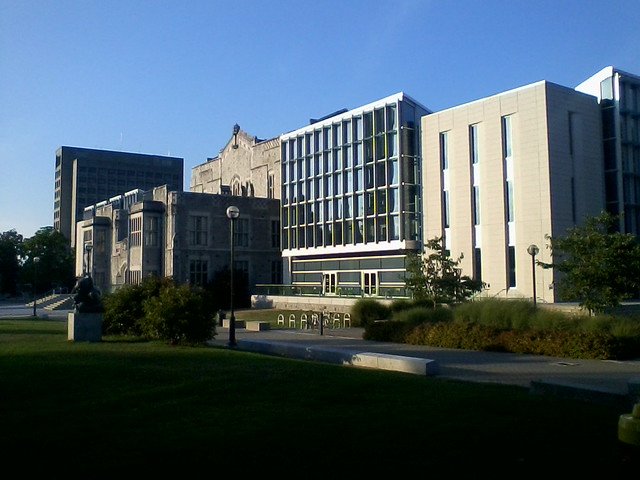
Geoff Hanmer's article in The Conversation is titled "A century that profoundly changed universities and their campuses", but I have no idea which hundred years is being referred to.

Hanmer starts on July 16 1945 with the first a bomb. As he notes this was largely the product of universities. However, that was not a new development, with universities contributing to other weapons development in WWII, for cryptography, radar, medicine, and other fields. Waiting to see inside the reactor at Lucas Heights I once bumped into Professor Bennett, who helped build the world's first practical stored program electronic computer. He commented that some of his generation went into radar like him during WWII, and some nuclear energy. 

Hanmer claims that the library was the major capital commitment for universities before WWI, but after it was laboratories and equipment for them. I find this surprising, as I would have thought buildings were the major cost. Also this doesn't include salaries for staff, which did and still do make up the major component of coast for universities, both for research and teaching. 

As Hammer points out, post WWII new Australian campuses were well outside city centers. To some extent that has now been reversed, with universities now establishing city campuses, in high rise buildings. The existing city campuses are also being built up, with accommodation, and entertainment, as well as classrooms, offices, and labs.

Hammer comments that "Broad-acre campuses are popular with students", but how much time do students spend on campus? I never set foot on the campuses of the last two universities I studied at (despite having to pay a fee to maintain the ovals at one of them). 

Hammer ended by commenting broad-acre campuses are also popular with companies. I didn't really see what this had to do with universities. Also this is a very limited analysis, not considering distributed campuses, or the effect of COVID-19 in popularizing of working, and studying remotely. A university will need some office space for a cadre of staff, and perhaps to help market the image of a university, but how much space does it actually need for teaching and research? Could the research facilities be better collocated with industrial clients? The best place for students, I suggest, is in a workplace, and the best place for researchers is in the industry, or field?

Hammer's article includes a photo of the National University of Singapore, with its generous campus. However, this doesn't mention the many other educational facilities crammed into much tighter spaces all over Singapore. Also it doesn't mention that Singapore was a leader in planning for online learning after SARS-COVID-1.

In my 2020 talk on "Higher education after COVID-19", I suggested  the High End Campus of The Future Looks Like a Mall, the Medium Level Campus Looks Like an Office Block, the Work Integrated Learning Campus a Hotel, or a Government Agency, and the Multi University Campus Building.


Monday, October 19, 2020

ACT Higher Education Post-COVID-19 Strategy

Canberra's universities need to change how they work to remain viable during, and after ,the COVID-19 emergency. The major post-secondary educational institutions in the ACT are the Australian National University, University of Canberra and the Canberra Institute of Technology. I have studied at all three and am on the staff at ANU, however, these suggestions do not necessarily reflect the current policy of any, or of the ACT Government. I will be discussing some of this at an ANU symposium on Thursday.


The approach to COVID-19 has been short term, assuming that it will be over in months. However, it may take years to recover and it is certain there will be further pandemics in the future. Also the geo-political situation Australia finds itself in may result in international students again being unable, or unwilling, to study on Canberra's campuses, without warning. In addition other countries are offering increasingly attractive quality online and blended learning. Both Australian and international students may decide to take up those offers, if Canberra's institutions do not have quality, cost effective, flexible educational offerings. 

1. Adapt Infection Control Measures for Institutions

Reduced distancing for students

COVID-19 restrictions in the ACT have been eased, but even the current STAGE 3 makes it difficult for educational institutions.  As an example, the ACT requires persons to remain 1.5 m apart. I propose that for educational institutions, this be reduced to the WHO recommended distance of 1 m

Where seated, people should be able to be 250 mm apart, side to side. This would allow existing fixed seating lecture theaters to be used at 50% capacity, with every second chair empty. Active lecture theaters, flexible learning spaces and laboratories could be used at full capacity. Institutions should be encouraged to build these guidelines into the design of new teaching spaces to reduce infection rates for annual respiratory infections and allow for future outbreak measures.

Tracking on campus

The ACT Government and institutions should commission a tracking application compatible with the Apple/Google Privacy-Preserving Contact Tracing Standard. Unlike the current Australian Govenrment's COVIDSafe App, this would be reliable, effective and voluntarily taken up.

2. Training for Hybrid Teaching 

Canberra's university have been able to quickly introduce online learning for students unable to get to campus. Unfortunately, most people teaching at university have not been trained to teach online. and have no formal qualifications for doing so. Vocational teachers at CIT, and private providers, are required to have a qualification in training and assessment. It is proposed that the ACT Government assist Canberra's universities to introduce a qualification for university teachers at least to the standard for vocational education. This could be provided a set of micro-credentials building to an AQF qualification.

3. Offering Hybrid Qualifications

In the past domestic and international students have been required to move to Canberra to undertake the majority of their university studies. I suggest this be changed so that a typical student can undertake 80% of their study online. The ACT Government can lobby the federal government to make the necessary changes to visa rules for international students. The Canadian government has already eased its visa rules, making Australia a less desirable destination. 

The ACT Government can assist Canberra's universities to develop advanced qualifications in the design and delivery of education to provide a quality online experience. This can then be used in marking campaigns national and internationally which emphasize students can have both the flexibility of an online education and the option of quality lifestyle experience in Canberra, leading to a world-class qualification.

4. Work Integrated Learning

Many vocational qualifications require students to undertake work experience as part of their degree. This is increasingly seen as a desirable part of any university qualification. However, international students experience problems obtaining access to a workplace in Canberra, due to federal government restrictions on non-citizens working for the public service and for government contractors. I suggest the ACT Government assist the Canberra Innovation Network to expand its current start-up program,. Also the ANU's Innovation ACT and TechLauncher programs could be expanded to provide cross institutional participation.

5. Vocational Supplementation to University Qualifications

The Canberra Institute of Technology has the capacity to provide training to supplement the university education of students. I suggest the ACT Government work with the universities to develop and market standard packages of degrees with vocational qualifications.

Tuesday, December 2, 2014

Will Higher Education Reforms Position Australian Universities to Compete On-line?

The debate over changes to Australian Higher Education has failed to address the major challenges which Australian universities face. Australian higher education policy needs to change to accept the reality that Australian students need vocationally orientated education and this can be delivered most effectively on-line.

The 2014-15Australian Federal Budget included reforms to the funding of higher education, most significantly, from 2016, the removal of the government imposed limit on the fees universities could charge domestic students (Australian Department of Education, 2014). The intention was to introduce this change from 2016, but the measures have been held held up in the Australia Senate, where the government does not have a majority. Negotiations with minor parties might see some form of legislation pass during 2015 (Knott,2014). 

However, proposals for universities to set their own fees, structural adjustment fund to help universities with the change and a scholarship scheme for regional students will not address the needs of Australian students. This policy misdirection is similar to ineffective government efforts to restructure the Australian motor vehicle industry, with all manufacturers announcing they will cease production by the end of 2017.

Hannah Forsyth's "A History of the Modern Australian University" pointed out that Australian universities were created to deliver practically orientated education in areas important to the nation, such as mining. The most effective and efficient to provide vocationally orientated education now is on-line. This opens the Australian education market to international competition, as happened with the motor vehicle industry.

The debate which needs to take place is over how to optimize higher education, using a combination of universities and vocational education institutions. Providing subsidies to prop up obsolete university campuses will not assist the students and will condemn the Australian education industry to a similar fate as the  motor vehicle industry (although the collapse of the education industry will be much quicker).

Apart from courses where students travel to another country, or study on-line at an overseas instution, Australian universities now face competition from an international on-line university in Australia.  Laureate International Universities, is an international for-profit provider of on-line university education. It is now accredited to deliver courses from its international network, through an Australian arm, Torrens University Australia (TEQSA, 2012). In addition, Australia has signed a number of free trade agreements with other nations, which cover services. Education providers in those countries can argue that Australian students studying at their campuses must receive the same Australian government funding support as students at Australian campuses.

The Australian organization which seems to have the best idea of what is happening with Higher Education, and has positioned itself for the change, is not a university. Open Universities Australia (OUA) is a consortium of universities delivering on-line education. This started as a brokering service where OUA got the students, who then studied at the member universities. But in the last few years OUA has acquired companies and set up new initiatives to deliver learning services and courses directly, including in the VET sector.

Earlier in the year I discussed the issue of the future of higher education with academics in Vancouver, but have not seen a similar discussion happening in Australia. It would be unfortunate if the the "reforms" to Australian Higher Education failed to address the important questions.

The debate over universities setting their own fees is reminiscent of the Australian Wool Reserve Price Scheme. This scheme put a floor under the price Australian wool producers were paid and was designed to smooth out fluctuations. However, when the price of wool dropped for an extended period, the only buyer was the scheme, until it ran out of funds. Similarly universities are deluding themselves if they think they can set the prices for courses. The price for courses will be set by the world market. A few Australian universities with a prestigious reputation will be able to charge a premium, but most universities will not.

Monday, November 24, 2014

Selling Social Science Impact

Greetings from the Australian National University where Professor Peter Davis, University of Auckland, is speaking on “Valuing the social sciences: An agenda for hard times". He argues that social sciences needs to makes its case as a useful field better and also apply more quantitative measures. He gave the example of driver education in schools, where the common suggests this is useful, but research shows it is not.
Professor Davis made the point that social scientists made a bigger impact that hard science, but outside scholarly publications.

This all seems very sensible and makes me wonder what social scientists normally spend their time doing. Peter commented that many social science students do not undertake any research methods course, which I found difficult to believe. The reason was that staff worry the statistic could drive students away from social science completely (which I can believe).  One quarter of the Master of Education I am doing is research methods, with courses on general, quantitative and qualitative methods (another chunk of the program is devoted to applying and communicating the results). Despite having a mathematics and computing background, I found statistics a very difficult subject and likely would have given up studies all together if that was what I first encountered. As it was, the statistics was something I knew I had to do.

I asked Professor Davis if social scientists could work more with the hard sciences, giving the example of climate change, where there is overwhelming evidence that global warming is real, but little action has been taken. He replied that the "nudge" theory, used in public health, could be applied. The idea is that people could be helped to make small changes to their behavior, rather than large, difficult,  lifestyle changes.

One recently example of where social science can help is the evaluation of social welfare policy. The Australian government introduced "income management", initially targeting aboriginal communities. The idea was that government payments would be made in a way which prevented the recipient from buying alcohol. Also requirements for recipients sending their children to school were made. However, a review of the program shows that it does not reduce alcohol consumption or increase school attendance. Unfortunately, it seems likely the government will ignore the evidence and expand the program anyway, for reasons of political ideology.

Wednesday, November 19, 2014

Australian Government Open Data Repository Focusing on Real Data

Greetings from  the "Big data, big opportunity" conference, at the Australian National University in Canberra, where Pia Waugh, Director of Coordination and Gov 2.0, Australian Government is explaining the open data strategy. She emphasized that real data for data.gov.au is needed, not electronic copies of government documents. A good example is that the budget data was provided as computer readable files, as well as human readable documents. Not all government data can be made public as it contains confidential information about people and organizations. I noticed Pia is the only one of the presenters talking about information access how actually has a computer in front of them.

ps: Recently the Australian Prime Minister said "Coal is good for humanity ...", perhaps we can get Malcolm Turnbull , Minister for Communications to say: "Data is good for humanity, data is good for prosperity, data is an essential part of our economic future, here in Australia, and right around the world". ;-)

Climate Governance

Greetings from  the "Big data, big opportunity" conference, at the Australian National University in Canberra, where Eliza Murray is speaking on "Could order and ambition emerge from the fragmented climate governance complex?". She is using network analysis and demonstrated this using Gephi software. The idea is to look at the connections between national and international institutions involved with climate change. She estimates there are about 1,000 institutions to research, which therefore requires automated analysis. She intends to mine the website of climate change organizations and look at the overlapping memberships. She expects to find that the organizations have become decentralized by not fragmented.

Eliza commented that she initially stated her research on Australian organizations, but found these were not indicative of the international situation. When interviewing people in other countries she is asked "Why are these weird things going on in Australia with climate change?

I suggested Eliza contact Paul Thomas and the people at CSIRO researching information retrieval.

Citizen Mapping in Indonesia

Greetings from  the "Big data, big opportunity" conference, at the Australian National University in Canberra, where Christina Griffin is speaking on "Open access spatial data for effective disaster risk reduction". She is emphasizing the use of open street map for dealing with disasters in developing nations. While crowd sourced mapping data has limitations, it is better than no data at all. She is studying vulnerability to disasters in central Java, Indonesia. It happens I helped with the deployment of Sahana open source software for the 2006 Yogjakarta Earthquake in Indonesia.

Saturday, November 15, 2014

Big Data Policy Conference in Canberra

There are still some free tickets left for the "Big data, big opportunity" conference, at the Australian National University in Canberra, 19 November 2014. This features Pia Waugh, Director of Coordination and Gov 2.0, Australian Government. This is a PHD conference, where the program is mostly research students presenting their work in short snappy presentations (along with some keynotes by celebrities).
The Big Data, Big Opportunity conference will examine opportunities presented by effectively harnessing big data, and in particular will look at how open data (across the Academy, government and industry) can enhance research, shape policy development, and impact on innovation. The conference will provide a forum for PhD students, academics, policymakers, and industry to jointly discuss the implications and challenges of moving towards open access data.
The conference will run the following topic streams:
• Economics/economic policy
• Public policy and governance
• Environment, development and resource management

My picks for the day

Time Session
0845 Registration
0915 Welcome: Arjuna Mohottala, President, Crawford PhD Conference 2014 Organising Committee, Molonglo Theatre
0920 Keynote: John McMillan, Australian Information Commissioner, Molonglo Theatre
1010 Morning tea.
1030 Griffin Room: ‘Putting a Value On It’. The value that New Zealand educational entrepreneurs plan to create, Steve Thomas
1100 Lennox Room: Applying reinforcement learning to single and multi-agent economic problems, Neal Hughes
Discussant: Akshay Shanker
1130 Griffin Room: Where big data meets no data, Belinda Thompson
1200 Griffin Room: Facing our demons: Do mindfulness skills help people deal with failure at work? James Donald
1230 Lunch.
1300 Griffin Room: Giving rights to nature: A new institutional approach for overcoming social dilemmas? Julia Talbot-Jones
1330 Molonglo Theatre: Small states, big effects? Oil price shocks and economic growth in small island developing states, Alrick Campbell. Discussant: Arjuna Mohottala
1400 Griffin Room: Open access spatial data for effective disaster risk reduction, Christina Griffin
1430 Lennox Room: Could order and ambition emerge from the fragmented climate governance complex? Eliza Murray
1500 Afternoon tea.
1520 Panel session: The successes, challenges, and future potential of big data, Molonglo Theatre
Chair: Jenny Gordon, Principal Adviser Research Canberra, Productivity Commission
• Andy Heys, Software Architect, IBM Australia
• Greg Laughlin, Principal Policy Adviser, Australian National Data Service
• Duncan Stone, Senior Manager, Open Innovation, Price waterhouse Coopers
• Pia Waugh, Director of Coordination and Gov 2.0, Australian Government
1645 Wrap-up: Arjuna Mohottala, President, Crawford PhD Conference 2014 Organising Committee
1700 Close