Showing posts with label CSIRO. Show all posts

Tuesday, April 3, 2018

E-learning Missing from CSIRO's List of Sunrise Industries

Horton, Devaraj, McLaughlin, Pham, Naughtin and Hajkowicz (2018) have identified seven "Sunrise Industries" in ASEAN and neighboring countries. Curiously this report, from CSIRO and Data 61, does not identify education as a sunrise industry, despite it being Australia's third largest export. There is strong growth in demand from the region for quality education. In a report released around the same time as CSIRO's, the AI Group (p. 5, 2018) point out that digital transformation of the economy will require new skills of the workforce, changes
to education systems.


The industries identified are:
  1. AI and automated systems
  2. Financial and regulatory services technology
  3. High value nutrition
  4. Next generation energy storage and distribution
  5. Cyber-physical systems security
  6. Personal health and ageing
  7. Digital infrastructure and connectivity

References

Ai Group (2018). Developing the Workforce for a Digital Future: Addressing critical issues and planning for action, Australian Industry Group. URL https://cdn.aigroup.com.au/Reports/2018/Developing_the_workforce_for_a_digital_future.pdf

Horton J, Devaraj D, McLaughlin J, Pham H, Naughtin C and Hajkowicz S (2018). Sunrise Industries: A snapshot of seven emerging industries in the formative stages of growth within ASEAN and neighbouring nations. CSIRO, Brisbane. URL http://www.data61.csiro.au/~/media/D61/Files/SunriseIndustriesReport.pdf

Wednesday, February 21, 2018

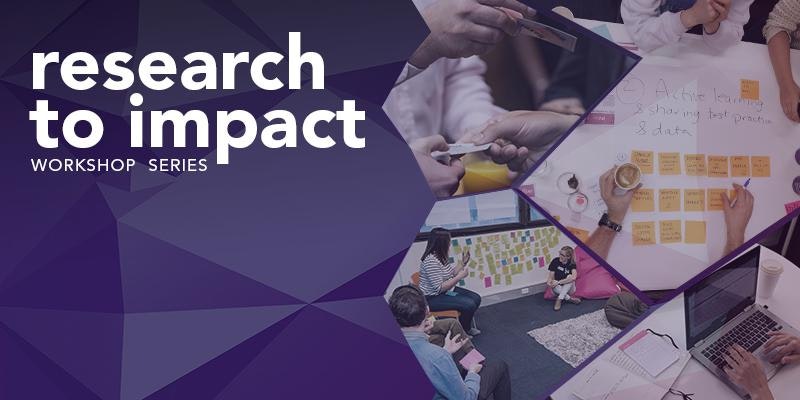
Research to Impact Program

The Research to Impact program is on at Canberra Innovation Network (CBRIN), starting 14 March. This consists of four workshops, over two months, with participants undertaking exercises between. The workshops are derived from those at CBRIN for entrepreneurs to find market needs, value propositions, business models, value chain, collaboration and pitching. But the workshops have been adapted for researchers who want their work to have a real work impact and be applied. I attended these workshops when they were run in-house for ANU by Petr Adamek and Craig Davis in 2016 and they were excellent. Staff of ANU, UC, CIT, Data61, CSIRO and UNSW Canberra can attend for free.

Friday, February 26, 2016

Tomorrow’s Digitally Enabled Workforce:

Greetings from the Sydney Opera House where Senator Michaelia Cash, Minister for Employment, is launching the report "Tomorrow’s Digitally Enabled Workforce" (Hajkowicz, Reeson, Rudd, Bratanova, Hodgers, Mason and Boughen, 2016). The report does not contain any new insights on the future of work, but is a useful compilation of conventional wisdom: IT will take over many jobs and the workforce needs to be trained for more high-tech and also human focused roles, with continual learning.

The area where the report is weak is in policy implications. After outlining what is going to happen, the report does not really say what we, as a nation, should do about it. As an educator, to me the implications are clear: we need to train people with tech and social skills, but most importantly, people who know about how to learn.
CONTENTS
Foreword 1
Executive summary 7
1    Introduction 17
2     A snapshot of Australia’s labour market today 23
2 1     Employment rates and spare capacity of labour 24
2 2     Youth unemployment 24
2 3    Earnings 25
2 4     Skilled labour – Australia’s competitive advantage 25
2 5     Climate change and employment 25
3     Strategic foresight 26
3 1     Strategic foresight method 26
3 2     Expert interview outcomes 28
4     The megatrends 31
4 1     The second half of the chessboard 31
4 2     Porous boundaries 36
4 3     The era of the entrepreneur 40
4 4     Divergent demographics 44
4 5     The rising bar 49
4 6     Tangible intangibles 53
5     The scenarios 57
5 1     Horizontal axis – extent of institutional change 58
5 2     Vertical axis – extent of task automation 60
5 3     Scenario 1 – Lakes 62
5 4     Scenario 2 – Harbours 63
5 5     Scenario 3 – Rivers 65
5 6     Scenario 4 – Oceans 68
6     Technology and employment 71
6 1    Globalisation 71
6 2    Automation 71
6 3    Augmentation 72
6 4     Distributional impacts 74
6 5     Technology and the firm 75
6 6     Market structure 76
6 7     Jobs of the future 76
7   Policy implications 85
7 1     Digital inclusion 85
7 2     Empowering and informing labour market re-activation 85
7 3     New workforce statistics 86
7 4    Education 87
7 5     Workplace relations 88
7 6     The need for choices 89
8    Conclusion 91
References  94

One problem with the report is that it has been released with a restrictive copyright notice, contrary to Australian Government policy. 

 Reference


Hajkowicz SA, Reeson A, Rudd L, Bratanova A,
Hodgers L, Mason C, Boughen N (2016)
Tomorrow’s Digitally Enabled Workforce:Megatrends and scenarios for jobs andemployment in Australia over the comingtwenty years. CSIRO, Brisbane.

Monday, February 8, 2016

CSIRO Researchers Need Innovation Training

CSIRO and the former NICTA (now Data61) were certainly in need of reform, but I am not sure if the new CEO's cure is not worse than the malaise the organizations were suffering from.

A few years ago I spent a year as a visiting scientist in CSIRO's IT R&D area. There were world class researchers working on important problems. But the management of the organization did not appear to be paying much attention to this. there did not seem to be any overall direction for the organization. CSIRO was using "matrix" management, which seemed to be an admission that there really was no one running the place. Having spent 15 years associated with a university, I am used to the difficulties of a diverse research orientated organization, but CSRIO's problems were an order of magnitude worse.

The new CSIRO CEO, Larry Marshall, is attempting to apply Silicon Valley management techniques to what is a losse federation of scientists. CSIRO probably does need a shock like this to restart it. But the language used to communicate with the staff, I suggest, needs to be translated from start-up speak, into something resembling Australia English. Lucy Kellaway writes a column for the Financial Times where she ridicules management speak used by CEOs when they are announcing staff reductions. She would have plenty of material to work with in Marshall's announcement.

The former NICTA (now Data61) was also in need of a rethink. I was one of those who was consulted and advocated the multi-center model for the organization, with nodes in each state associated with a major university. However, this has not worked, with the organization not having a clear identity of its own.

One of the ways I suggest CSIRO, Data61 and its university counterparts could improve the R&D process is to train researchers in how innovation happens. CSIRO have announced the ON innovation and entrepreneurship program. The first part of this is an accelerator an program called AcceleratiON, with eight teams of CSIRO staff and outsiders spending three moths developing a venture. However, I suggest research CSIRO all need basic training in innovation.

Innovation is not about how to have a brilliant new idea, but how to translate that idea into a marketable product. This is not to say every researcher needs to become an entrepreneur, but they do need to understand the basics of how their work is turned into something useful. Too many researchers in white coats (yes, some do really wear white coats) have the idea that they are doing the hard bit and someone else in a pinstripe suit (or(back skivvy) then has an easy job to turn this into a product. A little training will teach them how important and hard this is. I have been designing on-line mobile deliverable innovation training modules to help with this.

Thursday, December 10, 2015

Teach Our Researchers How to be Entrepreneurs

Part of the funding previous cut from CSIRO and NICTA/Data61 has been restored in the Government's
2016 Innovation Statsment. I suggest some of this should go to training the researchers in innovation, entrepreneurship, commercialization and communication. These organizations have been able to carry out research, but have a poor track record in turning the results of research into products and services. The reason for this poor performance, I suggest, is in part because the researchers have seen it as someone else's job to take their work and turn it into a commercial venture. That attitude needs to change and the best way to do it is to teach the researchers how commercialization works, with courses on innovation and entrepreneurship, where they are required to practice communicating with a non-technical audience.  I am designing a course to be delivered via mobile devices to help with this.

Monday, December 1, 2014

Experiments with users and sample size

Greetings from the Australian National University in Canberra, where Diane Kelly, University of North Carolina, is speaking on "Statistical power analysis for sample size estimation and understanding risks in experiments with users". Having struggled through a course in research methods, I was relieved to hear that there is no perfect sample size. Diane looked at some of the constraints on sample size, such as budget and time.

ABSTRACT:
One critical decision that researchers must make when designing experiments with users is how many participants to study. In our field, the determination of sample size is often based on heuristics and limited by practical constraints such as time and finances. As a result, many studies are underpowered and it is common to see researchers make statements like "With more participants significance might have been detected," but what does this mean? What does it mean for a study to be underpowered? How does this effect what we are able to discover about information search behavior, how we interpret study results and how we make choices about what to study next? How does one determine an appropriate sample size? What does it even mean for a sample size to be appropriate? In this talk, I will discuss the use of statistical power analysis for sample size estimation in experiments. Statistical power analysis does not necessarily give researchers a magic number, but rather allows researchers to understand the risks of Type I and Type II errors given an expected effect size. In discussing this topic, the issues of effect size, Type I and Type II errors and experimental design, including choice of statistical procedures, will also be addressed. I hope this talk will function as a conversation starter about issues related to sample size in experimental interactive information retrieval.

Tuesday, November 25, 2014

Sample size risks in experiments with users

Diane Kelly, University of North Carolina, will speak on "Statistical power analysis for sample size estimation and understanding risks in experiments with users" at CSIRO IR & Friends at the Australian National University in Canberra, 4pm, 1 December 2014.

ABSTRACT:
One critical decision that researchers must make when designing experiments with users is how many participants to study. In our field, the determination of sample size is often based on heuristics and limited by practical constraints such as time and finances. As a result, many studies are underpowered and it is common to see researchers make statements like "With more participants significance might have been detected," but what does this mean? What does it mean for a study to be underpowered? How does this effect what we are able to discover about information search behavior, how we interpret study results and how we make choices about what to study next? How does one determine an appropriate sample size? What does it even mean for a sample size to be appropriate? In this talk, I will discuss the use of statistical power analysis for sample size estimation in experiments. Statistical power analysis does not necessarily give researchers a magic number, but rather allows researchers to understand the risks of Type I and Type II errors given an expected effect size. In discussing this topic, the issues of effect size, Type I and Type II errors and experimental design, including choice of statistical procedures, will also be addressed. I hope this talk will function as a conversation starter about issues related to sample size in experimental interactive information retrieval.

Friday, October 25, 2013

ANU Can Add On-line Teaching to Nation Building Research

In "Winds of Change Buffett ANU" (The Australian, 23 October 2013 & at ANU), Professor Brian Schmidt proposed the Australian National University (ANU) should have fewer, higher quality students and an emphasis on international research. Instead, I suggest ANU expand its teaching on-line, opening courses to a wider range of students from diverse backgrounds, while maintaining standards and furthering research. ANU should aim to expand to 100,00 students, with one quarter on-campus and the rest on-line. ANU would then be able to compete on equal terms with other institutions for grants and students. I will be discussing this in my address to the Australian Computer Society Canberra Branch, on 12 November 2013.

ANU's Special Role In Nation Building


Professor Schmidt points out that Australian universities subsidize research from student fees, something ANU is less able to do due to its small size. He proposes additional government research grants to correct this. Instead, I suggest ANU can expand its teaching on-line, while retaining its small campus character and research focus. ANU can expand on-line course offerings rapidly, as it already has the technical infrastructure for e-learning in place. ANU can use its research reputation to market on-line courses internationally. ANU also has the advantage of not being impeded by the large investment in satellite campuses of other universities, which have been rendered obsolete by the Internet.

Professor Schmidt points out the ANU was created to engage in research at the highest international levels. The ANU was founded in 1946, by an Act of the Australian parliament, with a charter to:
"To encourage, and provide facilities for, post-graduate research and study, both generally and in relation to subjects of national importance to Australia." (Australian National University Act, NO. 22, Parliament of Australia, 1946).
As detailed in Milton Cameron's book "Experiments in Modern Living" (ANU ePress, 2012), the ANU was established with the active involvement of the most senior levels of government, specifically to further the government, defence, industry and society of Australia.

ANU has continued to carry out its nation building role. From the mid 1990s, the ANU assisted with training, technical infrastructure and policy, to establish the use of the Internet in Australia and national policy.

The ANU can continue to fulfill the role of acting as a formal and informal source of ideas for the Australian Government. ANU now educates senior military officers in strategic studies. Options for Australia's future defence posture are being discussed in ANU seminars. This includes how to deal with the new bipolar world, between China and the USA, and what weapons systems to invest billions of dollars in.

ANU Can Be a Small University With Many On-line Students


I agree with Professor Schmidt that ANU should not pursue growth at any cost, but the institution can have a relatively small number of students on campus, while serving a much larger student population on-line. Students can include ones with the highest academic qualifications. However, they can also include students who have lesser qualifications, but who would benefit as individuals, or be of benefit to society, through a superior ANU education.

At ANU I teach public servants and staff in major corporations how to reduce energy use by and through IT systems. These students research their corporate systems and make recommendations to management, as part of the course. There is no need to wait years for students to graduate for their research and education to benefit society.

The use of the Internet for teaching is now routine at ANU, with procedures for designer, delivery and assessment on-line and students enrolled around the world. Within five years, this will be the primary way university students will be educated globally. Face-to-face contact at campuses will still be relevant, but will be reserved for important activities, such as talking to people, not sitting passively in lectures absorbing information.

Buildings at Australian universities were designed for teaching in a mode which will soon be obsolete. Some buildings can be retrofitted for new forms of education, but universities which have made a large investment in satellite teaching campuses will find themselves burdened with an expensive drain on resources. The ANU has the advantage of not having a large investment in this soon-to-be obsolete teaching infrastructure.

Professor Schmidt is leading the way at ANU with new forms of on-line education, by hosting one of the first two ANU Massive Open On-line Courses (MOOCs) at ANU. A single MOOC can have hundreds of thousands of students, several times the ANU's entire current student body.

A reasonable target for ANU would be to have around 25,000 students on the existing campus and another 75,000 on-line students, making for a total student body of about 100,000. While this is five times the current ANU student body (and more than twice that of University of Melbourne), it is still half that of the UK Open University, on a campus three times the area of OU.

The ANU can continue traditional on-campus small group teaching and in on-line extensions of such courses, using the techniques I use for teaching "ICT Sustainability". In addition new techniques can be used for teaching large classes to an equivalent standard.

The ANU students should not be segregated into separate programs based on teaching technique or delivery mode. The current categories of full-time, part-time, on-campus, distance and on-line student should be abolished, along with the distinction between coursework and research students. All students should have the flexibility to choose the delivery mode which suits their current circumstances. All students will require some coursework and all will need to experience at least the fundamentals of research. In addition all students should learn to communicate their results, work in a team and leadership. E-portfolios can be used to allow students to document these professional skills, alongside specific course and thesis work.

ANU Can Continue to Work With World Researchers on Campus and On-line


Professor Schmidt points out that CSIRO's offices are on ANU's doorstep, but they are a lot closer than that. CSIRO's IT researchers have shared a purpose designed building with their ANU counterparts, on the ANU campus. The award-winning Computer Science and Information Technology Building was designed with input from both CSIRO and ANU scientists.

CSIRO researchers teach and supervise ANU students and ANU staff take part in CSRIO research. This relationship extends to government and industry, as it does at every good university (part of the so called "The Cambridge Phenomenon"). Public servants, politicians and business people visit for a seminar, or a chat and discuss what problems they have and as what the future holds. Some of these discussions happen in official meetings, but mostly informally after a seminar, in a café or bar. The university initiated Innovation ACT and the Entry 29 Co-Working space to further this business/industry/academic collaboration.

I will touch on this in my presentation "ICT trends in Education" to the Australian Computer Society in Canberra on 12 November.

Thursday, October 24, 2013

Effects of Copyright on Scholarly Work

Richard Hosking, University of Auckland, will speak on "The effects of Licensing on Open Data: Computing a measure of health for our Scholarly Record" in CSIRO's IT Lab at the Australian National University in Canberra, 1 pm, 28 October 2013.

The effects of Licensing on Open Data: Computing a measure of health for our Scholarly Record

Richard Hosking (University of Auckland)

DATE: 2013-10-28
TIME: 13:00:00 - 14:00:00
LOCATION: S206, level 2, CSIRO, CIST Bldg 108, ANU, Canberra.

ABSTRACT: As data collections become established in key disciplines, some of the longstanding barriers to data sharing become to dissolve; yet others remain. While metadata and ontologies help overcome the problems of finding and interpreting data, the lack of clarity over licensing remains a real impediment to data reuse. Freedom from legal restriction and uncertainty is essential for the effective sharing, combining and deriving of data from these distributed collections. Reuse and recombination of data will be greatly facilitated by expanding the definition of the semantic web to include the semantics of data licensing. We aim to express licensing terms in a computable manner, within the context of research practice, enabling us to infer the resulting state of rights, obligations and conditions that are inherited by derived and recombined datasets, using a mixed bag of licenses. Building off this we aim to simulate the effects of varying licensing practices within communities, proposing a measure of health of our scholarly record based on compatibility and restrictiveness of the licenses contained therein.
BIO: Richard Hosking is a PhD Candidate in the Centre for eResearch and the Department of Computer Science at the University of Auckland. His research interests are in techniques for capturing the social context of our research data with an eye towards developing tools to support data management and governance. Under the supervision of Mark Gahegan his current research examines how the application of Copyright is shaping our relationship to our scholarly record. Specifically how formalisms can be developed to capture the semantics of Copyright licenses, with a view that our research tools should be sensitive to this issue.

Thursday, August 29, 2013

Social Science Research Using Twitter

Rob Ackland will speak on "Some approaches for social scientific research using Twitter" in the CSIRO seminar room at the Australian National University in Canberra, 4pm 2 September 2013.

Some approaches for social scientific research using Twitter

Rob Ackland (ANU)

4-5pm Monday 2 September 2013
CSIRO room S201, CSIT Building, ANU, North Road, Acton, Canberra

In this presentation I provide preliminary findings from two Twitter research projects. The first involves the use of social movement theory and logistic regression to investigate the factors that predict whether a Twitter user will contribute to the emergence of a new hashtag, using a collection of Occupy Wall Street Twitter data as an example dataset. The second involves the use of index number theory (from economic decision theory) to develop new measures of attention and information consumption in social media. CSIRO room S201 (next to the seminar room, note change of venue), 4-5