Showing posts with label Canberra Innovation Network. Show all posts

Wednesday, October 15, 2025

Industrial Design Capacity Building

Greetings from the Canberra Innovation Network where Ashley Marsh-Croft is running an Industrial Design Capacity Building and PVP Info Session. There is about $100,000 available in vouchers for startups to get help with their prototypes. This is about physical prototypes, not software, or services.

Inserting microphone into soft toy,
Photo by Tom Worthington, CC-BY 2022
The example I chose was a throwable microphone. These are available, but are not cheap and are so heavy I would not want one thrown at me. So I went out and got some stuffed toys with zips in them. Could this be improved on as a product? As an example, how heavy does it need to be to be easily throwable, but not dangerous. Would it be better rugby football shaped, rather the a cube or a ball, as many are? Adults seem to react well to a cartoon face on the microphone, will this help them orientate the unit?

Chat GPT generated image of a
teacher throwing a microphone. 
Copilot generated image of a
teacher throwing a microphone.
 

I asked Chat GPT and Microsoft Copilot to "draw a throwable microphone shaped like a football being used in an australian classroom". They produced remarkably similar results, both with a female teacher and three students.  Chat GPT had a microphone end to the football. 

Some questions this brought up were if the microphone could be made of molded foam with no cover. This would be much cheaper, down to the point of being disposable (recyclable?).

Wednesday, August 7, 2024

Stackable Micro Credentials from UNSW Canberra

  Professor Blackburn, UNSW.
Photo by Tom Worthington CC-BY 2024.
Greetings from First Wednesday Connect at Canberra Innovation Network. The pitch from Professor Deborah Blackman hooked me with on Stackable Micro Credentials UNSW Canberra. UNSW offers very short training modules (called microcredentials). These can be used for credit towards a larger qualification, usually a graduate certificate. The idea is to supplement, rather than replace, conventional courses and qualifications, to top-up skills and knowledge quickly where needed. 

UNSW Canberra were hosting the event and this was a good opportunity to learn more about the business model behind their new Canberra CBD campus. What I couldn't understand was where UNSW was going to get all the students to fill the new classrooms: where they expecting to attract undergraduates to canberra from around Australia, or the world? The answer which became clear from a series of pitches from UNSW staff was that the new campus would focus on postgraduates, work shills and the needs of the Australian Public Service, the defence community and industry.

Australian industry, the public service and defence needs workers with new skills. Outbidding other employers for experienced staff is expensive, as is headhunting abroad. The better way to acquire stared staff is to take the staff you have and train them further. In 19 years with the Australian Public Service I was regularly sent on training courses run by top people in their field*. One problem in that system was the training was not formally recognised. Systems of nested microcredentials allow for recognition. I suggest this is the core of the future of Australian higher education. Unfortunately Australian universities are well behind their international competition, especially Singapore, with this.

ps: * Sometimes the training could be excessive. I was sent on two project management courses back to back. After a few days of intensive training I was ready to knot the sheets together and escape from my monk-like room in the Melbourne Business schools, but the windows did not open. ;-)

Wednesday, July 31, 2024

Research to Product

Greetings from the  InnovationACT: Research to Impact Panel at the Canberra Innovation Network. Damith Herath nominated a coin operated robot he built at school as his first innovation. Inger Newburn described her Thesis blog as a career saving strategy. Elizabeth McGrath nominated her space research project.


I asked the panel if enterperur skills should be in the curriculum. The panel's consensus was this would work for undergraduates but not research students.

This event was part of Innovation ACT a competition for tertiary students.

Thursday, June 27, 2024

Canberra's Digital Creatives Like Lunch

Creative Connect Panel at CBRIN:
Lucy Sugerman, Elvis Gleeson,
Emma Laverty, & Owen Walter
Greetings from Canberra Innovation Network, where I am taking part in "Creative Connect", sponsored by the ACT Government. We were surveyed beforehand and it turns out the largest group are digital creatives (which I guess I am) and we like meeting over lunch (CBRIN have put on a good spread). We have a panel with Lucy Sugerman (Music ACT), Elvis Gleeson (Blank Creative),  Emma Laverty (Project Dust), and Owen Walter (Oculo Digital). So we have a musician, writer, dancer, and video maker. This was a revelation, as most people think of Canberra as a place for public servants, and government contractors. I knew we also have a large education sector, but hadn't realized there was also a "creative" industry. Some of that supports education and government. One of the panel talked about getting paid to make "Beats to sound-cloud rappers". From this limited sample creatives don't fit the pattern of university fine arts degree and then work. 

The question for me is what can Canberra do to help this industry? One surprising answer is "Be a nice place to live". I had assumed creatives would want a grungy inner city squat, but apparently the novelty of that wears off quickly. Another answer was that it is a place you go when your partner gets a job in Canberra.

Wednesday, August 2, 2023

Billion Dollar UNSW Canberra Campus


Greetings from First Wednesday Connect in Building K at Canberra Institute of Technology. Normally this is at Canberra Innovation Network's office and I went there finding only two confused students. We found the event at the other side of the city, after a quick number 3 bus ride. We are here to celebrate approval of UNSW's new campus and new CIT courses.

The catering for this event was excellent, as Building K is the CIT Hospitality and Culinary School. ;-)

Wednesday, November 30, 2022

Research Should Be Driven by Both Curiosity, and Commerce

In an opinion piece, astrophysicist and ANU VC, Brian Schmidt urged that "Research in Australia’s universities should be driven by curiosity, not commerce" (The Guardian, 25 October 2022). He pointed out that technology such as WiFi was a spinoff from pure research. However, most of the useful, and profitable innovations from universities are not happy accidents, they are applied research to a practical outcome, funded by government, the military, and companies, with specific goals. The Internet was no accident, it was directed research, funded by the US Government, with the intent to build a reliable computer network.

There are skills and techniques which academics need to undertake applied research. There are also specialist roles for those who take the basic work and build usable products and services from it. These are very difficult fields with their own bodies of research. 

As a computer professional who wrote policy for government I had the honour of occasionally dipping into this field. As someone who helps out at a university I regularly get asked by academics how to get funding from government and industry. My answer is invariably is that they have to offer a useful outcome for those they are seeking funding from. Governments want ways to improve the lives of citizens, and companies want ways to make money. Ensuring that these things happen are very challenging tasks.

Several decades ago I visited Cambridge University (UK) to see how they commercialised research. What surprised me was that just about everyone, from the students to the VC, were hustling for money for commercial development. This was not treated as an accidental spinoff from pure research, but central to academia. Academics were comfortable going from the lab to the board room. On my return I proposed Australia, and Canberra in particular, adopt this approach. It is reflected in the establishment of the Canberra Innovation Network

Monday, December 9, 2019

Entrepreneurial Engineering Ethos

Dr. Lisa B. Bosman,
Purdue University
Greetings from Yogyakarta, where Dr. Lisa B. Bosman from Purdue University is speaking at the IEEE TALE 2019 engineering education conference on "How to Teach and get Published within the Entrepreneurial Engineering Ethos". This is a very different presentation to the usual conference research talk, as Dr. Bosman took us through her journey from school, through industry to being an academic and entrepreneur. I am familiar with the entrepreneurial ethos, through the Canberra Innovation Network (CRBIN), which ANU students are encouraged to participate in. However, that is an extra-curricular activity, whereas Dr. Bosmanis describing how to integrate this with an engineering program, and giving it academic rigor.

Dr. Bosman then went on to outline how to got about preparing a schoolyard paper in an entrepreneurial way. This is much the same as the usual advice for writing a paper, but emphasizes what the likely results will be, and reminding yourself as you are going through the long hard slog of preparing a paper (which may take a year or more), to remind yourself why you are doing this.

Wednesday, May 2, 2018

Canberra into Space

Greetings from the UNSW Canberra Campus, hosting the  Canberra Innovation Network's First Wednesday event. The host told us about UNSW Canberra Space, their motto should be "It is rocket science!". There were then eleven sixty second pitches. If you have a bright idea and have thought about turning it into a product, you should come along to such a pitch night at your local startup center. The room has a positive vibe.But the most useful part of the evening are not the formal presentations (which are short), but talking to people. I am interested in how to teach innovation online to graduate students and happened to meet someone enrolled in such a course.

Wednesday, February 21, 2018

Research to Impact Program

The Research to Impact program is on at Canberra Innovation Network (CBRIN), starting 14 March. This consists of four workshops, over two months, with participants undertaking exercises between. The workshops are derived from those at CBRIN for entrepreneurs to find market needs, value propositions, business models, value chain, collaboration and pitching. But the workshops have been adapted for researchers who want their work to have a real work impact and be applied. I attended these workshops when they were run in-house for ANU by Petr Adamek and Craig Davis in 2016 and they were excellent. Staff of ANU, UC, CIT, Data61, CSIRO and UNSW Canberra can attend for free.

Wednesday, July 20, 2016

Future of Innovation in Canberra

Greetings from ANU University House in Canberra, where Dr Sarah Pearson, CEO of CBR Innovation Network is speaking about innovation in Canberra. She pointed out that their lean startup workshops are about 50% female (something I noticed when I attended recently). CBRIN will also be hosting a national initiative to help with other innovation centers. CBRIN have signed a MOU with Wellington, to take advantage of the new direct flights between the two cities. Sarah foreshadowed innovation announcements to be made by the Canberra based AIE. Another initiative is to have the Australian Government fund innovation centers in Myanmar and Fiji. Sarah has also proposed CBRIN be the national innovation testbed for the Australian Government.

Rendering of the TEAL classroom at MIT
At question time one of the audience asked about changing the attitude of PHD graduate to consider a start-up as an option, rather than seeing the first option being research. In terms of culture, Sarah suggested using CBRIN's seminar room for university classes. It occurred to me that this large space could be adapted to be a TEAL Teaching Room (as used at University of Canberra's Inspire Center). Normally innovation workshops are done with groups of about 24 students. However, these could be run with 100 students, by installing screens on all four walls.

One significant start-up in Canberra was CSIRO's development of gluten free barley, which will first be commercialized for making German beer. 

Wednesday, July 13, 2016

Innovation Workshops

Greetings from the Australian National University in Canberra, where I am attending a Product Development Workshop. This is the third of a series of innovation workshops run by the Kiln Incubator for Innovation ANU. The previous two were Customer Validation and Business Models.

I attend a lot of "workshops" and Kiln present some of best. The instructors are skilled in their presentation technique and business experience.

The workshop has short presentations, interspersed with group exercise. The instructors do not make the mistake of many of talking too much, turning a workshop into an old fashioned lecture.

One of the inspiring parts of the workshop is that the materials used are licensed with a creative comments "by Attribution" open access license, so others can use them for free. For the third workshop there was a Product Design Canvas by David Peterson, Petr Adamek and Craig Davis.

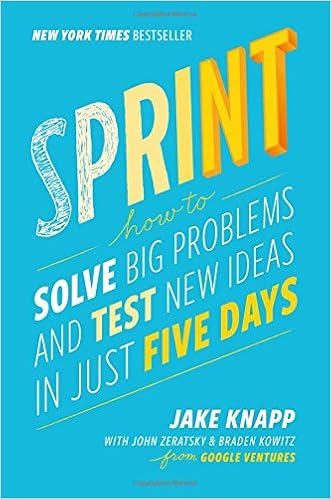
In the third workshop the a five step Design Sprint process was used and the book "Sprint: How to Solve Big Problems and Test New Ideas in Just Five Days" by Knapp was recommended.

Thursday, December 10, 2015

Incubator Support Programme

The Australian government's Global Innovation Strategy announcement included an $8 million Incubator Support Programme. An incubator is a training and advice program for start-ups. These are usually co-located with a co-working space, where entrepreneurs can get low cost shared office space to get started and an accelerator for seed funding. The best example of this is the Kiln Incubator, alongside the Entry29 Co-working Space and Griffin Accelerator at Canberra Innovation Network (CBRIN).

Thursday, December 3, 2015

World's Greatest Programming Language

Entry 29, the co-working space at the Canberra Innovation Network Incubator, held a debate this evening on what is the "World's Greatest Programming Language". It was a little like Big Bang Theory meets pub trivia night. Dr. Lachlan Blackhall, CTO of Reposit Power was the moderator and kept the witty banter flowing.
  • David Peterson, CTO of ImageBrief representing functional programming and delighted the audience with an almost erotic description of the joys of FP.
  • Mike Leonard, Fivium, put the case for Google G.O., which could have just been "Its from Google", but was so much more.
  • Dr Ali Salehi, SensorFront Co-Founder, wrapped Python around us.
  • Marcus Dawe, HealthHorizon Co-Founder , kept use sharp with C and C#.
There were some acronyms and a lot of laughs from the metaphors and something about how many monkeys you could wash). This reminded me a little of Dr Richard P. Gabriel and Dr Guy Steele presenting "50 in 50: 50 Programming Languages in 50 Years", with mention of Gödel, Escher, Bach: An Eternal Golden Braid.

The next debate is swinging the dial all the way to  11 on business. I have suggested the topic be "What Color Should your Business Plan Be?".

Thursday, August 27, 2015

Speed Dating for Startups

Last night I took part in the "Get a Mentor" part of the Innovation ACT business model competition, held at Canberra Innovation Network's office. The Innovator ACT Mentors, each sat at a table (I am a mentor). Each team of higher education students then had five minutes to tell a mentor about their project. At the end of five minutes the teams moved to another mentor. The mentors noted which teams they wanted to work with and teams which mentors, so they can be matched up. This was an exhausting, but interesting experience, a bit like speed dating (not that I have tried that).

Some questions I kept asking teams were:
  1. What is the product or service?
  2. Who is the customer?
  3. Who is going to pay you?
  4. Are there more people on your team?
  5. Have you considered looking for a market beyond Canberra's university students?
  6. Is this another Mobile Internet App?

Wednesday, June 3, 2015

Teaching Innovation to Graduate Students

Greetings from the Australian National University in Canberra, where I am taking part in a "SPARK innovation workshop" on how researchers can do innovation, commercialisation, and entrepreneurial initiatives. The most interesting part of this is that it is for research students as well as staff. Rather the student complete their PHD and then wonder what to do next, the idea is that they consider commercialise it while doing the research. Also co-creation is being emphasized, where the researcher engages with people outside academia. My aim in attending the workshop is to help with my


Technology Transfer Office  and ANU Enterprise.

Monday, May 11, 2015

EntrepreneurshipUC

Staff and students at University of Canberra are seeking crowd funding for "EntrepreneurshipUC". However, what is not clear is how this fits with the initiatives already underway in Canberra through the Canberra Innovation Network (CBRIN), which the University of Canberra is a member of, along with the Australian National University.
"Entrepreneurship is essential in today’s world – it contributes to the growth of economies, improving living standards, fruition of ideas and continued development. EntrepreneurshipUC (EUC) aims to create an environment in which thoughts are encouraged, potential is understood and confidence is gained, creating a support network which can be accessed and utilised and like minded people can come together.
Many university students don’t know where to look for assistance in entrepreneurship, or even recognise that their passion or idea can be more. EUC will fill this gap and provide a space at the University of Canberra in which students can approach for assistance. Not only will we provide assistance but also a place to learn through mentoring and workshops run by industry professionals.
An obstacle we are aware of is the difficulty associated with finding relevant mentors and industry professionals, this will be resolved through direct advertising, sponsorships and events with the community.

why you should support this project?

EntrepreneurshipUC is aiming to promote,develop and motivate entrepreneurialism concerning students within Canberra. By supporting this project you will be providing Students of Canberra with an opportunity to develop their ideas and make them into a reality. This project will be aiming to bring out new and innovative ideas whether they be for profit or social ventures. This will not only change the lives of those who we help but also those who are the markets for these potential entrepreneurs.

how will money be used?

The money received will go towards our direct advertising, buying a domain for the project and also acquiring any resources which we may require to set up the project. Any unused funds will be alloacted to holding our find workshop with an industry professional.

where will the project go in the future?

EntrepreneurshipUC has the opportunity to become and influential participant in Entrepreneurship in Canberra. Our vision is that we will have a set space which we can use to provide services and incubate projects/ventures.
As the project aims to assist and guide potential entrepreneurs the project itself has no limits and on its success as it is based on the participation of potential and up and coming entrepreneurs."