Showing posts with label Flinders University. Show all posts

Friday, October 28, 2016

m-Learning in Sydney

The 15th World Conference on Mobile and Contextual Learning (mLearn 2016), was held at the University of Technology in Sydney, 24 to 26 October. There were five parallel sessions in the MLearn2016 Program. The mLearn 2016 Proceedings are available as a PDF file. Here is a summary of my notes from the event:

UTS Bachelor of Technology and Innovation

Professor Shirley Alexander, UTS Deputy Vice-Chancellor, welcomed the delegates and talked about the UTS Bachelor of Technology and Innovation (BTI), being introduced next year. This is a general degree in technology, suitable for those going into business. I am skeptical of the idea of a BTI as the 21st Century replacement for the arts degree. BIT graduates may end up like arts graduates: well educated, but not qualified for any real job.

Mobile Learning and Indigenous People
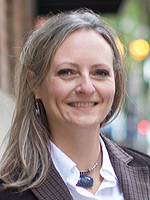
Marguerite Koole Assistant Professor, Curriculum Studies at University of Saskatchewan described applying a frame model of learning (Koole & Ally, 2006).

Kevinwâsakâyâsiw Lewis, then talked about the teaching of teachers of indigenous languages in the University of Saskatchewan's Certificate in Indigenous Languages. Asked about the relevance of song in language learning, Kevin pointed out that chant and song enables the learner to stop worrying about how they pronounce. Also the repetition in the song helps learning, as well as being culturally significant. This reminded me of Dr McComas Taylor, at ANU's Teaching Sanskrit online with chanting.

mLearning for Aboriginal Pre-service Teachers in Remote Communities

Philip Townsend talked on "A Theory of Enhancement of Professional Learning for Aboriginal and Torres Strait Islander Pre-service Teachers in Very Remote Communities through Mobile Learning". He pointed out that Aboriginal and Torres Strait Islanders have a much lower completion rate than the general population. The Community Based ITE program, specifically for students in remote areas, has an even lower completion rate than other forms of education. Philip has devoted his PHD research to finding if mobile devices can improve completion rates. Also he mentioned the Cooperative Research Centre for Remote Economic Participation. I suggest that addressing the needs of remote students can assist all students. If we make courses flexible enough for the remote students, these courses will also be better for city and campus based students. Philip was awarded top paper at the conference.

Mobiles for TEQSA Regulatory Course Compliance

Anthony Chung from mobileLearning gave one of the more practical and less academic (in a good way) sessions on "How does a Mobile Platform Address TEQSA and Other Regulatory Compliance for Online Courses?". Anthony went through some of the TEQSA requirements and how these could be facilitated with mobile devices. What was interesting about mobileLearning's approach is that they provide  mobile interface to the institution's native educational applications, rather than replace them. The idea is to make it easier for students and staff to do what is educationally useful. One example is to encourage the student to engage with the learning. This can be difficult where a Learning Management System (LMS) design for static desktop pages is used. The mobile interface can make it easier to access the materials and interact.

IamLearn AGM

The AGM of the International Association for Mobile Learning (IamLearn), was held in conjunction with the conference. Because I registered for the conference I received a year's membership. One initiative is that a new website will allow members to add content directly, rather than emailed to an officeholder who then puts it up. This is something other organizations might like to try

Telstra on Personalised mEducation

 Susi Steigler-Peters, from Telstra Corporation talked on "Personalised Learning, mEducation and Partnerships". Susi spent most of the time describing research on education Telstra has funded over the last few years. This research sounds well designed, but does not tell us, as educators, anything new. So I asked Susi how Telstra could help improve education. In response she cited something called "Telstra Smart Learning" and presented a use case of a student named "Ferris" having an "enriched learning experience". Susi also mentioned a center to be established in Sydney for education. It might be useful for Telstra to instead showcase some of the work in their muru-D startup accelerator.

Online Tutorials for Higher Education

Norman Wildberger and Joshua Capel presented an excellent live demonstration of "Higher Education Practice Online Tutorials and GeoGebra as Mobile Learning Tools" used for teaching mathematics at UNSW. However,what seemed to be missing was a business model to support the high up-front investment to produce such material.

UNSW mLearning Physics

Elizabeth Angstmann talked on "Higher Education Practice Using a mobile Moodle app in an online physics course". This shows an approach to education which focuses on ensuring that e-quality education can provide quality education, backed up by solid research.

Identity and the Mobile Learner

Professor John Traxler, University of Wolverhampton gave the last keynote on "The Role of Education in Identity Transformation and Acculturation". Professor Traxler challenged the assumption that m-learning (and education in general) was a culturally neutral boon for developing nations. Rather than telling us a canned answer, this was a presentation asking questions, which was refreshing.

Professor Traxler is concerned about a Western European view of education and technology being culturally imposed on others. However, this might also be a product of that culture.

Online Education for Prisoners

Louise Patching, USQ, talked on "Using Offline Personal Devices to Enable Access to Higher Education in Prisons" for the Making the Connection Project. Louise pointed out that lack of Internet access is only one factor limiting e-learning in prisons; also there is limited access to hardware, limited prior education of the students. She explained that USQ had decades of experience in teaching prisoners. USQ has a special server for providing materials to prisons and a way for materials to be loaded to portable devices.

Some of what USQ has done would be useful, more generally for students. For example, a problem with webinars is where students have inadvertent left their microphones turned on. I suggest that the off-line features could be built into Moodle and the Linux operating system, allowing the approach taken by USQ to be made available world-wide at no cost.

Encouraging Faculty Development

 Lisa O’Neill, York University, talked on "Encouraging Faculty Development Through Micro-Credentialing". This presented a good overview of the mechanics of recognizing small units of learning with "badges". However, what is also needed is a way to motivate university academics to learn to teach and undertake activities which award such badges.

I suggest that university educators should follow the approach used by nurses and computer professionals in Australia to enhance their recognition of their profession. This could include draft policy for universities and government to require and recognize teaching qualifications of university academics. Also they could suggest changes to university ranking schemes to give teaching quality the same weighting as research output.

References

Koole, M., & Ally, M. (2006, April). Framework for the rational analysis of mobile education (FRAME) model: Revising the ABCs of educational practices. In International Conference on Networking, International Conference on Systems and International Conference on Mobile Communications and Learning Technologies (ICNICONSMCL'06) (pp. 216-216). IEEE. Retrieved from http://dx.doi.org/10.1109/ICNICONSMCL.2006.103
Townsend, P., Halsey, J. R., & Guenther, J. (2016). Mobile Learning Congruencies with Aboriginal and Torres Strait Islander Cultural Philosophies. In Publishing Higher Degree Research (pp. 25-32). SensePublishers. Retrieved from http://link.springer.com/chapter/10.1007/978-94-6300-672-9_3 

Monday, October 24, 2016

mLearning for Aboriginal Pre-service Teachers in Remote Communities

Greetings from mLearn 2016  at UTS in Sydney, where Philip Townsend is speaking on "A Theory of Enhancement of Professional Learning for Aboriginal and Torres Strait Islander Pre-service Teachers in Very Remote Communities through Mobile Learning". He pointed out that Aboriginal and Torres Strait Islanders have a much lower completion rate than the general population. The Community Based ITE program, specifically for students in remote areas, has an even lower completion rate than other forms of education. Philip has devoted his PHD research to finding if mobile devices can improve completion rates.

Philip pointed out that indigenous students have cultural obligations which can take them away from their studies for extended periods. A mobile device may assist, but who pays for the device and network access? In a remote indigenous communities prepaid access is typically used and the account may be shared with others. Also the institution has to offer an on-line strategy as part of the education. One important points was that Philip asserted that mobile devices are compatible with indigenous communities: this is not a technology which will be abandoned after the novelty wears off. Also he mentioned the Cooperative Research Centre for Remote Economic Participation.

I suggest that addressing the needs of remote students can assist all students. If we make courses flexible enough for the remote students, these courses will also be better for city and campus based students. For the last four years I have been an on-line distance education student and have been teaching this way for seven years. To me this is just normal education, which can be enhanced, where possible, with supplementary face-to-face classes.

References


Townsend, P., Halsey, J. R., & Guenther, J. (2016). Mobile Learning Congruencies with Aboriginal and Torres Strait Islander Cultural Philosophies. In Publishing Higher Degree Research (pp. 25-32). SensePublishers. Retrieved from http://link.springer.com/chapter/10.1007/978-94-6300-672-9_3


Tuesday, February 2, 2016

Teaching Better Judgement

Greetings from the Australian National University in Canberra, where I am taking part in Professor Lambert Schuwirth's  Better Judgement Workshop. This is part of a Flinders University, funded by the Office for Learning and Teaching (OLT). This is about how to better train assessors for professions such as medicine.

This is about assessment of skills in the workplace. But something which struck me was that I feel very comfortable sitting in a classroom. I have been teaching and doing only  on-line courses for the last year and there is something familiar about being back in a classroom, with rows of desks, a lectern at the front and fellow students around me.

The next thing which struck me was that the workshop seemed to be about workplace assessment for competence, an area I was trained in as part of a Certificate IV in Training and Assessment. With this you first decide what the job requires, then what behavior you can observe of the student to asses if they can do what is required. This could be the student actually doing the job,or doing a simulation of the job. Only if that is not feasible would you give them an "examination" as such, as that is not a very good way to assess what some can do.

Also the Vocational Education and Training (VET) sector, unlike universities, requires formal training and assessment of assessors. Having been trained in how to design and administer assessment makes me more confident in what to do and, hopefully, better at it.

This brings up a problem with the OLT's strategy for improving the quality of terracing at Australian universities. OLT funds research on teaching and learning issues. The researchers are required to not only produce the usual academic papers, but also disseminate their results to academics. The usual way is to present results at workshops on campuses across Australia. The problem with this is that, by its nature, research has to be on something new. However, the day to day problems with teaching in Australian universities already have known solutions. The need is not for research, but for training of staff in how to teach.