Showing posts with label HE After COVID19. Show all posts

Tuesday, June 6, 2023

Should I go to a F2F meeting with a head cold?

Woke up feeling a little unwell. My intimidate thought was COVID-19, but test results were negative. So I probably have a cold. I have been vaccinated for COVID-19 and flu, so I should be okay, but what about those around me? 

Employers are now encouraging their staff to return to work, unless they have a medical certificate. Organizers of seminars, and conferences, are discontinuing the online/hybrid option. Is this a signal to that society is willing to accept the level of disease, and death, which will result?

I suggest organisations continue to offer an online option for staff, and clients, where possible. This will have minimal expense (perhaps save money). As well as allowing those mildly ill to still participate, it will also provide for people with a disability, or with  family, cultural and community obligations.

Sunday, September 11, 2022

Most Students Are Not Coming Back to Class So Get Used to It

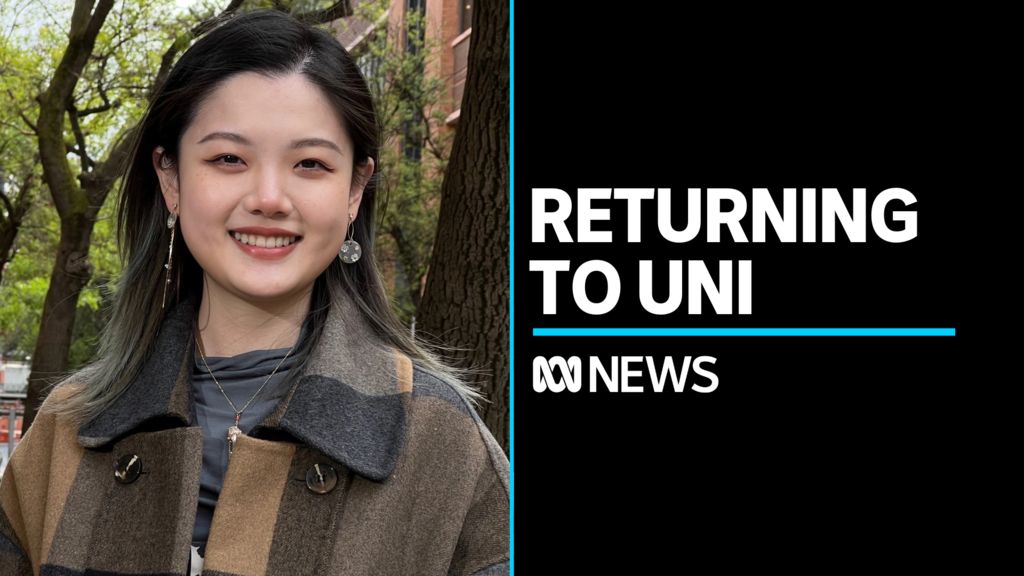
Returning to Uni (Video),
ABC TV, 6 September 2022
Victoria has made a pitch to absent international students to return. However, while acknowledging the efforts of the marketers of Australian education, I suggest this is domed to failure, and counterproductive. This signals to potential students that Australia's higher education system is inflexible, unwilling to cater to student's needs, and that our academics don't understand that things have changed, permanently. I suggest that the fantasy of a return to full classrooms needs to be challenged, before it does permanent damage to our education system, harming staff and students. This is not to say Australia can't have vibrant campuses, or students in class, but students have to be actively engaged when there, working to together, not passively listening to boring lectures.

It is confronting for a "lecturer" to admit that lectures are obsolete. I had this Epiphany in 2008, but it took years to retrain in more effective, online, blended, and hybrid teaching techniques. Australian universities need to make this change while they still can. Each day I see photographs taken by lecturers of empty lecture theaters, who are devastated by the fact that most of their students did not turn up. The lecturers contemplate drastic measures to force students back to class. I understand the anguish this situation causes for dedicated teachers, but the difficult solution is for them to learn to teach effectively.

Australian universities failed to prepare for a crisis which forced students off campus, despite being warned years in advance, and despite the example of universities in other countries which did. Despite that crisis occurring two years ago with COVID-19, and the shift to online learning as envisaged, most Australian universities, and academics, are unwilling to accept this is not temporary.

Most students never came to most classes, before COVID-19. About a quarter to a third of students turned up. Most students are not coming back to class after COVID-19. We can expect about 5% to 10% in the classroom, with the balance of the same quarter to a third participating synchronously online. Australian universities need to accept that fact, and provide a 21 century education.

Pre-COVID19 most students did not attend class, as they had lives, jobs, and families. Instead students made do with notes (as they always had), as well as videos, and online materials. This defacto blended/online education was not ideal, but workable. However, purpose designed flexible learning can be so much better. It can put resources into what actually helps students learn, rather than what is easiest for researchers, who are part time teachers, to deliver. This takes training, and time to prepare, but lowers the stress level for staff and students.

It is possible to design courses which can be delivered entirely online, but which have optional campus components, for students who have the time, and feel the need. Campuses can attract students, working together in supervised classes, and also in self organised teams on projects, with staff available when needed.

Tuesday, August 25, 2020

COVID-19 a White Swan Event for Universities, Webinar, 8am Wednesday 2 September


I will talk on "Higher education after COVID-19: Not business as usual" Wednesday 2 September, 8-9 am, AEST (Canberra Time) as part of the Microlearning Series curated by Manisha Khetarpal at Maskwacis Cultural College in Canada. This is the last of six weekly sessions. Free, register now.

Higher Education After COVID-19

  1. Responding to the Coronavirus Emergency with e-Learning
  2. Open Content for e-Learning in Response to the Coronavirus
  3. Online Assessment with e-Portfolios in Response to the Coronavirus
  4. Tools to engage students online.
  5. Mentoring student group work online.
  6. Higher education after COVID-19: Not business as usual
These are online, open to all and free. Suggestions are welcome.

Higher education after COVID-19: Not business as usual

In August 2008 I told my computer science students at the Australian National University that this was my last lecture. Not just the last for the semester, but the last I was ever intending to give. Through a sequence of coincidences I then spent five years teaching online and another seven learning how to integrate a classroom back into my teaching. After a year teaching in mixed mode in a new purpose built teaching building, COVID-19 forced me back to online only teaching. The question then is what I will do, when the COVID-19 pandemic is over and classroom teaching is again possible. The future I see for higher education is Online Plus: there will still be campuses and classrooms, but with the core of the curriculum online, with students out learning while working in the real world. COVID-19 was a White Swan Event for Australian universities: something they were warned about, knew was coming, were told how to prepare for and yet failed to act. Can existing universities make the changes they know are now needed, or will new forms of higher education replace them?

See: Online Plus is the Post-COVID19 Future of Higher Education

Questions for participants:
  1.  How can we replicate water cooler conversations for students and academics online? In "The surprising ways little social interactions affect your health" (New Scientist, 12 August 2020), David Robson points to research and personal experience that formal online interaction with video conferences is not enough. This doesn't replace impromptu water cooler chats which can form new relationships. Some of this is done by teachers with icebreaker exercises, breakout video rooms, team-building exercises and the like. But can these features be built into both the tools and the educational programs? One attempt is Athabasca University's Alumni Connect using the product Ten Thousand Coffees.
  2. In 2017 I predicted "... we can expect 80% of university education to be delivered on-line by 2020 ...". That happened suddenly due to COVID-19, not with a planned transition as I had hoped. We have the technology and pedagogy to sustain this, can universities find a business model to make it work, or do we need new teaching only institutions?

Higher education after COVID-19

  1. Blending of vocational and higher education producing job ready graduates
  2. Qualification platforms standardized globally
  3. Nested qualifications offering from a micro-credential to a Doctorate
  4. Global online courses with optional classroom time
  5. Campuses shared and integrated into community facilities

Pathways to Work, Training and Further Education

 "Senior secondary certification requirements and the way learning is packaged should be restructured so that students are not presented with a binary choice between vocational or higher education pathways."

Recommendation 5 of the Report of the review of senior secondary pathways, into work, further education and training, for COAG, Shergold, Calma, Russo, Walton, Westacott, Zoellner & O’Reilly, 17 June 2020.
A recent report to the Council of Australian Governments recommends not presenting students with a binary choice between vocational and university education (Shergold et al,  2020). My own path has been through work, on the job training and then formal university education, supplemented by vocational educational institutions.

COVID-19 has forced much of secondary and higher education online and this provides the opportunity to consider how to integrate them better and provide them more flexibly.

Australian secondary education can be blended into the vocational education and training (VET) system and VET into university. The Australian VET system is already focused on vocational training delivered online, with supplementary classroom teaching. That approach can be adopted by universities. This has implications for the way university academics teach, get paid, and the question as to if university is the best place to do much of vocationally orientated education.
Reference
Looking to the future – Report of the review of senior secondary pathways, into work, further education and training, for the Education Council of the Council of Australian Governments (COAG), by Peter Shergold, Tom Calma, Sarina Russo, Patrea Walton, Jennifer Westacott, Don Zoellner and Patrick O’Reilly, 17 June 2020. URL https://uploadstorage.blob.core.windows.net/public-assets/education-au/pathways/Final%20report%20-%2018%20June.pdf


Degree of the Future is Like a Car Chassis


MQB Platform for VW, Audi, SEAT, Škoda, coupes, hatchbacks, saloons, station wagons, convertibles, MPVs, SUVs, and panel vans (Ra Boe / Wikipedia)


VW, Audi, SEAT and Škoda factories make dozens of different vehicles sold at different prices to different customers around the world, based on the same MQB engineering "platform". It was worth the Volkswagen Group to have hundreds of engineers spend years and billions of dollars, so the one engineering design could be used globally for a decade or more. In the same way I suggest companies, national and international university consortia can design qualification platforms for specific disciplines. Each platform would allow for nested qualifications, ranging from a three week micro-credential to a multiyear doctorate. The basic curriculum would be built assuming asynchronous online delivery, but local institutions could offer online, blended, hybrid, face to face, and work integrating learning.


Global Professional Standards

Excerpt from ACS Certified Professional Certificate

The Australian Computer Society (ACS) has recognized me as a  certified computer professional under a scheme accredited by the International Professional Practice Partnership (IP3) under the Seoul Accord. The Canadian Information Processing Society (CIPS)  issues IP3 certifies for their computer professionals.. Engineering qualifications are similarly accredited under the Washington Accord. This provides a level of international standardization of the skills and knowledge required in professions and there for what universities include in degree courses. Universities are not required to teach in the same way, as long as graduates have the required attributes. Like Volkswagen's MQB platform such global agreements take many years to produce, but once agreed, they increase the quality and reliability of global education.


Global Online Courses

One course, four institutions:
  • Green Technology Strategies (ACS and Open Universities Australia)
  • COMP7310: ICT Sustainability (ANU)
  • Computer Science COMP 635 (Athabasca University)

    Aligned with Skills Framework for the Information Age (SFIA) competencies.


    Global professional standards and online courses make the global delivery of course materials much simpler. In 2008 the Australian Computer Society commissioned me to design the course Green Technology Strategies aligned with the Skills Framework for the Information Age (SFIA) and delivered using Moodle. This was also offered through the Open Universities Australia consortium of institutions. The course was later offered to Australian national masters of computing students, also online using Moodle and aligned with Skills Framework for the Information Age (SFIA) competencies. The course was adapted for North America by Brian Stewart and is still offered as COMP 635 by Athabasca University, also using Moodle. Like the Like Volkswagen's MQB platform, considerable effort was required to design the course maters, but they could then be used globally for a decade.

High End Campus of The Future Looks Like a Mall

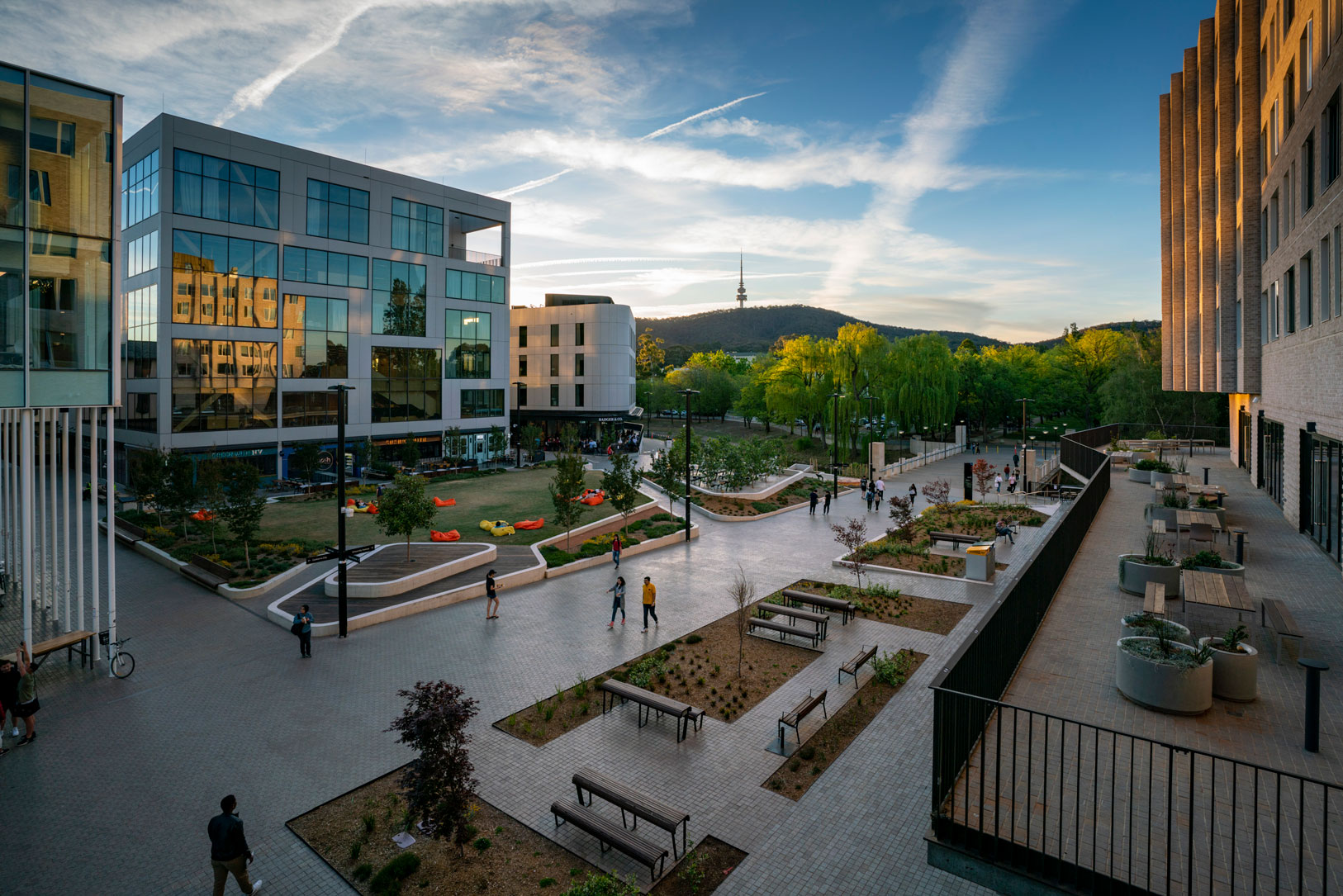
ANU Kambri


The campus of the future will look like a shopping center, a hotel, an office building, or a library. In this way it can be more integrated with everyday life, provide facilities to the community and have some income independent of student fees. While there will be students and teachers on campus, this will only be about one fifth of the learning community, with the other four fifths online. That will lower the cost of the campus, by having it used more intensively. However, there may be a need for consolidation of campuses, as there will be an excess of space during the transition.


Even general purpose university campuses are tending to look less like universities and more like resorts and shopping malls. The Australian National University Kambri development, opened in 2019, has an art gallery, conference center, cinema, drama theater, cafes, bars, restaurants, medical center, pool, and gym. There are also offices for university administrators, and apartments for students. The performance spaces double as lecture theaters, some with retractable tiered seating to make a large flat floor space. This allows different teaching styles and use of the same even in a pandemic, when closely packed tiered seating is not appropriate.


Medium Level Campus Looks Like an Office Block


Artists Impression of Planned CIT Campus Woden, Canberra (CIT, 2020)

Many university campuses will be in commercial style office buildings. A good example, is the planned Canberra Institute of Technology (CIT) building in Woden, Canberra. This will be located at a bus interchange, adjacent to a shopping center, providing easy access. However, given that most students will be studying online most of the time, it is not clear how much of the building will be actually used by staff and students, or it it will be used by government and commercial tennants.

Work Integrated Learning Campus Hotel

Nesuto Leura Gardens Hotel operated by the Blue Mountains International Hotel Management School at Torrens University


In 2019 I reserved a room at the Leura Gardens Hotel in the Blue Mountains near Sydney. I selected this as the closest to the Everglades Historic House and Gardens to attend the Leura Shakespeare Festival. Only after arriving did I notice that the hotel is staffed by students of the Blue Mountains International Hotel Management School (BMIHMS), part of Torrens University. There is a campus of the university across the road from the hotel. This is a form of Work Integrated Learning (WIL), where rather than send the student to workplace, the educational institution provides the workplace (in some cases a large corporation, government agency or military organization has its own educational institution).

The year before I stayed at Hotel Samudra, Colombo, part of the Sri Lanka Institute of Tourism & Hotel Management (SLITHM). The Hotel Kurragong in Canberra was previously part of a hotel school also. In a similar way, teaching hospitals are part of the medical faculties of universities. There is scope for integrating other disciplines into workplaces.


WIL in a Government Agency

 
Cameron Offices, Canberra (Public domain)


As a young "programmers assistant" I worked downstairs in the Australian Bureau of Statistics, and then went upstairs for formal training. This was not as part of any formal educational program. The Australian Public Service (APS) now has programs for apprentices and cadets who study part time at VET institutions and universities, while working. There is scope to expand such programs to smaller employers and startups.


Multi University Campus Building

Torrens Building, International University Precinct, Adelaide (by Bahudhara / CC BY-SA)


Universities can share campuses. Adelaide has the Torrens Building, in its International University Precinct. The has provided office and teaching space for Carnegie Mellon University , Torrens University, Cranfield University, and University College London. While sharing a building, the individual university use photos of the outside shown just their own banner, cropping those of the other institutions. In this way universities can present an individual identity, while sharing resources.

While the Adelaide campuses of Carnegie Mellon, Cranfield and University College London are satellite campuses of overseas universities, Torrens University Australia is slightly different. This is an Australian university, but also part of the for-profit Laureate Education Incof Baltimore. Laureate has almost one million students worldwide and so can spread the cost of course development better than it could for just their 11,500 Australian students, while still having local campuses and a local identity. Laureate has also incorporates specialist campuses such as the Blue Mountains International Hotel Management School.


Community Campus Colocated with High School or Public Library

Gungahlin Library, Canberra
The Gungahlin Public Library is colocated with the Gungahlin College (upper secondary school) in Canberra. The public library is also the library for the school. In addition there is a learning center of the Canberra Institute of Technology (CIT)in the building, with computers, a classroom and staff. Students can also undertake some CIT and ANU courses as part of their schooling.


Co-curricular Activities
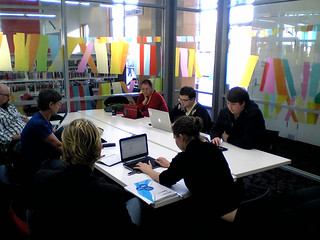
GovHack 2013 Organizers Meeting at the Gungahlin Library
Events which students can participate in for course credit can be organized in facilities colocated with the campus. Here the organizing committee for GovHack 2013 are in one of the meeting rooms adjacent to the CIT Learning Center in the Gungarlin Library. GovHack has run each year for a decade with participants using open source government data in creative ways.


One Classroom of the Future Has Furniture on Wheels
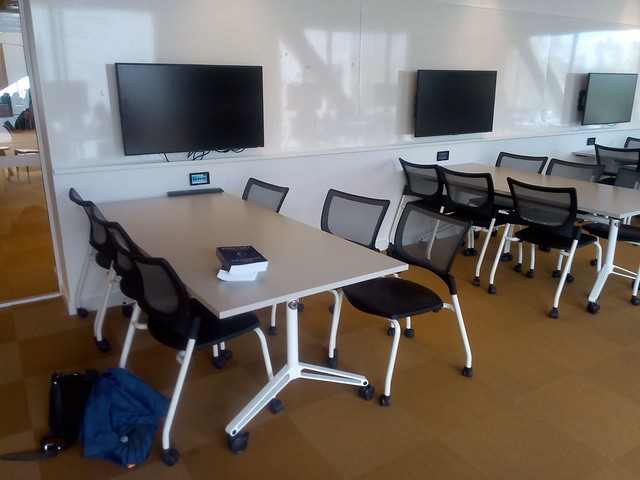
Wall mounted LCD screens & desks on wheels at ANU Marie Reay Teaching Centre


The  Marie Reay Teaching Centre at Australian National University opened in 2019, with five stories of rectangular flat floor classrooms, with electronic screens on the walls and flip top tables on wheels. The spaces can be rearranged from class to class as required for curricular and co-curricular activities, such as hackerthons.

Reference

Worthington, T. (2020, June). Blend and Flip for Teaching Communication Skills to Final Year International Computer Science Students. Paper accepted for the IEEE International Conference on Teaching, Assessment and Learning for Engineering (TALE), 10-13 December 2019, Yogyakarta, Indonesia. URL https://openresearch-repository.anu.edu.au/handle/1885/204833

The Other Classroom of the Future is Online

Zoom Meeting of the ASCILITE MLEARGING Sig (2020)
While higher education will still have campuses, most of the learning and teaching has already moved online and will remain there. After COVID-19 ceases to be a major public health risk, hopefully within the next few years, most post secondary education will be delivered online. COVID-19 provided a sudden acceleration to the online learning trend. Decades of research and practical experience showed that online delivered comparable results to face to face higher education, with benefits of flexibility.


Reference

Worthington, T. (2014, August). Chinese and Australian students learning to work together online: proposal to expand the New Colombo Plan to the online environment. In 2014 9th International Conference on Computer Science & Education (pp. 164-168). IEEE. URL https://doi.org/10.1109/ICCSE.2014.6926448


The University is an Idea, Not a Place


Zen and the Art of Motorcycle Maintenance,  Robert M. Pirsig, 2006
Zen and the Art of Motorcycle
Maintenance, Robert M. Pirsig, 2006
"...the real university exists not as the physical campus, but as a body of reason within the minds of students and teachers ..."
 Chapter 13, Zen and the Art of Motorcycle Maintenance, Robert M. Pirsig, 2006


In early 2020 Australian universities had crash programs to move teaching online, first to reach international students stranded overseas and then to minimize the risk of the transmission of COVID-19 for domestic students at home. Face-to-face teaching will resume, gradually, in the next few years. We will still have university campuses, as a place for research, administration and some teaching. But I suggest the real education should continue to take place, as it is now, online, wherever the student needs to be. The average student will need to be in a classroom for about 20% of their study, but otherwise should be out in the world learning and earning.

COVID-19 a White Swan Event for Unis

 
NUS eLearning Week Video, National University of Singapore, 2014

Many commentators have described the  COVID-19 pandemic as a "black swan event": completely unexpected, but something we should have in retrospect. However, the virus which causes COVID-19 is called "SARS-CoV-2". The similar SARS-CoV-1 was identified in 2003 outbreaks in East Asia resulted in universities such as NUS, having drills to practice online teaching to students at home.

Australian universities face financial difficulties due to the loss of international students. However, the financial risk to these institutions from over-dependence on international student fees was widely discussed in the media and at education conferences.

In 2016 in the conclusion of my e-Portfolio for my MEd at Athabasca University, I identified the long term risk of international students seeking other study options, and the short term risk of an international incident keeping students from Australian campuses. In the MEd, subsequent book, and presentations, I suggested to my university colleagues they begin the transition to online teaching and be ready to switch quickly. While Australian universities have been able to implement online learning quickly, many at universities assume this will be a short term measure, before business as usual resumes: it will not.

The term Black Swan Event come from the idea that Europeans had never seen a black swan and so assumed there were none. But this idea is odd to those in Australia, where black swans are common.  The University of Western Australia is on the Swan River and has a black swan on its coat of arms. COVID-19 was a White Swan event for Australian universities: something they were warned about, knew was coming, were told how to prepare for and yet failed to act.

Reference

Chandran, R. (2010, May). National University of Singapore's Campus-Wide ELearning Week. In Global Learn (pp. 2062-3302). Association for the Advancement of Computing in Education (AACE). URL https://cpb-us-w2.wpmucdn.com/blog.nus.edu.sg/dist/0/119/files/2011/03/national-university-of-singapores-campus-wide-elearning-week.pdf


Education and online learning in a pandemic

Australia and the post-pandemic world, ANU Symposium, 22 October 2020


The Australian National University will hold an online symposium on "Australia and the post-pandemic world", 22 October 2020. This includes a section on "Education and online learning in a pandemic", including myself on "Australian Higher Education in the Post-pandemic World". Suggestions welcome.


Synchronising Asynchronous e-Learning Research Project 

"... synchronization of the asynchronous learning process ..." (Worthington, p. 619, 2013)


Worthington, T. (2013, April). Synchronizing asynchronous learning-Combining synchronous and asynchronous techniques. In Computer Science & Education (ICCSE), 2013 8th International Conference on (pp. 618-621). IEEE. URL https://doi.org/10.1109/ICCSE.2013.6553983

WhatsApp for Teaching Microbiology

  1. Student Sensitization
  2. Faculty Sensitization
  3. Module Preparation
  4. Formation of WhatsApp group (students and faculty)
  5. Putting up of questions related to topic on the group
  6. Self directed learning by students on topic and answers being posted on the group (by
  7. some students who were active responders, while others learnt as passive learners)
  8. Discussion on the answers posted and posting of new questions (activity lasted for one
  9. week)
  10. Group dissolved after a week
  11. Didactic lecture taken on said topic
  12. Feedback by students and faculty
From Singla, Kumar, & Badyal (p. 55, 2020).


This paper on using WhatsApp for teaching microbiology is relevant to previous discussion of tools in this series. I noticed it, because it cites my 2013 paper on asynchronous learning.

Reference

Singla, N., Kumar, M. B., & Badyal, D. (2020). Introduction of social media learning tool in teaching of Microbiology. South-East Asian Journal of Medical Education, 14(1). URL http://doi.org/10.4038/seajme.v14i1.188

Worthington, T. (2013, April). Synchronizing asynchronous learning-Combining synchronous and asynchronous techniques. In 2013 8th International Conference on Computer Science & Education (pp. 618-621). IEEE. URL https://doi.org/10.1109/ICCSE.2013.6553983

Saturday, August 22, 2020

Mentoring student group work online, 8am Wednesday


I will talk on "Tools to engage students online" Wednesday 19 August, 8-9 am, AEST (Canberra Time) as part of the Microlearning Series curated by Manisha Khetarpal at Maskwacis Cultural College in Canada. This is the third of six weekly sessions. Free, register now.

Higher Education After COVID-19

  1. Responding to the Coronavirus Emergency with e-Learning
  2. Open Content for e-Learning in Response to the Coronavirus
  3. Online Assessment with e-Portfolios in Response to the Coronavirus
  4. Tools to engage students online.
  5. Mentoring student group work online.
  6. Higher education after COVID-19: Not business as usual
These are online, open to all and free. Suggestions are welcome.

Mentoring student group work online

The best way for students to learn practical skills for a vocation is by practice. This can be in a real workplace as an intern, or in a team of students working on a real-world project. But many "real" workplaces are now virtual, with staff working online remotely. This requires new skills of those providing Work Integrated Learning.

Questions for participants:

1. How do you provide individual students, or teams, just enough advice, when you can't physically meet with them?

2. How can online mentoring techniques be used after face to face teaching and working resumes?

Mentors give guidance based on experience

Telemachus son of Odysseus and Mentor
from Aventuras de Telémaco
by Pablo E. Fabisch / Public domain

The tools a mentor uses may be much the same, but their role is different to other teachers. The mentor is experienced in what it is the student is learning to do.  The mentor answers questions and provides advice, rather than taking the student through a set of coursework. Other educators may have set out what the student needs to learn, the mentor helps with the practicalities. As an example, I tutor students undertaking team projects and mentor participants in hackerthons, not telling them how to do the project, but asking what they intend to do.


Work-integrated learning (WIL)


Dr Penny Kyburz,
Game Developer
 Take the learning to the workplace or the workplace to the learning.


Australia has Work-integrated learning (WIL) both in its Vocational Education (VET) sector and universities. I was trained in computing in the Australian Public Service (APS), through short courses by contracted professionals, and supervision in the workplace. Employers may also release staff to attend courses at VET institutions or universities. The APD trainees are called apprentices or cadets. There are also university courses where students work in a company as "interns". Students may also work in a team on a project for a client. 

Mentoring has a role here as these trainees need a form of supervision which takes account of their role as someone working but also learning. Ideally there will be someone with work experience working alongside an educator to ensure the trainee makes a practical contribution, learns from the experience and that can be formally recognized through a educational qualification. In some cases the professional is also an educator, such as Dr Penny Kyburz, Game Developer, and Dr Charles Gretton (AI Developer).


Project Audits

  • Project Audit 1 - Week 3, to set or reset the agenda and scope for the semester
  • Project Audit 2 - Week 6, to guide and evaluate progress, based on the project scope
  • Project Audit 3 - Week 10, to finalise and prepare for the next stage of the project
From: Project Audits (PA), ANU, 2020


Many Eyes Process

 
From: Many Eyes Process, ANU, 2020
 

Mentoring Online With Remo Conference


Remo Conference Example
Participants in Canberra's ZeroCO2 Hackathon 2020 took part in an online idea forming exercise this month. Teams were each allocated a table and booked sessions with a mentor. The mentors had their own virtual table where they could chat between mentoring sessions. At the end of each set time period a bell would sound indicating it was time for mentors to move to their next team appointment.

This format has been used at the Canberra Innovation Network (CBRIN), for fast paced start-up sessions for several years. The difference this year is that it has moved online due to COVID-19. The room and tables are virtual. While many video conference and forums tools could be used, Remo Conference was used for the ZeroCO2 hackerthon. This displays a floor plan of the virtual room, with participants seated.


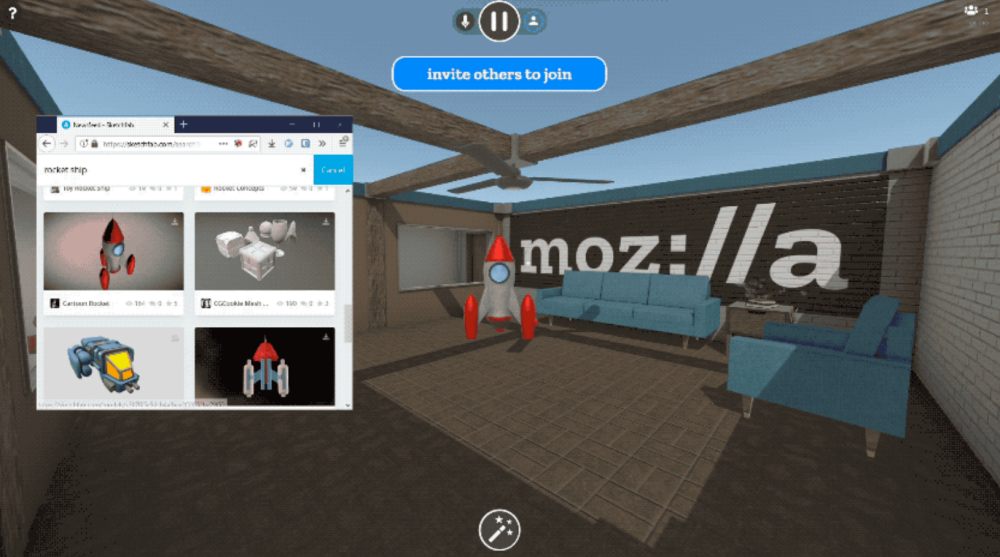
Mozilla Hubs is Too Much Like Life

Mozilla Hubs Example
Last week the


Wednesday, August 12, 2020

Webinar on Tools to Engage Students Online, 8am Wednesday


I will talk on "Tools to engage students online" Wednesday 19 August, 8-9 am, AEST (Canberra Time) as part of the Microlearning Series curated by Manisha Khetarpal at Maskwacis Cultural College in Canada. This is the third of six weekly sessions. Free, register now.

Higher Education After COVID-19

  1. Responding to the Coronavirus Emergency with e-Learning
  2. Open Content for e-Learning in Response to the Coronavirus
  3. Online Assessment with e-Portfolios in Response to the Coronavirus
  4. Tools to engage students online.
  5. Mentoring student group work online.
  6. Higher education after COVID-19: Not business as usual
These are online, open to all and free. Suggestions are welcome.

Part 4: Tools to engage students online

Due to the risk of COVID-19, universities are using online delivery of courses. But "delivery" suggests students are passive recipients of knowledge, a view reinforced if all students get are recordings of lectures, or a live lecturer who drones on and on in Zoom. Students learn best when they are doing things and there are many techniques developed for getting students active in the classroom which translate online easily. These and be used with the basic learning management system (such as Moodle) and video conference system (such as Zoom). There are also specialized online tools for individual and group activities, such as: Slack, Piazza, GitLab, Padlet, and trello. These will be discussed in this webinar and participants asked to contribute their experience. Here are some questions to get started:
  1. What tips, tools and techniques do you use to get students actively engaged?
  2. Do you do this differently in online, if so how?
ps: You can read through the notes for the ANU Coffee Course "Engaging Students Online" (Katie Freund, 2017).

Students learn best when they are doing things

Dr Katharina Freund

  1. What is engagement, and how does it work online?
  2. Creating social presence in your course
  3. Communicating effectively with students
  4. Critical perspectives on engagement and participation
  5. Creating engaging online activities
  6. Reflection and final thoughts
Daily topics, from  Engaging Students Online, Coffee Course, Katie Freund and Janene Harman, ANU, 2017.


The Australian National University (ANU) has been running online teaching courses for several years. These are named "Coffee" courses, as they are designed to do the study while having a coffee each day, for around one week. One course is on Engaging Students Online (Freund & Janene, 2017). The course doesn;t tell experienced educators anything they did not already know. The major insight is that techniques for getting student's attention work just as well online as they do in the classroom. The online teacher has to be more explicit in explaining who they are and what they want students to do, but the techniques are the same.


Asynchronous Mode: Moodle Example

ICT Sustainability Course Moodle Page


 This example of a Moodle course page shows the tutor's name and photo, so they are more than just an anonymous entity. There is a link to their bio and a link to contact them. Official information about the course is provided by way of an announcements forum and an e-book, but there is also a chat forum. What the student is expected to do is provided, along with a quiz to try. The  Tutor Notes for the course suggest providing a welcome message in the forum and inviting students to introduce themselves in the chat room.

Synchronous Mode: Zoom Example


ASCILITE ML SIG video meeting

Video conferencing is decades old and the tools have not changed much in that time (I observed a ship to shore video conference while onboard the USS Blue Ridge, in the Coral Sea in 1997). Key to using video conferencing for education is to have a purpose to the session, introduce the participants and the topic, much like a face to face class. More planning and structure is needed due to the limitations of the technology.

Messaging: Slack, Piazza

  • Slack: threaded text based chat, but also does video conferences
  • Piazza: simpler text based chat for courses
Both used by the ANU TechLauncher Project


Slack and Piazza are two text based tools which can be used for communication with and between students. Piazza was specifically designed for education, and provides a forum for each course, where students can post questions to be answered by teachers, or preferably, other students in the class. 
Slack was designed for IT development teams to communicate and provides or discussion under topics. Slack also allows for video communications in a team. The ANU TechLauncher project uses Piazza for routine course announcements and student questions about deadlines and marking. Slack can be used by teams of students working on a project.


Teamwork: GitLab, Padlet, and Trello

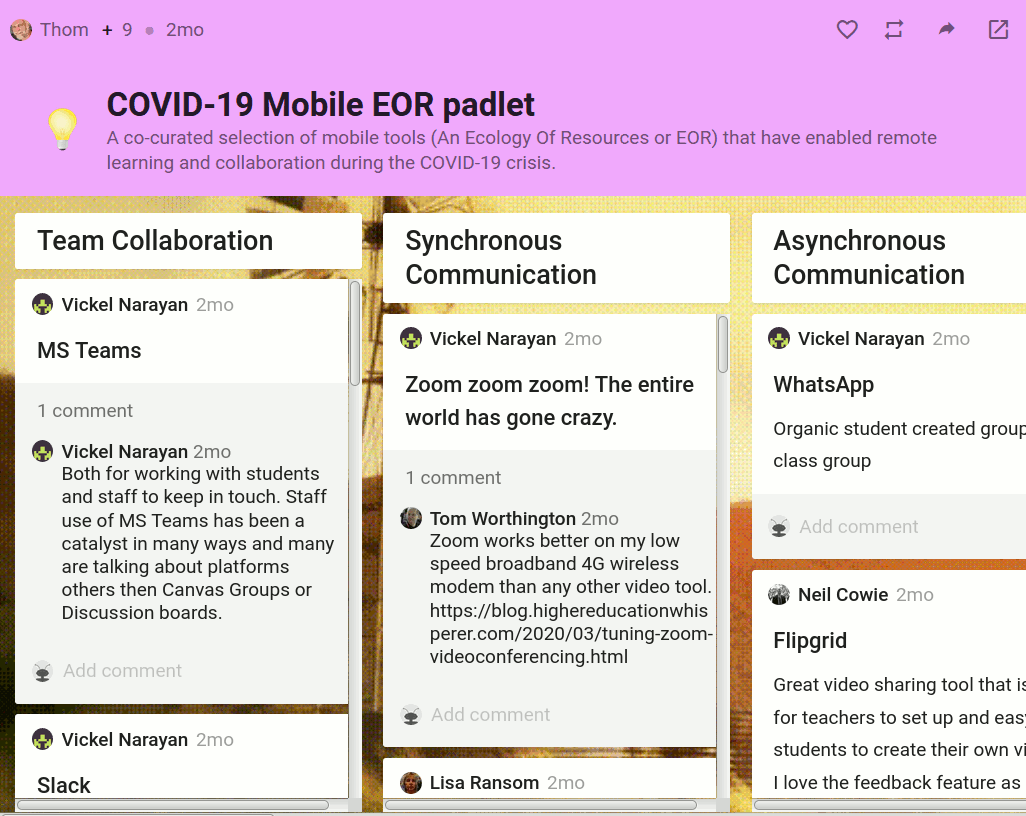
Padlet Example from ASCILITEMLSIG, Webinar 12 June 2020,


Tools, such as GitLab, Padlet, and Trello allow students to work togehter in teams online, over minutes, hours weeks or years. Thom Cochrane convenor of ASCILITE MLSIG
the education Mobile Educaiton Special Interest groups, used Padlet to collect ideas during, and after, a video conference session. Participants can type in contributions under prepared headings, or create new headings themselves. Trello, now owned by Sydney company Atlassian has a similar interface, but specifically for teams to arrange tasks. GitLab provides a repository of digital documents with version control, for a complex project.

Use Synchronous and Asynchronous Tools to Flip

  1. Moodle (asynchronous) for preparation
  2. Everyone meets in Zoom (synchronous) and make notes in Padlet (asynchronous)
  3. Save notes to Moodle for later


E-learning tools and techniques are usually classified into two broad categories: synchronous and asynchronous. These are complementary and can be used in combination. As an example I have students study material in Moodle and do a quiz, to prepare for a Zoom conference. They can use Padlet during the conference and paste results to Moodle for later use. 

Reference


Worthington, T. (2013). Synchronizing Asynchronous Learning: Combining Synchronous and Asynchronous Techniques. In Proceedings of 2013 8th International Conference on Computer Science & Education (ICCSE), 26 Apr - 28 Apr 2013 , Sri Lanka. URL: http://dx.doi.org/10.1109/ICCSE.2013.6553983
Preprint available at: http://hdl.handle.net/1885/9556


 ZeroCO2 Hackathon 2020 


Each team will occupy a table on the Remo virtual conference floor.


Canberra's ZeroCO2 Hackathon 2020 runs online over two-weeks, starting 18th August and is open for registrations. Teams will work on business ideas to reduce domestic and commercial carbon emissions, with $10,000 in prizes. I mentored teams in the 2019 competition and have volunteered again. 

Due to COVID-19 this years event is entirely online, whereas last year we were all at the Canberra Institute of Technology's excellent renewable energy training facility. However, this will be my fourth time helping with an online hackerthon this year, and the activity has easily translated to the online format.
Like the Fighting Pandemics hackerthon I helped with recently, this one is using Remo Conference. Each team will occupy a table on the virtual conference floor. Mentors will move from table to table with a double click. The organizers will keep tack of time to tell us when to move. It will be interesting to see how this works virtually, as it is usually a bit chaotic in a real room with hundreds of people.


Legal and Ethical Issues with Online Tools


"If you are not paying for it, you’re not the customer; you’re the product being sold."
From Andrew Lewis ("blue_beetle"), Post to MetaFilter, August 26, 2010

Teachers, and educational institutions, have a legal and ethical obligation to protect their student's privacy.  This can be difficult with online tools. A traditional Learning Management System, such as Moodle, would have been run on a computer at the campus, thus under the control of the institution and withing the same legal jurisdiction. However, tools are now commonly hosted externally.

If the tool you are using is hosted in another country, that country's government authorities may have access to the student data, with or without, judicial oversight. Governments may wish to spy on foreign students for national security purposes, as well as their own students studying abroad for internal security reasons.

Perhaps of more day to day concern is using "free" commercial online tools. These tools are free because the company providing them wants to up-sell you or your students, a more advanced subscription service, or they want to sell your details, and those of your students, to advertisers.

You need to consider who will have access to your student's information, and what they might do with it. Most commercial companies will look to make a quick return, and so older students with more money will be an attractive target. However, private criminal organizations, and government intelligence agencies, can find information about the children of their targets useful for Phishing attacks.


 Fake Sites to Collect Information

Fake child care center website, 2013

In 2013 invitations to apply to a government endorsed child care center were sent to employees of a Government intelligence agency in Canberra. The center did not exist and was designed to collect personal information which could be used for sending fame messages to staff at the agency to trick them into revealing secrets.  (Page & Jean, 2013).

Reference

Page, F., & Jean, P. (2013, April 16). Free childcare scam aimed at intelligence staff. Sydney Morning Herald. Retrieved from: http://www.smh.com.au/it-pro/security-it/free-childcare-scam-aimed-at-intelligence-staff-20130415-2hwhq.html

Thursday, August 6, 2020

Online Assessment with Portfolios in Response to the Coronavirus, 8am Wednesday

I will talk on "Online Assessment with Portfolios in Response to the Coronavirus" Wednesday 12 August, 8-9 am, AEST (Canberra Time) as part of the Microlearning Series curated by Manisha Khetarpal at Maskwacis Cultural College in Canada. This is the third of six weekly sessions.  Register now.

Higher Education After COVID-19

  1. Responding to the Coronavirus Emergency with e-Learning
  2. Open Content for e-Learning in Response to the Coronavirus
  3. Online Assessment with e-Portfolios in Response to the Coronavirus
  4. Tools used to engage students in online delivery
  5. Mentoring student group work onlin.
  6. Higher education after COVID-19: Not business as usual
These are online, open to all and free, but please  register now. Suggestions are welcome.

Part 3: Online Assessment with Portfolios in Response to the Coronavirus

Slides and notes (2 Mbytes PDF)

Due to the risk of COVID-19, universities are using online invigilated examinations in place of examination rooms. However, there are much better ways to assess students online. Assessment can be an afterthought when delivering a face to face course: after all, it comes after the learning, doesn't it? Perhaps not. Assessment can be used to provide the student and the teach information on what they already know, to help plan what to learn and how. Assessment can be used during learning to see what more needs to be done. Assessment can also be integrated into what the student works on, in real world tasks, or simulations of them. A portfolio can be used for students to collect evidence of the skills and knowledge they have gained in formal courses and co-curricular, to show they have the real world skills needed to graduate. All of these approaches to assessment require more skill of the educator, than a final examination, but may not take any extra time. There are tools which can be used online, such as Moodle (Quizzes, forums, and peer assessed assignments) and Mahara (e-portfolios), but these require a knowledge of pedagogy, as well as the technology.  This third talk in the series and also I will cover some requests from the second talk.

See also:
  1. Assessment for ICT Sustainability-Assessment and Strategies for a Low Carbon Future, (ANU COMP7310, Athabasca University COMP 635,  ACS Green Technology Strategies), Worthington, 2016
  2. Assessment for the Learning to Reflect module for the ANU TechLauncher program, (COMP3500, COMP3550, COMP3710, COMP4500, and COMP8715), Worthington, 2019
  3. Capstone e-Portfolio for the Masters of Education, Athabasca University, Tom Worthington (2016)

Don't Replace Long Paper Examinations with Long Electronic Ones

  • Online invigilation allows paperless home exams
  • ProctorU at Athabasca University,  Proctorio at ANU
  • Work okay, but do we need a long exam?

In the first half of the year I tried a couple of demo exams with one of the leading online exams products. There were some good points : the compatibility test beforehand warned my CPU was too slow, but it worked okay anyway. I have a relatively under-powered laptop by today's standards and slow Internet connection. This is not just because I am a cheapskate, I am doing what Ken Mattingly did for Apollo 13: make sure that if it works on my equipment, it will work for those out in the void.

The business of panning the camera around the room, to make sure no one else was present was a bit of light relief.

Having tried this process twice, I could image taking a short test this way. There is the comfort of a familiar environment, rather than an exam room, but help is further away. If it was for a small amount of my grade (perhaps 20%) and short (around 30 minutes), this might be tolerable, just. But if for the majority of the grade in a course and for hours, there is no way I would ever contemplate sitting such a test.

In my view, any exam should be relatively short, more like a take-home examination, than end of semester one. One issue is when the students can do it. I worry that some course designers are assuming all the students take the test at precisely the same time. This will not work well at home. There should be a period of a day, or days, over which students can choose to start their exam.

Academics and university administrators may be using online examinations in the mistaken belief that some law, policy or rule requires examinations. Even before COVID-19, there was flexibility with how assessment could be done. Assessment rules generally have a lot of detail about how to do a traditional examination, but then include a get-out clause saying that some other form of assessment can be used. Other forms of assessment take skill to design and resources to administer. But if you have been trained in how to design assessment (as I have), this can be done reliably, at reasonable cost.
While just a practice, these exams brought back a tinge of the terrors I suffered as a student with assessment. As an instructor, I would not use such a system for long examinations. Such examinations are not a good way to assess the knowledge, and even less so for assessing skills needed for real work tasks. In addition such examinations increase the risk to the health and safety of students. Students were already at risk of mental illness and self harm before COVID-19. They are now at higher risk, and there are better, safer, ways to carry out assessment. Online invigilated tests should have only a small part in assessing students.

See also:

Use Small Quizzes and Short Exercises For Building Confidence

Example quiz questions in Moodle
 

Multiple choice and short free form questions can be used to build the student's confidence and prompt them to study the material. A small number of marks can be allocated to encourage students to actually do the quiz, which can then prompt them to study the material.

Typically I will set a half dozen or fewer multiple choice questions per week and two discussion questions. These would normally make up about 20% of the final grade. To avoid this making it too easy for bright students, I set the grading scheme so these tests do not count for more than a mid range grade (a Credit, not a Distinction or High Distinction). 

Multiple choice and some other types of quiz question can be marked automatically. They can also have questions drawn at random from a bank, to make cheating harder. But the object of the exercise is not to test the student's know under exam conditions, but to help them learn.

Free form text answers can't be automatically marked, but they can be peer assessed, also creating an additional learning opportunity. Students learn from having to read an answer from another student and make a useful comment about it. Of course some students will try using boilerplate phrase and give everyone a high mark, but that behavior is easily corrected by giving them zero for the exercise.

This type of assessment doesn't need fine grained marking, it can be a two, three or five point scale.

Use Projects for More Advanced Skills

Ict Sustainability book cover"In the weekly forums and the two major assignments, you are asked to write about the ICT sustainability of an organization your are familiar with. It may be where you work, w

here you have worked, or an organization you can obtain information on from public sources. For this first assignment, describe the organization and how it uses ICT. Outline how you plan to obtain the information needed to report on the carbon footprint and materials use of the ICT operations of the organization."

From Assessment: ICT Sustainability

The way to provide students with real world skills is to have them working on projects as close to real world as possible. This is easiest to do for students who are already employed in a relevant job, where they can do their project in the workplace. This is common in engineering, computing and teaching. As an example, I encourage the ICT Sustainability students to approach their boss and get permission to estimate the carbon emissions of their organization. If students don't have a suitable job, I suggest they pick somewhere they would like to work and do the project based on open source information. 

Some courses are built around an internship or a group project for a client (ANU has these for computing students). However, this approach requires a considerable investment of staff time and skills of dealing with industry.

Use an e-Portfolio for a Capstone

Hot Air Balloon Over Canberra,
Photo by Tom Worthington CC-by 3.0 1996
 
“Three years ago I set out to make the transition, from a computer professional, to a designer and teacher of computing courses. My original learning goal was to acquire the skills needed to undertake quantitative research in education. Instead, I have learned enough theory, balanced with practical skills, to help with the transition to e-learning in Australian universities. ...International tensions could disrupt the flow of students to Australia very quickly ... "

From: Capstone e-Portfolio for the Masters of Education, Athabasca University, Tom Worthington (2016)
 
 
In place of a conventional masters thesis, I completed a Capstone e-Portfolio using Mahara for my MEd at Athabasca University. This presented five artifacts, covering six competency areas, in a process described by Hoven (2015). With this the student prepares a collection of samples of their work, and explains how this is evidence that they have the skills and knowledge required. It can be used for a small part of a course or for an entire degree. 
 
What is key is not having an e-portfolio software package (just about any document construction tool will do), but a process to help the student build the portfolio, piece by piece. Hoven describes how students were having difficult preparing a portfolio and this was delaying their degree completion. I was one of the students in the transition period, who could choose to do this as a course, with an instructor and with step by step feedback from peers. This process works well, but it takes the student a few attempts to understand what is happening. I had to undertake several of these portfolio experiences before I had the hang of it. This can be used for anything from a vocational short course to a postgraduate degree.

References:

 Capstone e-Portfolio for the Masters of Education, Athabasca University, Tom Worthington (2016)

Hoven, D. (2014). ePortfolios in Post-Secondary Education: An Alternate Approach to Assessment. UAE Journal of Educational Technology and eLearning, 1, 11-24. URL https://web.archive.org/web/20160210160342/http://ejournal.hct.ac.ae/wp-content/uploads/2014_Article2_Debra.pdf

Disguise a Reflection Exercise as a Job Application

"Select a real position to apply for. Prepare a cover letter ... CV ... statement addressing the selection criteria ... Supplementary material ... and a copy of the advertisement you are responding to. ...

After submitting, each student will be allocated four assignments from other students to provide feedback on. ... The reviews are double-blind peer reviewed ... Twenty percent of your mark will be for the quality of your feedback."

 From: Learning to Reflect for ANU COMP3500/3550/3710/4500/8715, Tom Worthington, 2019.
 
Educators are fond of asking students to "reflect on their learning" in the e-portfolio. However, as a STEM student I had difficulty understanding what was expected. The ANU TechLauncher students  are equally confused by such a task. So several years ago the reflective exercise using Mahara was replaced with one where the student has to write a job application submitted as one PDF document. The student selects a real job to apply for, or application to undertake a PhD, apply for start-up funding or similar. In their application the student must present evidence of what they did, what they learned and how they learned it, in their course. This is, in effect, a capstone reflective e-portfolio exercise in disguise. It is much easier for the student to understand as they are (hopefully) about to graduate and be looking for a job (or a PhD program, or startup funding). 

For the ANU TechLauncher program I wrote a blended module to assist the students. The essential point here is no so much the course content, but the exercises to help students and provide feedback. Last year I included an online contingency as envisaged in my MEd portfolio. This was activated for COVID-19, with relatively little difficulty.
 
References
 
Learning to Reflect for ANU COMP3500/3550/3710/4500/8715, Tom Worthington, 2019. URL http://www.tomw.net.au/technology/education/learning_to_reflect/learning_to_reflect_2_1.shtml
 
Worthington, T. (2020, June). Blend and Flip for Teaching Communication Skills to Final Year International Computer Science Students. Paper accepted for the IEEE International Conference on Teaching, Assessment and Learning for Engineering (TALE), 10-13 December 2019, Yogyakarta, Indonesia. URL https://openresearch-repository.anu.edu.au/handle/1885/204833

Designing in an On-line Learning Option, Tom Worthington, Higher Educaiton Whisperer, March 14, 2020 URL https://blog.highereducationwhisperer.com/2020/03/designing-in-on-line-learning-option.html

Use e-Portfolios Throughout a Program?

Mahara SmartEvidence Example
  1. identify their study goals and licensing requirements
  2. inventory existing skills and knowledge
  3. obtain exemptions from courses
  4. plan study
  5. record evidence of achieving each goal
 
ePortfolios are something usually used at the end of a degree program as part of a capstone. The student may be told earlier they have to do this, but if it is only due at the end, then that is when the student will worry about it. I suggest e-portfolios could be used through a program of study, first to help the student identify their study goals (and specifically any program or industry licensing requirements they must meet), inventory their existing skills and knowledge, obtain exemptions from courses, plan their study, record evidence of the achievement of each goal.

What the student is seeking entry to a profession, the template of requirements could be loaded into the e-portfolio of them to complete. The student could plan courses to meet these requirements, but they could also check which could be met from prior experience, by co-curricular activities, work experience and projects. The aim should be for the average student to only undertake formal study for one third to one half their program. 
 
For a university degree, plus multiple concurrent industry licensing requirements,  there may be hundreds of requirements to meet, each requiring evidence to be kept and certification to the required standard recorded. Mahara SmartEvidence and  Moodle Competencies have some of the features needed to be able to record student's achievements in a fine grained way needed for a whole of program e-Portfolio. 

References

Assessing Competencies with Mahara and Moodle, Higher Educaiton Whisperer, August 5, 2016. URL https://blog.highereducationwhisperer.com/2016/08/mahara-annotation-function.html

Worthington, T. (2014, August). Chinese and Australian students learning to work together online proposal to expand the New Colombo Plan to the online environment. In 2014 9th International Conference on Computer Science & Education (pp. 164-168). IEEE. URL https://openresearch-repository.anu.edu.au/bitstream/1885/11724/1/Worthington%20Chinese%20and%20Australian%20students%20learning%202014.pdf
 

Virtual Hackathon on Fighting Pandemics 

Remo Conference Example

Last weekend I talked at the Virtual Hackathon on Fighting Pandemics. This is organized by the Australian National University Humanitarian Innovation Society (ANU HISoc), with the Clinton Global Initiative University and IBM. We have had an introduction from the organizers at HISoc, and a design thinking workshop from IBM. I then talked about better logistics. The opening sessions used Remo Conference, and later ones Zoom video conferencing.


Remo Conference takes the "conference" part of video conferencing more literally than other products, with an interface which looks like a conference room floor plan. Participants can be pre-allocated to tables, with a tiny picture of them, labeled with their initials, around the table as if seated. Spare space at the table is indicated by empty chairs. Those at a table can see and hear each other with the video windows appearing at the top of the screen. Participants can move tables by double clicking on another. Some tables may be reserved for MCs and a help desk. The MC can call all participants to a presentation, at which point the table conversations shut down and a large window opens for the presenter. In contrast, when in presentation mode Remo Conference looks much like any other webinar product, with a presentation window, chat, Q&A and Raise-Hand functions.

While there are some technical problems with Remo, it shows potential for a way to provide a classroom-like experience.
 
 
Reference
 
Hacking the Virtual Hackerthon,  Higher Education Whisperer, August 8, 2020 URL https://blog.highereducationwhisperer.com/2020/08/hacking-virtual-hackerthon.html

Discussion Questions

  1. Who are you teaching?
  2. How are they assessed?
  3. How do you record the evidence? 
  4. Does this work online?

What worked well at the hackerthon was that I did not present too much or too complex information. I followed this up with four questions for the participants, which worked well in getting a discussion going. So I have prepared four questions for this week.

Reference

Better Logistics for Fighting Pandemics, Higher Education Whisperer, July 31, 2020. URL https://blog.highereducationwhisperer.com/2020/07/better-logistics-for-fighting-pandemics.html