It was good to discuss common problems of finding enough places in industry for students, and how to keep them learning.
Showing posts with label Sydney. Show all posts
Friday, December 8, 2023
ACEN NSW/ACT WIL Summit in Sydney
Greetings from the ACEN NSW/ACT WIL Summit at University of Wollongong's Sydney campus. This is near Circular Quay, with a terrace view of the Sydney Harbor Bridge. The summit had people from NSW and ACT universities working in Work Integrated Learning (WIL). Formal presentations were eschewed for guided discussion. I won the prize for longest distance, having just come from ASCILITE 2023 in Christchurch.
Monday, August 19, 2019
Digital Learning For Behavioural Change
I was skeptical, and slightly worried, by the title of Haymarket HQ's talk last Friday: "The Future of Digital Learning to Drive Behavioural Change" by So-Young Kang, Founder of Gnowbe. Haymarket HQ is a start-up center in Sydney's Chinatown, specializing in helping Australian businesses expand into China. But the behavioral change So-Young talked about was not some sort of Orwellian brainwashing, but helping people get ready for new jobs.
So-Young emphasized a mobile first approach to online learning, rather than mobile responsive. The latter is for on-line delivery to desktop computers, but uses features in web technology to ensure the display is adjusted if the student has a mobile device. With real mobile-first, the screen display, the content, and the course, is designed with mobile devices in mind. This requires much smaller units of learning.
With my course design I started with desktop orientation, about ten years ago, and started incorporating more mobile features using responsive design over the last five years. I now assume the student will study the material on a mobile device, do the quizzes and forum interaction, but still use a desktop computer for the major written assignments.
So-Young talked of both businesses and universities using Gnowbe products for staff and students. What was most interesting was using this for people skills. Academics and teachers could look at some of these techniques. What is yet to be explored in detail is how this will fit with conventional post-secondary learning. Are VET and university qualifications to be replaced by micro-learning? I suspect not, but it may be supplemented, or supported by this.
So-Young emphasized a mobile first approach to online learning, rather than mobile responsive. The latter is for on-line delivery to desktop computers, but uses features in web technology to ensure the display is adjusted if the student has a mobile device. With real mobile-first, the screen display, the content, and the course, is designed with mobile devices in mind. This requires much smaller units of learning.
With my course design I started with desktop orientation, about ten years ago, and started incorporating more mobile features using responsive design over the last five years. I now assume the student will study the material on a mobile device, do the quizzes and forum interaction, but still use a desktop computer for the major written assignments.
So-Young talked of both businesses and universities using Gnowbe products for staff and students. What was most interesting was using this for people skills. Academics and teachers could look at some of these techniques. What is yet to be explored in detail is how this will fit with conventional post-secondary learning. Are VET and university qualifications to be replaced by micro-learning? I suspect not, but it may be supplemented, or supported by this.
Friday, September 7, 2018
Call for University to Establish in Western Sydney
Blacktown Council in Sydney's West has invited universities to set up a 5,000 student campus, expanding to 30,000 students. Their business case argues a strong market demand for study in Sydney, good transport, businesses wanting to partner on logistics,
manufacturing, engineering, IT, sport and medicine.
What the Council has not mentioned is the availability of existing buildings, suitable for conversion to a campus. Universities no longer require large purpose built lecture theaters. What would be ideal is an old shopping mall, with adjacent cinema complex and office tower.
Also required are suitable professionals, who can be trained to teach, and a lifestyle suitable for attracting a few academics. A university campus only needs a handful of full time research orientated academics. What is required is a large supply of part time teachers who are already qualified in the discipline they are teaching.
What is not clear is how large the Council expects the campus to be. With students mostly studying on-line, a university only needs to accommodate about one fifth of the enrolled students at any one time. Also students are increasingly part-time. As a result a university campus accommodating 30,000 students suggests the actual number of students enrolled to be about 150,000.
I will be discussing Learning to use new tech-infused teaching spaces, at EduBuild Asia 2018 in Singapore 10 October.
What the Council has not mentioned is the availability of existing buildings, suitable for conversion to a campus. Universities no longer require large purpose built lecture theaters. What would be ideal is an old shopping mall, with adjacent cinema complex and office tower.
Also required are suitable professionals, who can be trained to teach, and a lifestyle suitable for attracting a few academics. A university campus only needs a handful of full time research orientated academics. What is required is a large supply of part time teachers who are already qualified in the discipline they are teaching.
What is not clear is how large the Council expects the campus to be. With students mostly studying on-line, a university only needs to accommodate about one fifth of the enrolled students at any one time. Also students are increasingly part-time. As a result a university campus accommodating 30,000 students suggests the actual number of students enrolled to be about 150,000.
I will be discussing Learning to use new tech-infused teaching spaces, at EduBuild Asia 2018 in Singapore 10 October.
Friday, June 8, 2018
Best of EduTECH Sydney, Higher Ed Leaders Congress, Day 2
EduTECH Sydney
starts this morning. I am on 2:20pm today speaking about e-portfolios in the Higher Ed Leaders
Congress. Apart from that, here is my best of:
9:30 UNSW Hero Program case study: Student-driven innovation for universities
- Discover the first program in Australia that gets students and their professional work experience to design their own learning experience and environment
- How universities can work with students to design and develop internal innovation projects at your university
- Lessons learned from project, and how you can successfully achieve great collaboration with students, operational and educational staff
9:50 Critical success factors of the implementation of a National eLearning Platform
- See how Singapore’s National eLearning Platform has supported the teaching and learning of 96,000 students and 3,500 staff within a 6 month project time frame
- Learn how to effectively collaborative through inter-institutional teams to work towards a common goal
- Discover how to provide students and industry with appropriate skillsets through the National eLearning Platform
10:10 Blending learning pedagogy, technology and space in a connected world: Implications for institutions, teachers and students
- Discover how learning and teaching has changed in a blended world and blended teaching has changed in a connected world
- Learn how to use technology to support effective assessment and enhance student learning
- Discover how teachers and students can thrive in a connected world
- See how project-based learning can create active life-long learning
10:30 Coffee
- Learn how to integrate technology in the classroom to deliver enhanced teaching and learning experiences
- See how strong collaborative partnerships can aid educational institutions to prepare for digital disruption
- Discover how virtual and physical education infrastructure can drive innovation in Australian education
11:50 Education's response to prepare students for the future of work
- Discover how AI will change the workforce and how we can prepare our students
- Learn how online learning innovation can be used to respond to changes in workforce
- See where in the education cycle you can be proactive in driving student engagement with digital learning
12:10 Digital inclusion, moving from chalk & talk to eEducation
- Discover a vision for an educational future: Transforming education through technology
- Learn how to use online and mobile technologies to improve skills
- Create a framework for assessing and considering readiness of universities to provide access to students
14:00 Industry partnerships to create better opportunities for students
- Insights into Monash Talent: learning how to solve skills challenges facing industries
- Using technology to find the right graduates to the industry
- Discover how to match services to make sure right candidate aligned to right role
- Discover innovative education techniques to teach students how to better communicate with employers and people
- Learn how to build your students confidence and capture their skills set to become more job ready
- Discover how to provide formal postgraduate education to students in their workplaces via mobile devices
15:20 Afternoon tea
Thursday, June 7, 2018
Best of EduTECH Sydney, Higher Ed Leaders Congress, Day 1
EduTECH Sydney starts this morning. I am on 2:20pm tomorrow in the Higher Ed Leaders Congress. So today I can just attend as a delegate. Here is my best of:
BREAKOUT SESSIONS - SEMINARS
11:20 How Digital Transformation is enabling higher education institutions to put resources back in the classrooms
Nadia Hossain,
Business Development Manager, Laserfiche International Limited, Hong Kong |

As
education funding decreases, concerns over the effect of the cuts grow,
student numbers increase and resources become scarcer, universities are
having to find new and more innovative ways to stay competitive. Find
out how education institutions around the world are adapting their
processes and infrastructures by using Digital Transformation and
content service solutions to be more cost effective and put resources
back where they are needed.
13:10 Lunch
- Learn how to engage students through gamification and increase average grade by 7%
- Discover how to get students to enjoy the experience of learning and decrease failure rates through mobile first technology
- Learn how to identify at risk students early and engage them in active learning
- Overview of global trends in higher education commercial models in profit/not-for-profit institutions
- Challenge existing financial sustainability paradigms in higher education
- Outline of current working commercial models and provision of live examples
15:50 Afternoon tea
- Focus on developing children's strengths instead of fixing their deficiencies
- Teaching children to identify and solve problems worth-solving and create value for others through product-oriented learning
- Make education personalisable for children, not personalized for them
- Examine an education system that embraces timely change and timeless constraints, centralisation and decentralisation, teaching less and learning more
- Understand the key success factors of Singapore’s education system
- Learn the eye-opening difference between acing an examination vs appreciation of subject
18:00 Networking drinks
Sunday, May 20, 2018
Using an ePortfolio to capture students' skill sets to align to workplace
At
EduTECH, 8 June in Sydney, I be speaking on "Using an ePortfolio to capture students' skill sets to align to workplace". I would welcome corrections and comments on my draft
presentation:
"Tom teaches university computing students how to undertake real projects for real clients. This has included an artifact mapping tool for the Plain of Jars in Laos and test software for the radars on Australian warships. These real-world projects require real-world assessment techniques, including e-portfolios. In this presentation he discusses:
- Innovative education techniques to teach students how to better communicate with employers and people
- How to build students confidence and capture their skills set to become more job ready
- How to provide formal postgraduate education to students in their workplaces via mobile devices"
Wednesday, April 18, 2018
ePortfolios to capture students work-ready skills
I will be speaking on "Using an ePortfolio to capture students’ skill sets to align to workplace" at the Higher Education Leaders Congress, as part of Edutech 2018, in Sydney, 2pm, 8 June in Sydney:
There are specialized applications to help with producing a portfolio, such as Mahara. These are especially useful where a student uses the portfolio as part of showing evidence of skills and knowledge as part of a formal program. The software to help ensure that the student has met all requirements. This may be also useful where an employer has very detailed job requirements.
However, what is of interest to a university examiner is unlikely to be of much interest to an employer. What an employer wants to know is if the applicant can do the job. This is best demonstrated by evidence of the applicant having already done the job, or something similar.
As an example, in the ANU Techlauncher program I tutor teams of students who have to produce something (usually software) for a client. The client may be a start-up, a government agency or a company. The last assessment task for the program is an application for a job, which details how what the student did for the project is relevant to that job.
- "Discover innovative education techniques to teach students how to better communicate with employers and people
- Learn how to build your students confidence and capture their skills set to become more job ready
- Discover how to provide formal postgraduate education to students in their workplaces via mobile devices"
Teaching students to communicate with employers
There is one simple way to teach students to communicate with employers: get them to practice communicating with employers and assess them on this. Students can practice with written and face-to-face presentations. One overlooked aspect is remote communications. Recently one of my teams said their client would be overseas, so the could not have meetings only email. I pointed out that it was possible to have a "meeting", by email, providing the discussion was suitably structured and documented. The documentation is not just a copy of all the emails, but an agenda beforehand and a set of minutes with what was discussed and what was decided after.Build your students confidence
Confidence comes from practicing a skill, under more difficult and realistic circumstances. With one team of students I had only just met I warned them they had to be ready to pitch at any time. A few minutes later a venture capitalist came up and said "tell me about your project". The team got through this encounter and that built their confidence.Capture their skills set to become more job ready
The student has decide what would be of interest to a prospective employer. The more relevant and real-world the better.Formal postgraduate education in the workplace
Once academics get used to the idea that they don't have to give "lectures", delivering university education on-line becomes relatively simple. Postgraduate education to students who have jobs is even easier. Graduate students have more maturity and are focused on achieving results at university. Courses can be redesigned to first identify what knowledge and skills the student has to demonstrate, then provide ways they can do that through practical exercises, ideally involving they day job. Lastly the student can be provided with course notes, videos\, quizzes and the rest of the educational paraphernalia, to support the leaning.via mobile devices
Educational applications, including e-portfolio tools and learning management systems, now support mobile devices. The course designer doesn't have to use any special software, they just have to remember to divide the content into reasonably small chunks for the mobile user. Keep in mind the student will not be sitting in a silent room for an hour or more, they will be on a noisy bus with a few minutes to spare.More Thoughts
The idea of a portfolio, being a collection of samples of work by an artist is not a new one. An e-portfolio is just an electronic version of this: being a collection of digital artifacts from the student to show an examiner and prospective employers.There are specialized applications to help with producing a portfolio, such as Mahara. These are especially useful where a student uses the portfolio as part of showing evidence of skills and knowledge as part of a formal program. The software to help ensure that the student has met all requirements. This may be also useful where an employer has very detailed job requirements.
However, what is of interest to a university examiner is unlikely to be of much interest to an employer. What an employer wants to know is if the applicant can do the job. This is best demonstrated by evidence of the applicant having already done the job, or something similar.
As an example, in the ANU Techlauncher program I tutor teams of students who have to produce something (usually software) for a client. The client may be a start-up, a government agency or a company. The last assessment task for the program is an application for a job, which details how what the student did for the project is relevant to that job.
Sunday, December 10, 2017
Sydney Startup Hub: Model for the University of the Future?
On Friday I attended the last Friday Night Pitches at the Fishburners co-working space in Ulitmo in Sydney, before they move to a new location in the Sydney CBD. Fishburners is currently located in an old warehouse with timer beams on the ceiling in the Industrial/New York loft style adopted by start-ups around the world. Fishburners is moving to the NSW Government sponsored "Sydney Startup Hub" along with the Stone & Chalk Fintech Hub and other incubators and accelerators. They are offering free trials and discounts on the new location. It will be interesting to see how the new, more corporate atmosphere effect
s the start-ups.
The new fit-out is by interior architects TomMarkHenry and from the artist's renderings looks open and comfortable. This is a more modern building, but not new (which is a good thing). It appears to be "Transport House" built in the Art
Deco style in the 1930s:
The new interior design is by the same architects of the WeWork co-working space at Pyrmont in Sydney. From a brief visit, this I thought was a little cluttered with too much industrial ornamentation, but still usable. It is a shame perhaps, the designers did not go for some 30s details with the Sydney Startup Hub: perhaps a comic book transport motif?
The design of such start-up hubs is of interest for more than budding entrepreneurs, as the same design is now being used for universities and businesses. With this approach there are a few dedicated offices and some meeting rooms. Most of the space is given over to open plan shared working areas with offices, with movable furniture and combined recreation presentation rooms with kitchens. Some may lament the loss of individual offices and dedicated presentation rooms, but few would be willing to pay the cost of these, either in terms of dollars per square metre, or loss of flexibility.
Bree Trevena from University of Melbourne wrote recently about Australian universities becoming more integrated with the community by locating facilities in the city and providing services on campus for the community. One driver for this Trevena did not mention was review. Start-up co-working spaces charge for desk-space by the day, week, month or year. It will be interesting to see if universities adopt the same approach. Companies are reducing the allocation of permanent offices and desks for staff, preferring staff to be out on site with customers. The same could be applied to students, who should not be sitting around at the university, but out in the community, in the field, or at work, learning. This would be particularly applicable for graduate students, where Australia needs to produce more Masters and Doctoral students with practical professional skills for industry and fewer research academics.
s the start-ups.
"Transport House is one of the most intact Art Deco buildings in Sydney, and one of the earliest fully resolved Art Deco expressions in CBD (along with ACA at King and York Streets). It is an important building by prominent firm of H. E. Budden and Mackay, and was awarded a Sulman Medal in 1935 and Royal Institute of British Architects Medal in 1939. Substantial important intact office interiors survive. The building is rare for its scale and extensive use of green terracotta facing, considered the most impressive in Sydney. It is a major element in the townscape of Wynyard Square precinct."
From Former Railway House (Part of Transport House), NSW Office of Environment and Heritage.
The new interior design is by the same architects of the WeWork co-working space at Pyrmont in Sydney. From a brief visit, this I thought was a little cluttered with too much industrial ornamentation, but still usable. It is a shame perhaps, the designers did not go for some 30s details with the Sydney Startup Hub: perhaps a comic book transport motif?
The design of such start-up hubs is of interest for more than budding entrepreneurs, as the same design is now being used for universities and businesses. With this approach there are a few dedicated offices and some meeting rooms. Most of the space is given over to open plan shared working areas with offices, with movable furniture and combined recreation presentation rooms with kitchens. Some may lament the loss of individual offices and dedicated presentation rooms, but few would be willing to pay the cost of these, either in terms of dollars per square metre, or loss of flexibility.
Bree Trevena from University of Melbourne wrote recently about Australian universities becoming more integrated with the community by locating facilities in the city and providing services on campus for the community. One driver for this Trevena did not mention was review. Start-up co-working spaces charge for desk-space by the day, week, month or year. It will be interesting to see if universities adopt the same approach. Companies are reducing the allocation of permanent offices and desks for staff, preferring staff to be out on site with customers. The same could be applied to students, who should not be sitting around at the university, but out in the community, in the field, or at work, learning. This would be particularly applicable for graduate students, where Australia needs to produce more Masters and Doctoral students with practical professional skills for industry and fewer research academics.
Monday, January 16, 2017
Chinese Venture Capital for Australian Startups
"Angel investing & venture capital in China; the development of the Wechat ecosystem; the current startup boom in the Middle Kingdom; and investment by Chinese VCs in Australian startups.
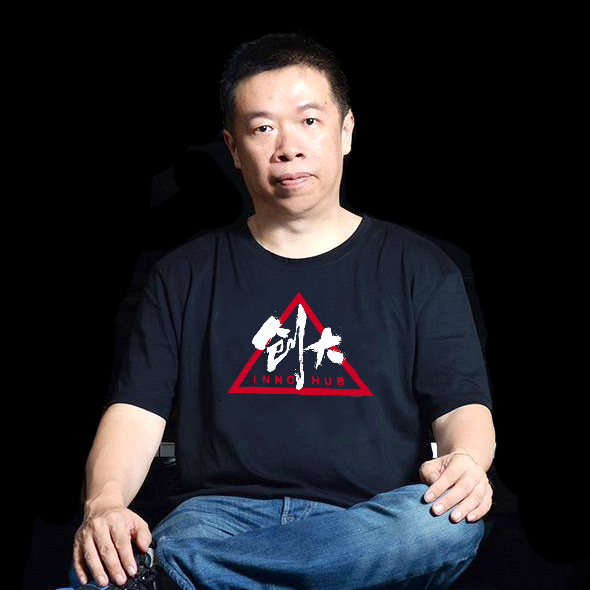
Professor XU Hongbo is an active angel investor; founder of the Shenzen venture firm Innohub.io; which is the general partner of the Wechat Growth Fund, which is backed by, among others, Tencent. He is also a professor of computer science, specialising in artificial intelligence, at the South China University of Technology, a Top 25 university. ..."
Sunday, January 8, 2017
Chinese Start-ups in Sydney
Nick Jenkins, Co-founder and CEO of Language Confidence will be giving a free talk on "Lessons learned starting up in China" at Haymarket HQ, in Sydney's Chinatown, 6PM, 10 January 2017. "Nick will be talking about raising money in Singapore, creating a global
team ... and working with Chinese corporates.".
Friday, December 16, 2016
EdTech Takes Off in an Old Sydney Woolstore
The EduGrowth Christmas Party was held
Thursday, December 15, in Sydney. EduGrowth is an accelerator network for the education sector. The event was held at the recently opened WeWork Pyrmont co-working space. The keynote speaker was
Adam Brimo,Founder and CEO of OpenLearning. EdTech Takes Off in an Old Sydney Wool-store
EduGrowth is new peak body for the EdTech sector: that is start-up companies selling mostly on-line services and products for education.
WeWork provide co-working office space around the world (mostly the USA), with two locations in Sydney. The new location in Pyrmont is in an old wool store which has been renovated in the classic start-up style, with old wooden beams and ceilings retrained, plus retro style steel fittings. There is an extensive bar provided and some interesting touches, such as "telephone boxes" for making private calls and cafe booths for intimate meetings.
OpenLearning provide an on-line learning system using what they call "social media workflow". The company came to prominence when they arranged with the Malaysian government to provide the platform for Malaysian university on-line courses (with 59 courses so far).
OpenLearning also have a "Pay for Certification" offering with Hunter TAFE. The idea seems to be you do the courses on-line for free and then pay to receive the formal certification. This is not as radical as it sounds, as the VET sector has previously provided Recognition of Prior Learning (RPL). I obtained a Certificate IV in Training and Assessment through Canberra Institute of Technology, with 80% through RPL and the rest some on-line learning and assessment. The OpenLearning/Hunter Cert IV T&A is more than twice the cost I paid for CIT certification.
Thursday, December 15, 2016
EduGrowth Christmas Party
The EduGrowth Christmas Party is
Thursday, December 15, 2016 in Sydney. EduGrowth is an accelerator network for the education sector.
Saturday, October 22, 2016
World Mobile Learning Conference in Sydney Monday
The 15th World Conference on Mobile and Contextual Learning (mLearn 2016), starts at University of Technology in Sydney, this Monday 24 October. There are five parallel sessions, so I have selected from the MLearn2016 Program those which look most interesting to me:
Monday 24 October
- 9:02-9:15 Acknowledgement of Country and Welcome to mLearn2016: Associate Professor Wan Ng (Conference Chair) & Welcome to UTS: Professor Shirley Alexander (Deputy Vice-Chancellor and Vice-President (Education and Students))
- 9:15-10:15 KEYNOTE: Constructing Experience, Mark Pesce. Chair: Associate Professor Wan Ng
- Session 1 10:45-11:25 (40 mins) Mobile Learning as a Tool for Indigenous Language Revitalization and Sustainability in Canada: Who will the pipe holders be? Marguerite Koole & Kevin wâsakâyâsiw Lewis
- Session 2 11:30-12:10 (40 mins) A Theory of Enhancement of Professional Learning for Aboriginal and Torres Strait Islander Pre-service Teachers in Very Remote Communities through Mobile Learning, Philip Townsend
- Session 3 12:15-12:40 (25 mins) PANEL: Indigenous People & Mobile Learning. Laurel Evelyn Dyson, Marguerite Koole, Kevin wâsakâyâsiw Lewis, Suzaan Le Roux & Philip Townsend
- Session 4 1:30-2:10 (40 mins) Enterprise-Wide Systems, Chair: Matthew Burle. Building a Campus-Wide Mobile Platform that Focuses on Enhancing Student Effectiveness and Learning, Alexander Roche, Anthony Chung & John Reddin
- Session 5 2:15-2:55 (40 mins) How does a Mobile Platform Address TEQSA and Other Regulatory Compliance for Online Courses? Alexander Roche, Josephine Chan, Anthony Chung & Matthew Burley
- Session 6 3:00-3:25 (25 mins) WORKSHOP: The Handbook of Mobile Teaching and Learning & Future Possibilities, Aimee Zhang & Dean Cristol
- Session 7 3:55-4:20 (25 mins) WORKSHOP (Continued)
- Session 8 4:25-4:50 (25 mins) WORKSHOP (Continued)
- 5:00-6:30 IAmLearn AGM
- 6:30-7:30 Reception
Tuesday 25 October
- 9:00-10:00 KEYNOTE: Personalised Learning, mEducation and Partnerships, Susi Steigler-Peters (Telstra Corporation), Chair: Associate Professor Matthew Kearney
- 10:30-12:30 Session 1 & 2 (Practitioner Presentations) (40 mins each): Negotiating Cultural Spaces in an International Mobile and Blended Learning Project. Charlotte N: Gunawardena, Agnieszka Palalas, Nicole Berezin, Caitlin Legere, Gretchen Kramer & Godwin Amo-Kwao
- Landscape and Literacy on Aboriginal Country: Teaching Indigenous Australian Studies in a Cross-Cultural M-Learning Context, Olivia Guntarik & Aramiha Harwood
Mobile Learning in Practical-Based Subjects: A Developing, Country Perspective, Suzaan Le Roux - 1:00-2:00 POSTER PRESENTATIONS
- Session 3 2:00-3:00 (Practitioner Presentations). Higher Education Practice
Using a mobile Moodle app in an online physics course, Elizabeth Angstmann - Session 4 3:20-4:20 (Practitioner Presentations) (60 mins). Teacher Education
Sustaining Mobile Learning Pedagogies with High Possibility Classrooms: A Vision for Teacher Education in Australian Universities, Jane Hunter & Ariane Skapetis - Session 5 4:20-5:20 (Practitioner Presentations) (60 mins). Professional Development Accepting the Challenge of Adapting Traditional Faculty Development to Online and Mobile Environments, Lisa O’Neill
- CONFERENCE DINNER CRUISE, Boarding: 19:00, Departure: 19:30; Returns: 22:00
Wednesday 26 October
- 9:00-10:00 KEYNOTE: The Role of Education in Identity Transformation and Acculturation, Professor John Traxler (University of Wolverhampton), Chair: Dr Laurel Evelyn Dyson
- Session 1 10:35-11:00 (25 mins) Workplace Learning Chair: Lisa O’Neill: Learning Official Crisis Communication through Decentralized Simulations enabled by Mobile ICTs, Hanna Vuojärvi & Tuulikki Keskitalo
- Session 2 11:05-11:45 (40 mins) Encouraging Faculty Development Through Micro-Credentialing, Lisa O’Neill
- Session 3 11:50-12:30 (40 mins) Flipped Learning Approach for a University EFL Course: Utilizing an Online Communication System, Yasushige Ishikawa, Yasushi Tsubota, Craig Smith, Masayuki Murakami, Mutsumi Kondo, Ayako Suto, Koichi Nishiyama & Motoki
Tsuda - Session 4 1:15-1:55 (40 mins) Digital Citizenship, Chair: Boris Handal: Teaching Digital Citizenship in Higher Education, Boris Handal, Sandra Lynch, Kevin Watson, Marguerite Maher & Grace Hellyer
- Session 5 2:00-2:40 (40 mins) Using Offline Personal Devices to Enable Access to Higher Education in Prisons, Helen Farley, Louise Patching, John Macdonald, Kyle Murphy, Jared Wright, Christopher Lee, Stephen Seymour
- 2:45-3:15 Closing Ceremony: Chairs: Dr Laurel Evelyn Dyson (Program Chair) and Dr Agnieska Palalas (IAmLearn President), Best Full Paper Award and Best Poster Award
Sunday, March 2, 2014
Combined College and Community Centre for Sydney Inner West
Jamie Parker MP, Member of the NSW Parliament of the inner west for Sydney, has proposed vacant government land be used to expand the Sydney Secondary College's Leichhardt Campus. I suggest this could include community facilities, modelled on Gungahlin College Canberra with have dual purpose teaching/community spaces based on the Inspire Centre at University of Canberra.
Gungahlin College is an ACT Government upper secondary school, which has on the campus the Gungahlin Public Library, community meeting rooms and a Canberra Institute of Technology TAFE campus. Most of the school is only for students, but the library/TAFE building is open to the public. I suggest such an facility could be built adjacent to Sydney Secondary College and shared by the students and the wider community.
The Inspire Centre is a purpose building on the University of Canberra campus for the teaching of new computer assisted learning techniques to ACT school teachers. The building has a large "TEAL Room" (Technology Enabled Active Learning) and smaller flexible class rooms. The rooms are very flexible and robust spaces, with flat floors, movable furniture and whiteboard/projection walls. These can be used by one large class or small groups and the furniture can be arranged as require, or packed away. I suggest such rooms could be used by the Sydney Secondary College students during the day and by the community outside school hours.
One use for the facility would be for face-to-face classes to supplement low cost on-line courses. Such courses (including Massive Open Online Courses, or "MOOCs"), are being offered by the world's leading universities for members of the community to undertake informal study and also for school students to supplement conventional courses. However, it has been found advantageous to supplement the purely online courses with some face-to-face classes.The Inspire Centre has video projectors covering about one third of the walls, leaving the rest of the space for use as whiteboards. The cost of projectors are dropping, so I suggest the new facility could have the capability of projecting onto all wall surfaces. This could be used to create an effect reminiscent of the "Holodeck" of the fictional starship Enterprise. One seamless moving image could completely surround the students.
Such a facility could be built and operated at a lower cost than separate educational and community centres. A first step could be for the Leichhardt Municipal Council to commission some sketches from an architect experienced in designing combined educational and community facilities.
Wednesday, December 11, 2013
Optus SydEduTech Pitchfest
Greetings from the "Optus SydEduTech Pitchfest" at the UTS Business School in Sydney. This is being streamed live. In his welcome, Professor Roy Green, head of the Business School at UTS, commented on the announcement of the end of Holden car making in Australia. He called for work on micro-national startup companies. As an example, he pointed to the "creative precinct" which is growing up around UTS, in Ultimo in Sydney.
Labels:
EduTech,
Innovation,
Optus,
Pitchfest,
SydEduTech,
Sydney,
UTS
Thursday, December 5, 2013
University on Wheels
Greetings from the Inaugural Student Experience Conference in Sydney, where Professor Doug Hargreaves, Science and Engineering Faculty, QUT is speaking on "Enhancing the student experience through collaborative learning spaces".
Doug described how the new Engineering Studio and Teaching Space at Queensland University of Technology has the equipment on wheels. Gordon Howell, Manager Learning Environments Support at QUT showed me an early version of some of this equipment in 2009.
QUT has a room called "The Forum" (P419), intended for debates.This looks to me like an extravagant use of space with an inflexible design. What would be preferable is a standard, square, "TEAL room", with tables on on wheels and walls which can be projected or written on. The furniture could then be arranged to this forum format, when needed. But tables could be rearranged for group work, or a traditional lecture.
Doug described how the new Engineering Studio and Teaching Space at Queensland University of Technology has the equipment on wheels. Gordon Howell, Manager Learning Environments Support at QUT showed me an early version of some of this equipment in 2009.
QUT has a room called "The Forum" (P419), intended for debates.This looks to me like an extravagant use of space with an inflexible design. What would be preferable is a standard, square, "TEAL room", with tables on on wheels and walls which can be projected or written on. The furniture could then be arranged to this forum format, when needed. But tables could be rearranged for group work, or a traditional lecture.
Addressing the needs of international students
Greetings from the Inaugural Student Experience Conference in Sydney, where Thomson Ch’ng, National President, Council of International Students Australia (CISA) is speaking on "Addressing the needs of international students to enhance their student experience". CISA was set up after in response to criticism of treatment of international students. There is a CISA Good Practice Program. One issue Thomson mentioned was the role of university agents, who help recruit international students.
Thomson pointed out that long induction presentations, with handouts, are not useful. It would seem to me obvious this should be "flipped", with the students getting the induction information on-line before they arrive and then just a question and answer when they arrive.
During this presentation it occurred to me that I am now an international student.I am enrolled in a course provided by a university in another country. Even thought I am not traveling to that country, there are some differences. One trivial difference is that my course is scheduled in what the university describes as "Winter 2014", even though for me it is high summer. While this is trivial, it would be good if the institution acknowledged its international students and used global terminology. More seriously, I don't exactly how large the course I have enrolled in is, as it is described in terms different to those used in Australian Higher Education.
Thomson pointed out that long induction presentations, with handouts, are not useful. It would seem to me obvious this should be "flipped", with the students getting the induction information on-line before they arrive and then just a question and answer when they arrive.
During this presentation it occurred to me that I am now an international student.I am enrolled in a course provided by a university in another country. Even thought I am not traveling to that country, there are some differences. One trivial difference is that my course is scheduled in what the university describes as "Winter 2014", even though for me it is high summer. While this is trivial, it would be good if the institution acknowledged its international students and used global terminology. More seriously, I don't exactly how large the course I have enrolled in is, as it is described in terms different to those used in Australian Higher Education.
Student leadership in curriculum development
Greetings from the Inaugural Student Experience Conference in Sydney, where Elizabeth Deane (UWS) is speaking on "Student leadership in curriculum development and reform". This is an Office of Learning and Teaching funded project, with La Trobe University, University of
Queensland, University of Sydney, University of South Australia,
University of Southern Queensland and, most interestingly, the National Union of Students.
It would seem to me that leadership skills would be part of any professional degree program. This could therefore be built into the programs. However, there would have to be a curriculum and qualified teachers.
Also before teaching university students outdated pre-Internet ways to run a university, I suggest new on-line techniques be looked at. I help organize events and run organizations with people who I hardly ever (or never) see. These use specialized on-line services and also more fluid forms of "un-conference" event.
It would seem to me that leadership skills would be part of any professional degree program. This could therefore be built into the programs. However, there would have to be a curriculum and qualified teachers.
Also before teaching university students outdated pre-Internet ways to run a university, I suggest new on-line techniques be looked at. I help organize events and run organizations with people who I hardly ever (or never) see. These use specialized on-line services and also more fluid forms of "un-conference" event.
Abstract
This project addresses a key issue in Higher Education: identifying and developing valid, productive roles for student leaders, particularly important in capitalising on the capacity of the student body to contribute to strategies for improving learning, teaching and curriculum. Phase 1 will investigate institutional governance and management frameworks supporting student involvement. This will entail documenting and critiquing student roles in education-related committees, a stocktake of models of student representation and policies, processes and approaches used to gather and use student feedback. Phase 2 will involve a survey of staff and students as to the validity and effectiveness of processes used to access the student voice and act on results, particularly in relation to curriculum development and reform. This survey will identify strategies and initiatives to ensure valid student leadership roles and develop case studies for the sector. Phase 3 will workshop the findings with experienced students and staff to establish effective student leadership framework(s) and validate key recommendations.
Improving the Student Experience Online
Greetings from the Inaugural Student Experience Conference in Sydney. After a day and a half of presentations from university personnel, Peter Rohan from Ernst & Young, is giving a refreshing business view of higher education (E&Y issued "Universityof the future: A thousand year old industry on the cusp of profound change" in 2012). He asked if investments, such as WiFi on campuses, actually is worth the cost. He suggests that providing feedback to students and taking an interest in them would better improve their experience. He also suggested the university look at what their students value.
My own experience as a student has been that at times a university may try too hard. I don;t mind a few surveys to find what I like. But at one stage I was getting a survey about every week from one university. I did not know which were important and which were not, but the surveys were detracting from my student experience, so each time I got one, I have the university a lower rating.
In my view Higher Education could usefully invest in on-line presence and in teaching skills. This not be an expensive exercise, compared to building new buildings and hiring new staff. A university is inherently virtual, with the physical environment just to supplement the experience: it is about people and ideas.
An example of the ideas and people is when I visited Cambridge University Computer Labs. This institution is world famous for helping create the modern computer age, from building the world's second electronic computer to the world's first web cam. But when I visited the lab was in a crumbling old, cramped building (with a dinosaur skeleton in it). The old buildings are part of the Cambridge ethos (although on my next visit I found they had moved into a shiny new building next to Microsoft Research Labs). But it was the idea of the Lab which was important not the physical building.
Wednesday, December 4, 2013
Topping The Student Experience Survey
Rise to the top of the The Student Experience Survey. University of East Anglia was established in the 1960s. Richard commented that the UK higher education system went wrong in the 1980s. In particular he criticized the national ranking of research, which forced some researchers into teaching. East Anglia is a center for climate changed research and was embroiled in controversy over "Climategate". He showed a university "league table" graph comparing his own university with the "Russell Group" (which appears to be the UK equivalent of Australia's Group of Eight, leading universities). He also showed the National Student Survey (NSS), Student Barometer and the Times Education Supplement Student Experience Survey. The survey I find of interest is the Webometrics, which ranks the quality of the university's web presence. The interesting point about the web rankings is that they correlate closely with other more general university rankings.
Richard looked at the NSS in detail. He pointed that that the criteria would not be welcomed by some at universities, as for example, library facilities are not a priority. He pointed out that scores for feedback on students were "remarkably poor" for UK institutions. He suggested universities needed at most a five day turnaround for student feedback.
Richard also pointed out that student satisfaction differs by discipline and nationality. He suggested that this needs to be addressed. But some effects are correlations, rather than causal relationships (such as graduate employment rate being caused by quality of courses, rather than a measure of it).
Richard commented that more attention needed to be paid to the postgraduate experience. I will speak on this a little in my presentation at 3:40pm on "MOOCs and the Student Experience" (see program for other speakers).
Subscribe to:
Posts (Atom)


